There's been a somewhat stressful few weeks lately; this week we're shooting the final video presentation for the project, and ATR has its yearly Open House. But while the run-up has been busy this week is remarkably slow as all the shooting, presentations and visitors pretty much preclude any real work. So I've taken the opportunity to upgrade my laptop to the newest version of Ubuntu.
For those that do not know, Ubuntu is an operating system (like Windows or Mac OSX) based on Linux. I've used Linux for many years but then, I'm pretty much hopelessly geeky. Of course, lots of people - you included - are using Linux without knowing it: you'll find it in your cable modems, cable-TV set-top boxes, routers and other electronic devices; many of the Internet sites you visit are served to you by Linux. When you use any Google application like Gmail or Google Maps you are using Linux. But while Linux has worked great for me on my desktop I'd be the first to admit that Linux on your PC is very much not for everyone. Up until now, that is.
Whenever I install a new version I always spend a good deal of time tweaking the new system to fix small issues and get everything working properly. It can take a couple of days of off-and-on tinkering to get everything shipshape. This time it took all of ten minutes, mostly just reentering passwords for my email accounts and such. My only real tweak is getting my keyboard to work. I have the very oddball requirement of using a Swedish keyboard layout on a a Japanese laptop keyboard that is missing a couple of keys vital to Swedish (specifically, the Swedish key for "<>|" to the left of 'z' is missing). I basically need to tell Linux to use a different, unused key for that. Of course you could argue that Linux sucks for forcing me to do such a remapping, but under Windows I have never found any way to do it at all. Under Linux this is a bother; under Windows it is impossible.
Other than the (self-inflicted) keyboard thing everything - and I mean everything - worked right out of the box. Wireless connections, suspend and resume, and things like connecting second screens have been common problem spots for laptops, but now it all just worked with no tweaking needed whatsoever. The included software (and there is a lot included) is all just a bit more polished and smooth than before. The F-Spot photo management software is updated and a lot more polished; the Gimp image editor is steadily improving too and is good enough that I prefer it over Photoshop even though we have both at home.
There are a few things not installed by default that I think people should get. Installing things, by the way, is generally much easier under Linux than Windows. Just about any kind of software (we're talking tens of thousands of packages here) is available through the "package manager". Just open the "Add/Remove applications" and you'll get a nice categorized list of what's available. One thing I recommend is the Inkscape drawing program. Smooth and polished; I use it for all illustrations and drawings. The included spreadsheet is pretty good, but I prefer Gnumeric as it is faster and more stable. Install Macromedia Flash; it's not included by default because its license doesn't allow it. Also look for VLC, a good film player, and "Ubuntu Restricted Extras" so you can play mp3 and various other music and movie formats.
But if you have some specific application on Windows you just can't do without? Well, we do have our computers for running our applications after all, not for using operating systems. If your program is important to you and there is no good alternative in Ubuntu then you should of course use Windows. If it's only one or two programs, however, and especially if they are "productivity apps" - tax software or stuff like that - then there is the possibility of running it under Ubuntu using "Wine". It is a piece of software that lets you run a lot of Windows software under Ubuntu. It is not perfect by any means but it does work decently. It may well be a solution for that one important software package you still need.
Anyway, just wanted to state that I'm happy with Ubuntu and you might be too. You can download and burn a CD with Ubuntu, then boot from that CD to try it out. It will be a bit slower than having it installed but it will not touch your computer in any way so it's a completely safe way to see what it's about.

Wednesday, November 5, 2008

Wednesday, October 29, 2008
How Not To Get Married
How's this for a scenario: You are a 39 year old salaryman, the night before your wedding. You and your bride have booked a prestigious hotel for the ceremony and the party, and worked for months preparing the event. There's just one little problem: you're already married. To somebody else.
So, it's 2 in the morning. Dawn will break in but a few hours and your fiancée and all your guests will get up and prepare for the big event. Speeches have been written, gifts have been bought, clothes have been carefully laid out. The hotel kitchen staff is undoubtedly already preparing the sumptuous dinner course awaiting the attendees. With some consternation you realize that you've really let this whole "I'm already married"-issue slide for far too long; this very day you will enter the holy state of bigamy in front of your relatives, your friends, your coworkers and your bride to not-really-be. So what can you do? You could come clean and live in shame forever; you could keep silent and hope nobody finds out. You could even try casually mentioning that oh, by the way, my other wife will be moving in with us next week. What do you do?
Well, you could try any of the above. Or, you could simply set fire to the hotel.
So, it's 2 in the morning. Dawn will break in but a few hours and your fiancée and all your guests will get up and prepare for the big event. Speeches have been written, gifts have been bought, clothes have been carefully laid out. The hotel kitchen staff is undoubtedly already preparing the sumptuous dinner course awaiting the attendees. With some consternation you realize that you've really let this whole "I'm already married"-issue slide for far too long; this very day you will enter the holy state of bigamy in front of your relatives, your friends, your coworkers and your bride to not-really-be. So what can you do? You could come clean and live in shame forever; you could keep silent and hope nobody finds out. You could even try casually mentioning that oh, by the way, my other wife will be moving in with us next week. What do you do?
Well, you could try any of the above. Or, you could simply set fire to the hotel.
Tuesday, October 28, 2008
Autumn
Summer is finally over. Temperatures drop, the air dries a bit and we finally get the high, clear autumn days that mark the best time of the year here in Kansai. When we go to Kobe now we don't avoid the hot streets anymore, but can take leisury walks up to the mountains, or down to the harbour area. This time I brought my Yashica film camera instead of the usual digital one.

In Sweden people will sit outside everywhere during summer, enjoying the warmth and light. Here summer is too hot, but on beautiful autumn days you find lots of people sitting outside in the same way.

Of course we ended up sitting in Meriken park for an hour, just watching the passing people.

Motomachi is a long covered shopping street in Kobe, running right along Chinatown (and near a favourite restaurant of ours). This day they had a music festival, with bands and singers performing all along the street.

One of the shopping centers in the harbour always has some themed decorations. For summer season they had an Olympic theme with giant Roman legionnaire statues performing various athletic feats. This is the long jump, apparently.

The Harbourland area draws large crowds of people to its restaurants and shops. But Kobe is also very much a working harbour, and the real harbour is never far away.
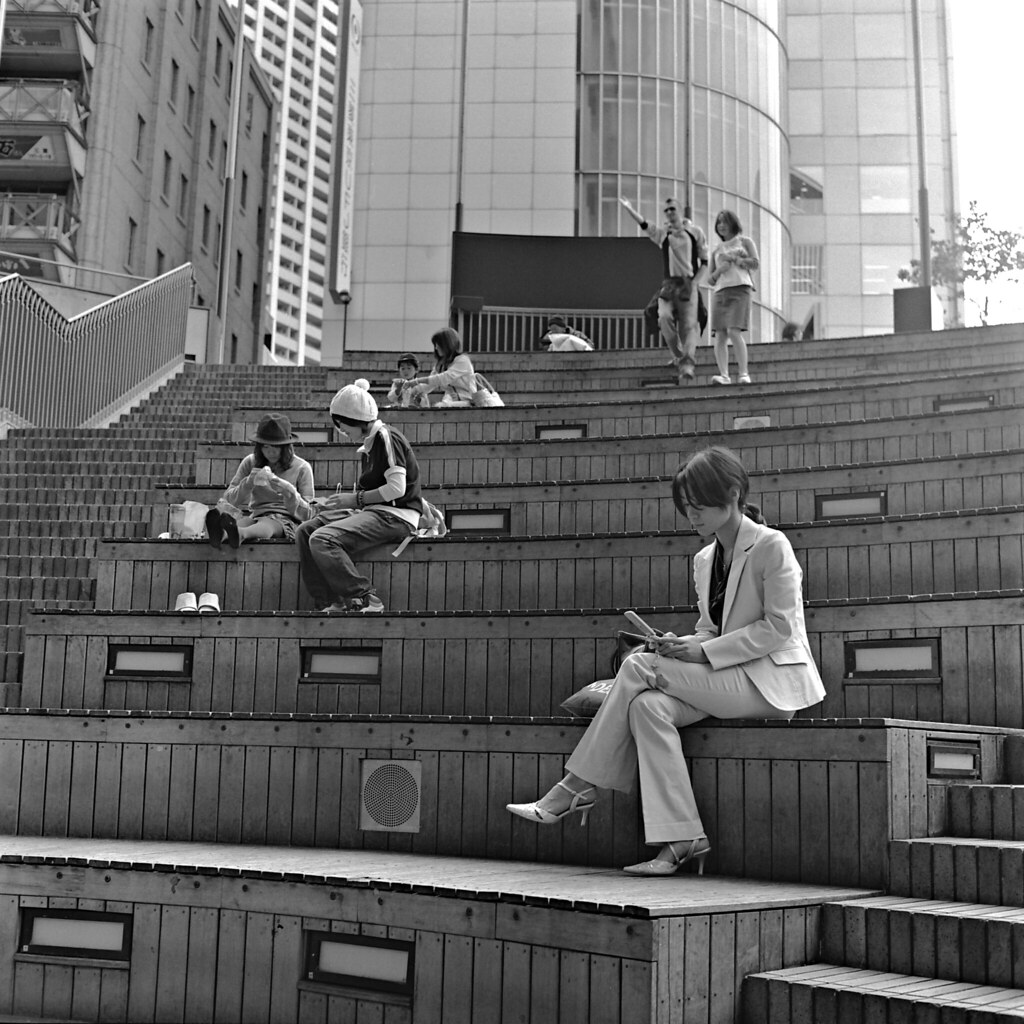
In Sweden people will sit outside everywhere during summer, enjoying the warmth and light. Here summer is too hot, but on beautiful autumn days you find lots of people sitting outside in the same way.

Of course we ended up sitting in Meriken park for an hour, just watching the passing people.
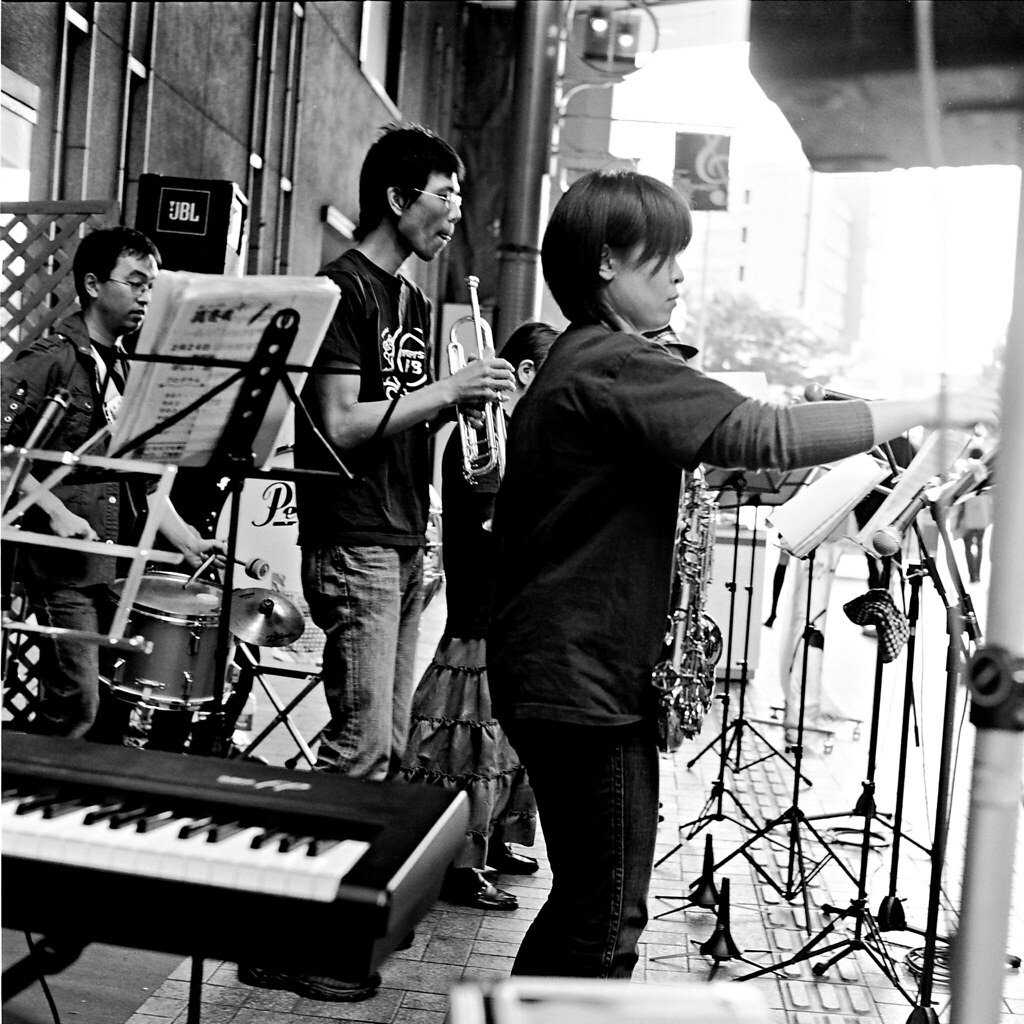
Motomachi is a long covered shopping street in Kobe, running right along Chinatown (and near a favourite restaurant of ours). This day they had a music festival, with bands and singers performing all along the street.
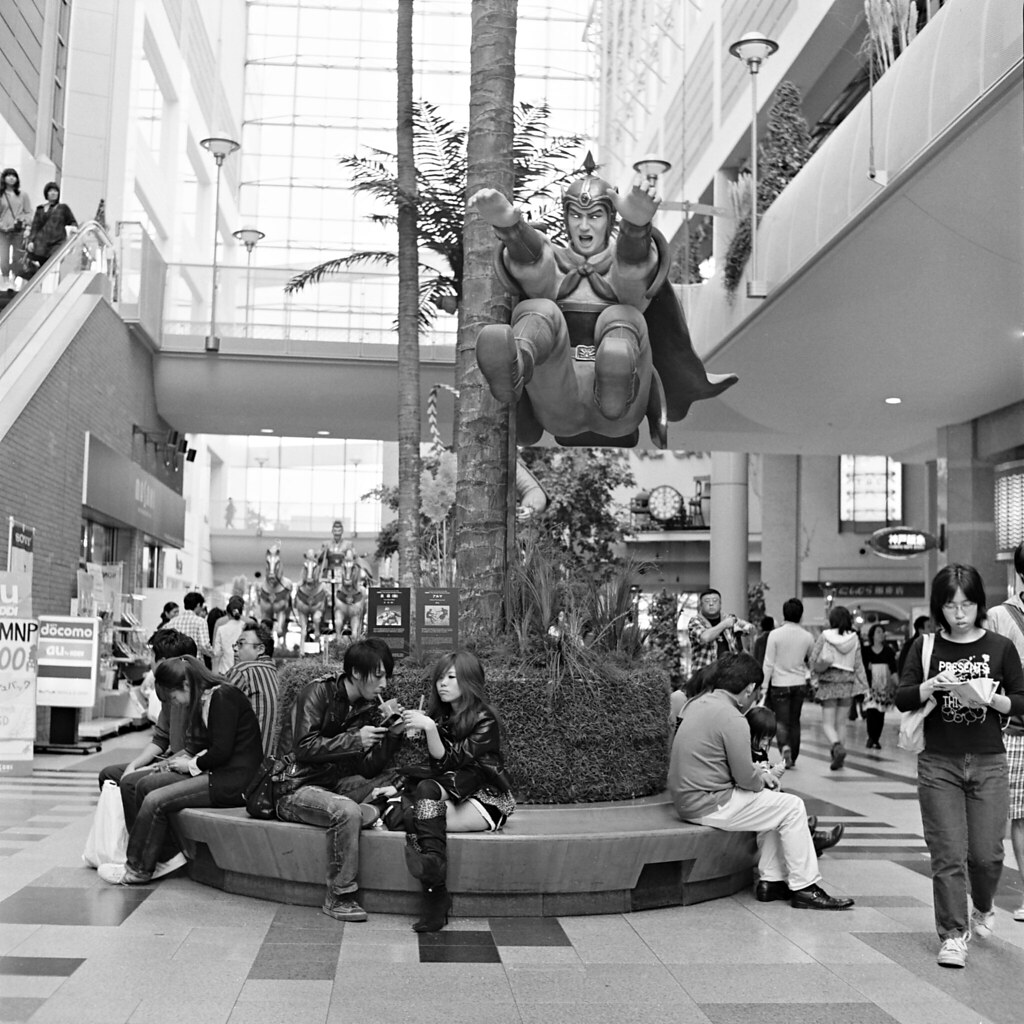
One of the shopping centers in the harbour always has some themed decorations. For summer season they had an Olympic theme with giant Roman legionnaire statues performing various athletic feats. This is the long jump, apparently.

The Harbourland area draws large crowds of people to its restaurants and shops. But Kobe is also very much a working harbour, and the real harbour is never far away.
Wednesday, October 22, 2008
Atheist Bus Campaign
Not about Japan or Osaka in any way, I know, but this is just too cool not to share. Apparently, some rather unsavory religious organization have run advertisements on London buses warning people about damnation and hellfire unless they give their money, loyalty and brains open their hearts to the church. This rankled a columnist in the Guardian who floated the idea that perhaps atheists should collect some money and advertise too.
The campaign to raise the needed money started yesterday, 21st of October. The plan was to perhaps raise as much as 5500 pounds by the end of the year; Richard Dawkins pledged to match any donations up to that amount. That would give the campaign £11000, enough to run an advertisement ("There's probably no God. Now stop worrying and enjoy your life.") on 30 buses for four weeks.
The donation page has been open for only a day now but the amount donated already stands at £50000, almost ten times the original expectation - and that's before the £5500 Dawkins is pitching in - and it's still climbing. I'd say there's a fairly significant untapped constituency there for any politician willing to stick their neck out in defiance of religious groups. The campaign website is here, and the donation page is here.

Alone.
The campaign to raise the needed money started yesterday, 21st of October. The plan was to perhaps raise as much as 5500 pounds by the end of the year; Richard Dawkins pledged to match any donations up to that amount. That would give the campaign £11000, enough to run an advertisement ("There's probably no God. Now stop worrying and enjoy your life.") on 30 buses for four weeks.
The donation page has been open for only a day now but the amount donated already stands at £50000, almost ten times the original expectation - and that's before the £5500 Dawkins is pitching in - and it's still climbing. I'd say there's a fairly significant untapped constituency there for any politician willing to stick their neck out in defiance of religious groups. The campaign website is here, and the donation page is here.
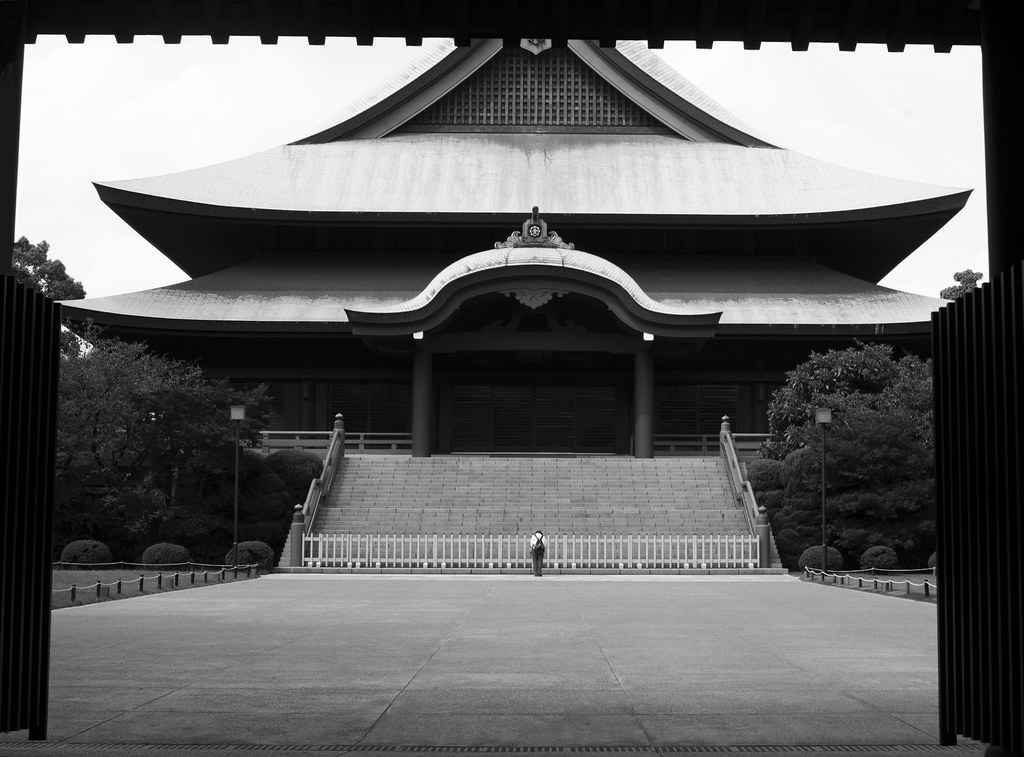
Alone.
Saturday, October 18, 2008
Diana+
Remember I wrote about that small photo competition where I ended up being one of the winners? My prize came in the mail last week: a bagful of Ilford films and a Diana+ medium format camera.

Diana+ camera. Taken with my Yashica - and yes, the grain and contrast is intentional.
The original Diana was a silly cheap plastic toy camera made in the 1960's by a Chinese plastics company and sold as a promotional item ("Apply for our store loyalty card and get a camera FREE!!") or sold in discount stores as a childrens toy. It was discontinued after a few years, but the camera found a following as an "anti-camera" of sorts; some people embraced its many faults and started photographing with it for real. As the years passed it became something of a cult item, and finally the Lomographic Society, makers of current Soviet-designed Lomo cameras, decided to make a slightly updated new version of it. They kept the functional parts like the lens and body mechanics, but added touches like a pinhole aperture and the ability to shoot in different formats.
Now, given it's history it's of course not exactly the cream of the crop as far as quality goes. It is a cheap, flimsy plastic camera; so light that you wonder if they forgot to put any actual mechanics inside it. That's not to say it's not good value - I took a quick look at medium-format gear for sale on the net, and the Diana+ kit with camera, instruction manual and a very nicely produced book with the camera history, interviews and short stories interleaved with lots of example images costs exactly the same as a spare lens cap for a Rolleiflex TLR. Don't expect TLR quality in other words.
Comparing the Diana to a "real" camera would be unfair. This is not a serious tool for carefully planned, well-metered, deliberately executed shots. Instead, it's meant to be used for spontaneous, unplanned, uncomposed snapshots; the kind where, when you get to see the images, you have no idea what's going to be there and how it'd turned out. You can see lots and lots of examples here for instance. Exactly the kind of shots, in fact, that I was getting with my old Handy Box box camera, another old, extremely simple design. Let's compare them.

A close look at the Diana.
The Camera
The Diana is, as I said above, very flimsy. It's almost all plastic, including the lens, with a few metal bits only where plastic just won't do. The Handy Box, by contrast, is all metal, with a glass lens. The difference, when you hold them, is profound - if you drop the Diana you'll worry that the camera will break; if you drop the Handy Box your only worry is the ugly impact marks on the floor. I would not expect the Diana to be long for this world when stuffed into my backpack. As the camera is not actually guaranteed to be light-proof (violating the perhaps most basic definition of a camera as "a lightproof box with a controllable opening"), you need to tape up the body seams and that does give it some additional stability.
Both cameras have very simple viewfinders that show a view only vaguely related to what you'll get in your picture. The Diana viewfinder is pretty inaccurate of course but overall not bad at all. It's large and bright - well, it is basically a hole through the camera - and a lot easier to use than the Handy Box viewfinder. That's not a terribly high bar to crawl over of course; with the Handy Box I ended up ignoring the viewfinder altogether.

Office workers on their morning commute. Give the camera a medium-distance subject and contrasty light and the results aren't bad.
While the Handy Box controls are basically nonexistent, the Diana does provide you with both variable focus and aperture control. The focus is highly approximate of course (close, medium and far, more or less), and the aperture control is limited to f/11, f/16 and f/22 and an extra pinhole aperture (f/150 or so). Nevertheless, a dramatic improvement in the amount of control you get. Like the Handy Box you have only two shutter modes: quick (about 1/60) and bulb where you open and close manually.

Bike speeding past. 1/60 is not enough to capture fast movements - or plenty, depending on what effect you want.
In Use
Loading the film is a pain, and the clearest example of the Lomographic Society designers going a bit too far in copying the original camera. Like most rollfilm cameras, you load the Diana by putting a roll of film in one compartment, pulling the film across to the empty uptake spool in the other compartment, wind the film a bit until it catches properly, then you close the camera and wind to the first frame. Easy. Except, it's not very easy with the Diana.
The problem is that the film spool and the empty spool need to, well, spool the film when loading it. The spools need to rotate in place, so they need a tab or knob at either end as an axle for the spool. But with the Diana, the bottom tabs are part of the cover, not part of the film spool compartments, so when you first start loading the film you can't wind the film in the normal manner; the spools just jump around. What you need to do is remove the empty spool, hook the film end into the uptake spool and wind it on for a few turns while out of the camera, and only then carefully place both spools in the body and line them up so you hopefully can close the cover properly. It's a hassle, and worse, an unnecessary hassle. This has no impact on the image quality or handling, so keeping this design flaw just because the original had it makes no sense.
As the camera is so light, it's easy to take along, and it's easy to use one-handed if you want (the shutter in on the side of the lens barrel, making it really easy). On the other hand, as it is so light it doesn't stand securely if you put it down; that makes it a bit more difficult to take long exposure shots. The Handy Box is a lot more stable - and not just because it's metal, but also because it's a box. It has a large, square footprint that will stay a lot more stable than the narrow bottom of the Diana.

My morning commute. The camera is light, to it was easy to press it up against the ceiling and hold the shutter open for about a second.
The Images
Well, this is where we discover that a plastic one-element lens mounted in a flexing body with wide tolerances does indeed not produce much of an image. Overall, I'd say the Diana and the Handy Box are just about comparable. Vignetting is pronounced, overall contrast is low and sharpness is not something that naturally comes to either of these cameras. True, the Handy Box is a higher-quality item with a glass lens and rigid body; on the other hand, the Diana design is about 20 years younger and has presumably incorporated some of the advances during those years.

Double exposure. The idea was better than the execution.
In the end, for a play camera which would I choose - which will I choose to take out from time to time? As of now I still don't know. On one hand I do appreciate the variable aperture of the Diana, and the ability to shoot pinhole images is a great selling point all by itself. When people see it they seem to refuse to believe it's a real camera so shooting people is very easy. But the very breakable body with protruding lens, the light leaks and the difficulty of loading it doesn't really inspire the confidence I need to really rely on it. And while focusing and variable aperture are great tools, operating them does distract you from taking the image.
On the other, the Handy Box is all but indestructible and so silly easy to use (from loading the film to shooting) that there really is nothing to it - you decide whether to take an image and that's it. Yoda said it best: "Take. Or not take. There is no focusdistanceDOF

Rushing past.

Diana+ camera. Taken with my Yashica - and yes, the grain and contrast is intentional.
The original Diana was a silly cheap plastic toy camera made in the 1960's by a Chinese plastics company and sold as a promotional item ("Apply for our store loyalty card and get a camera FREE!!") or sold in discount stores as a childrens toy. It was discontinued after a few years, but the camera found a following as an "anti-camera" of sorts; some people embraced its many faults and started photographing with it for real. As the years passed it became something of a cult item, and finally the Lomographic Society, makers of current Soviet-designed Lomo cameras, decided to make a slightly updated new version of it. They kept the functional parts like the lens and body mechanics, but added touches like a pinhole aperture and the ability to shoot in different formats.
Now, given it's history it's of course not exactly the cream of the crop as far as quality goes. It is a cheap, flimsy plastic camera; so light that you wonder if they forgot to put any actual mechanics inside it. That's not to say it's not good value - I took a quick look at medium-format gear for sale on the net, and the Diana+ kit with camera, instruction manual and a very nicely produced book with the camera history, interviews and short stories interleaved with lots of example images costs exactly the same as a spare lens cap for a Rolleiflex TLR. Don't expect TLR quality in other words.
Comparing the Diana to a "real" camera would be unfair. This is not a serious tool for carefully planned, well-metered, deliberately executed shots. Instead, it's meant to be used for spontaneous, unplanned, uncomposed snapshots; the kind where, when you get to see the images, you have no idea what's going to be there and how it'd turned out. You can see lots and lots of examples here for instance. Exactly the kind of shots, in fact, that I was getting with my old Handy Box box camera, another old, extremely simple design. Let's compare them.
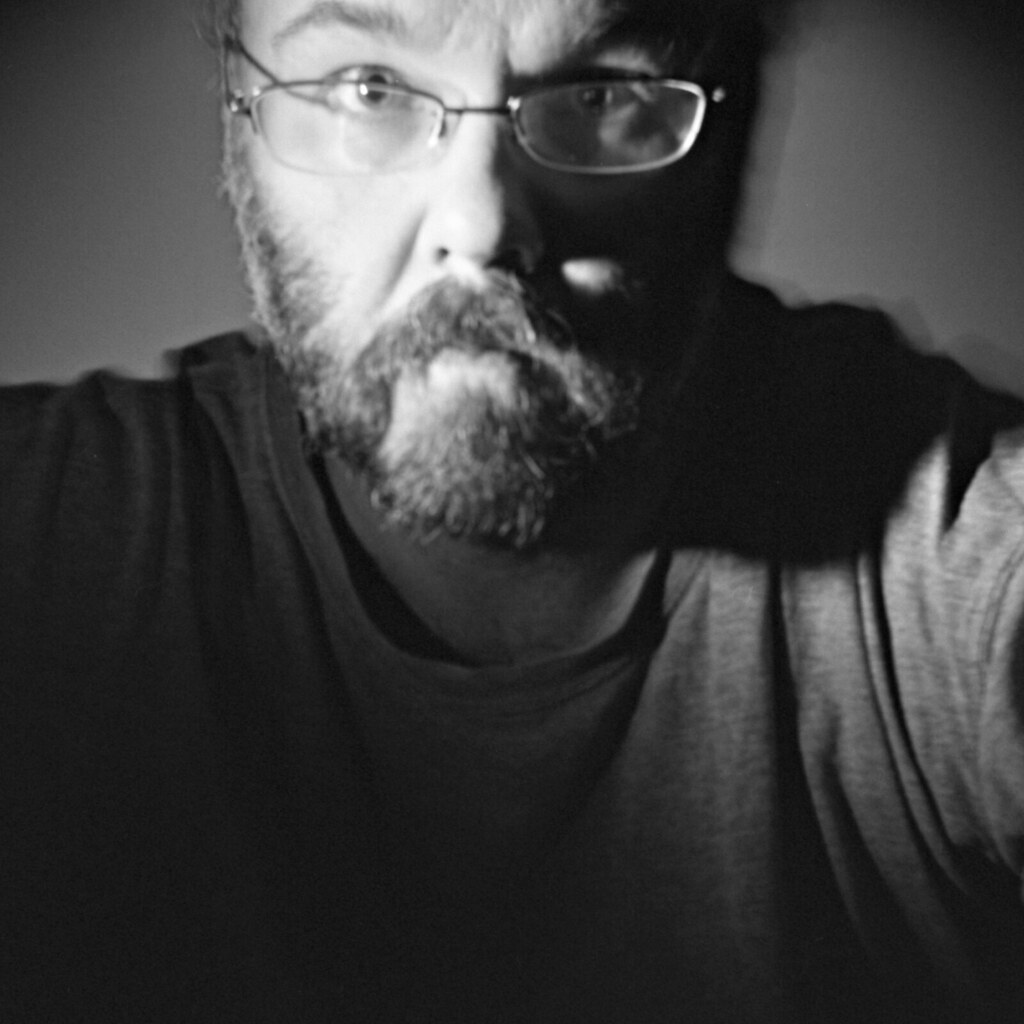
A close look at the Diana.
The Camera
The Diana is, as I said above, very flimsy. It's almost all plastic, including the lens, with a few metal bits only where plastic just won't do. The Handy Box, by contrast, is all metal, with a glass lens. The difference, when you hold them, is profound - if you drop the Diana you'll worry that the camera will break; if you drop the Handy Box your only worry is the ugly impact marks on the floor. I would not expect the Diana to be long for this world when stuffed into my backpack. As the camera is not actually guaranteed to be light-proof (violating the perhaps most basic definition of a camera as "a lightproof box with a controllable opening"), you need to tape up the body seams and that does give it some additional stability.
Both cameras have very simple viewfinders that show a view only vaguely related to what you'll get in your picture. The Diana viewfinder is pretty inaccurate of course but overall not bad at all. It's large and bright - well, it is basically a hole through the camera - and a lot easier to use than the Handy Box viewfinder. That's not a terribly high bar to crawl over of course; with the Handy Box I ended up ignoring the viewfinder altogether.

Office workers on their morning commute. Give the camera a medium-distance subject and contrasty light and the results aren't bad.
While the Handy Box controls are basically nonexistent, the Diana does provide you with both variable focus and aperture control. The focus is highly approximate of course (close, medium and far, more or less), and the aperture control is limited to f/11, f/16 and f/22 and an extra pinhole aperture (f/150 or so). Nevertheless, a dramatic improvement in the amount of control you get. Like the Handy Box you have only two shutter modes: quick (about 1/60) and bulb where you open and close manually.
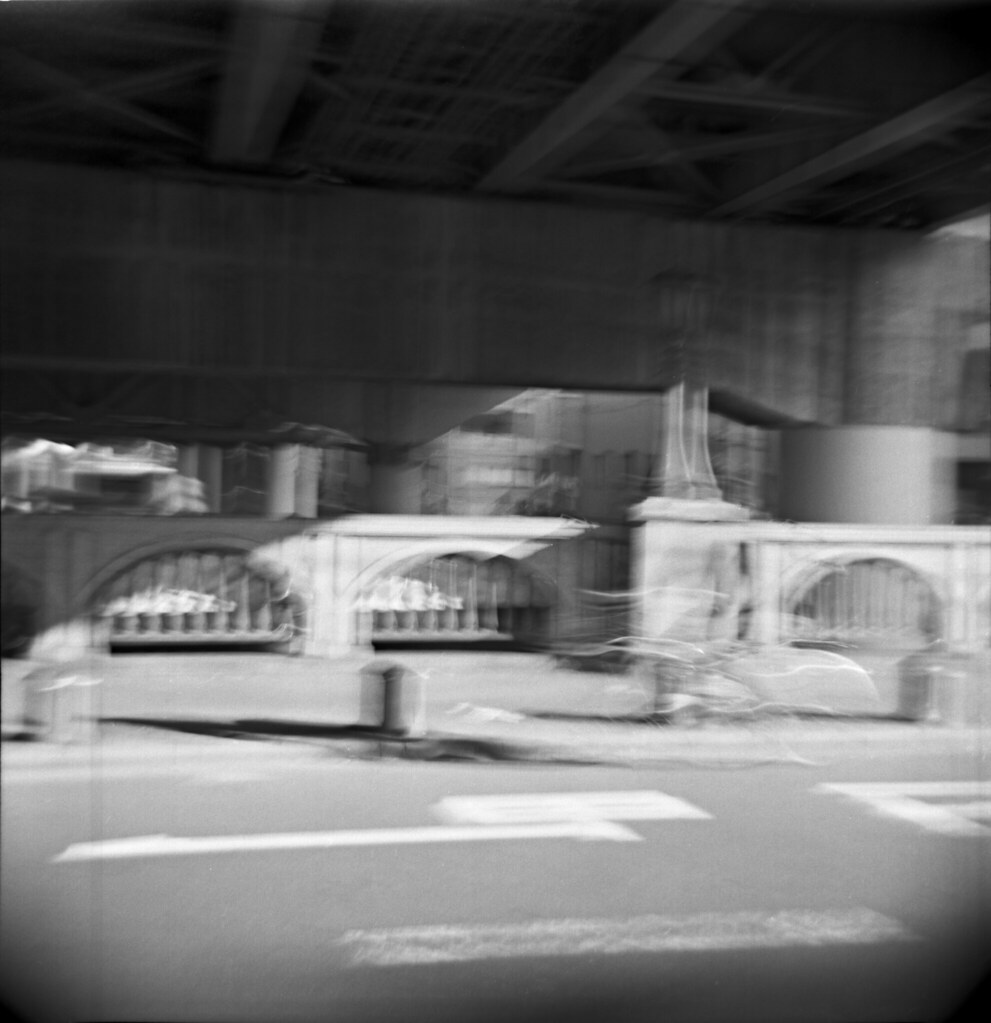
Bike speeding past. 1/60 is not enough to capture fast movements - or plenty, depending on what effect you want.
In Use
Loading the film is a pain, and the clearest example of the Lomographic Society designers going a bit too far in copying the original camera. Like most rollfilm cameras, you load the Diana by putting a roll of film in one compartment, pulling the film across to the empty uptake spool in the other compartment, wind the film a bit until it catches properly, then you close the camera and wind to the first frame. Easy. Except, it's not very easy with the Diana.
The problem is that the film spool and the empty spool need to, well, spool the film when loading it. The spools need to rotate in place, so they need a tab or knob at either end as an axle for the spool. But with the Diana, the bottom tabs are part of the cover, not part of the film spool compartments, so when you first start loading the film you can't wind the film in the normal manner; the spools just jump around. What you need to do is remove the empty spool, hook the film end into the uptake spool and wind it on for a few turns while out of the camera, and only then carefully place both spools in the body and line them up so you hopefully can close the cover properly. It's a hassle, and worse, an unnecessary hassle. This has no impact on the image quality or handling, so keeping this design flaw just because the original had it makes no sense.
As the camera is so light, it's easy to take along, and it's easy to use one-handed if you want (the shutter in on the side of the lens barrel, making it really easy). On the other hand, as it is so light it doesn't stand securely if you put it down; that makes it a bit more difficult to take long exposure shots. The Handy Box is a lot more stable - and not just because it's metal, but also because it's a box. It has a large, square footprint that will stay a lot more stable than the narrow bottom of the Diana.

My morning commute. The camera is light, to it was easy to press it up against the ceiling and hold the shutter open for about a second.
The Images
Well, this is where we discover that a plastic one-element lens mounted in a flexing body with wide tolerances does indeed not produce much of an image. Overall, I'd say the Diana and the Handy Box are just about comparable. Vignetting is pronounced, overall contrast is low and sharpness is not something that naturally comes to either of these cameras. True, the Handy Box is a higher-quality item with a glass lens and rigid body; on the other hand, the Diana design is about 20 years younger and has presumably incorporated some of the advances during those years.

Double exposure. The idea was better than the execution.
In the end, for a play camera which would I choose - which will I choose to take out from time to time? As of now I still don't know. On one hand I do appreciate the variable aperture of the Diana, and the ability to shoot pinhole images is a great selling point all by itself. When people see it they seem to refuse to believe it's a real camera so shooting people is very easy. But the very breakable body with protruding lens, the light leaks and the difficulty of loading it doesn't really inspire the confidence I need to really rely on it. And while focusing and variable aperture are great tools, operating them does distract you from taking the image.
On the other, the Handy Box is all but indestructible and so silly easy to use (from loading the film to shooting) that there really is nothing to it - you decide whether to take an image and that's it. Yoda said it best: "Take. Or not take. There is no focusdistanceDOF
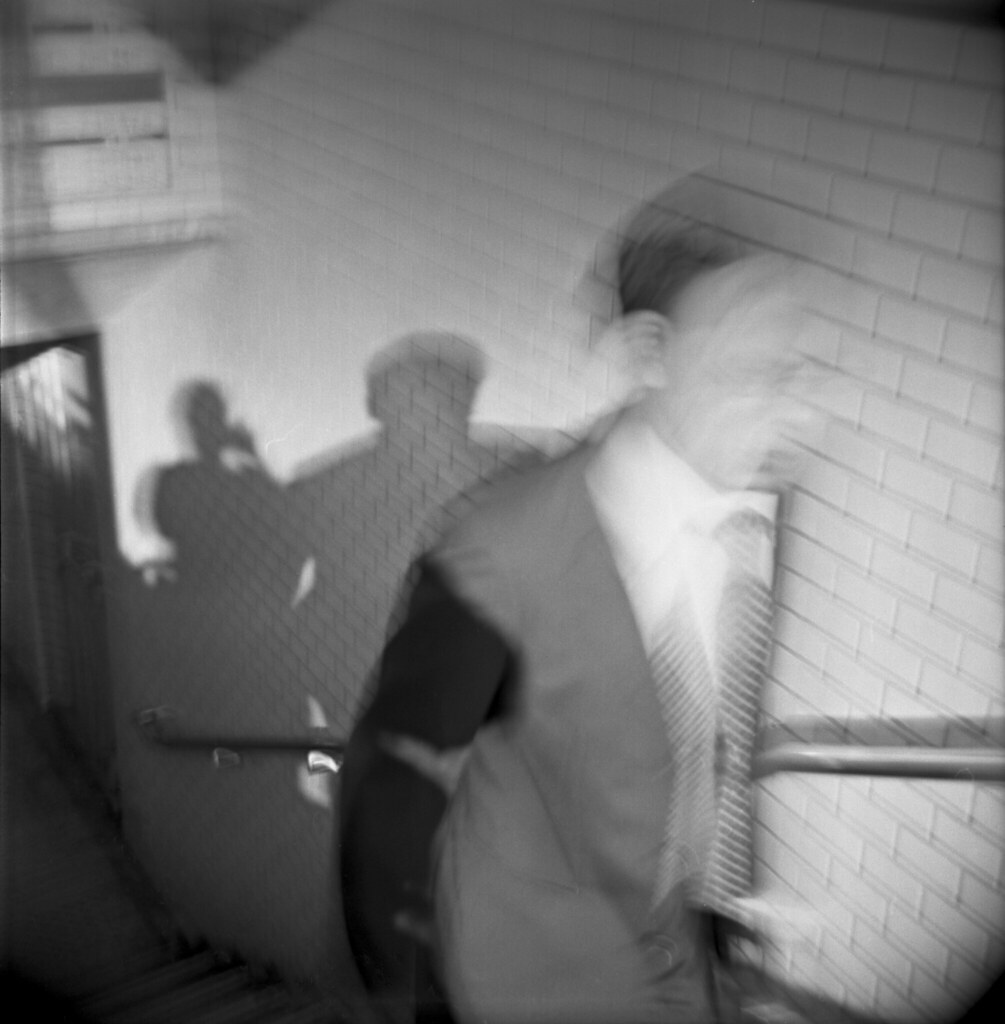
Rushing past.
Wednesday, October 15, 2008
Not So Freezer
Freezers are generally at their best with the door tightly closed; most experts seem to be in agreement on this. However, there's two undeniable benefits of accidentally leaving the freezer door open for half a day:

Frozen assets
- You finally get to throw away all that old food you were never going to eat anyway, and you get to really clean up inside;
- Instead of the usual fish and rice, dinner becomes an improvised buffet of all the frozen delicacies - smoked salmon, marinated octopus - you were saving for later.

Frozen assets
Friday, October 10, 2008
Aomori
Two weeks ago, just ahead of autumn, we took a trip to Aomori. Aomori prefecture is the northernmost prefecture on the main island of Honshu, right across the strait to Hokkaido. Aomori city - a recent invention, a merger of two adjacent towns - is a fairly small community of about 300 000 people lying at the base of Mutsu bay.
The prefecture is most well known for its apple orchards, and Aomori apples sell at a premium here. The area is also famous for extensive archaeological findings from the Jōmon period. There's apparently a lot of good downhill skiing in the mountains for the advanced skier, with a lot of steep off-pist areas. Aomori city itself used to be the gateway to Hokkaido, with a dense network of ferries between the two islands across the Tsugaru strait. The ferry services mostly disappeared when the rail tunnel was built between Hokkaido and Honshu, though, making the city a bit of a backwater.
We went to Aomori just overnight - to visit a friend of Ritsuko's, but also to do something a little different over a weekend. This kind of short trip is really, really effective. When you travel somewhere for a week or two you need to pace yourself or you'll run yourself ragged. But for a short weekend trip like this you can pack your schedule as tightly as you want; two days of hectic vacation is going to leave you invigorated, not worn out.

Itami airport. Used to be outside the city itself; now it's right in the middle of the northern part of it.
We left early Saturday morning from Osaka's old Itami airport. Governor Hashimoto wants to close it, by the way, and move all flights to Kansai airport out in the bay. He does have a point, as the city has grown around Itami and completely engulfed the airport by now, creating noise pollution and safety problems and making expansion impossible. That's bits of Osaka you see around the airport above, basically - offices, factories (down to the left), apartment buildings, a few schools, all nestled right up to the fence surrounding the airfield.
On the other hand, it is a historical airfield in a country that is all too keen on tearing down old stuff before considering if it may have some cultural value. It's a charming little airport, and I hope it remains a least partially open and in use.

The Aomori Museum of Art. Good thing about buildings like this is, it's very easy to take a good picture. The bad thing is, it's very difficult to take a good picture that tenthousand other people haven't already taken.
Once we landed in Aomori we didn't even stop by the hotel; we went straight to the Aomori Museum of Art. Another benefit of a short trip there: you have so little luggage you can just bring it all along as you go. The museum itself is in the typical modern concrete design for places like this: all smooth stone expanses and sharply delineated rectilinear shapes. I happen to really like it, as it gives the artwork inside space to shine.


A couple of exterior shots. There was no photography allowed inside, unfortunately.
The museum has been criticized for having spent so much money on the building that they haven't been able to create a sufficient permanent collection. I don't know how well-founded that criticism is, but that's not how it felt to me. Most of the permanent space contains works by artists with a connection to the area - exactly what a prefectural museum should focus on, I think. They do have a room near the entrance with three enormous Chagall paintings, backdrops for an opera, and while the paintings are apparently not counted among his foremost works, the presentation and the sheer size makes a pretty powerful impression on you.
The temporary exhibition was "Box-art of plastic models and Japan’s postwar culture". Far more fascinating than I thought it would be. I was not alone in finding it interesting either; there were more nerds visiting that exhibition than the museum have likely seen since it opened.

Jōmon period longhouse, observed by not-so-Jōmon period woman.
Just a short walk from the museum you find Sannai-Maruyama, a large archaeological site with traces from the Jōmon period. 縄文 ("Jōmon") means something like "rope pattern" and refers to the practice of decorating pottery with sometimes intricate rope pattern impressions. The field was found when a new sports stadium was being built; the stadium plans were quickly abandoned and the field excavated (excavations seems to continue today). There's a number of reconstructed buildings as well as climate-controlled domes with the real excavations, and a small museum housing found artifacts. Very pleasant place to walk around even if you would have little interest in the archaeology. I have a few more pictures of the site here.
From the site we took the bus into Aomori city proper. We checked in at the hotel, then left for the third museum of the day: the Munakata Shiko Memorial Museum of Art. Munakata Shiko was a wood block print artist from Aomori, and retained his connections to the area throughout his life. He gave one set of prints of his masterpiece "Ten Great Disciples of Buddha" to the museum, with specific instructions on the order they should hang. There's a not very good image of them here - why is it so hard to find decent examples of artworks online, by the way?
Munakata's woodblock prints are spectacular in real life to be sure, but we went to the museum because Ritsuko's friend is working there. After a tour - the museum is dedicated to one artist so it's not very big - we left for dinner at a local fish restaurant. The food was excellent and with our host being very talkative and entertaining it made for a long, pleasant evening. After dinner we took a walk along the waterfront before returning to the hotel.

The Aspam pyramid is a tourist information center and local speciality store in the harbour. Well, it works; I doubt there's a tourist that doesn't visit and take a picture of the place. And if the country is dead set to waste its money on unnecessary construction I certainly prefer something fun like this over yet another elevated motorway.
Hakkoda

Hakkoda mountains
The next morning saw us at an early breakfast. A travel tip I swear by: the local breakfast style is almost always better made and better tasting than the bland international "continental breakfast" stuff. The same goes for dinner as well of course.
From Aomori city there is a regular bus line out to the Hakkōda mountains near the city. Northern Honshu gets lots of snow in the winter so there's plenty of cross-country and downhill off-pist skiing in the Hakkoda mountains, and in the summer it's a pretty popular hiking area. The bus trip takes an hour or thereabouts, in a comfortable bus, on winding mountain roads with sometimes spectacular scenery. We got off at mount Tamoyachi where there's a ropeway up to the top of the mountain. The ropeway runs up the densely forested mountain side and is famous for some spectacular fall color views as the foliage turns yellow and red all along the whole mountain range.
We were a little early for the changing of leaves, with but a few trees starting to turn color. At the top there's a couple of walking trails for those who don't want to go across country, and the view is very good when the weather cooperates. Unfortunately, it didn't in our case. It was cool and dry, but also quite overcast and somewhat hazy, making the far vistas disappear into the mist. Still well worth the trip though. More pictures here.


A couple of Hakkoda views. They are really much better when large, so click through.
Back in Aomori city we had lunch - Indian food; inexpensive and quite good - after which we took a walk through town for some sightseeing and shopping (mostly local foods like apples, dried squid, ramen and sake). There's been settlements in the area for a very long time of course, but Aomori city owes its existence to its role as a communications hub. It's located at the base of large, protected bay so it's a good transit point between sea and land transport, especially between the main island of Honshu and the resource-rich and sparsely populated northern island of Hokkaido.
The ferry lines between the two islands were very heavily used, so in the 1970's a train tunnel between the islands was built and opened in the early 1980's. With the tunnel taking a lot of the cargo traffic and cheap air transport taking most passengers the ferry lines largely disappeared. There are still ferries going between the islands but not in anything resembling the volumes of earlier times. As a result, Aomori city has to some extent become a city looking for a reason to exist.

One of the ferries from the now defunct JR ferry line is laid up at the original pier in the harbour as a museum.
Ferries and waterways have always held a lot of symbolic meaning, of course, so it's only natural that they would lodge in public consciousness and popular culture in a big way. There's several songs, movies and so on about the Tsugaru strait.
One song, however, stands out: "Tsugaru Kaikyou Fuyu Geshiki" - "Tsugaru strait winter view" (hear it on Youtube - with one of the original ferries as backdrop - here). This enka - the song is about how the singer is boarding the ferry by herself, leaving her love behind - was an astounding hit, and you still hear it often, in original or as a cover. It's one of those songs that everybody knows and lots of people do covers on, and it's a popular karaoke song as well. Right next to the museum ferry is a large stone monument to the song - and better yet, the monument has motion sensors so it starts blasting out the song whenever anyone comes near. And as it turns out, quite a lot of people do. Both the ferry line and this song are known and loved, so many people that visit Aomori take the short walk out to the harbour to see the ferry and the monument.

Monument to Tsugaru Kaikyou Fuyu Geshiki, in front of the Hakkoda Maru museum ship. Yes, the song was playing constantly as we took these pictures.
This was a short, fun trip, and as this (over)long post shows, as packed with impressions as a longer vacation would have been. We really have to do this kind of vacation more often. More pictures from Aomori in this set.
The prefecture is most well known for its apple orchards, and Aomori apples sell at a premium here. The area is also famous for extensive archaeological findings from the Jōmon period. There's apparently a lot of good downhill skiing in the mountains for the advanced skier, with a lot of steep off-pist areas. Aomori city itself used to be the gateway to Hokkaido, with a dense network of ferries between the two islands across the Tsugaru strait. The ferry services mostly disappeared when the rail tunnel was built between Hokkaido and Honshu, though, making the city a bit of a backwater.
We went to Aomori just overnight - to visit a friend of Ritsuko's, but also to do something a little different over a weekend. This kind of short trip is really, really effective. When you travel somewhere for a week or two you need to pace yourself or you'll run yourself ragged. But for a short weekend trip like this you can pack your schedule as tightly as you want; two days of hectic vacation is going to leave you invigorated, not worn out.
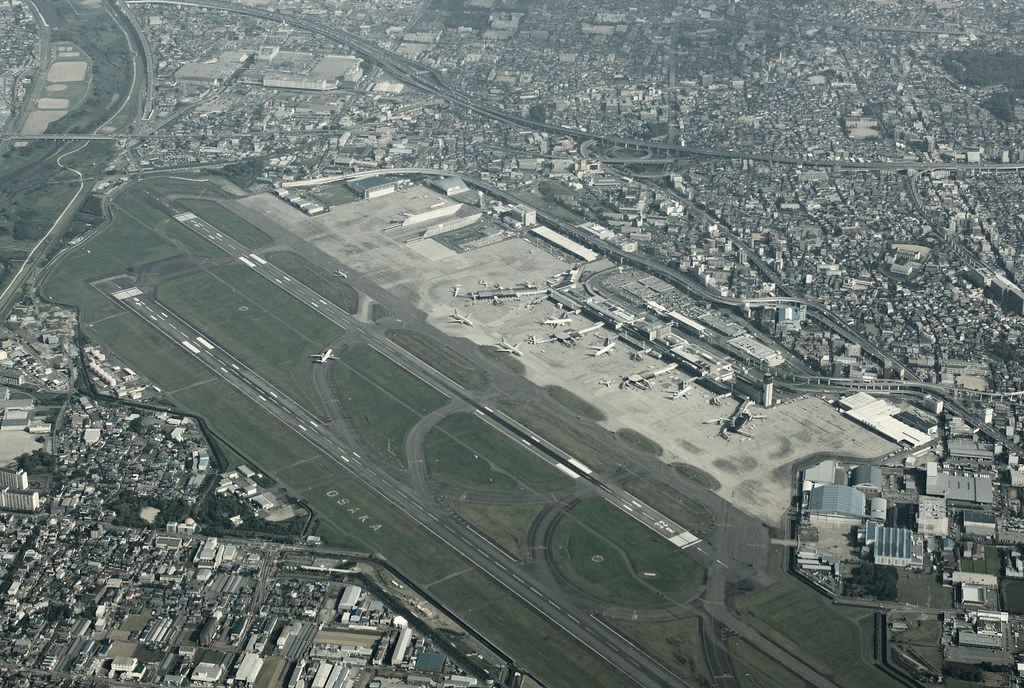
Itami airport. Used to be outside the city itself; now it's right in the middle of the northern part of it.
We left early Saturday morning from Osaka's old Itami airport. Governor Hashimoto wants to close it, by the way, and move all flights to Kansai airport out in the bay. He does have a point, as the city has grown around Itami and completely engulfed the airport by now, creating noise pollution and safety problems and making expansion impossible. That's bits of Osaka you see around the airport above, basically - offices, factories (down to the left), apartment buildings, a few schools, all nestled right up to the fence surrounding the airfield.
On the other hand, it is a historical airfield in a country that is all too keen on tearing down old stuff before considering if it may have some cultural value. It's a charming little airport, and I hope it remains a least partially open and in use.
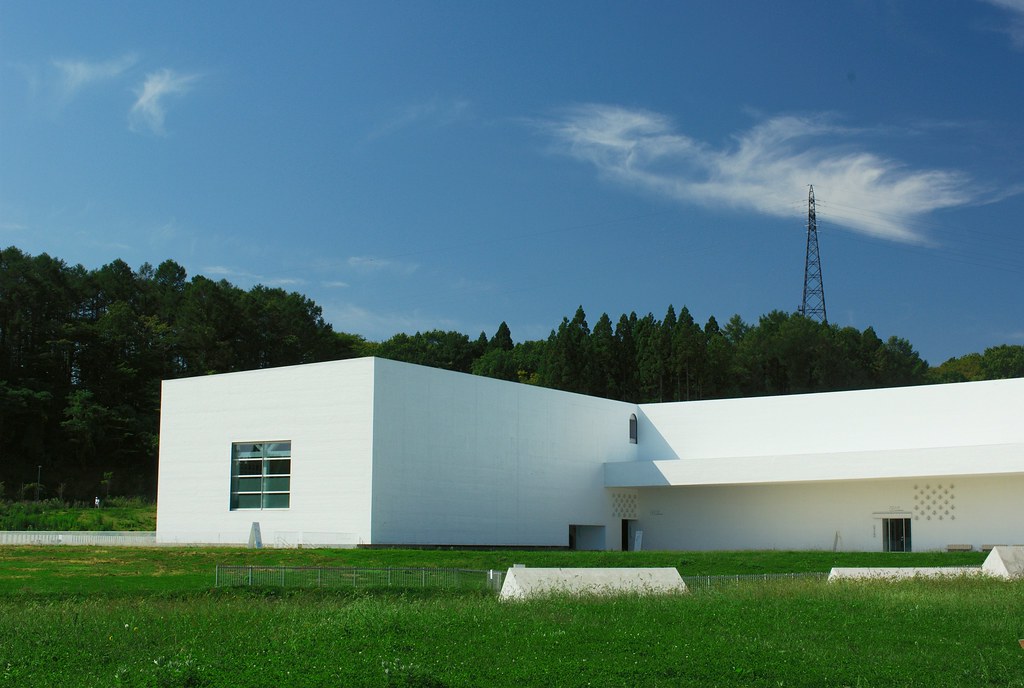
The Aomori Museum of Art. Good thing about buildings like this is, it's very easy to take a good picture. The bad thing is, it's very difficult to take a good picture that tenthousand other people haven't already taken.
Once we landed in Aomori we didn't even stop by the hotel; we went straight to the Aomori Museum of Art. Another benefit of a short trip there: you have so little luggage you can just bring it all along as you go. The museum itself is in the typical modern concrete design for places like this: all smooth stone expanses and sharply delineated rectilinear shapes. I happen to really like it, as it gives the artwork inside space to shine.
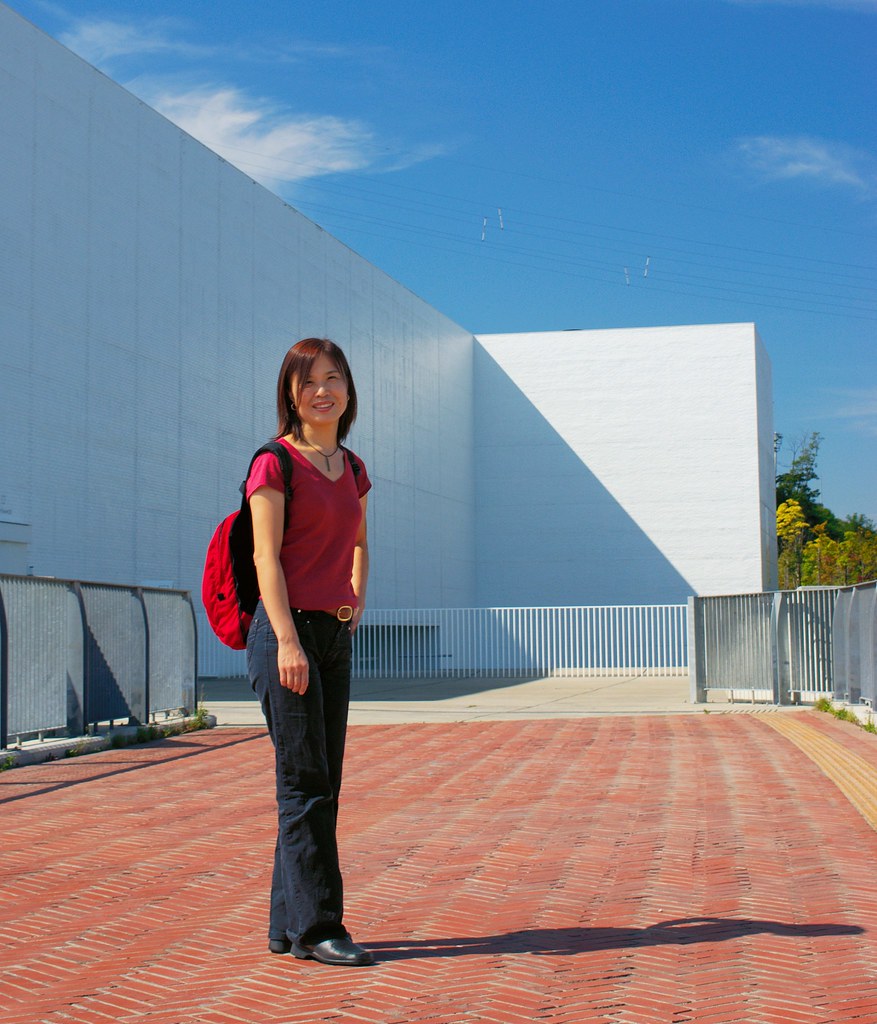
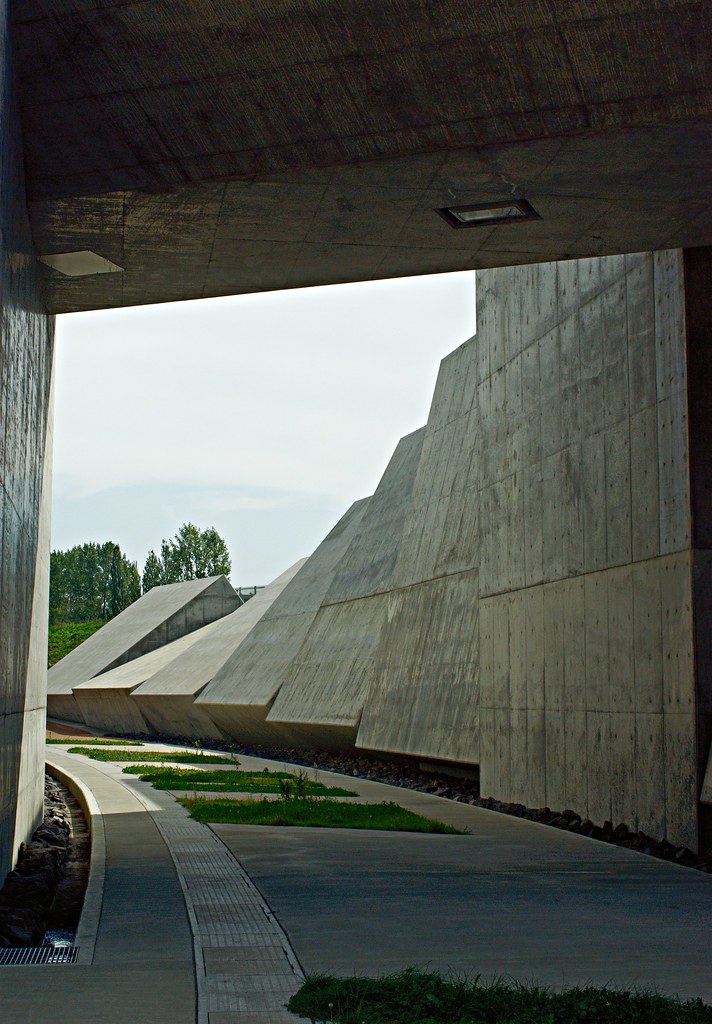
A couple of exterior shots. There was no photography allowed inside, unfortunately.
The museum has been criticized for having spent so much money on the building that they haven't been able to create a sufficient permanent collection. I don't know how well-founded that criticism is, but that's not how it felt to me. Most of the permanent space contains works by artists with a connection to the area - exactly what a prefectural museum should focus on, I think. They do have a room near the entrance with three enormous Chagall paintings, backdrops for an opera, and while the paintings are apparently not counted among his foremost works, the presentation and the sheer size makes a pretty powerful impression on you.
The temporary exhibition was "Box-art of plastic models and Japan’s postwar culture". Far more fascinating than I thought it would be. I was not alone in finding it interesting either; there were more nerds visiting that exhibition than the museum have likely seen since it opened.
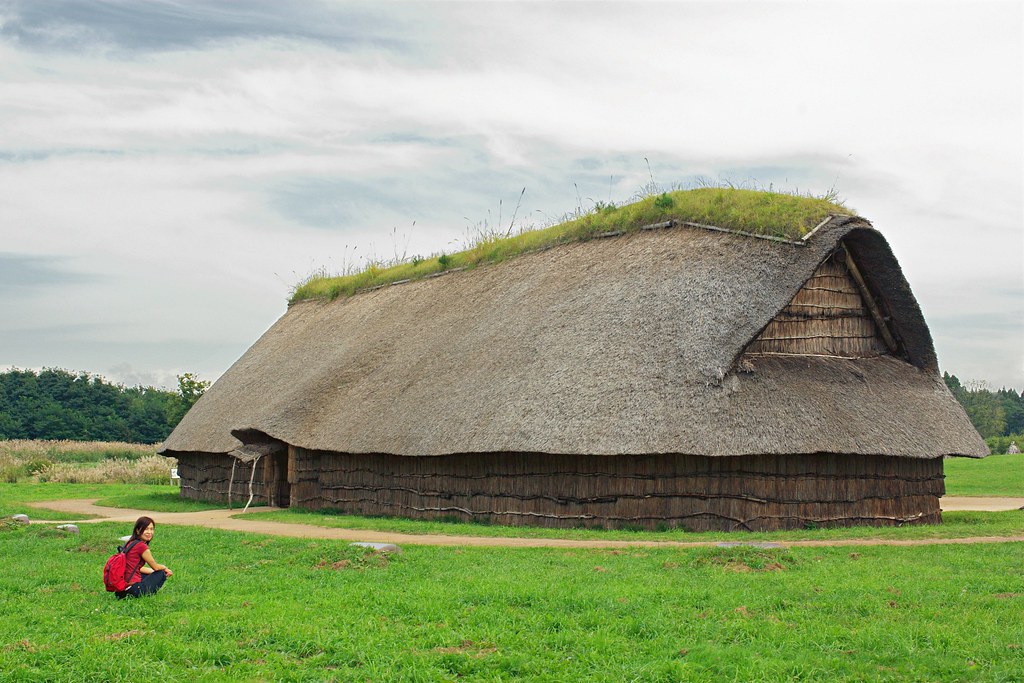
Jōmon period longhouse, observed by not-so-Jōmon period woman.
Just a short walk from the museum you find Sannai-Maruyama, a large archaeological site with traces from the Jōmon period. 縄文 ("Jōmon") means something like "rope pattern" and refers to the practice of decorating pottery with sometimes intricate rope pattern impressions. The field was found when a new sports stadium was being built; the stadium plans were quickly abandoned and the field excavated (excavations seems to continue today). There's a number of reconstructed buildings as well as climate-controlled domes with the real excavations, and a small museum housing found artifacts. Very pleasant place to walk around even if you would have little interest in the archaeology. I have a few more pictures of the site here.
From the site we took the bus into Aomori city proper. We checked in at the hotel, then left for the third museum of the day: the Munakata Shiko Memorial Museum of Art. Munakata Shiko was a wood block print artist from Aomori, and retained his connections to the area throughout his life. He gave one set of prints of his masterpiece "Ten Great Disciples of Buddha" to the museum, with specific instructions on the order they should hang. There's a not very good image of them here - why is it so hard to find decent examples of artworks online, by the way?
Munakata's woodblock prints are spectacular in real life to be sure, but we went to the museum because Ritsuko's friend is working there. After a tour - the museum is dedicated to one artist so it's not very big - we left for dinner at a local fish restaurant. The food was excellent and with our host being very talkative and entertaining it made for a long, pleasant evening. After dinner we took a walk along the waterfront before returning to the hotel.
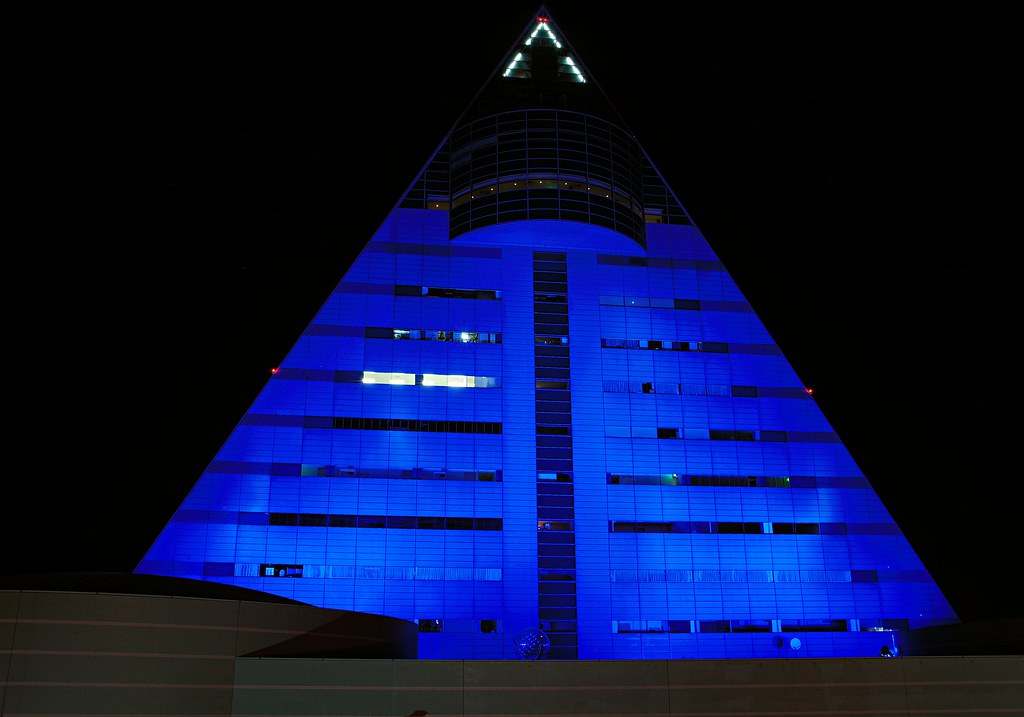
The Aspam pyramid is a tourist information center and local speciality store in the harbour. Well, it works; I doubt there's a tourist that doesn't visit and take a picture of the place. And if the country is dead set to waste its money on unnecessary construction I certainly prefer something fun like this over yet another elevated motorway.
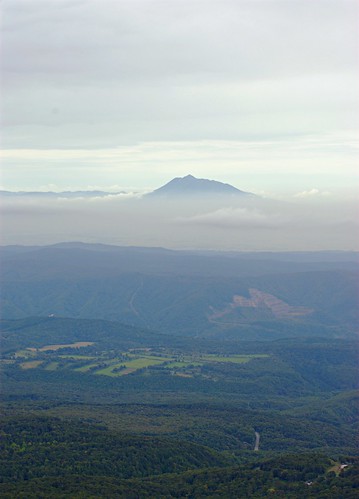
Hakkoda mountains
From Aomori city there is a regular bus line out to the Hakkōda mountains near the city. Northern Honshu gets lots of snow in the winter so there's plenty of cross-country and downhill off-pist skiing in the Hakkoda mountains, and in the summer it's a pretty popular hiking area. The bus trip takes an hour or thereabouts, in a comfortable bus, on winding mountain roads with sometimes spectacular scenery. We got off at mount Tamoyachi where there's a ropeway up to the top of the mountain. The ropeway runs up the densely forested mountain side and is famous for some spectacular fall color views as the foliage turns yellow and red all along the whole mountain range.
We were a little early for the changing of leaves, with but a few trees starting to turn color. At the top there's a couple of walking trails for those who don't want to go across country, and the view is very good when the weather cooperates. Unfortunately, it didn't in our case. It was cool and dry, but also quite overcast and somewhat hazy, making the far vistas disappear into the mist. Still well worth the trip though. More pictures here.
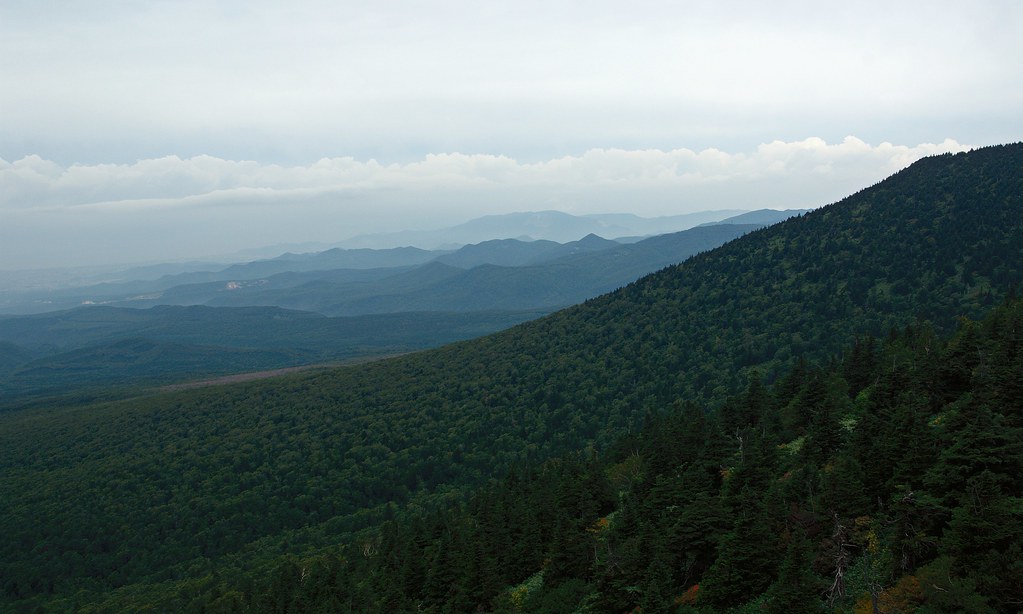
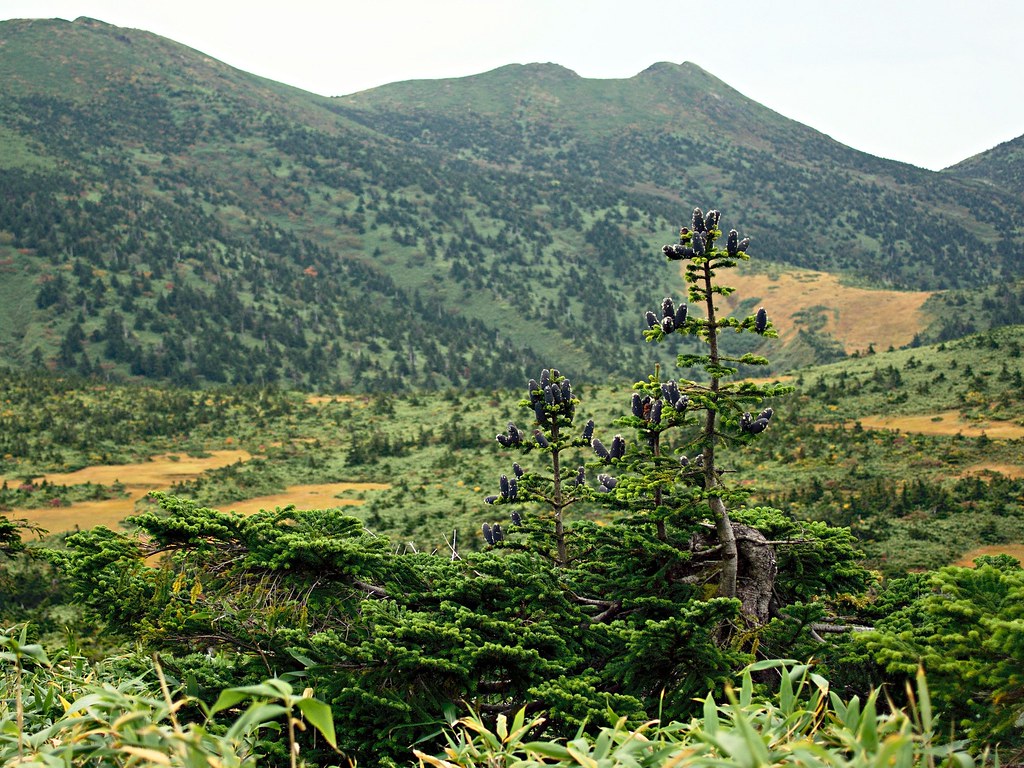
A couple of Hakkoda views. They are really much better when large, so click through.
Back in Aomori city we had lunch - Indian food; inexpensive and quite good - after which we took a walk through town for some sightseeing and shopping (mostly local foods like apples, dried squid, ramen and sake). There's been settlements in the area for a very long time of course, but Aomori city owes its existence to its role as a communications hub. It's located at the base of large, protected bay so it's a good transit point between sea and land transport, especially between the main island of Honshu and the resource-rich and sparsely populated northern island of Hokkaido.
The ferry lines between the two islands were very heavily used, so in the 1970's a train tunnel between the islands was built and opened in the early 1980's. With the tunnel taking a lot of the cargo traffic and cheap air transport taking most passengers the ferry lines largely disappeared. There are still ferries going between the islands but not in anything resembling the volumes of earlier times. As a result, Aomori city has to some extent become a city looking for a reason to exist.
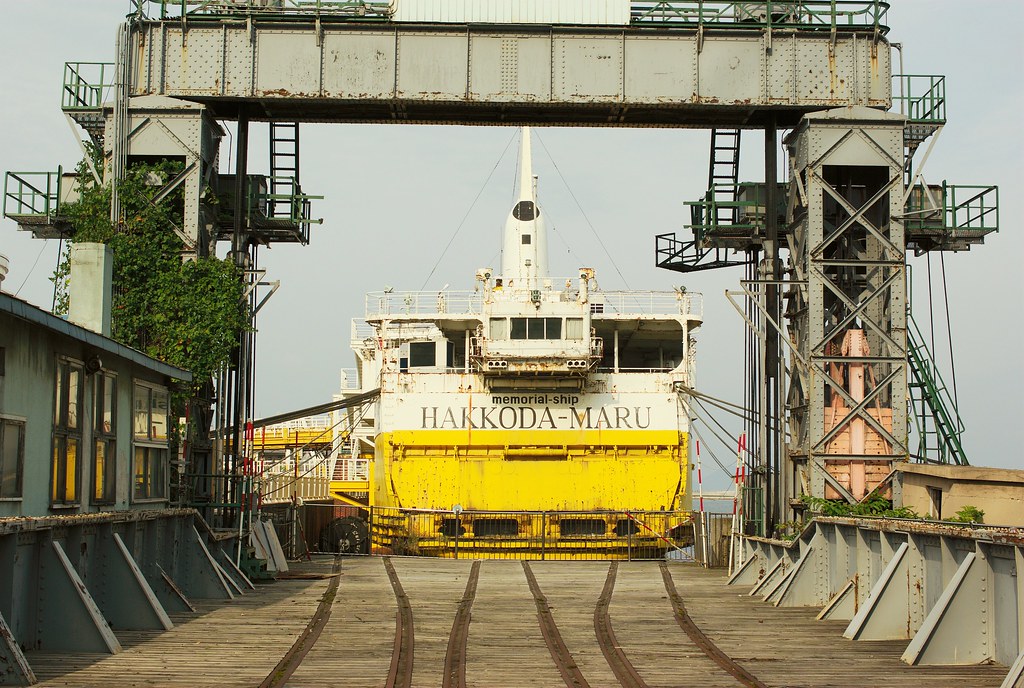
One of the ferries from the now defunct JR ferry line is laid up at the original pier in the harbour as a museum.
Ferries and waterways have always held a lot of symbolic meaning, of course, so it's only natural that they would lodge in public consciousness and popular culture in a big way. There's several songs, movies and so on about the Tsugaru strait.
One song, however, stands out: "Tsugaru Kaikyou Fuyu Geshiki" - "Tsugaru strait winter view" (hear it on Youtube - with one of the original ferries as backdrop - here). This enka - the song is about how the singer is boarding the ferry by herself, leaving her love behind - was an astounding hit, and you still hear it often, in original or as a cover. It's one of those songs that everybody knows and lots of people do covers on, and it's a popular karaoke song as well. Right next to the museum ferry is a large stone monument to the song - and better yet, the monument has motion sensors so it starts blasting out the song whenever anyone comes near. And as it turns out, quite a lot of people do. Both the ferry line and this song are known and loved, so many people that visit Aomori take the short walk out to the harbour to see the ferry and the monument.
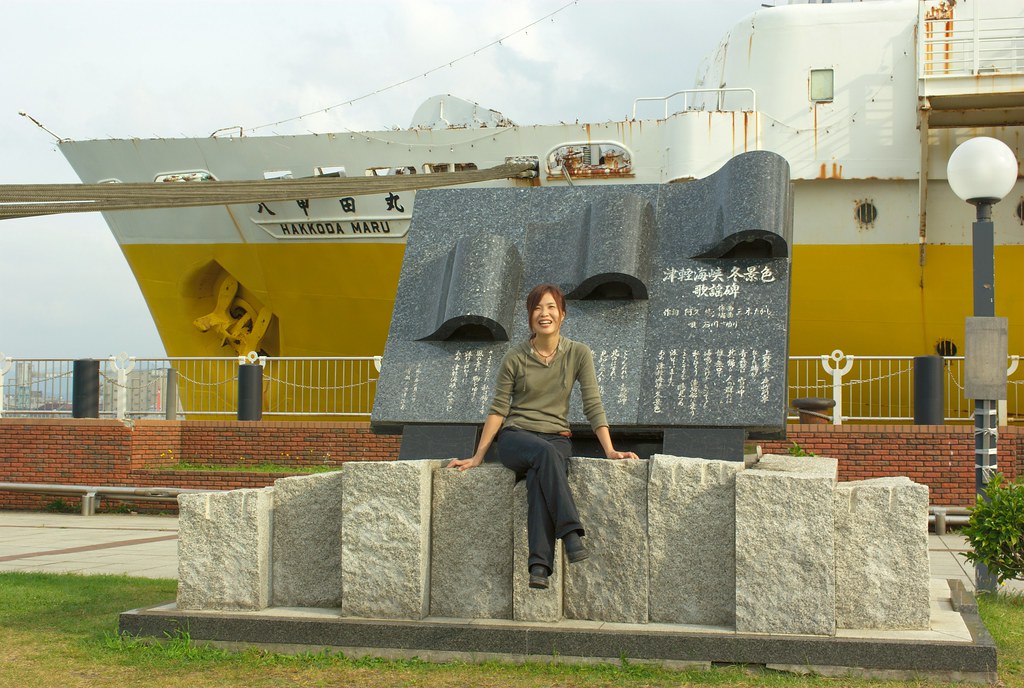
Monument to Tsugaru Kaikyou Fuyu Geshiki, in front of the Hakkoda Maru museum ship. Yes, the song was playing constantly as we took these pictures.
This was a short, fun trip, and as this (over)long post shows, as packed with impressions as a longer vacation would have been. We really have to do this kind of vacation more often. More pictures from Aomori in this set.
Subscribe to:
Posts (Atom)