We celebrated Ritsukos birthday last week. And as usual for our birthdays, we went for dinner somewhere we would not normally go.
This year we went to Kobe. A quick lunch at a German hot-dog place (Kobe is good for non-Japanese food), a walk around town for a few hours, then a beer at Ebisu Bar right by Sannomiya station. It's a European-style pub where you can sit for an hour or two over a beer and talk. It's exactly the kind of place I often used to visit when in Sweden, and that I sort of miss here. They have some good dark beers on tap too, which is not something we're spoiled with here.
Dinner was at Ito Grill, by Nankinmachi in Kobe. As the name implies it's a steak and grill restaurant, vaguely French or western European in style. We had a terrine; soup; an excellent fried flatfish with mashed potatoes, vegetables and balsamico sauce; their signature beef stew; and dessert. It was all very good, if somewhat light on seasoning in my view (I'm a little too fond of salt for my own good). We had a good view of the charcoal roast oven, and while the stew was really, really good the steaks in that oven made our mouths water just looking at them. Perhaps we'll go again some day, just to try the steak.
Ritsuko got a new camera as her old one died late last year, a Panasonic GF2. I'm pretty impressed by it; a major step up from a small-sensor camera in quality, while remaining small and compact. Anyway, it meant we only had that camera with us, so I don't have any shots of my own from the dinner.

Showing posts with label kobe. Show all posts
Showing posts with label kobe. Show all posts
Sunday, March 6, 2011

Monday, September 6, 2010
Back - again, for real
The three day conference in Kobe is over. It was just on the heels of the Paris conference, so I've really had no time to sort out the material from Paris nor any time to prepare pictures or blog posts about anything. I commuted to Kobe each day, and the conference started early - morning sessions from 8:30 - so I've had the joy of getting up at half past five every morning while shrugging off jetlag and suffering through a cold I brought back. Not much energy left for anything else1.
I got some free time yesterday, so I finally developed the rolls I've shot in Paris. My fixer2 was apparently used up, but my head was still mushy enough that I just noted that the films seemed strangely foggy and opaque without making the connection until I'd already developed, dried and cut them all. I did get the point eventually, so I re-fixed, washed and dried them again, and now the negatives looks fine. Not a disaster, but it did waste an hour of my bedtime. Live and learn.
In fact, one reason I didn't get it was that I don't often test my fixer. You're supposed to take a small piece of exposed, undeveloped film and see how long it takes for it to clear. If it takes more than a couple of minutes, the fixer is exhausted and it's time to mix another batch. If you develop 35mm film you always get a good-sized piece of undeveloped film leader left that you can use. But with 120-format film you don't get any extra bits to use. Now I'm thinking I should use one roll of 35mm BW film as "fix tester", and just cut off slices to test it every now and then. You only need a thin slice, so one roll would last almost forever.
---
I got some free time yesterday, so I finally developed the rolls I've shot in Paris. My fixer2 was apparently used up, but my head was still mushy enough that I just noted that the films seemed strangely foggy and opaque without making the connection until I'd already developed, dried and cut them all. I did get the point eventually, so I re-fixed, washed and dried them again, and now the negatives looks fine. Not a disaster, but it did waste an hour of my bedtime. Live and learn.
In fact, one reason I didn't get it was that I don't often test my fixer. You're supposed to take a small piece of exposed, undeveloped film and see how long it takes for it to clear. If it takes more than a couple of minutes, the fixer is exhausted and it's time to mix another batch. If you develop 35mm film you always get a good-sized piece of undeveloped film leader left that you can use. But with 120-format film you don't get any extra bits to use. Now I'm thinking I should use one roll of 35mm BW film as "fix tester", and just cut off slices to test it every now and then. You only need a thin slice, so one roll would last almost forever.
---
#1 Cue the worlds tiniest violin playing the worlds saddest song.
#2 Film is covered with a light-sensitive silver salt. Light changes the crystal structure of the salt, and the developer converts those changed crystals to pure silver (which looks black). The fixer dissolves the remaining, unexposed, salts afterwards, leaving just the pure silver. If you don't get it all off, the remaining salts will turn a murky dark gray when exposed to light. It's not permanent (not in a short time frame) so you can re-fix the negatives, but it's a hassle and you risk scratching and damaging the negatives.
Thursday, June 3, 2010
Venus Bridge
Venus Bridge
Walk up from Sannomiya station in Kobe towards the Rokko mountainside to the northwest. On the way you'll find Ikuta shrine, a sometime popular place for wedding ceremonies. The city center ends here, and as you walk further the office buildings will give way to a residential area with apartment blocks and single homes.

Ikuta shrine recently became a very popular site for weddings when singer and talent Norika Fujiwara got married there in 2007. Alas, fortune is fleeting; she divorced again in 2009 and the shrine is now rumoured to be bad luck for weddings. I'm sure they'll weather it, but the wedding ceremony windfall is probably over.

Greengrocer in Nakayamate. The north-south streets here give you the forested mountainside towards one end and the Seto inland sea on the other.
Right up against the mountain lies a park of sorts by the name of Suwayama. The park is right on the steep forested mountainside with footpaths and stairs, playgrounds and a temple. The paths are dotted with warnings not to approach wild boars. Near the top is a curved, meandering foot bridge called "Venus Bridge" that leads up to the summit, with a spectacular view of Kobe. It's a favourite setting for TV dramas; you can't have a murder mystery here that does not end with the villain and the hero detective|taxi driver|pathologist|undertaker confronting each other at the top of a waterfall, high bridge, rooftop, ocean cliff or some place like that. The go-to place in Kobe is Venus Bridge, so if you watch TV dramas here you've probably seen it a few times already.

Venus Bridge.

Many a fictional villain has explained everything to the hero right on this spot before they're led off into a waiting police car. It's a beautiful place.
The name "Venus Bridge" honours an astronomical observation of Venus during the Meji era. It's a popular place for dating, with the beautiful, romantic night-time view of the city. But dating or not, it's a pleasant walk from the city center to the mountainside, up through the park and on to the bridge. There's a (fairly expensive) European-style restaurant at the top if you fancy eating something, and there's taxis and a bus line on the weekends if you don't want to return back down on foot.

Kobe from Venus Bridge. You can see Port Tower toward the right-hand side.

Lovers hang padlocks on this statue thingy at the top of Venus Bridge. They write a message, lock it then throw away the key. Those steel wires are unhooked from time to time to clear out the locks. Some couples don't use the statue though; you can see padlocks hanging here and there all over the bridge and around the park. Bolt cutters are probably standard equipment for the park maintainers. It's a cute tradition.
Walk up from Sannomiya station in Kobe towards the Rokko mountainside to the northwest. On the way you'll find Ikuta shrine, a sometime popular place for wedding ceremonies. The city center ends here, and as you walk further the office buildings will give way to a residential area with apartment blocks and single homes.

Ikuta shrine recently became a very popular site for weddings when singer and talent Norika Fujiwara got married there in 2007. Alas, fortune is fleeting; she divorced again in 2009 and the shrine is now rumoured to be bad luck for weddings. I'm sure they'll weather it, but the wedding ceremony windfall is probably over.

Greengrocer in Nakayamate. The north-south streets here give you the forested mountainside towards one end and the Seto inland sea on the other.
Right up against the mountain lies a park of sorts by the name of Suwayama. The park is right on the steep forested mountainside with footpaths and stairs, playgrounds and a temple. The paths are dotted with warnings not to approach wild boars. Near the top is a curved, meandering foot bridge called "Venus Bridge" that leads up to the summit, with a spectacular view of Kobe. It's a favourite setting for TV dramas; you can't have a murder mystery here that does not end with the villain and the hero detective|taxi driver|pathologist|undertaker confronting each other at the top of a waterfall, high bridge, rooftop, ocean cliff or some place like that. The go-to place in Kobe is Venus Bridge, so if you watch TV dramas here you've probably seen it a few times already.
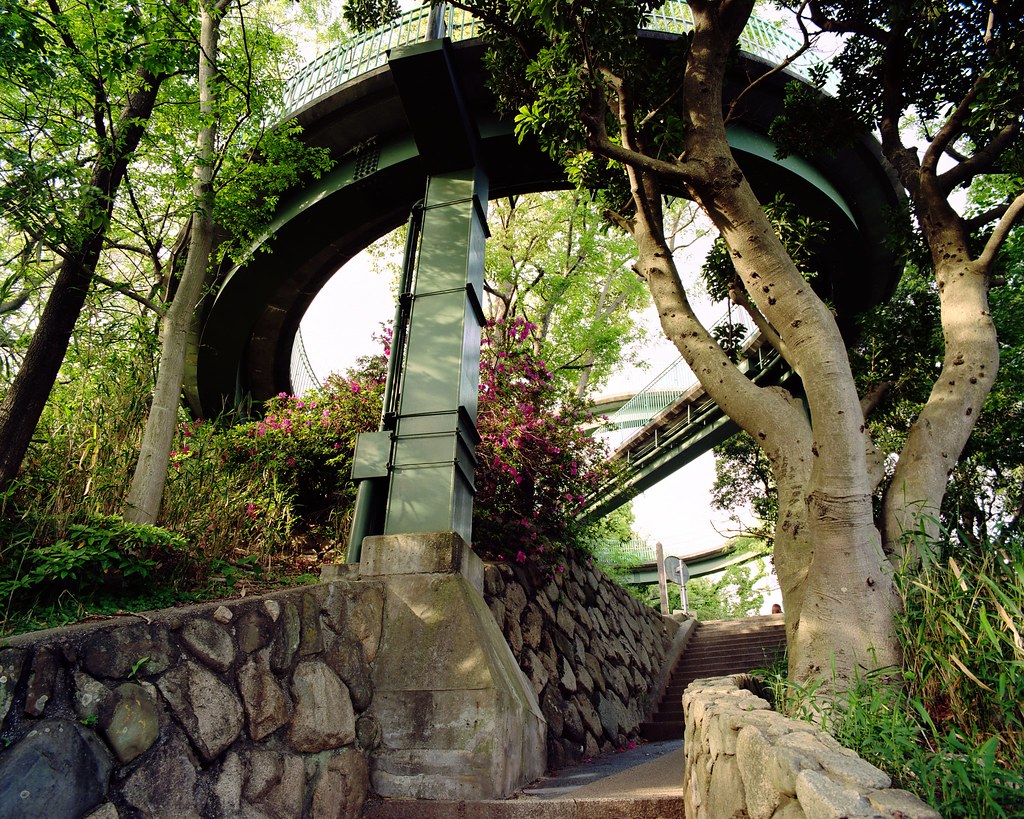
Venus Bridge.

Many a fictional villain has explained everything to the hero right on this spot before they're led off into a waiting police car. It's a beautiful place.
The name "Venus Bridge" honours an astronomical observation of Venus during the Meji era. It's a popular place for dating, with the beautiful, romantic night-time view of the city. But dating or not, it's a pleasant walk from the city center to the mountainside, up through the park and on to the bridge. There's a (fairly expensive) European-style restaurant at the top if you fancy eating something, and there's taxis and a bus line on the weekends if you don't want to return back down on foot.
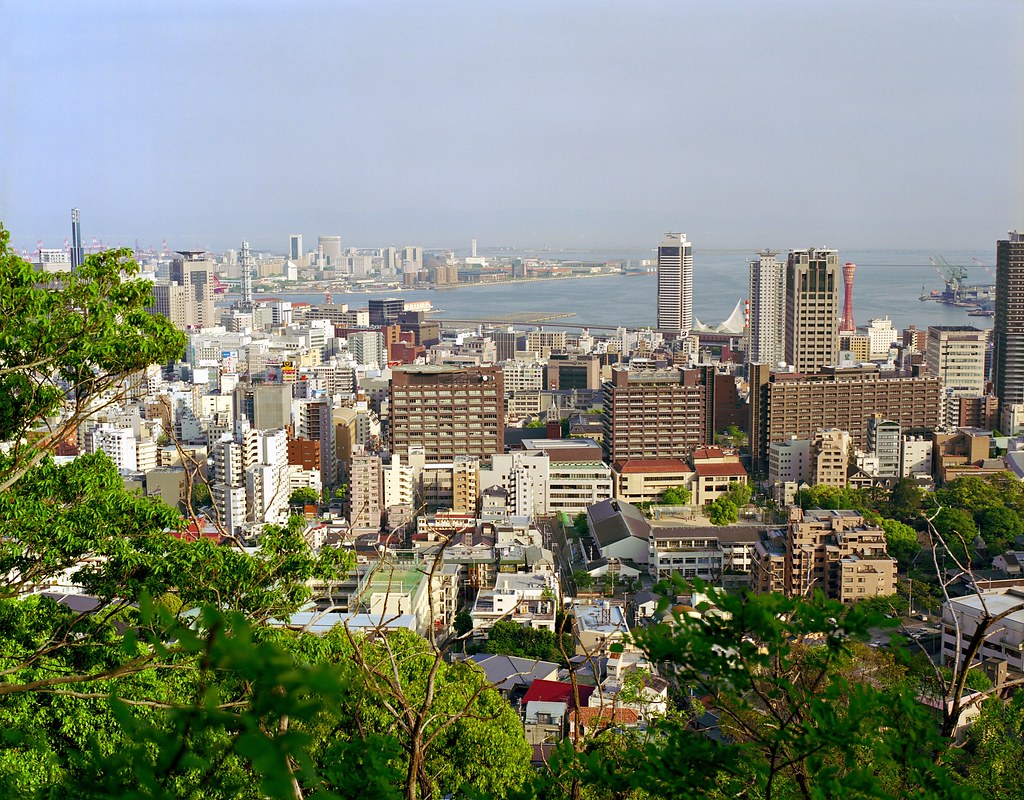
Kobe from Venus Bridge. You can see Port Tower toward the right-hand side.
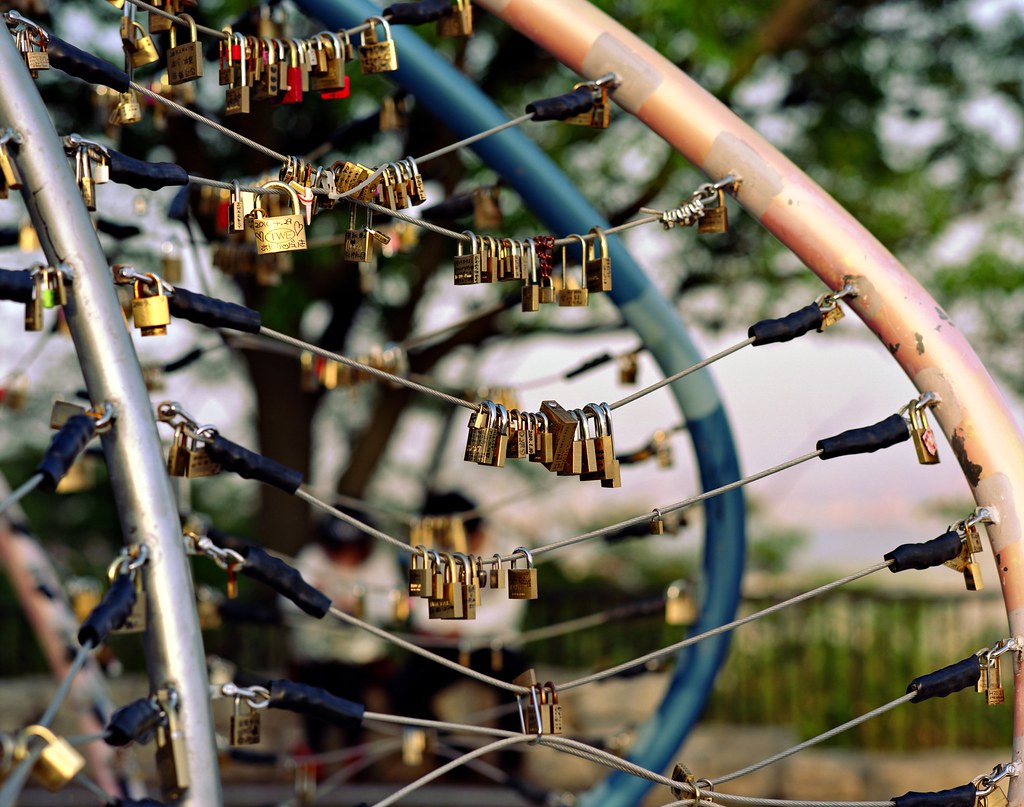
Lovers hang padlocks on this statue thingy at the top of Venus Bridge. They write a message, lock it then throw away the key. Those steel wires are unhooked from time to time to clear out the locks. Some couples don't use the statue though; you can see padlocks hanging here and there all over the bridge and around the park. Bolt cutters are probably standard equipment for the park maintainers. It's a cute tradition.
Monday, October 12, 2009
Utsurundesu - Fuji one-use camera
We went to Kobe a few weeks ago (as usual, I know - but it's a nice place). The weather was absolutely perfect; a cool, completely clear day with pure blue sky and just a hint of approaching autumn in the air. After lunch at a south Indian restaurant and inspired by the weather we walked to the mountainside and took the Shin-Kobe cable car up the mountain. For whatever reason, however, I had neither a digital camera nor a color film camera with me. Black and white film is a wonderful medium, but it's admittedly less than ideal for capturing brilliant blue autumn skies.

Kobe, from the ropeway. At the top is a restaurant and a few souvenir shaps (of course), and a public herb garden that is quite nice, though a bit bedraggled from too many visitors.
Fortunately help was close at hand. I've often seen these disposable one-use film cameras for sale in convenience stores and shops, and here we had an opportunity to test one. It seemed like fun, it was certainly better than nothing, and if the results were really disastrously bad we'd still be no worse off than without it.

The Fuji "Utsurundesu" single-use camera. "Film With Lens" is a pretty accurate slogan. There's several variants, with iso 400 film as well as 1600 and with various length of film. There's a waterproof version, and yes, there's a Hello Kitty one too. This one is 400 speed film, with 27 shots and a built-in flash. Cost is just shy of 1000 yen - about twice the price of just buying the film itself.
The camera is a snap-together plastic shell with a fixed lens, fixed shutter and a flash. The 35mm film is already wound out in the camera, and as you shoot you wind the film back into the canister. You don't have to rewind it once you're done, and your shots are safe inside the can if anything would happen. The camera store takes out the film and develops it as usual. They send the shell back to Fuji where they put in a new film, attach a new wrapper and send it out to the shops again. It's really a rental camera rather than a disposable one in other words.


On the left, Kobe's Kitano district, with its old European-style buildings. On the right, the ground station for the Shin-Kobe ropeway. The two pictures are taken with the exact same shutter speed and aperture. The left image is in direct, cloudless midday sunshine, while the right one is indoors, with only a shadow-side window and north-facing opening letting in dim light. Despite the large difference in light, the film manages to record both scenes nicely - though the indoor scene is probably near the practical limit for it, as the grain increases a lot.
This camera is a latter-day descendant of the box camera, like the one I wrote about last summer. It aims to be simple to use, robust and inexpensive, and like a box camera it succeeds admirably. The focus distance, the shutter speed and the aperture are all fixed1. The lens is 32mm - that's pretty wide. No focusing errors, ever; with a wide lens and a small aperture everything is more or less in focus. You really have no exposure problems either. Negative film has lots and lots of exposure latitude, so whether you're in bright sunlight or dim shadows you'll still get a usable image. The small flash is only needed for night-time shots or dim indoor light.

Isuzu Bakery, Kobe
This is the most portable camera I've ever used. It weighs 88 grams - less than even the smallest digital camera. It really is small enough to fit in your shirt pocket (and the light weight means your shirt doesn't sag). The shutter emits a discreet "clk" sound that you wouldn't notice a meter away. Apart from the flash there's no need for a battery or external power so you could stuff one of these into your bag and just forget about it until you need it.
And a fair number of here people do just that: they keep one of these in the car. If they get involved in an accident they may need to document the scene and any damage. And they use these not just because of the reliability and cost; film is seen as more trustworthy than digital cameras since it's very hard to manipulate a negative without leaving traces. Just keep one in the trunk and replace it every few years.
The results? Good. In fact, surprisingly good. The small prints we got (9x11) look just fine if a little contrasty; the shop probably use their "holiday snapshots" setting, with lots of color and contrast, when printing from these cameras. They'd be perfect for passing around to friends and relatives. As you can see in the images here they're clearly good enough for web use too.

A man observes Kobe from the greenhouse balcony.
Of course, "good enough" is not the same as "perfect". It has a cheap, plastic lens after all, so it flares a lot, there's plenty of light falloff in the corners (arguably not a bad thing for blue-sky shots like these), fairly low contrast and low resolution. This is a great snapshot camera, but it's a complement, not a replacement for a more serious camera if you are interested in photography.

Kobe ropeway in late afternoon. Fuji Utsurundesu camera.

Kobe ropeway in late afternoon. Pentax 67.

The medium format camera and the 35mm instant camera pictures, showing the same spot at the same size. My digital SLR camera would end up somewhere in between, though fairly close to the MF shot in resolution. Good to know there's a reason to keep lugging the 6x7-format camera around.
I like this camera - and the idea of this camera - so much, in fact, that I'd like to have one like it for real. I'd basically want a reusable version of this camera with selectable aperture and focus, but still very simple and very compact; something I could throw in my bag and forget about until I need it. It would be a near perfect street camera, backup camera and small camera to take along on business trips. Ritsuko has a Canon Demi half-frame camera; it comes close, though it's completely dependent on its light meter. I'll see what I can find.
Update: My blog entries usually take a fair amount of time to write, and scanning film for the illustrations doesn't exactly speed it up either. Since I first wrote this I got myself a candidate camera that seems to fit my requirements. I'll write about it when I've used it for a while.

Sakaisuji subway line entrance. Late afternoon, bad weather and under cover so it was getting fairly dark already. I used the built-in flash to brighten up the entrance and get the light level closer to the outside street. Grainy, yes, but I feel it enhances this picture.
--

Kobe, from the ropeway. At the top is a restaurant and a few souvenir shaps (of course), and a public herb garden that is quite nice, though a bit bedraggled from too many visitors.
Fortunately help was close at hand. I've often seen these disposable one-use film cameras for sale in convenience stores and shops, and here we had an opportunity to test one. It seemed like fun, it was certainly better than nothing, and if the results were really disastrously bad we'd still be no worse off than without it.

The Fuji "Utsurundesu" single-use camera. "Film With Lens" is a pretty accurate slogan. There's several variants, with iso 400 film as well as 1600 and with various length of film. There's a waterproof version, and yes, there's a Hello Kitty one too. This one is 400 speed film, with 27 shots and a built-in flash. Cost is just shy of 1000 yen - about twice the price of just buying the film itself.
The camera is a snap-together plastic shell with a fixed lens, fixed shutter and a flash. The 35mm film is already wound out in the camera, and as you shoot you wind the film back into the canister. You don't have to rewind it once you're done, and your shots are safe inside the can if anything would happen. The camera store takes out the film and develops it as usual. They send the shell back to Fuji where they put in a new film, attach a new wrapper and send it out to the shops again. It's really a rental camera rather than a disposable one in other words.
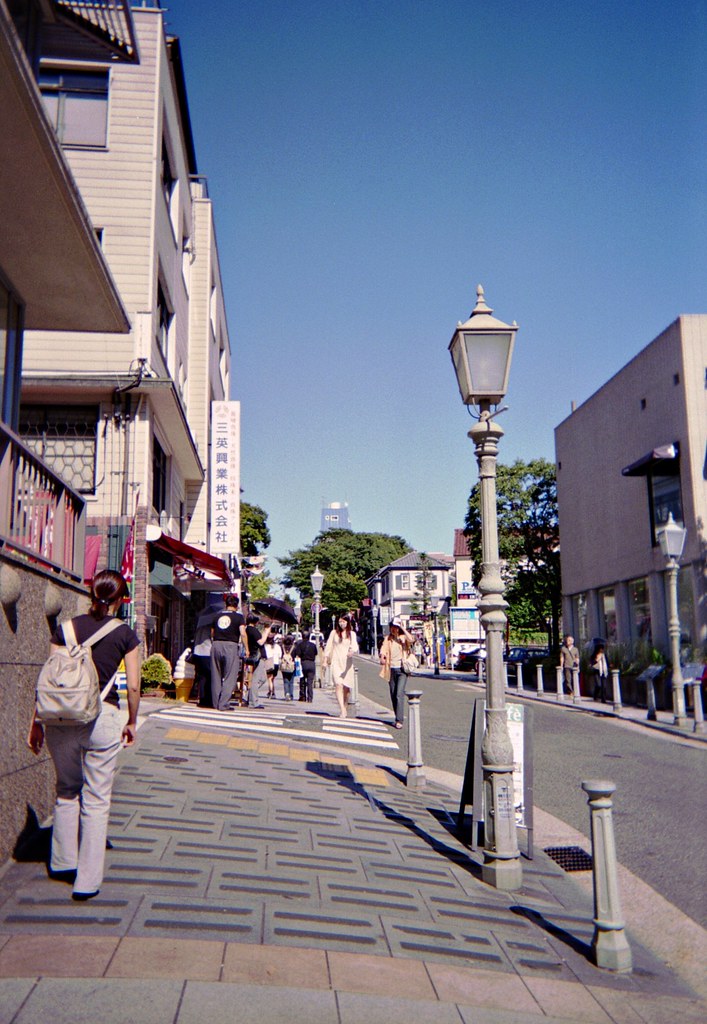

On the left, Kobe's Kitano district, with its old European-style buildings. On the right, the ground station for the Shin-Kobe ropeway. The two pictures are taken with the exact same shutter speed and aperture. The left image is in direct, cloudless midday sunshine, while the right one is indoors, with only a shadow-side window and north-facing opening letting in dim light. Despite the large difference in light, the film manages to record both scenes nicely - though the indoor scene is probably near the practical limit for it, as the grain increases a lot.
This camera is a latter-day descendant of the box camera, like the one I wrote about last summer. It aims to be simple to use, robust and inexpensive, and like a box camera it succeeds admirably. The focus distance, the shutter speed and the aperture are all fixed1. The lens is 32mm - that's pretty wide. No focusing errors, ever; with a wide lens and a small aperture everything is more or less in focus. You really have no exposure problems either. Negative film has lots and lots of exposure latitude, so whether you're in bright sunlight or dim shadows you'll still get a usable image. The small flash is only needed for night-time shots or dim indoor light.
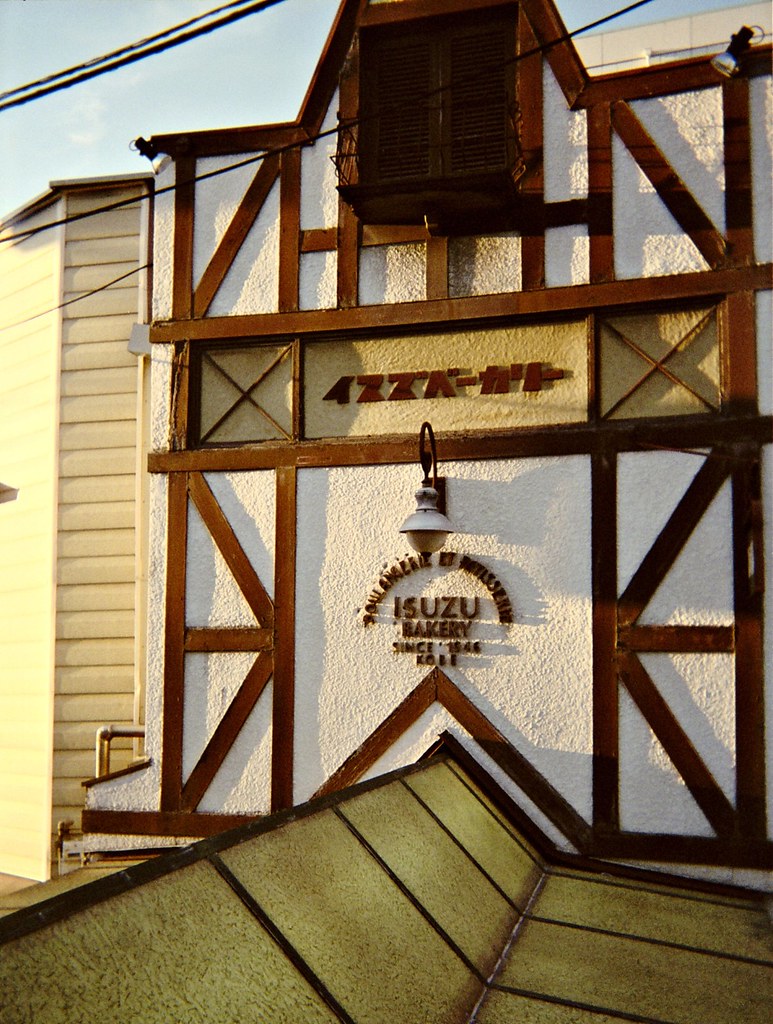
Isuzu Bakery, Kobe
And a fair number of here people do just that: they keep one of these in the car. If they get involved in an accident they may need to document the scene and any damage. And they use these not just because of the reliability and cost; film is seen as more trustworthy than digital cameras since it's very hard to manipulate a negative without leaving traces. Just keep one in the trunk and replace it every few years.
The results? Good. In fact, surprisingly good. The small prints we got (9x11) look just fine if a little contrasty; the shop probably use their "holiday snapshots" setting, with lots of color and contrast, when printing from these cameras. They'd be perfect for passing around to friends and relatives. As you can see in the images here they're clearly good enough for web use too.
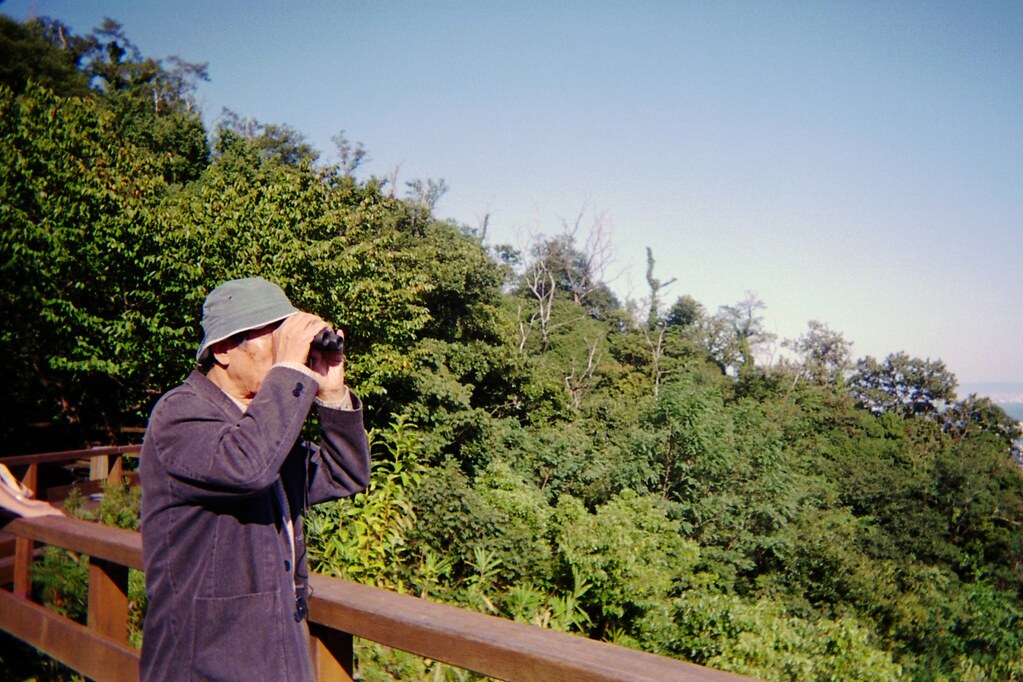
A man observes Kobe from the greenhouse balcony.
Of course, "good enough" is not the same as "perfect". It has a cheap, plastic lens after all, so it flares a lot, there's plenty of light falloff in the corners (arguably not a bad thing for blue-sky shots like these), fairly low contrast and low resolution. This is a great snapshot camera, but it's a complement, not a replacement for a more serious camera if you are interested in photography.
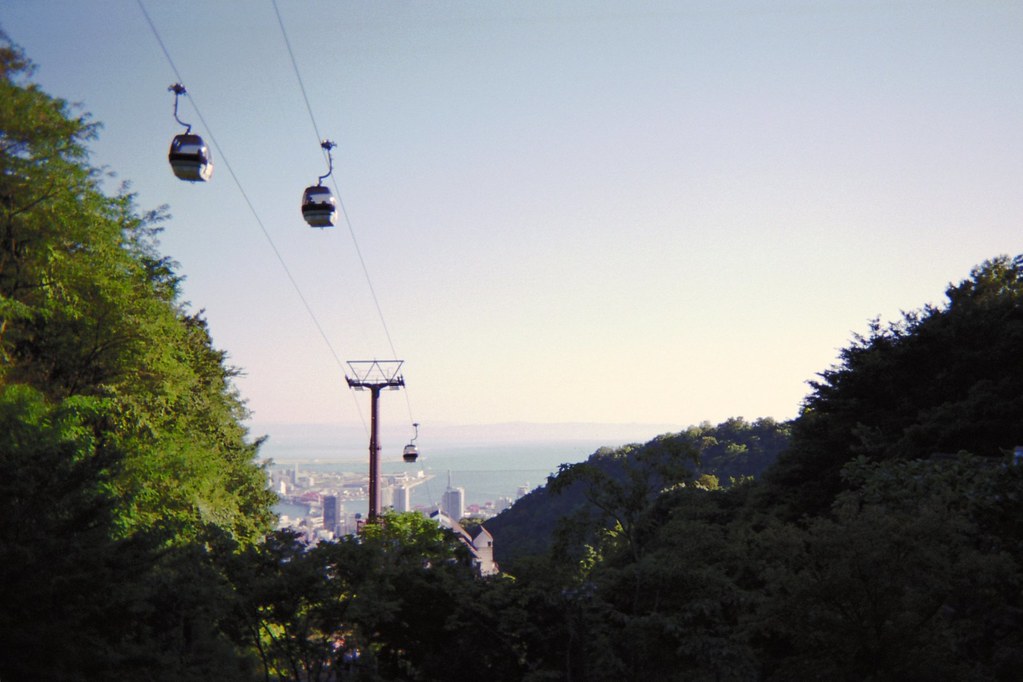
Kobe ropeway in late afternoon. Fuji Utsurundesu camera.
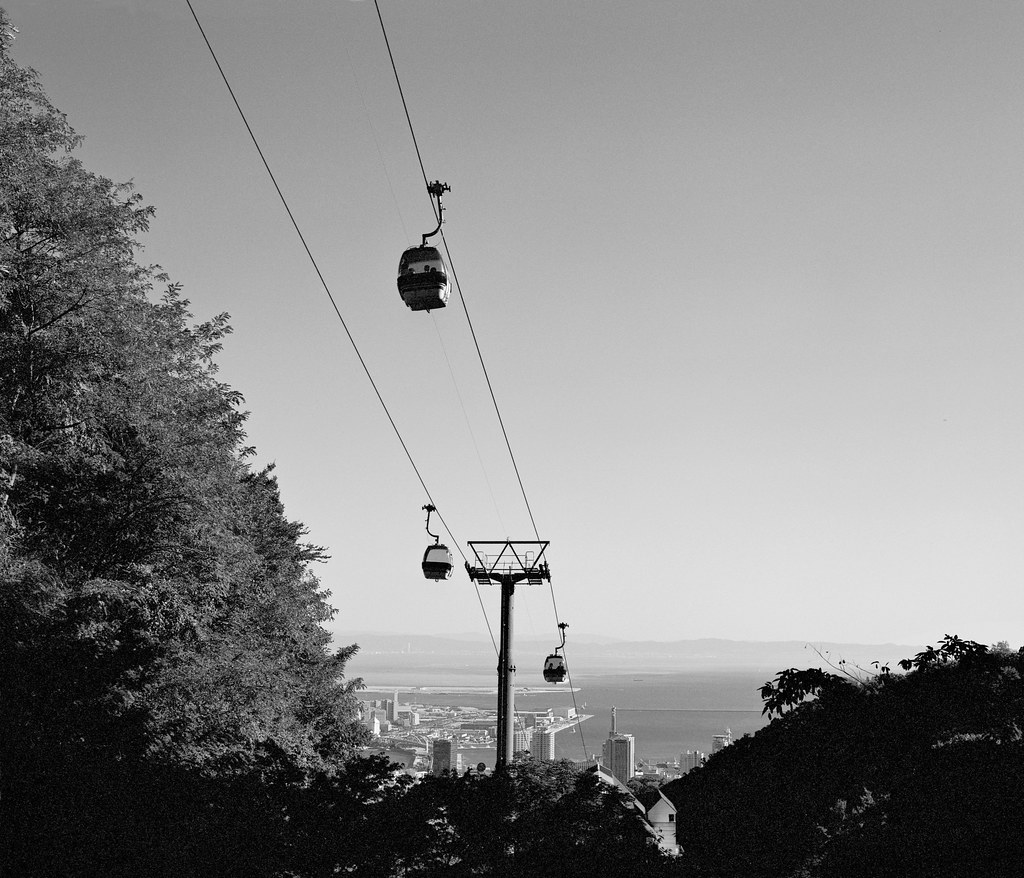
Kobe ropeway in late afternoon. Pentax 67.
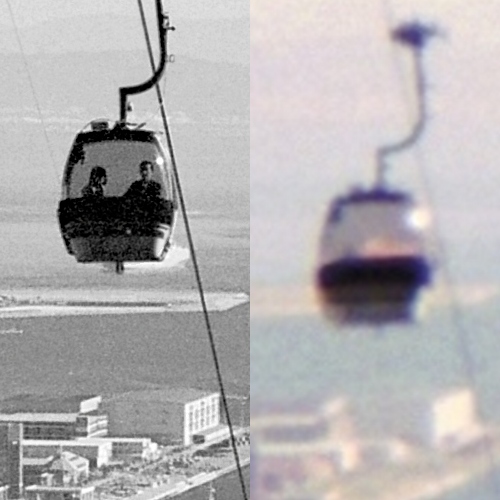
The medium format camera and the 35mm instant camera pictures, showing the same spot at the same size. My digital SLR camera would end up somewhere in between, though fairly close to the MF shot in resolution. Good to know there's a reason to keep lugging the 6x7-format camera around.
I like this camera - and the idea of this camera - so much, in fact, that I'd like to have one like it for real. I'd basically want a reusable version of this camera with selectable aperture and focus, but still very simple and very compact; something I could throw in my bag and forget about until I need it. It would be a near perfect street camera, backup camera and small camera to take along on business trips. Ritsuko has a Canon Demi half-frame camera; it comes close, though it's completely dependent on its light meter. I'll see what I can find.
Update: My blog entries usually take a fair amount of time to write, and scanning film for the illustrations doesn't exactly speed it up either. Since I first wrote this I got myself a candidate camera that seems to fit my requirements. I'll write about it when I've used it for a while.
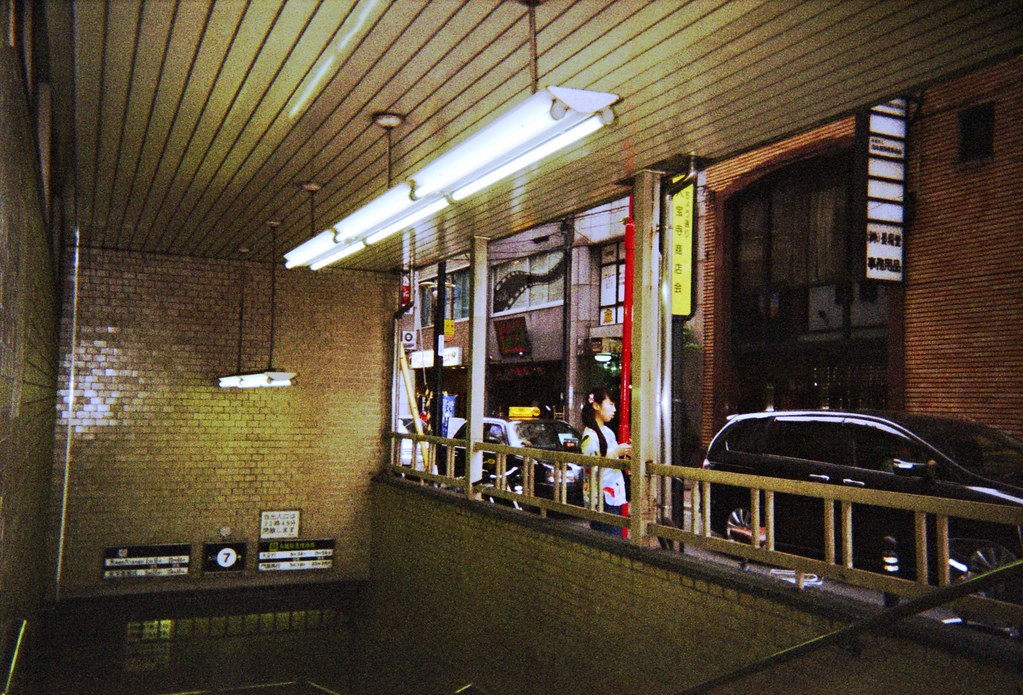
Sakaisuji subway line entrance. Late afternoon, bad weather and under cover so it was getting fairly dark already. I used the built-in flash to brighten up the entrance and get the light level closer to the outside street. Grainy, yes, but I feel it enhances this picture.
--
#1 The shutter speed is 1/140 and aperture is f/10 according to Fuji's online documentation. With a 400-speed film it's about right for decently sunny days.
Wednesday, August 26, 2009
Rokko Mountain

Panoramic view from Rokko mountain. Click on the image for a somewhat larger version. You can also view the really large size, though that one is big.
In the center foreground is Kobe's Sannomiya area, with Port Island (site of Ikea and the airport) to the right. In the background left is Osaka city (I think you technically can see our house from here), becoming Sakai city toward the right along the coast. Way in the back on the right, a narrow strip of lights in the sea is Kansai Airport (in the huge version above you can see the bridge connecting it to the mainland).
Our only excursion during this year's Obon holiday was a day trip to Rokko mountain in Kobe. Eastern Kobe lies along a fairly narrow strip of land between the sea to the south and the steep slope of the Rokko mountain to the north. It's pretty high - more than 700 meters - so the climate is notably cooler and drier, and the views can be spectacular.
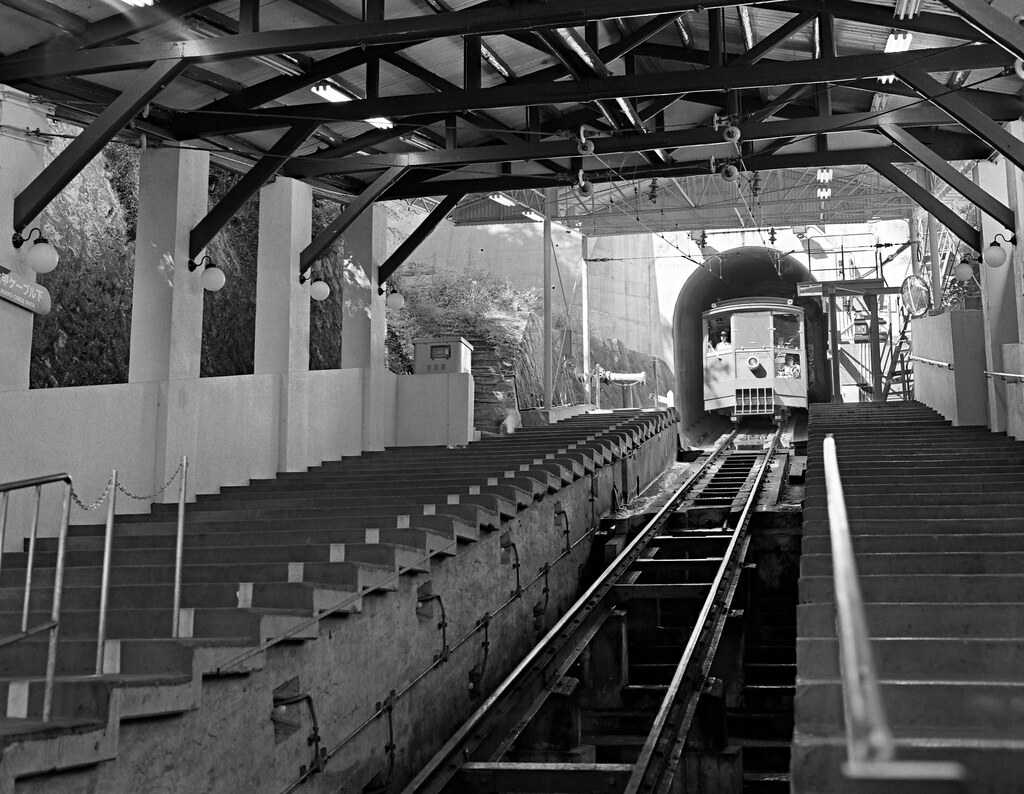
The cable car ground station.
You can go up by bus on steep, winding roads, or you can take the cable car at the foot of the mountain. You get there by bus from any of the three railway stations (JR, Hanshin and Hankyuu lines) passing by below. The cable car itself is fun, with big open windows and a glass roof that gives you a good view as you get pulled up some very steep gullies and through a number of tunnels on the way to the top.

The mountain top is littered with corporate retreats and summer homes, used for conferences and parties. This one seems maintained but clearly unused (that's why I could get right up to it); the company could be bankrupt, or they may simply have sold the place and the new owners have yet to take it in hand.
There's apparently a lot of outdoorsy things you can do up on the mountain, with a sports center, parks, golf course, hiking trails, farms to visit and so on. For those, like us, with a less physical approach to leisure time the Rokkosan hotel is an alternative.
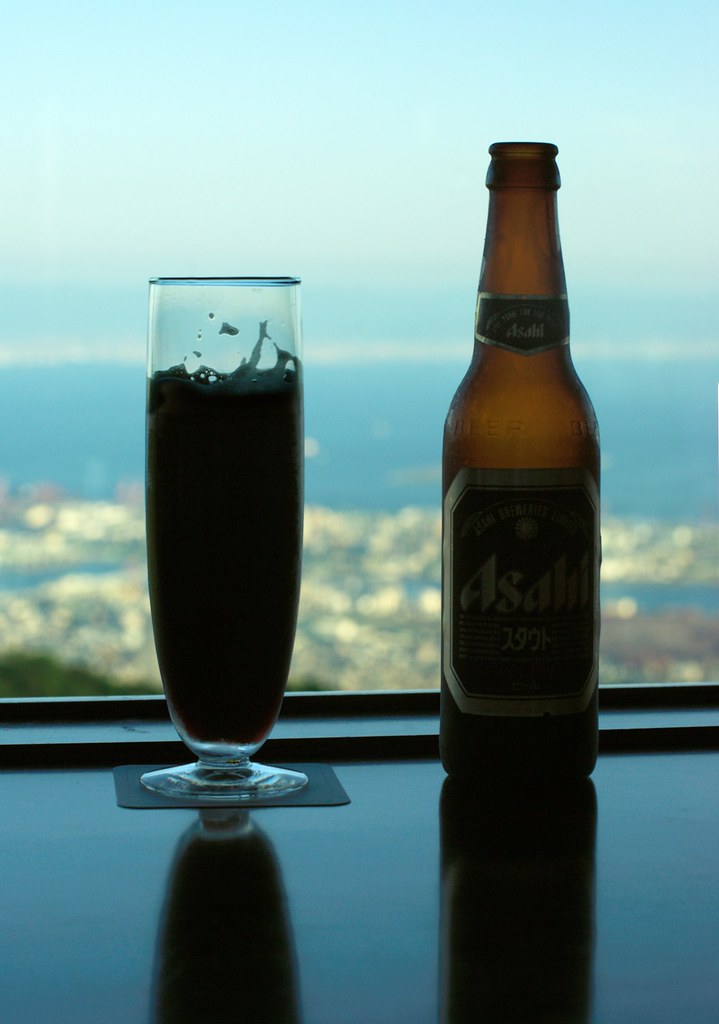
Beer with a view
The hotel runs two restaurants in separate buildings right on the edge of the precipice, one an indoor fondue and general Western food, and the other one a mostly outdoor barbecue place with three levels of balconies overlooking the mountainside. We ate at the all-you-can-eat barbecue place ("Djingis Khan" is the Japanese name for it) where you pick up meat, fish and vegetables from the buffet and grill on the hot plate on your table while watching the sun set over the sea.
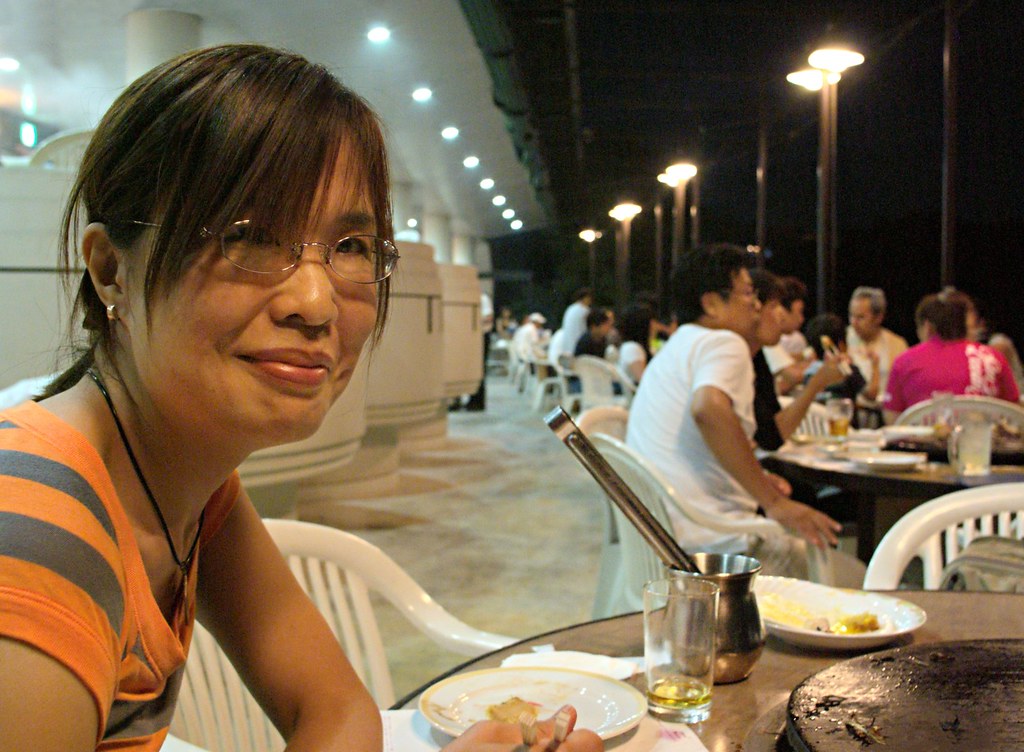
Ritsuko and the barbecue place. Surprisingly good food, and with a good atmosphere.
This kind of place is family oriented of course, and usually aims for affordability over quality. Knowing that, we were very positively surprised. Lots of good quality meats, sausages, fish and shellfish to choose from, and the vegetables, too, were fresh and plentiful. I must have eaten a dozen scallops alone, to say nothing about all the lamb, squid and buttered corn I managed to stuff myself with. For dessert you could pick among an assortment of puddings and cakes, and some really good stick ice cream in three flavours. 90 minutes was either not nearly long enough, or too long already, depending on whether you care more about the food or the resulting waistline.
All pictures and more are in the Rokko Mountain set on Flickr.

Detailed image of Sannomiya. It really hits you how much of Kobe is just a narrow strip of land between the mountain and the sea. Makes the Kobe subway system layout, with two lines running in parallel, seem much more sensible too.
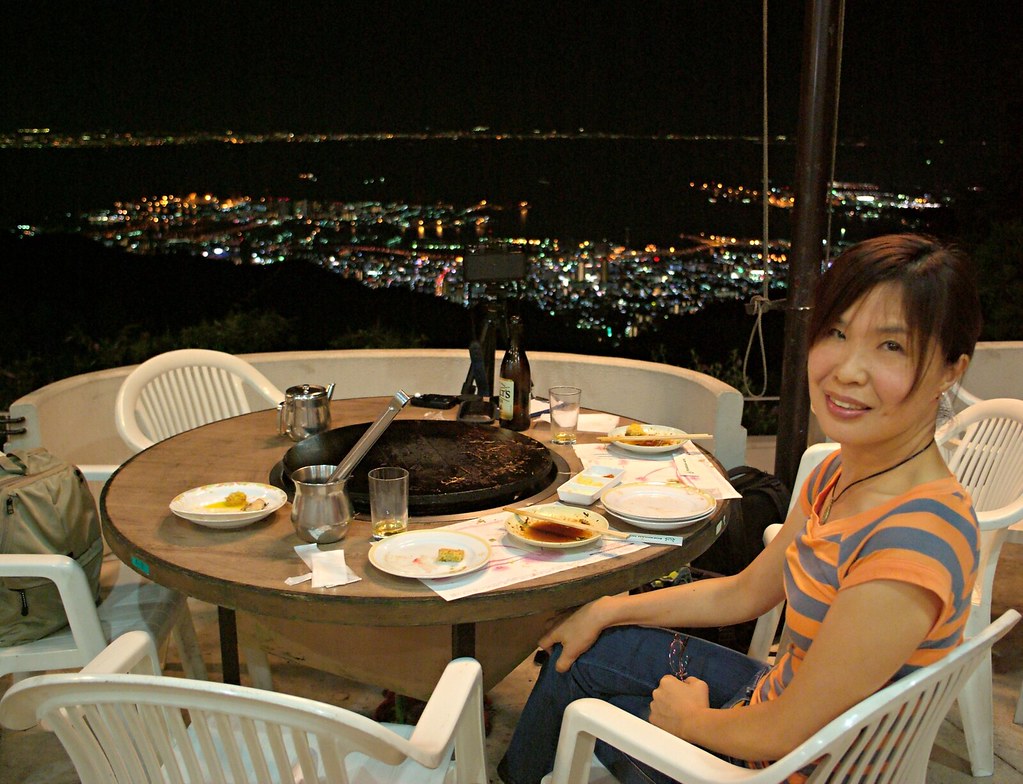
The view really is beautiful.
Saturday, June 27, 2009
40
I turned forty today. My beard is visibly graying. My next pair of glasses will be bifocals. The top of my head has better use for sunscreen than for a comb. I am officially no longer "young" or "promising" for anything. Any year now, I may have to decide what I want to do when I grow up.
On the other hand, at 40 half my life still lies ahead of me - two-thirds, if you count just your adult life. That's statistically speaking of course; I could live to a hundred, or I could get run over by a bus tomorrow. Thirty, forty years of adulthood is a long time. It takes less than ten years to go from novice to proficient in most fields; in forty years you could have another two full careers.
The 40th birthday seems to create a lot of anxiety in many people; I don't really see why. Much worse, for me, was 25. That's when you're irrevocably an adult with adult responsibilities and expectations piling up. That's when you're expected to "go out in the world", "make your mark", "be all that you can be" and so on. You're supposed to build your career, start a family, become famous, become rich, seize the day...
"Be all that you can be" - well, by 40 you know what "you can be". You know what you'll be able to achieve and what you will not. Nobody expects you to do more than muddle through life, experience piling up and body gently falling apart. Which is great. With the pressure to succeed gone you're free to make you and your family happy instead. Do things because they're interesting, not because they benefit your career or your social status. And if you do decide to embark on something new you can do it quietly, with little fuss, and without expectations weighing you down.
No, 40 is not a problem. If anything this is the best time of my life so far. I have an interesting (if temporary) project to work on, fun hobbies, friends and acquaintances dotted around the world, and I'm happily married to a woman I love to distraction. I may finally be getting the hang of this whole "life" thing. I'll take 40 over 25 anytime.
Anyway, on our birthdays we always treat each other to dinner, preferably somewhere we would not normally go. Somewhere too expensive, too far away or too special for us to go on a normal weekend. On my birthday last year we had Kobe steak, and on Ritsuko's birthday we had traditional French cuisine. This year we ate dinner at "Rote Rose", a German restaurant and wine importer in Kobe.

Restaurant Rote Rose, Kobe.
The menu is very German, of course, with a fairly extensive wine list but only one beer (Löwenbräu). Ritsuko had today's fish and I had eisbein with sauerkraut. It was very good; the meat was savoury and very tender and the fat was not runny or bland. I have to say, though, that I'm no longer used to this kind of food; it was all I could do to finish the plate. Good food overall, if perhaps a bit overpriced. Not a restaurant for a beer lover but if you like German wines this seems a very good place to go.
On the other hand, at 40 half my life still lies ahead of me - two-thirds, if you count just your adult life. That's statistically speaking of course; I could live to a hundred, or I could get run over by a bus tomorrow. Thirty, forty years of adulthood is a long time. It takes less than ten years to go from novice to proficient in most fields; in forty years you could have another two full careers.
The 40th birthday seems to create a lot of anxiety in many people; I don't really see why. Much worse, for me, was 25. That's when you're irrevocably an adult with adult responsibilities and expectations piling up. That's when you're expected to "go out in the world", "make your mark", "be all that you can be" and so on. You're supposed to build your career, start a family, become famous, become rich, seize the day...
"Be all that you can be" - well, by 40 you know what "you can be". You know what you'll be able to achieve and what you will not. Nobody expects you to do more than muddle through life, experience piling up and body gently falling apart. Which is great. With the pressure to succeed gone you're free to make you and your family happy instead. Do things because they're interesting, not because they benefit your career or your social status. And if you do decide to embark on something new you can do it quietly, with little fuss, and without expectations weighing you down.
No, 40 is not a problem. If anything this is the best time of my life so far. I have an interesting (if temporary) project to work on, fun hobbies, friends and acquaintances dotted around the world, and I'm happily married to a woman I love to distraction. I may finally be getting the hang of this whole "life" thing. I'll take 40 over 25 anytime.
Anyway, on our birthdays we always treat each other to dinner, preferably somewhere we would not normally go. Somewhere too expensive, too far away or too special for us to go on a normal weekend. On my birthday last year we had Kobe steak, and on Ritsuko's birthday we had traditional French cuisine. This year we ate dinner at "Rote Rose", a German restaurant and wine importer in Kobe.
Restaurant Rote Rose, Kobe.
The menu is very German, of course, with a fairly extensive wine list but only one beer (Löwenbräu). Ritsuko had today's fish and I had eisbein with sauerkraut. It was very good; the meat was savoury and very tender and the fat was not runny or bland. I have to say, though, that I'm no longer used to this kind of food; it was all I could do to finish the plate. Good food overall, if perhaps a bit overpriced. Not a restaurant for a beer lover but if you like German wines this seems a very good place to go.
Friday, June 12, 2009
Chinatown
Nankinmachi is the Chinatown in Kobe. Long ago the area housed Chinese merchants come to Japan to trade, just like the European merchants clustered in their mansions up towards the mountainside. Those European villas are now Western-style restaurants and wedding chapels, and similarly, Nankinmachi is now home to a busy Chinese-themed shopping and restaurant area. It's not very big (nothing like its counterpart in Yokohama) but there's still plenty of restaurants, ramen joints, street stalls, food speciality stores and the inevitable piles of souvenirs and other trinkets. The area is normally packed, with long lines for the most popular places.

Nankinmachi. The square, with its lanterns.

Saleswoman.
However, for the past month or so Kobe has been the unwitting host to the Japanese swine flu outbreak. Kobe lost a lot of visitors and Nankinmachi was all but deserted as tours, school excursions and business travelers all canceled or postponed their visits. A number of businesses simply closed for a week or more. Some places take the opportunity to clean up or renovate; one restaurant has apparently taken the entire staff on a job-training and education trip.
But now the uncertainty and hysteria is passing and people are finding their way back. Two weeks ago there was still few people about and our favourite Indian restaurant had far fewer customers than usual but at least shops and restaurants were mostly open again and few people bothered with masks any longer. We realized, then, that we had a golden opportunity to go eat dinner in Nankinmachi without having to stand in line and jostle the crowds. Said and done, we went back to Kobe again the last weekend, to eat Chinese rather than Indian for once.

Street stall selling butaman (steamed pork buns) to hungry passers-by. Way, way better than the butaman sold at convenience stores during winter.
While there's still a lot fewer people around than usual it's clear we weren't the only ones with that idea in mind. The lines were back for the most popular ramen and butaman joints, and while we didn't have to wait, the restaurant we picked was seating almost every table. If you have similar plans it's probably a good idea to go soon; at this rate the area will be back to its normal crowded self within a few more weeks.
Nankinmachi is a touristy place, and we've kind of avoided eating there because of the crowds and a perception of high prices and indifferent food. That perception turned out, at least in our case, to be completely false. We ate at a restaurant right on the square called Toeishuke, and it was delicious (the chicken in lemon sauce could have used a bit more bite, but the rest was great). The dishes were large, with three dishes plenty for two people, and the whole meal was surprisingly inexpensive. We're certain to go back again, and soon. The whole set of pictures are available here.

Lanterns at dusk.
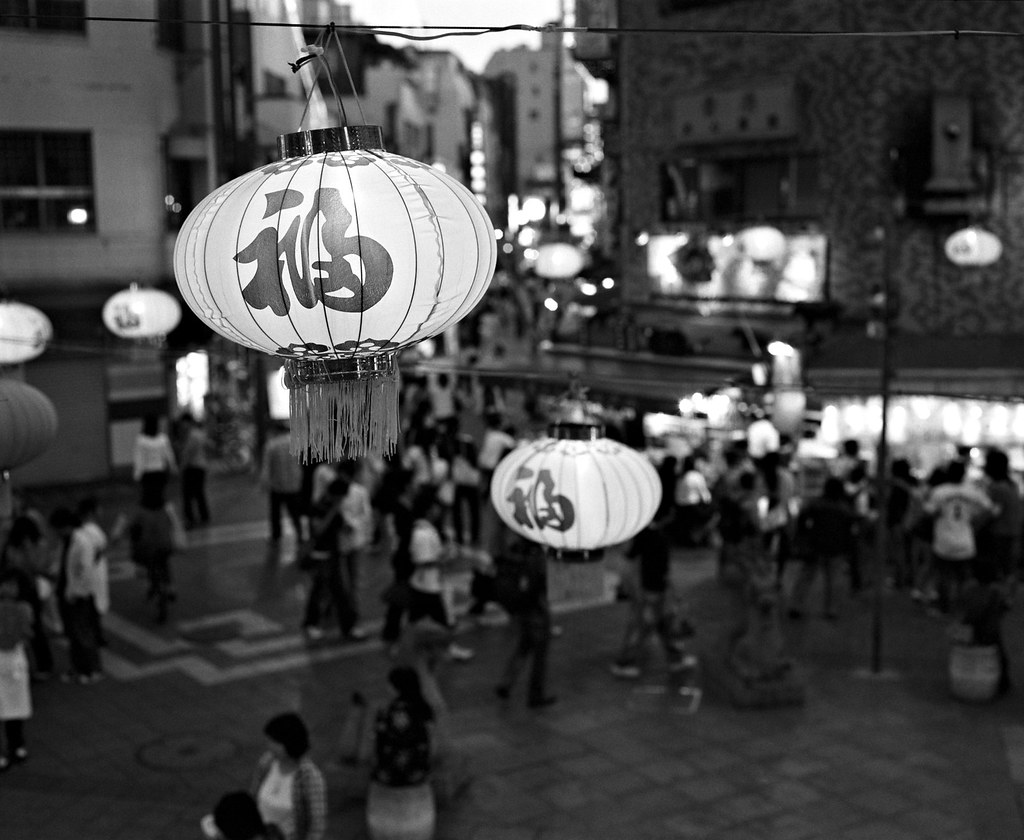
Nankinmachi. The square, with its lanterns.
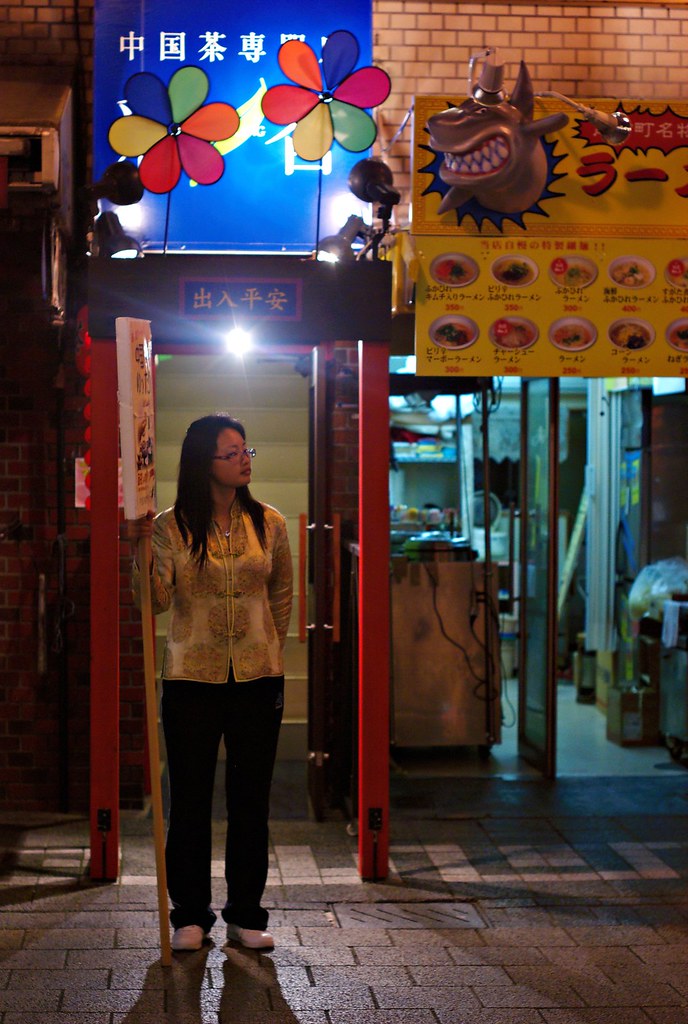
Saleswoman.
But now the uncertainty and hysteria is passing and people are finding their way back. Two weeks ago there was still few people about and our favourite Indian restaurant had far fewer customers than usual but at least shops and restaurants were mostly open again and few people bothered with masks any longer. We realized, then, that we had a golden opportunity to go eat dinner in Nankinmachi without having to stand in line and jostle the crowds. Said and done, we went back to Kobe again the last weekend, to eat Chinese rather than Indian for once.
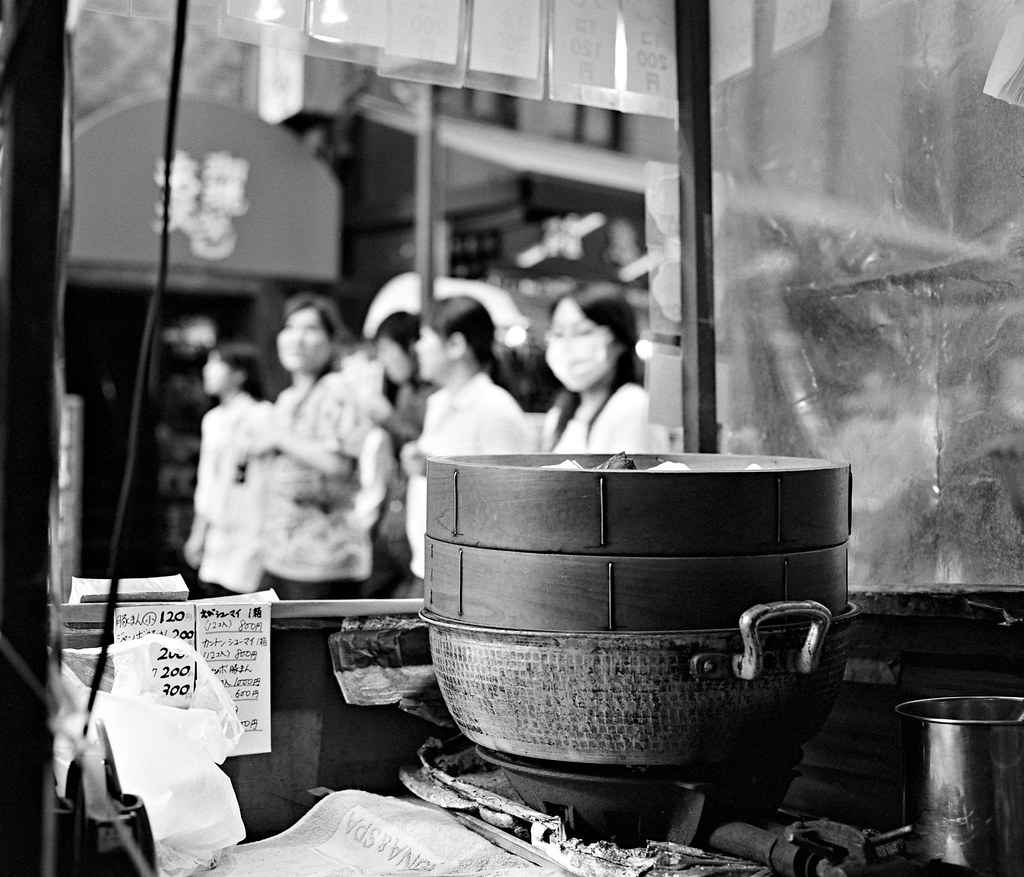
Street stall selling butaman (steamed pork buns) to hungry passers-by. Way, way better than the butaman sold at convenience stores during winter.
While there's still a lot fewer people around than usual it's clear we weren't the only ones with that idea in mind. The lines were back for the most popular ramen and butaman joints, and while we didn't have to wait, the restaurant we picked was seating almost every table. If you have similar plans it's probably a good idea to go soon; at this rate the area will be back to its normal crowded self within a few more weeks.
Nankinmachi is a touristy place, and we've kind of avoided eating there because of the crowds and a perception of high prices and indifferent food. That perception turned out, at least in our case, to be completely false. We ate at a restaurant right on the square called Toeishuke, and it was delicious (the chicken in lemon sauce could have used a bit more bite, but the rest was great). The dishes were large, with three dishes plenty for two people, and the whole meal was surprisingly inexpensive. We're certain to go back again, and soon. The whole set of pictures are available here.
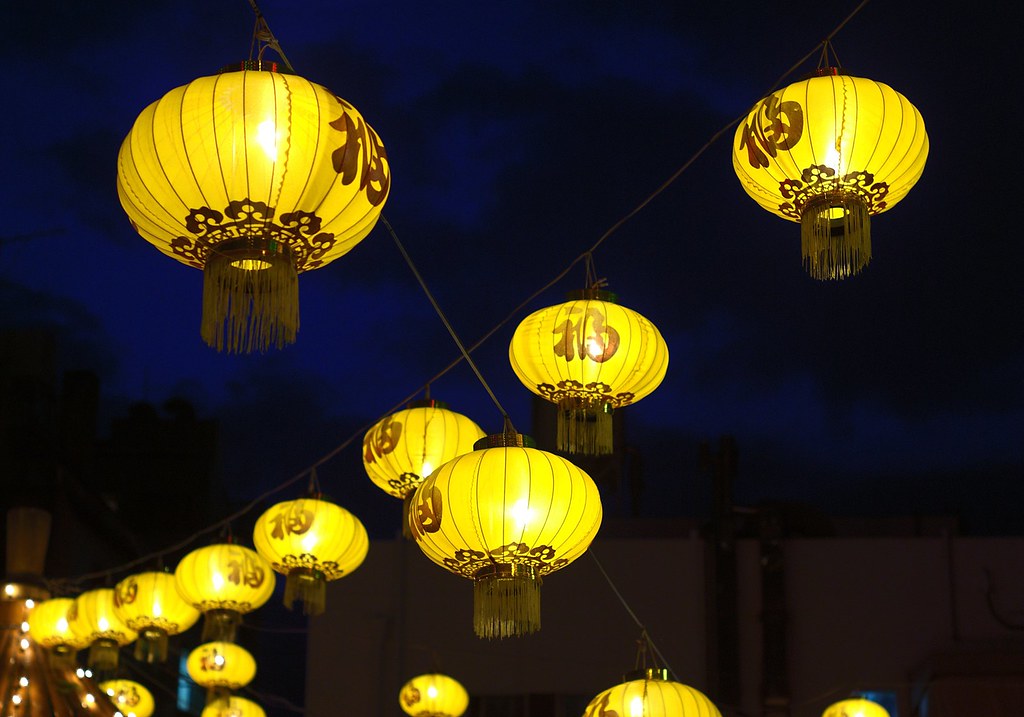
Lanterns at dusk.
Monday, April 20, 2009
Suma and Akashi
If you go east along the coast from Kobe you'll find Suma, the easternmost ward of Kobe city. It's a sleepy place that seems to mostly live off beach visitors and amateur fishermen; it has that lazy summer-city vibe. Of course, the entire coastline from Osaka to Suma, to Akashi and beyond is fully developed so it's not isolated or hard to reach.

Suma Beach. Picture taken by Ritsuko; that explains the presence of that odd-looking foreign fellow. It's fairly empty now, but during Golden Week this place will look like an upturned anthill, if the ants were all pink and red and drinking beer.
Anyway, Suma has a pretty good beach within easy day-trip distance from Kobe, Osaka and Kyoto. The trains actually stop just by the beach - you can step off the JR train station exit right onto the sand. This weekend was the perfect time to go. It's still early summer so it's not offensively hot, and the big Golden Week holiday is still a couple of weeks off. As a result the area was almost empty in stretches and the cool breeze made it a pleasure to walk along the beach from Suma to nearby Suma no Koen (yes, we really do enjoy long walks on the beach. And romantic dinners - not that there's anything wrong with that). This is a really pleasant day-trip if you live in Osaka or thereabouts.

Sky and sea and Ritsuko. Just about perfect.

Not everybody enjoys a day at the beach. This guy would probably feel rather more at ease in a dark, dingy diner than out here with all the unhealthy sun and fresh air. And yes, it seemed the woman in the background is his wife.
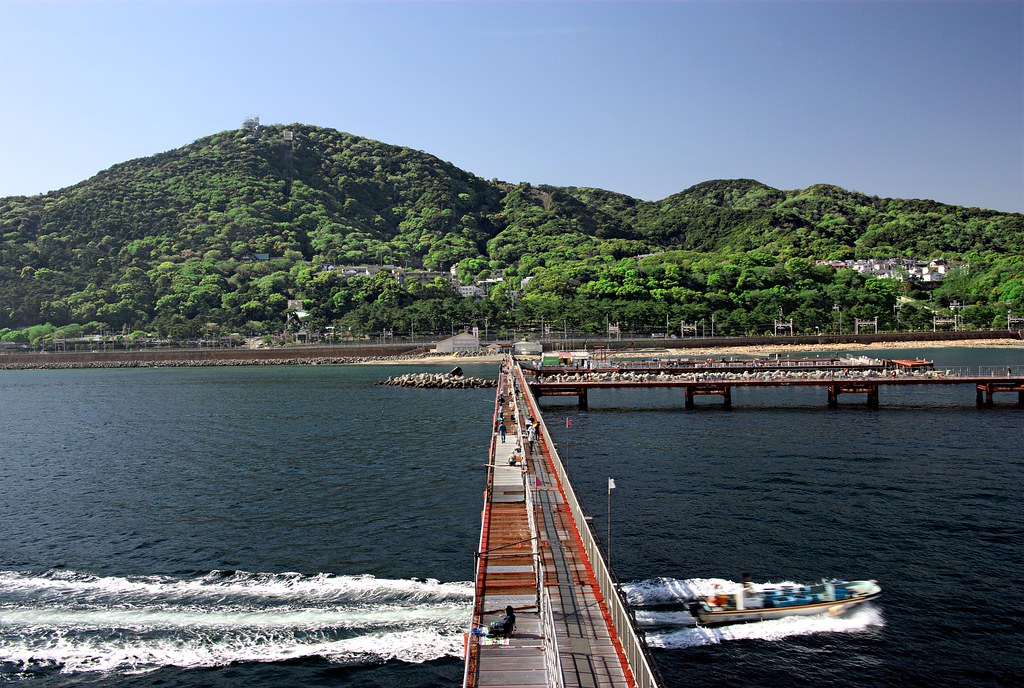
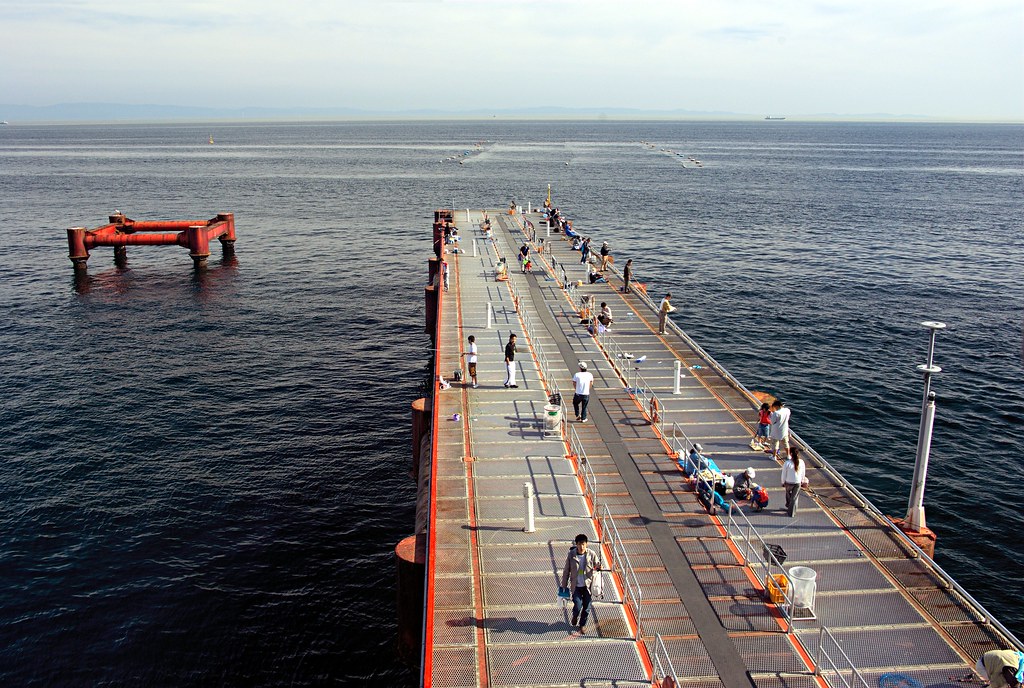
At Suma no Koen there's a fishing park. It's a set of long steel piers for amateur fishermen. We first went there two years ago. It's a nice setup; you pay an entrance fee and get to fish from the piers. If you need it, they'll sell you fishing gear, bait and even live fish if you're out of luck but still need something for dinner, and they can help you clean your catch too if you want. There's a squat, round tower near the center with a good sea view where you can get out of the sun and get something to eat and drink. The entrance fee is really low if you don't want to fish - and frankly, we've never felt the urge. It's way easier to buy fish cleaned out and ready at the local fishmonger than trying to catch it ourselves.

Fishing is quality time. Of course, photographing other people fishing is even better: same view, same fresh air, but no need to mess with rods, lines or hooks, or clean out your catch afterwards. Akashi and Akashi Kaikyō Ōhashi in the distance.


The fishing park is very pleasant to visit even if you don't fish. Great scenery, fresh sea breezes and plenty of interesting people milling about.
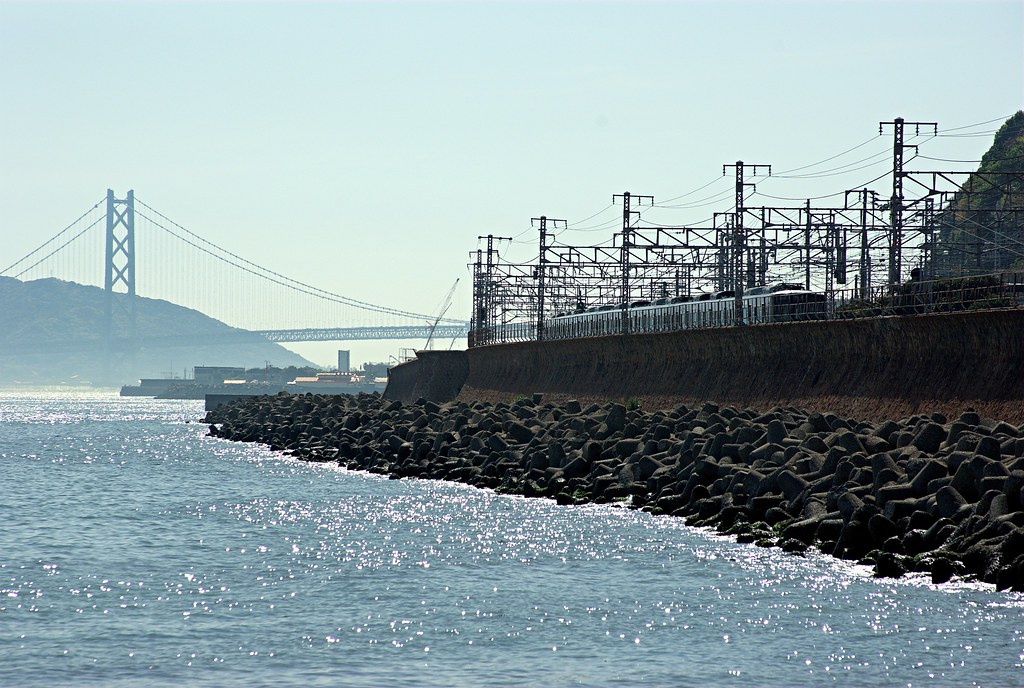
From Suma it's a fairly short train ride onward to Akashi, and you pass the Akashi Kaikyō Ōhashi bridge - one of the longest in the world, apparently - to Awaji on the way. Akashi's claim to fame is the bridge and the 135th meridian which passes through the city; it's the basis for Japan Standard Time, and there's an observatory sitting right on the meridian. We only spent an hour or so in the city; enough time to pick up some food from the local fish market, but not enough to visit the observatory.

The coast is rugged, so the train lines often hug the beach, making for some good views as you travel. Here is the JR line with the Akashi straight and the bridge in the background.

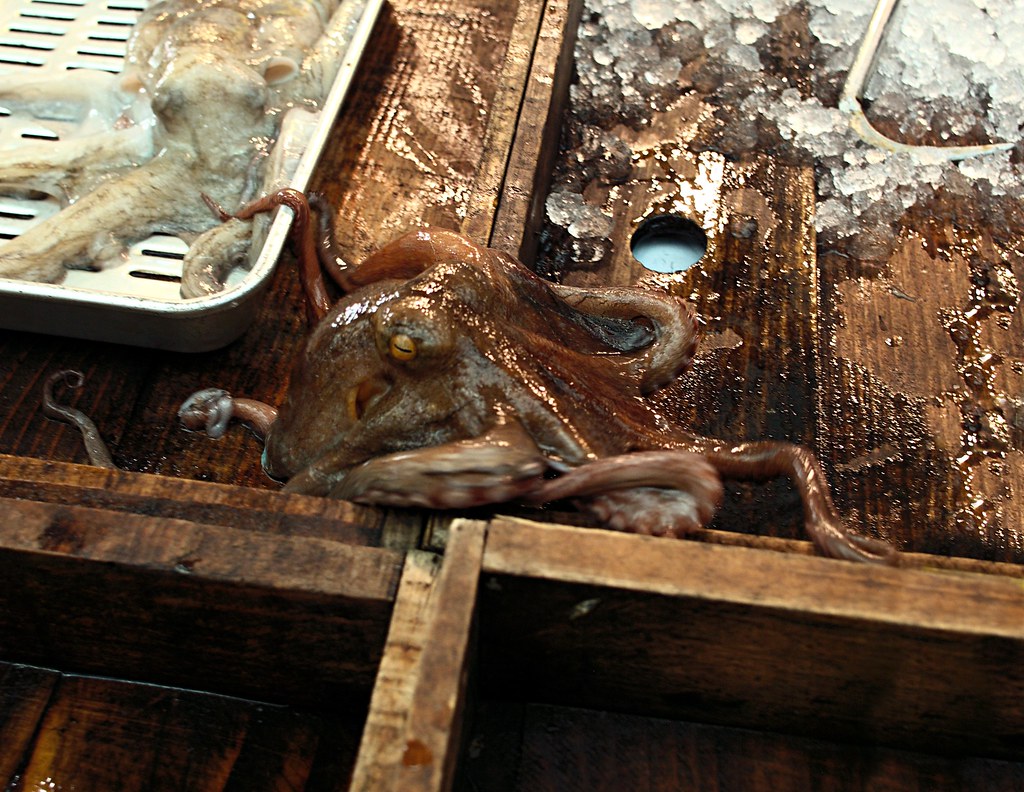
The Akashi market is good; not huge, but with a lot of fresh, good quality food. Very, very fresh - this octopus is fresh enough to make a determined break for freedom. The shop assistant had to stop it and put it back on the tray three times while I was watching. You know, put a kilt on it and it does look a bit like an aging Mel Gibson.
On the way back we had dinner at Raja, our favorite Indian restaurant in Kobe. Good as always. The owner, by the way, is one of those people who are indecisive about their facial hair; he's going through a mustache period at the moment. Normally we'd walk for a bit after dinner but as we'd done nothing but walk all day we called it a day and went home.

The Akashi city manhole design. They really like the meridian connection - A map of Japan with the 135th meridian going through it, overlaid with an image of the observatory, and the text "Shigosen no Machi Akashi" - Meridian City Akashi - on the rim. Should really visit the observatory next time.
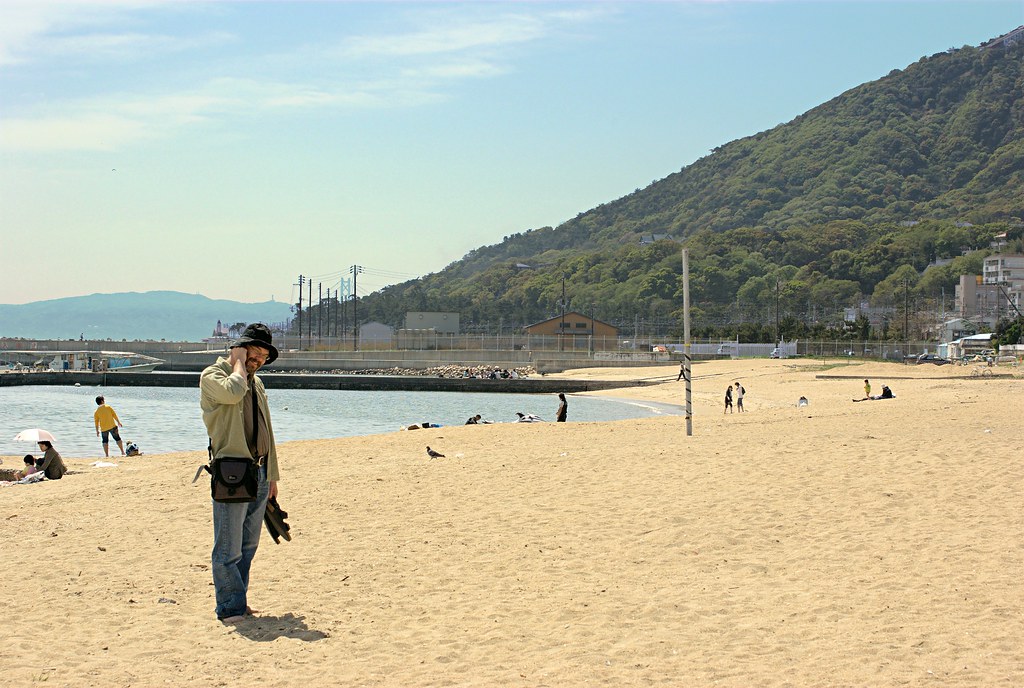
Suma Beach. Picture taken by Ritsuko; that explains the presence of that odd-looking foreign fellow. It's fairly empty now, but during Golden Week this place will look like an upturned anthill, if the ants were all pink and red and drinking beer.
Anyway, Suma has a pretty good beach within easy day-trip distance from Kobe, Osaka and Kyoto. The trains actually stop just by the beach - you can step off the JR train station exit right onto the sand. This weekend was the perfect time to go. It's still early summer so it's not offensively hot, and the big Golden Week holiday is still a couple of weeks off. As a result the area was almost empty in stretches and the cool breeze made it a pleasure to walk along the beach from Suma to nearby Suma no Koen (yes, we really do enjoy long walks on the beach. And romantic dinners - not that there's anything wrong with that). This is a really pleasant day-trip if you live in Osaka or thereabouts.
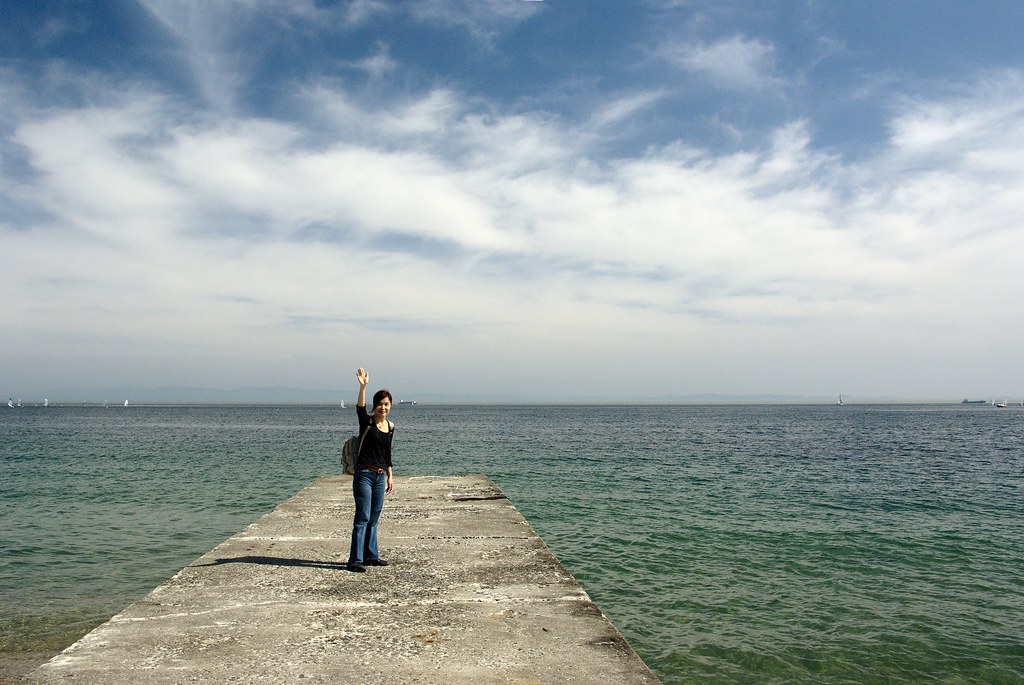
Sky and sea and Ritsuko. Just about perfect.

Not everybody enjoys a day at the beach. This guy would probably feel rather more at ease in a dark, dingy diner than out here with all the unhealthy sun and fresh air. And yes, it seemed the woman in the background is his wife.
At Suma no Koen there's a fishing park. It's a set of long steel piers for amateur fishermen. We first went there two years ago. It's a nice setup; you pay an entrance fee and get to fish from the piers. If you need it, they'll sell you fishing gear, bait and even live fish if you're out of luck but still need something for dinner, and they can help you clean your catch too if you want. There's a squat, round tower near the center with a good sea view where you can get out of the sun and get something to eat and drink. The entrance fee is really low if you don't want to fish - and frankly, we've never felt the urge. It's way easier to buy fish cleaned out and ready at the local fishmonger than trying to catch it ourselves.
Fishing is quality time. Of course, photographing other people fishing is even better: same view, same fresh air, but no need to mess with rods, lines or hooks, or clean out your catch afterwards. Akashi and Akashi Kaikyō Ōhashi in the distance.
The fishing park is very pleasant to visit even if you don't fish. Great scenery, fresh sea breezes and plenty of interesting people milling about.
From Suma it's a fairly short train ride onward to Akashi, and you pass the Akashi Kaikyō Ōhashi bridge - one of the longest in the world, apparently - to Awaji on the way. Akashi's claim to fame is the bridge and the 135th meridian which passes through the city; it's the basis for Japan Standard Time, and there's an observatory sitting right on the meridian. We only spent an hour or so in the city; enough time to pick up some food from the local fish market, but not enough to visit the observatory.
The coast is rugged, so the train lines often hug the beach, making for some good views as you travel. Here is the JR line with the Akashi straight and the bridge in the background.
The Akashi market is good; not huge, but with a lot of fresh, good quality food. Very, very fresh - this octopus is fresh enough to make a determined break for freedom. The shop assistant had to stop it and put it back on the tray three times while I was watching. You know, put a kilt on it and it does look a bit like an aging Mel Gibson.
On the way back we had dinner at Raja, our favorite Indian restaurant in Kobe. Good as always. The owner, by the way, is one of those people who are indecisive about their facial hair; he's going through a mustache period at the moment. Normally we'd walk for a bit after dinner but as we'd done nothing but walk all day we called it a day and went home.
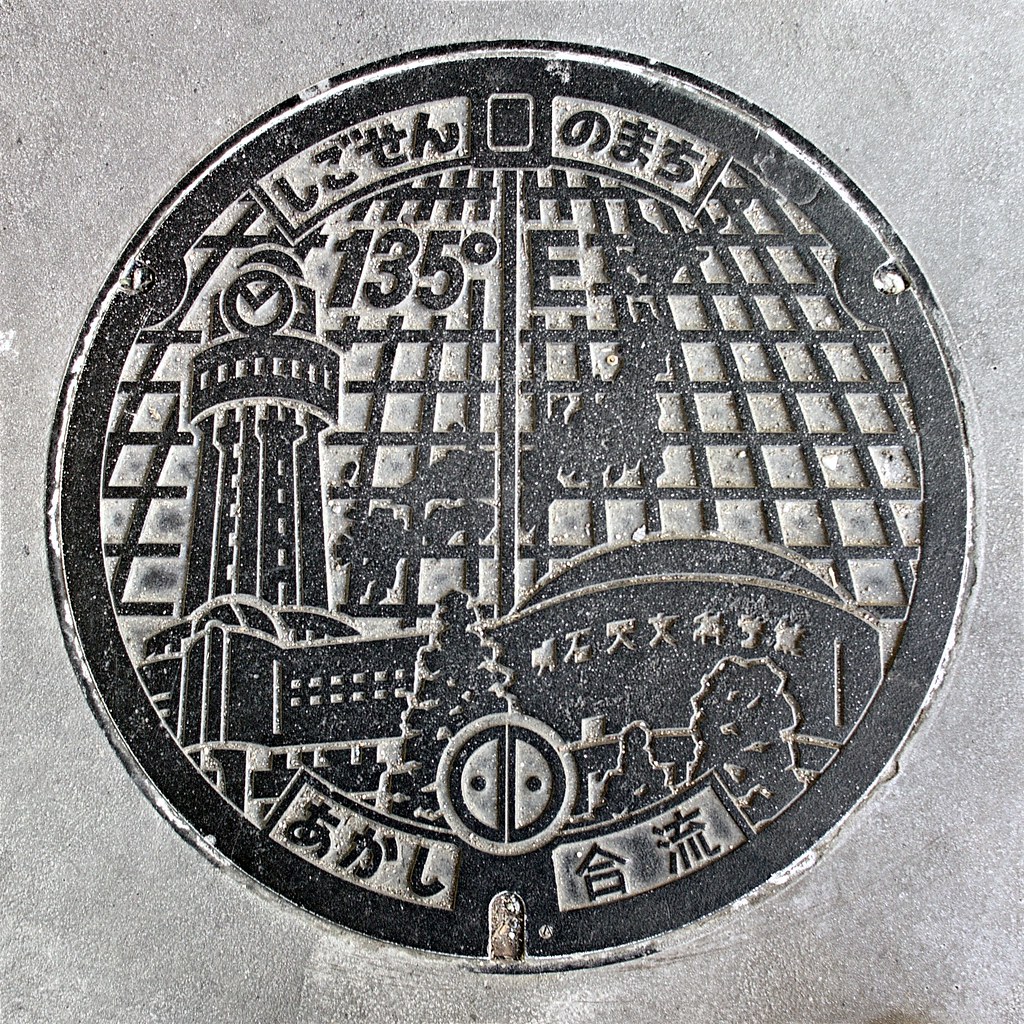
The Akashi city manhole design. They really like the meridian connection - A map of Japan with the 135th meridian going through it, overlaid with an image of the observatory, and the text "Shigosen no Machi Akashi" - Meridian City Akashi - on the rim. Should really visit the observatory next time.
Tuesday, October 28, 2008
Autumn
Summer is finally over. Temperatures drop, the air dries a bit and we finally get the high, clear autumn days that mark the best time of the year here in Kansai. When we go to Kobe now we don't avoid the hot streets anymore, but can take leisury walks up to the mountains, or down to the harbour area. This time I brought my Yashica film camera instead of the usual digital one.

In Sweden people will sit outside everywhere during summer, enjoying the warmth and light. Here summer is too hot, but on beautiful autumn days you find lots of people sitting outside in the same way.

Of course we ended up sitting in Meriken park for an hour, just watching the passing people.

Motomachi is a long covered shopping street in Kobe, running right along Chinatown (and near a favourite restaurant of ours). This day they had a music festival, with bands and singers performing all along the street.

One of the shopping centers in the harbour always has some themed decorations. For summer season they had an Olympic theme with giant Roman legionnaire statues performing various athletic feats. This is the long jump, apparently.

The Harbourland area draws large crowds of people to its restaurants and shops. But Kobe is also very much a working harbour, and the real harbour is never far away.
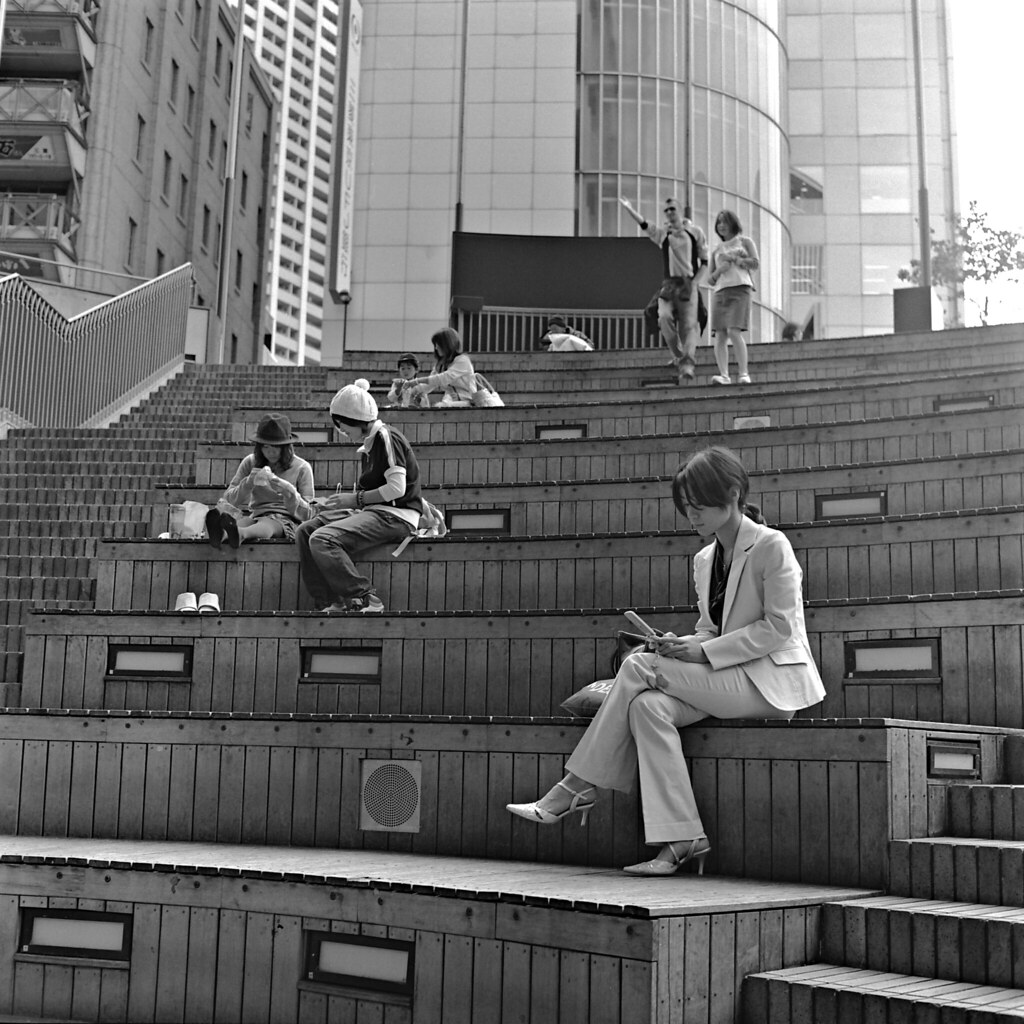
In Sweden people will sit outside everywhere during summer, enjoying the warmth and light. Here summer is too hot, but on beautiful autumn days you find lots of people sitting outside in the same way.
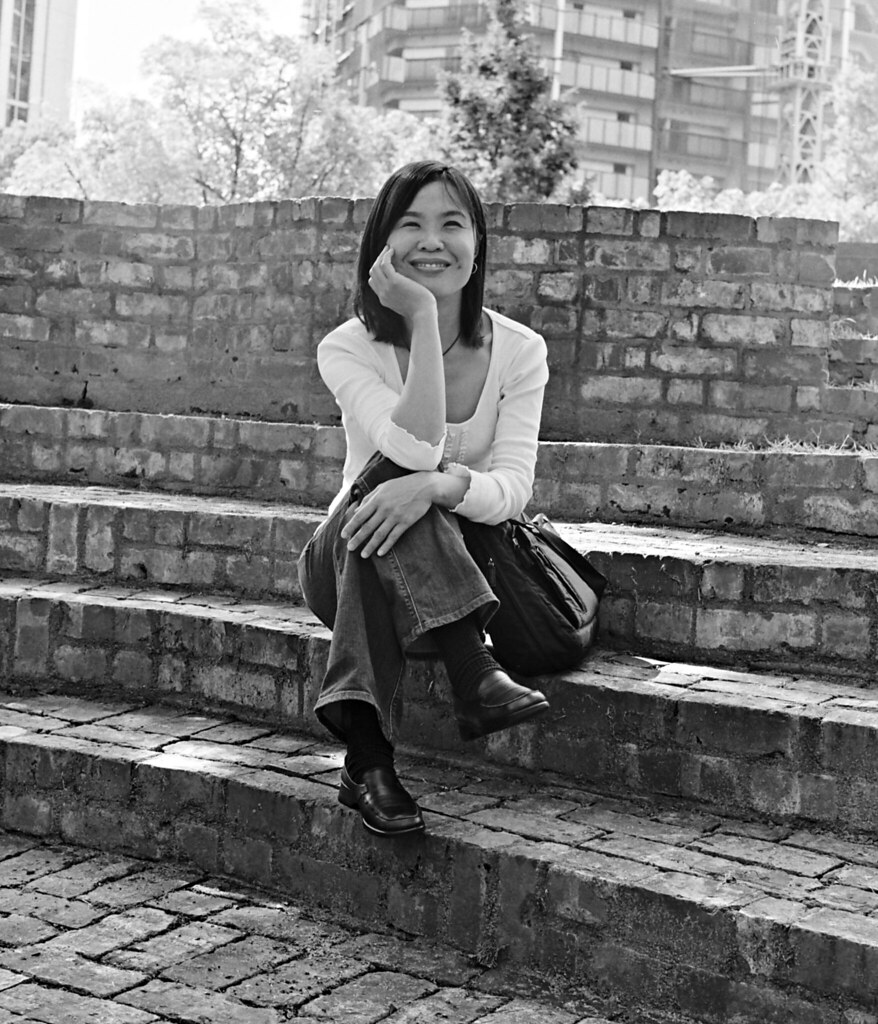
Of course we ended up sitting in Meriken park for an hour, just watching the passing people.
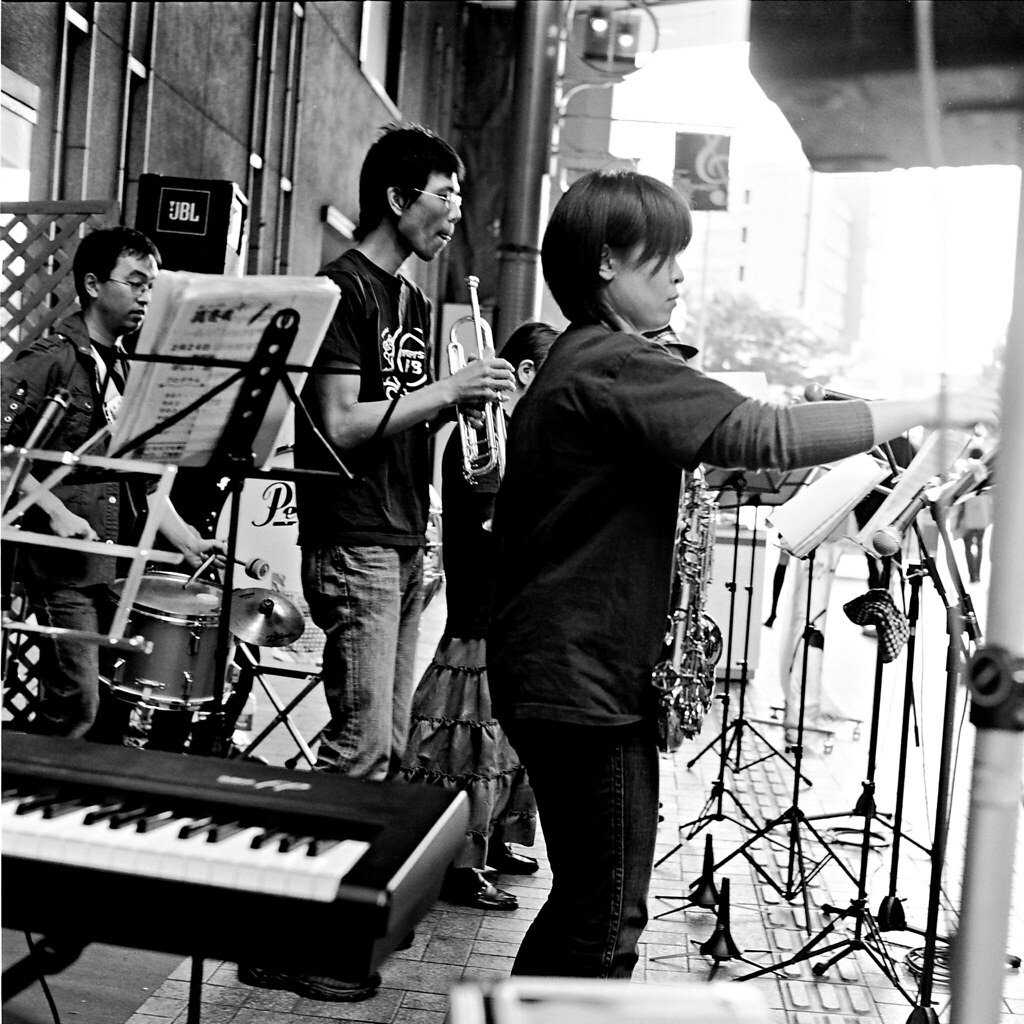
Motomachi is a long covered shopping street in Kobe, running right along Chinatown (and near a favourite restaurant of ours). This day they had a music festival, with bands and singers performing all along the street.
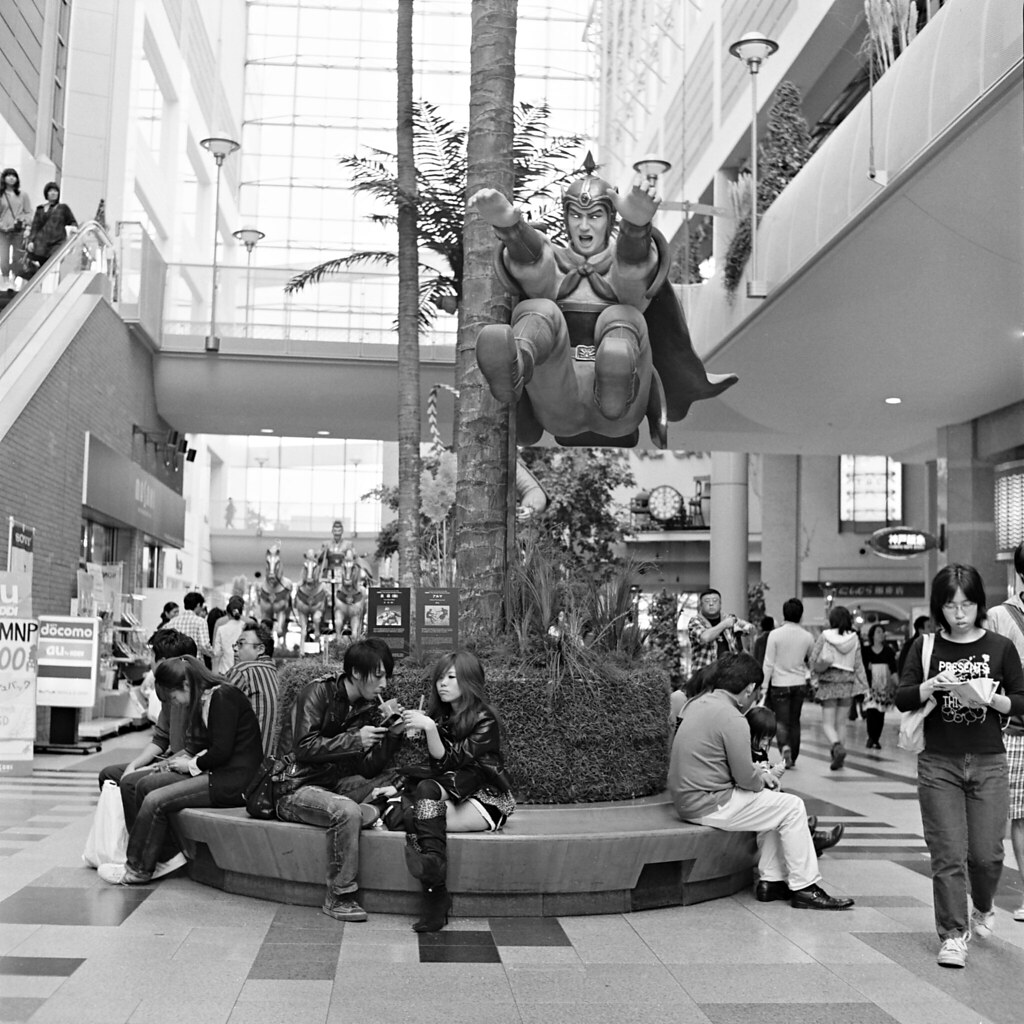
One of the shopping centers in the harbour always has some themed decorations. For summer season they had an Olympic theme with giant Roman legionnaire statues performing various athletic feats. This is the long jump, apparently.

The Harbourland area draws large crowds of people to its restaurants and shops. But Kobe is also very much a working harbour, and the real harbour is never far away.
Sunday, December 2, 2007
Autumn
Autumn is in full bloom as it were, with cool, clear days, trees turning golden and people starting to stress out over the coming New Years holidays. At this time, anybody with a camera will feel the primeval urge to go out and take pretty pictures of leaves. I'm sure that in some far distant human past, cavemen would go out at this time of year, painstakingly create hollow boxes with a small opening in the front out of rocks and twigs, then obsessively point their contraptions at piles of leaves with an expression of utter bewilderment mixed with a deep sense of contentment.
Since these kind of pictures rarely have much value for anybody but the photographer, I thought I'd shorten the suffering and try to make one largish autumn post rather than dribble pictures at you over the next month or so.

Osaka castle and the park is ringed with small access roads and causeways that are very popular for walks or bicycle rides. This one to the north is surrounded by Ginkgo and cherry trees. To my eyes, the Ginkgo in the fall beats the cherry blossoms every time. As autumn is unusually late, the Ginkgo planted along midosuji hasn't actually turned color yet.


I really like the whole area around Osaka castle (with the exception of the castle itself). The moats are connected to the rivers, so they actually have plenty of fish for those who are so inclined to spend their time. No word on how edible they are though, after having lived in Osaka river water their whole lives. The water quality in rivers and canals is apparently a lot better than just a few years ago, but that is of course very much the relative statement.


Kobe seems to have an earlier autumn than Osaka; when went there a couple of weeks ago leaves were already turning.
More pictures, for those who are interested, in my Flickr-stream shown on the right. One warning or promise is that there's a couple of spider pictures there, with a spider eating a freshly caught ladybug.
Since these kind of pictures rarely have much value for anybody but the photographer, I thought I'd shorten the suffering and try to make one largish autumn post rather than dribble pictures at you over the next month or so.
Osaka castle and the park is ringed with small access roads and causeways that are very popular for walks or bicycle rides. This one to the north is surrounded by Ginkgo and cherry trees. To my eyes, the Ginkgo in the fall beats the cherry blossoms every time. As autumn is unusually late, the Ginkgo planted along midosuji hasn't actually turned color yet.
I really like the whole area around Osaka castle (with the exception of the castle itself). The moats are connected to the rivers, so they actually have plenty of fish for those who are so inclined to spend their time. No word on how edible they are though, after having lived in Osaka river water their whole lives. The water quality in rivers and canals is apparently a lot better than just a few years ago, but that is of course very much the relative statement.
Kobe seems to have an earlier autumn than Osaka; when went there a couple of weeks ago leaves were already turning.
More pictures, for those who are interested, in my Flickr-stream shown on the right. One warning or promise is that there's a couple of spider pictures there, with a spider eating a freshly caught ladybug.
Subscribe to:
Posts (Atom)