Sunday, September 28, 2008

Osaka Crime

Police
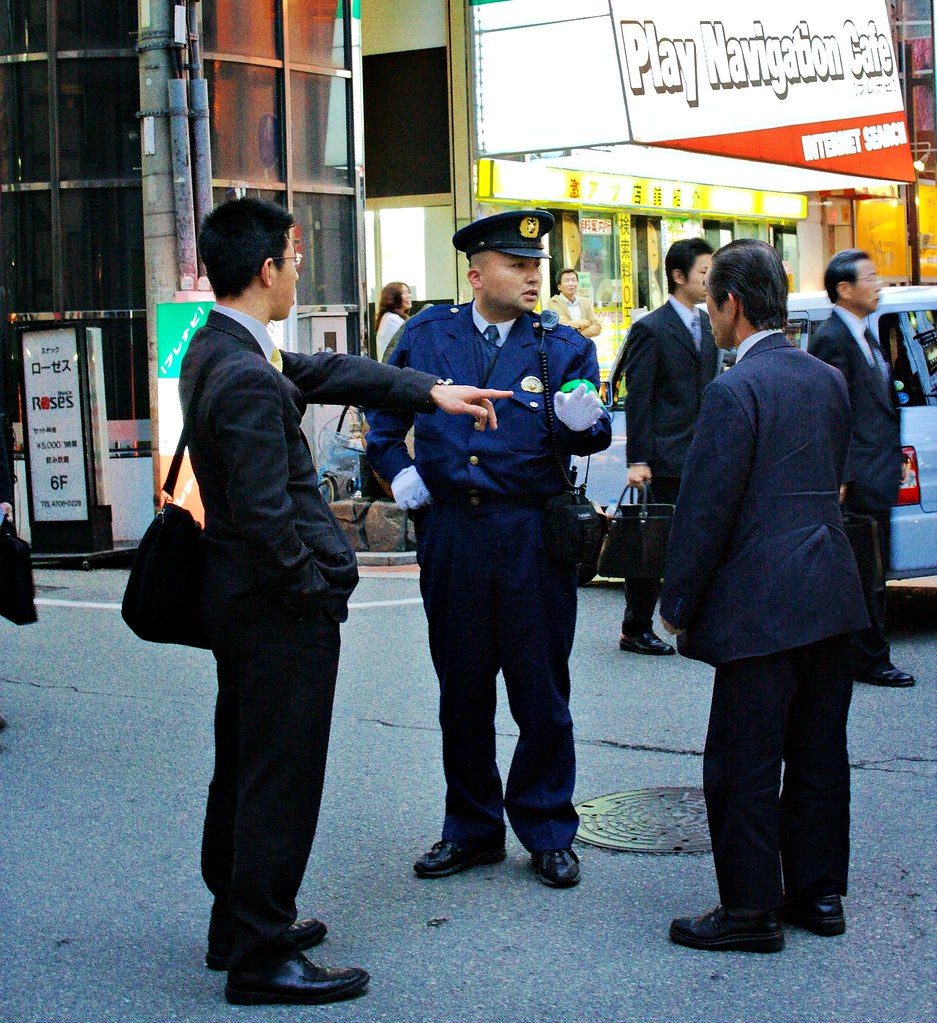
Policeman breaks up
a fight between a
drunk and a taxidriver

It can't have escaped any reader of this blog that I like Osaka. I really like the place, in fact - the always surprising architecture included.

But Osaka has another side. It has a reputation for being a crime-ridden, yakuza-infested dump, a place where you should be careful going out at night. And there is something to this reputation. Asahi Shimbun published some comparative crime statistics recently, but the statistics they printed are pretty useless - they don't adjust for population for instance, and they only look at the largest cities in Japan. The printed table is also quite sparse, with only the first two cities and Tokyo listed (it seems Tokyo uses a different basis for their statistics so comparisons are dificult) so it's difficult to adjust the data. Osaka is certainly among the top cities for crime in Japan, but it's clearly not as bad as popular sentiment would make you believe; most statistics I've seen place it only third or fourth for violent crime, for instance.

But how unsafe is it actually? Anecdotally, I have never felt threatened or unsafe anywhere I've gone in Osaka, day or night. Being a scruffy-looking foreigner does have something to do with it of course; there's easier- and wealthier-looking targets out there if you want to rob or harass somebody, and targeting a western foreigner tends to bring a lot of police scrutiny. It doesn't help that I have the situational and social awareness of a half-brick. So, let's do a quick comparison of Osaka and the largest Swedish cities.
 
Below is the yearly rates per 100,000 people for Osaka compared to Stockholm, Gothenburg and Malmö, the three largest cities of Sweden. I took only the statistics for a few crimes that seem comparable (we just don't have enough vending machines in Sweden to even record vandalism of them as a separate crime), that are relevant for the feeling of safety on the street, and that I had readily available figures for. The last column is the percentage of occurrence for Osaka as compared to the highest incidence in Sweden.


Crime rate in Osaka and the largest Swedish cities
 OsakaStockholmGothenburgMalmö% Osaka
Purse-snatching94505666143%
Bicycle Theft662480631159242%
Car Theft545616753538%
Street Robbery51491842083%


The street robbery column does look pretty incredible. It is quite possible that Sweden and Japan have different definitions of street robbery (some snatchings in Japan could be counted as robberies in Sweden for instance), but even the most skewed interpretation I could make will not make much of a difference. Street robbery and street violence in general just isn't very common in Osaka compared to Swedish cities.

To get a fuller picture we'd have to look at more crimes (assaults, rape and so on) and we'd have to be much more careful about interpreting the statistics so we know we are counting the same thing, That's quite a bit of work, however, and this quick comparison already shows what I suspected: the feeling I have that Osaka is a very safe city is fully justified, and spending time out on the streets here poses very little danger.

Wednesday, September 24, 2008

Pittsburgh, Where Every Student Is Above Average

Pittsburgh has instituted a school policy that no child can score less than 50% on any test, assignment or any other graded work. If the score would be less than 50% it is automatically adjusted up to this cut-off limit.

The reason is to give severely failing students a reason to keep trying; somebody with a 20% score on the first semester would no longer need almost 100% on the remaining semester to pass any more. That won't really work of course, as somebody with the skills and background knowledge to manage only a 20% or 30% score during one semester has no more chance of making 70% or 65%(the needed score) the next semester than they would have had making 100% or 90%. There's a reason the student was failing badly in the first place, and with later material depending on the failed, previous material this is not going to make much of a difference. All it does is mask the problems for a little while longer until the student fails even the new, inflated level.

They could have achieved the same thing by simply adjusting the grade levels downward, with a passing grade at 40-45% rather than 60%. That would have had the benefit of honesty and openness, and would signal that yes, we do value your work even when the score is low. Placing an artificial floor like this, on the other hand, signals that what you do below a certain point simply doesn't matter. Do nothing but make funny noises throughout the test, or work hard and get half right - it's exactly the same as far as the school is concerned. So, if you're going to fail exactly equally in either case, why not spend your time practising your musical burping rather than study for the test?

It never ceases to amaze me how creative people can be when it comes to screwing up the school system, in any country.

Friday, September 19, 2008

Aomori Holiday

We're going on an overnight trip to Aomori on Saturday and Sunday. We'll be meeting a friend of Ritsuko's, eat lots of fish and perhaps go up the Hakkōda mountain, weather permitting. Which is a little doubtful as Typhoon #13 is right in the neighbourhood. We haven't had one single typhoon in Osaka all season, but this one has to show up just in time to potentially derail our trip. We've been worrying about this one since last weekend, and early in the week it seemed it'd hit Osaka head on just when we were due to fly. Today it seems the coast is clear; the typhoon will pass by well south of Osaka this afternoon and be gone in time for the flight, so we should be fine. And with a typhoon out as sea, the weather in Aomori should be unsettled and interesting - a good thing, as it makes for better pictures than boring blue skies.

Thursday, September 18, 2008

The $50 Camera competition

Handy Box
The handy Handy Box

A while ago I wrote a review of The Handy Box, an excellent box camera, as an entry to the $50 Film Camera competition. The idea was that you pick up a film camera worth less than 50 US dollars, write a review and post a roll of shots from the camera. And from 80 entries and against all odds, my review was picked as one of the three winners. The price is a Diana+ camera and ten rolls of Ilford film - I'm sure Ritsuko will be delighted to have yet another camera in the house. ^_^

Anyway, the real excitement is still to come. All the 80 entries are now posted online, for you to browse and be amazed at. Two winners were picked by a small jury, but the third winner is an open vote - go to the site, look through the reviews and vote for the one you like best. The entries cover any kind of camera you could think of, from late-model pocket cameras to TLR's to Russian SLR's to pinhole cameras - even a 3D camera. And with all cameras cheap and cheerful - cheaply made or old and well used - the resulting images are all over the place, in quality and tone. Even if you never intend to use film ever again, the breadth of results is inspiring.
 
So go here, marvel at the scope of human ingenuity, and vote for your favourites. You can vote for as many or as few as you like (it's an approval voting system) so don't hesitate.

Wednesday, September 17, 2008

Tainted Rice - More Food Scandals

Hanging riceJapan has to import some specified amount of rice every year as part of various trade deals; that yearly quota technically fulfils promises to "open up" the domestic rice market. Little of that rice is ever sent directly out into the public food market, though. In order to protect the domestic rice industry most of the imported rice is used in industrial food processing, stored as an emergency reserve or diverted for industrial use - making glue, paper coatings and such things. Of course, if the rice is not being used for human consumption it'd be a huge waste to buy expensive high-grade rice. A fair amount of the imported rice is contaminated with pesticides, mouldy, toxic or otherwise unfit for human consumption.

And now, it turns out that, first one, then two, then three and now four rice wholesalers have been buying up such toxic rice very cheaply, then mixed it with food-grade rice and sold it on to other companies for human consumption. The list of unwitting buyers are at least 377 as of this morning just from one of these importers, with a total of at least 4000 tons of contaminated rice. I'd expect all these numbers to continue to grow over the next week or so as more fraud is uncovered.
 
As Jun Okumura points out, this is a little different from most earlier recent food scandals: it is domestic in origin, not foreign (unlike the recent tainted gyouza scandal), and it is not just a regulatory breach like ignoring best-before dates or mislabelling products. Rice with more than twice the maximum allowable levels of pesticides have been found in schools and hospitals, and it's certain that people, both children and hospital patients, have eaten the contaminated rice.

An amusing political wrinkle (for some value of "amusing") is that it was a MAFF (the Ministry of Agriculture, Fisheries and Forestry) official that first introduced the rice seller to the cheating rice importer; that's the same ministry that's supposed to police this kind of thing, but were completely blindsided by this due to inadequate inspection routines. Companies are supposed to police themselves, and "surprise inspections" to police them are infrequent and announced well ahead of time. It doesn't help their image that one MAFF official in charge of rice sales was wined and dined by one of the offending companies, against ministry regulations. I wish I could say this creates a cloud of doubt over MAFF and the Japanese state bureaucracy, but the scandals have been so many and so outrageous in recent years that I believe the actual fallout will be small. The social security agency established whole new levels of incompetence with the unfolding pension scandals, and MAFF itself (an organisational basket case) is already known for siding with the agricultural industry over the Japanese consumers. This level of mishandling is simply expected, and will not materially change the ministry's standing among the public.

And this food safety scandal ties in with something I've gradually come to realize: Japanese cuisine is truly excellent, but Japanese produce, by and large, is not. Yes, there's some really good fruits and vegetables out there (we get some wonderful, juicy apples from Aomori every year), but those are exceptions - and usually expensive exceptions, sold as sought-after local specialities - in a sea of rather mediocre products. Not really bad or anything - perfectly usable - but indifferent, and certainly not deserving of the high prises and high praise they command. I have to wonder just how broken this system is when a producer in sub-arctic northern Sweden with nothing like the level of subsidy a Japanese farmer receives can produce vegetables as good at half the price or less of a producer in one of the most fertile areas of the world.

The only reason the Japanese agricultural industry gets away with selling second-rate products at premium prices in this way is the strong, persistent local myth of the absolute superiority of Japanese produce. If that image is shattered, due to continuing food safety scandals for instance, then this unconditional support for Japanese agriculture will erode. This is something the agriculture industry and Ministry of Agriculture is acutely aware of, and that is why imported rice is not allowed in stores and supermarkets, for instance: they desperately want to avoid consumers making a direct comparison and discovering that the Japanese product is no better than the imported one.

Tuesday, September 16, 2008

Sport, Religion and Civil Society

Jun Morimoto brings up an interesting thread on violence in sports and why we allow sports to sidestep civil and criminal law. It's related to the increasingly contentious conflict between sports league rules and employee and human rights. His stance is basically that as the participants freely signed up to play, they have accepted the risk of violence, though to a greater or lesser degree depending on the sport. I agree on his distinction between what you freely signed up for and could reasonably expect, and what you did not. When you start boxing or judo, you agree to get beaten up as part of the game. Jun brings up tattoos and body piercings as another kind of activity that, since it is completely voluntary, is not criminal.

But the "implicit consent" of violence beyond that which is expected is just that - implicit, and quite possibly non-enforceable would it come to that. When Zidane headbutted Materazzi in a soccer game, that went beyond implicit consent. Mazeratti did very much not sign up for the possibility of a headbutt (a move that can potentially kill the victim if it hits badly) when agreeing to participate in the match. If, just to take a pure hypothetical, he had chosen to sue Zidane over it, it is not at all clear that the suit would be dismissed. And I, at least, don't think it should be.

There are other areas with a large "don't go there" legal gray zone; the largest is probably religion. Many societies give religious organizations a de-facto jurisdiction over their congregations, including children (that can't reasonably have said to have given free, informed consent). On one end you have a recent case in the US where a 17 year old girl was held captive against her will for two days and beaten up as part of an involuntary exorcism. The court ruled that it had no standing to try the case since in their view it would collide with the separation of church and state.

Overall, though, the trend seems to go the other way, with civil society claiming pre-eminence over special interests. There is a fair amount of debate about gay marriage in many countries, for instance, with proponents and opponents in heated debate. But that is really just a consequence of an earlier, far more fundamental shift of marriage from a primarily religious institution to a primarily civil one. In many countries you can get married today without asking a church for permission; indeed without having any religious input at all. You can also get named, be considered an adult, own property and be buried - all without involving religious authorities or asking them for permission.

This was not always the case (and still isn't in some parts of the world). In the not so distant European past, the various christian churches wielded political and secular power at least equal to - and frequently greater than - the secular rulers. With the continuing rise of civil society (including the rise of the national state) as the dominant force, the religious rulers have lost much of their power - and lost it quietly, unnoticeably through the emergence of legal rules for areas once religious. Once there is a law or rule regulating something, civil society has taken ownership of and responsibility for it.

In the same way, the recent conflicts between the sporting world and civil society is, I think, a reflection on the latter's increasing dominance. I believe this is mostly a good thing. It does not mean that religions or sports leagues should never be allowed exceptions to regular laws, but it does mean that any exceptions be made explicit and transparent, rather than remain enacted by default.

Wednesday, September 10, 2008

More Fun with Pensions

How's this for a scenario: A company is in financial trouble. It has cash-flow problems and has difficulty coming up with the money to pay expenses every month. One expense is of course the monthly pension premiums it pays for its workers, premiums based on the employee's monthly salary. The salary, and thus the premium, is of course what determines how much the employee will get in pension benefits once they retire.

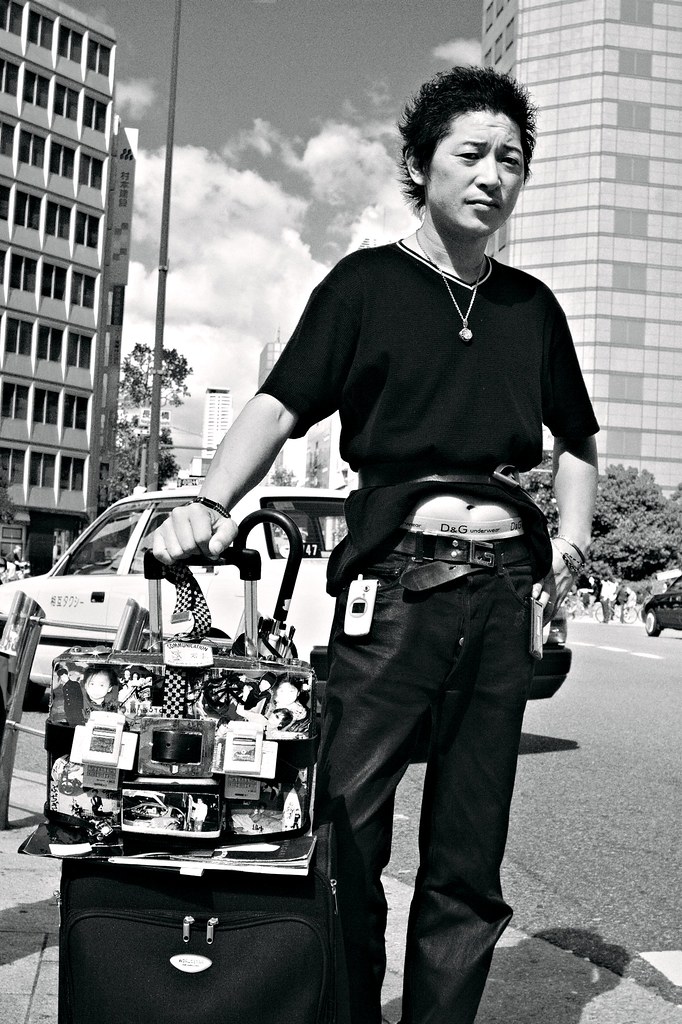
Phone Peddler
The Japanese Social Insurance
Agency Open for Business
Things look grim, and as it turns out, one way to cut expenses is to lie to the social insurance agency - tell them the monthly salary of the workers are a lot lower than they really are and you can get away with paying just the minimal premium. Of course, years down the road those employees are going to get a very nasty surprise when their retirement payouts are only a fraction of what they thought they'd get. But that is then, this is now and it's a clever way to cut costs. All in all, just another example of companies in trouble resorting to fraud or other crime in an effort to save themselves.

But here's the wrinkle: Hundreds of companies in trouble were told to do this by a social security agency official. Why would he do that (it's only one official at the moment but the scandal is still very young)? If a company defaults on the pension payments, that impacts the payment rate statistics for the agency, making the pension system look like it's in trouble and makes the official look bad. If the company declares a fraudulently low income it can continue to pay, and that makes the agency statistics look much better while avoiding economic problems for the company. Everybody wins - well, everybody except for the workers cheated out of their pensions, but who cares about them anyhow, right?