Showing posts with label umeboshi. Show all posts

Friday, August 13, 2010

So Quiet

It's Obon, when most Japanese take time off and hit the road to go back to their hometowns, see old relatives and visit the family grave. Which means that out there is a circus of backed-up traffic, overflowing trains and frayed nerves right in the hottest part of summer, with the first typhoon of the season making landfall across half the country. But in here it's cool, it's still, and it's so very quiet.

Sleep, Crowd

O-bon

My mornings normally look something like the shot at the top. The picture at the bottom is from yesterday. Practically empty.


The reason being, I'm the only one at the office today. There's a couple of heavy deadlines breathing down my neck, so I'm not taking any time off this year. A lone doctoral student was working over in the common room yesterday, but today I'm all by myself.

This suits me just fine right now. I like having people around, but when alone I can sit and argue loudly with myself, play music when I feel like it, and generally act out. It helps me focus when I'm stressed, and right now I need all the focus I can get.

I miss Obon, though. Last year we saw the World Press Photo exhibition, dried our homemade umeboshi and went up Rokko mountain in Kobe for sightseeing and dinner. No such fun this year.

Out to Dry

I did manage to help Ritsuko spread out the umeboshi to dry this morning. And we'll be meeting friends for dinner tonight, so Obon's not all devoid of fun this year.

Thursday, July 22, 2010

Summer Fruits

We're done putting stuff in jars. New this year is pickled ginger and blueberry liqueur. The ginger is ready to eat already - and it is delicious - though it will keep for a year. The blueberry liqueur needs about eight weeks like this before we remove the berries (we'll make jam with them) and let the liqueur sit for another month or two to stabilize. We still need to dry the umeboshi and let them soak, so they'll take another couple of months as well.

The brandy umeshu needs to sit for at least a year. But at the rate we drink the stuff - we're still on the last of the umeshu from two years ago - I guess it'll take up to three years before we open this jar. The flavour should be pretty spectacular by then.

This Year's Produce

From left: umeboshi with shiso (two jars); ginger pickled in salt (two jars) and in umeboshi juice; brandy umeshu; umeboshi; blueberry liqueur.

Thursday, September 3, 2009

Umeboshi - The Drying Game

Now that we've finally gotten this whole election thing out of our system we can go back to vaguely disliking the ruling party - whoever they are - and return to more normal blogging fare.

In June we started a batch of umeboshi, remember? We got a pile of ume, cleaned them and pickled them, some plain and some with shiso leaves which give them a distinctive taste and an intense red color. We're making four kinds in all: plain, honey-flavoured (not sure about that one), a bit of shiso, and lots of shiso.

After a couple of months of pickling, it's time to dry them in the sun. "Umeboshi" (梅干し) literally means "dried ume" so not drying them would of course be a bit weird - what'd you call them for a start? "umeboshijanai" (梅干しじゃない - "It's not dried ume")? "umewaritonureteiru" (梅割と濡れている - "Comparatively wet ume")? Anyway, we dried them during the o-bon holidays. That's the traditional time to do it as tsuyu is normally over by then; also, they need about three days to dry and it can be hard to organize if you're working at the same time.

Umeboshi

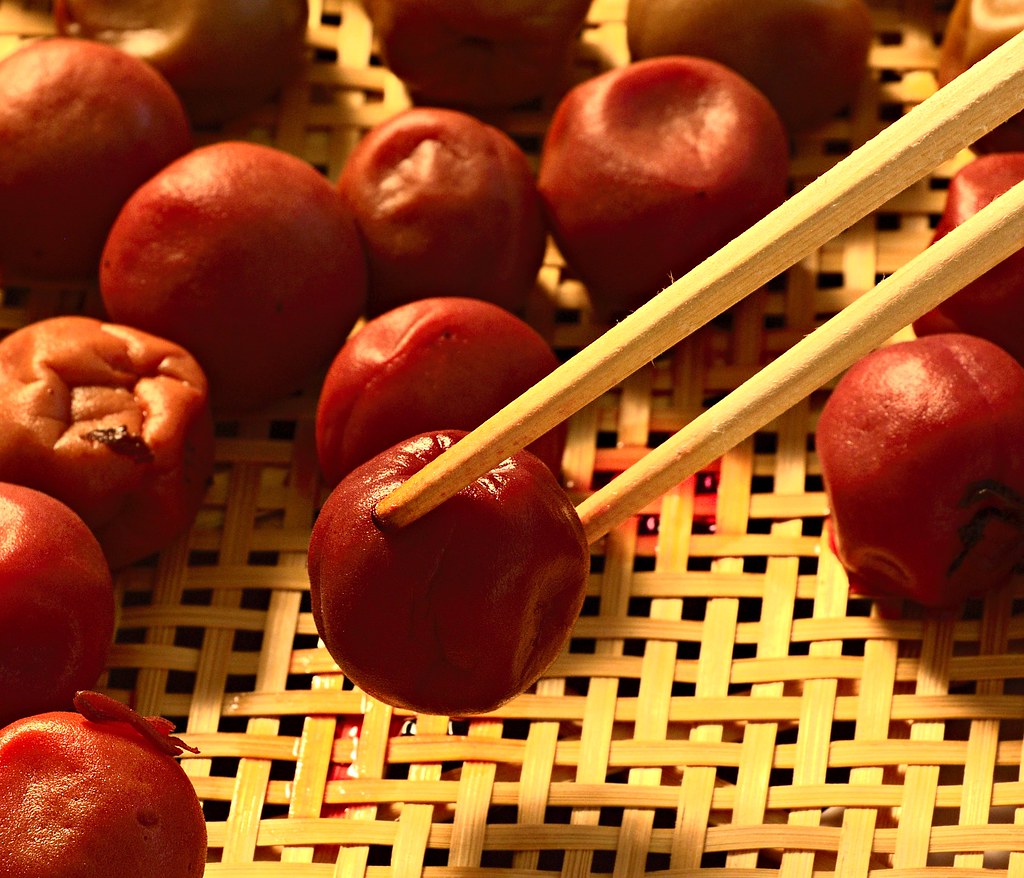
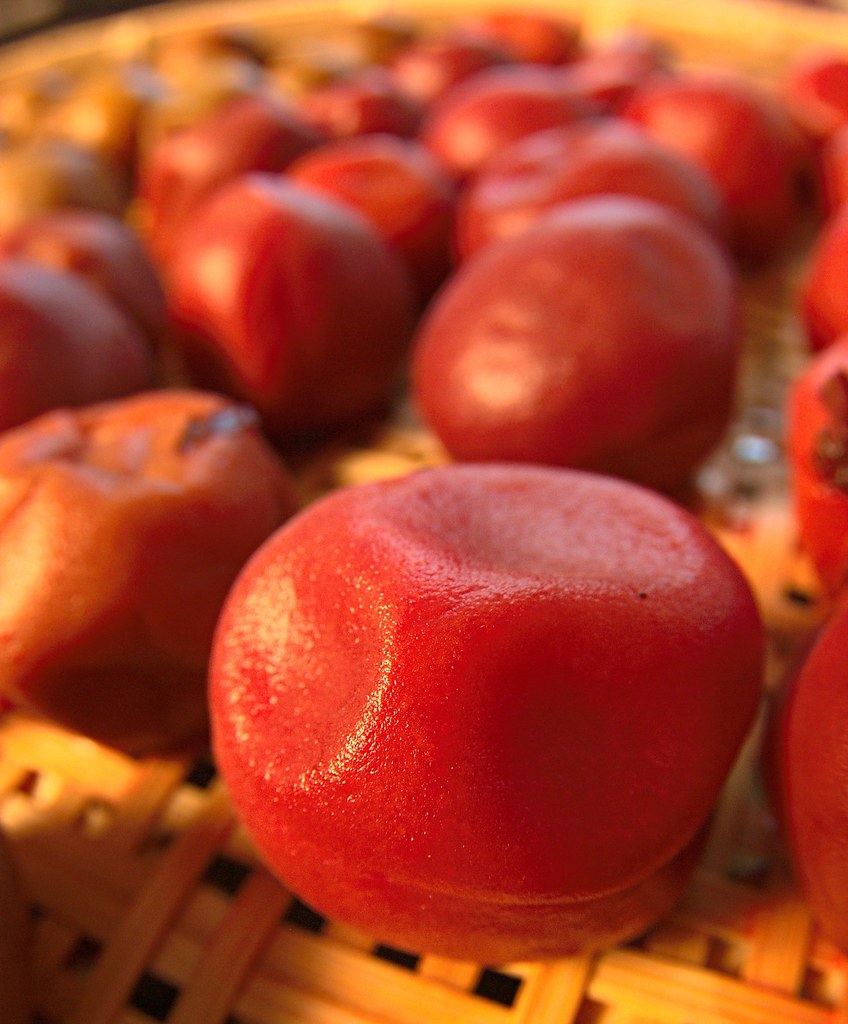
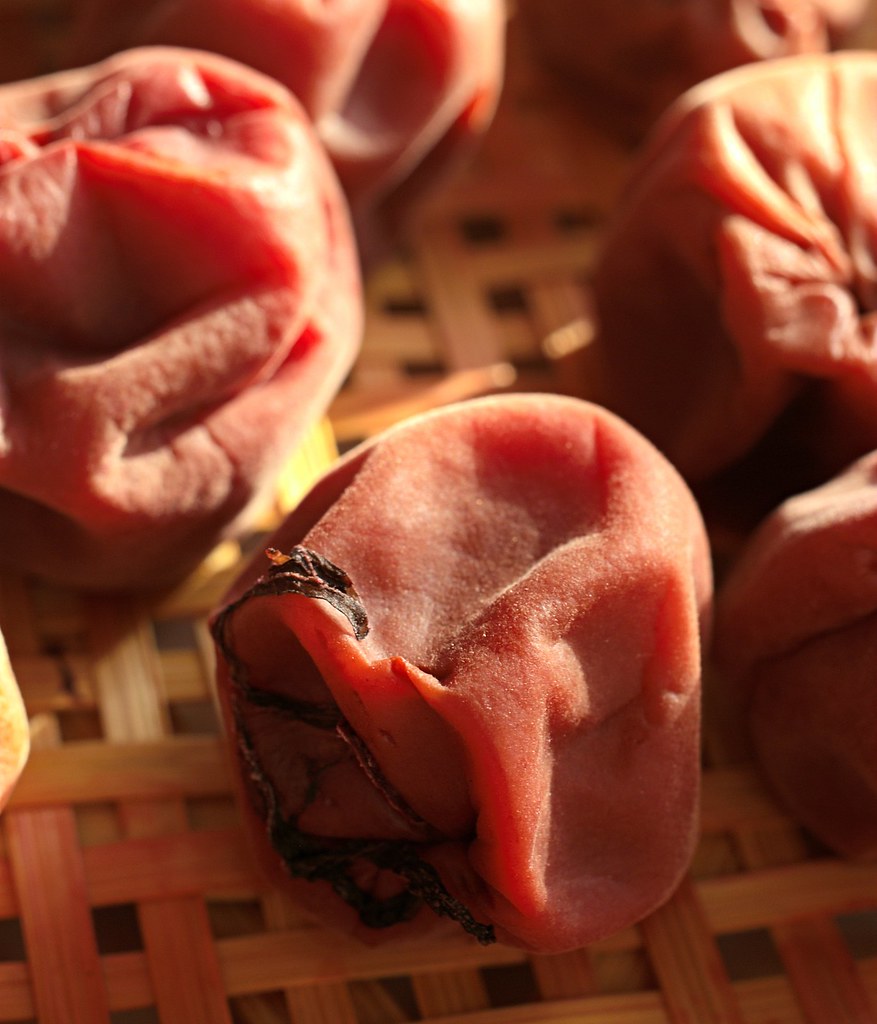
The ume has gone all soft, plump and squishy from being pickled. Some people like to eat them like this, but the drying process makes them firmer and chewier, and gives them a more intense flavour.


Umeboshi

Early in the morning, you place the ume on a big, sieve-like bamboo frame, not too close together. Be careful; they're really soft. Place the frame in the sun (we use our balcony). Around midday, rotate the ume - one by one - so they don't stick to the frame and so they get to dry from all sides. In the evening you rotate them again, then you take the frame inside overnight.


Umeboshi

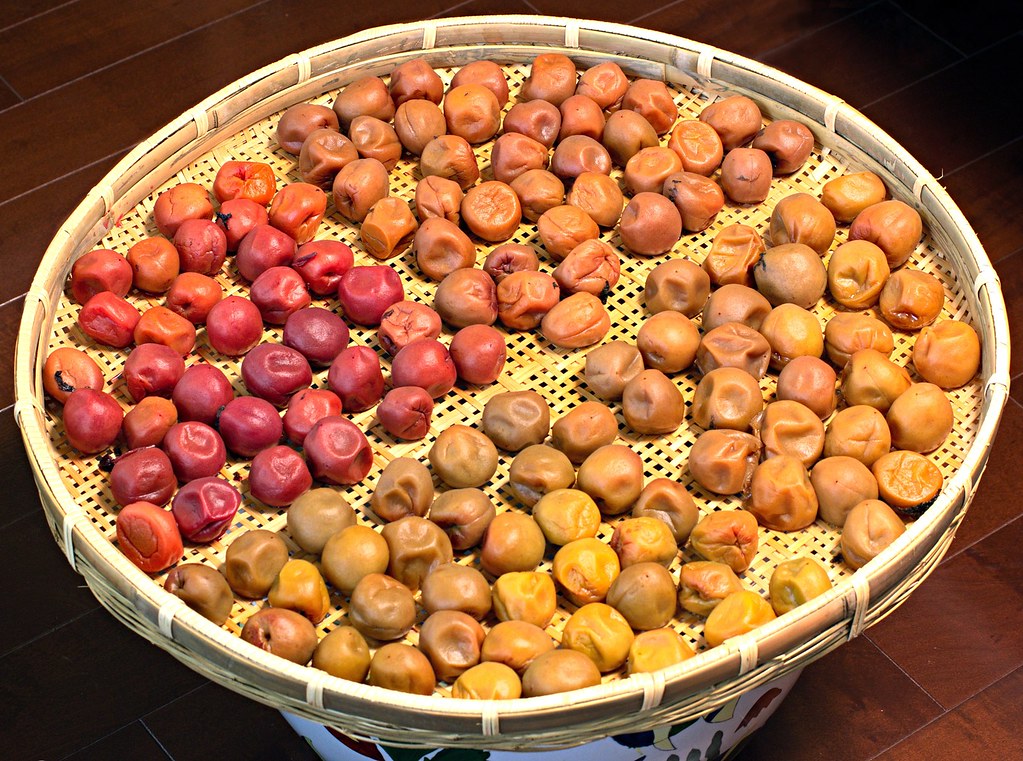
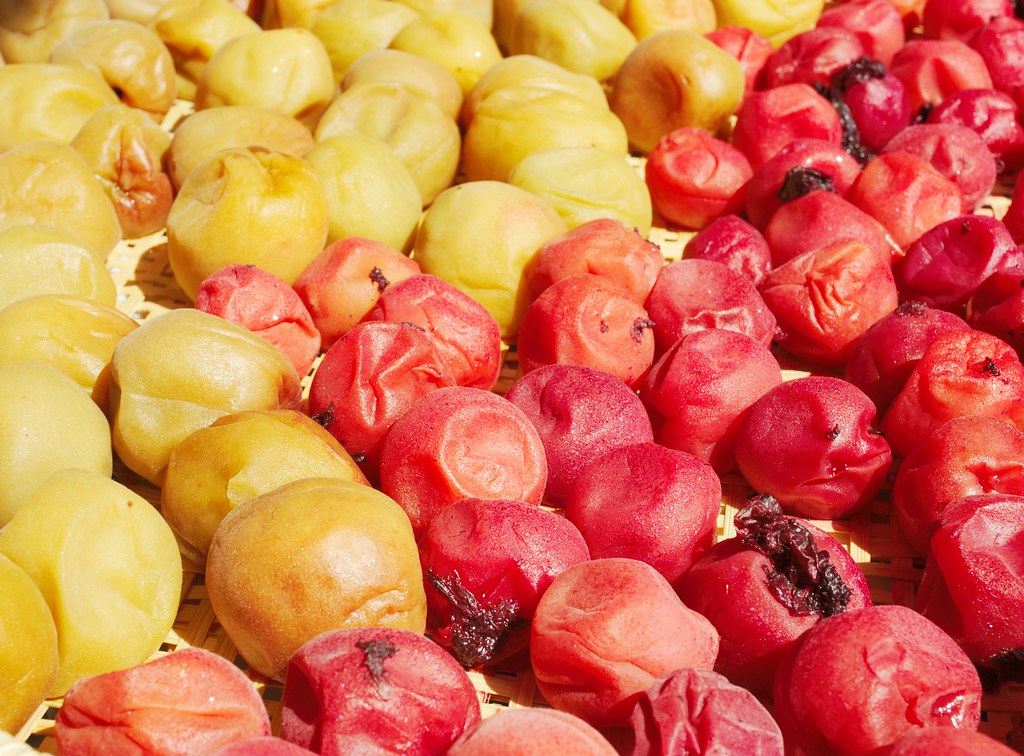
Note that you don't actually need full sun all the time, just dry, clear and hot weather. Our balcony is in shadow for half the day and it doesn't seem to affect the process at all. This is the sieve with the four different kinds of ume we're making.


Dry Ume

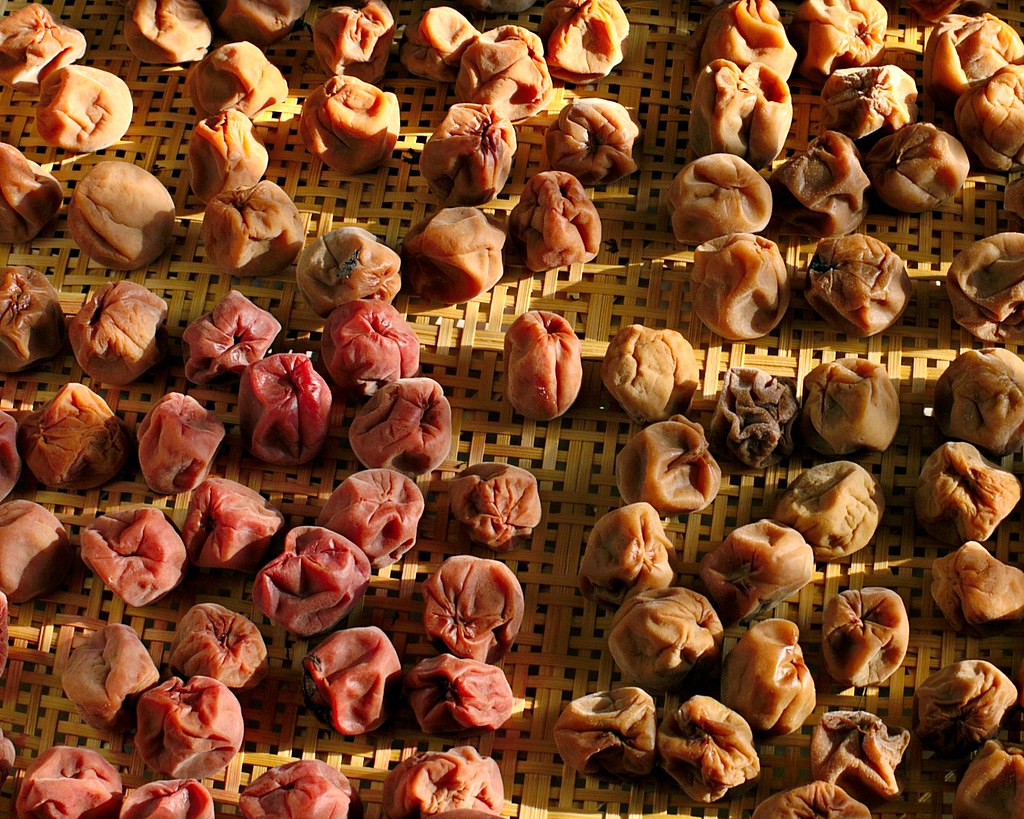
After three days of drying, they'll start looking all scrunched up and shriveled and feel fairly firm to the touch - though it depends on the kind of ume you're using, and the kind you're making too; note how different they are from each other.


Ume Ume

Here's the same type of ume (the "lots of shiso" one) before and after drying. Once they're done, you return them into the brine jars. You're supposed to be able to eat them almost directly after, but it's probably a good idea to let them be for a week or so at least, so they get to soak up a bit of liquid and stabilize.


Once done they'll be good for at least a year. The only risk is getting mold on the surface, apparently, but we've never gotten that so far. We're on our final jar of last year's umeboshi right now and they taste great; if anything the flavour keeps developing over time, making them intensely savoury by now.

Wednesday, June 24, 2009

Umeboshi

We're making umeboshi this year in addition to the umeshū I wrote about earlier. Umeboshi are sour pickled Japanese plums; chewy but soft, sour but savoury. They're very popular and you can find multiple brands in any store. You eat them as a topping on rice, as an onigiri filling, or just straight up. A favourite of mine is to chop up one or two umeboshi, mix the pulp with a bit of soy sauce and use the resulting paste as a flavouring or dip for gyouza.

The process is a little more involved than making umeshū. The name means "dried plums", and drying them is one step along the way. What we'll do first is to pickle the plums in brine for a month or so. Then we'll sun-dry them for a few days and finally return them into the brine again. This creates the soft chewiness and very thick, succulent, savoury taste that is the hallmark of good umeboshi. There's several varieties including plain, shiso-leaf flavoured (it gives them a characteristic taste and strong red colour), and honey-flavoured. We're making all of those this year.

Bubbles

Ume soaking in water, with air bubbles forming on the surface.


The basic recipe is 1kg plums, 150g salt1 and a little bit of clear distilled alcohol (white liquor, vodka or something like that). Clean the plums well, then soak them in water for a few hours. Meanwhile, use some of the alcohol to carefully rinse the glass jar and lid. One of the few problems that can crop up is mold and we want to prevent that if possible.

Umeboshi
One jar, after three days. It was
completely full at first.

When the plums are done soaking, put them in the jar. Ideally there should be just enough to completely fill up the jar. Be careful that you don't damage the skin of the fruit. Add the salt, then pour about 50cc of the alcohol over the salt so it partially dissolves and dribbles down through the jar. Don't worry if there's salt left at the top. You can interleave the fruit with the salt if you want but it's not necessary. Many people use weights to press the plums down but it's not needed - the ume are heavy enough to sink on their own - so we don't bother with it.

Now we wait. The salt will start drawing out liquid from the plums, and pretty soon there'll be a pool of brine at the bottom. In time the liquid level rises and the plums shrink. You can carefully turn the jar over about twice a day for the first couple of days if you want to make sure the salt dissolves and all the plums get soaked in the liquid. Be careful that you don't damage them, though; they're getting pretty soft. After three days or so the fruit should be completely submerged.
 
Umeboshi
The shiso has just been
added and the colour is
already spreading.

Shiso

Shiso leaves. This is enough for 2-3 kg ume.

If you're making umeboshi with shiso, the shiso leaves go in after 3-10 days, depending on the recipe - basically, you can add it at any time after the ume is covered in the brine. You can get prepared leaves if you want, or buy a bagful of fresh ones. The preparation is really easy: Take a big bowl of leaves, sprinkle about two tablespoons of salt over them, and start rubbing the salt into the leaves with your hands. They'll soften, shrink and release a lot of red liquid almost immediately. After a couple of minutes that big heap is reduced to red water and a lump of soggy leaves. Add the lump of leaves to the jar.


This is as far as we'll get for now. The ume are quietly pickling in their sour, salty brine for the next six weeks or so. We'll take the next step around the Obon holiday in early August and dry the plums in the strong summer sun.


--

#1 Recipes are typically 12-18% salt by weight. That's a lot of salt. Most of it ends up in the brine, not the plums though, and you don't eat more than one or two plums at one time so it's OK. Don't skimp on the salt; it prevents mould.

Wednesday, August 13, 2008

Obon

The Obon holiday is upon us here in Kansai. Up to a whole week off where we're supposed to leave the city for our home towns to celebrate our ancestors. Of course, my "home town" is rather ill-defined (where I was born? Where I grew up?) and on a different continent; Ritsuko's home town is Chuuo-ku in Osaka city so we're already there, no travel required, with the family grave a quick bicycle ride away. But many people are travelling this week; there'll be fireworks and festivals, polishing up family graves and general attention will lavished on the old folks still living in some rural district far away from the big cities.

I have the entire week off. We are going to Kobe a couple of times - we just recently found another excellent Indian restaurant - and see friends and relatives. This weekend we went out to eat and watch the fireworks with a cousin of Ritsuko's and her husband. Today we're seeing the World Press Photo exhibition that opened in Osaka this week. This travelling exhibition of the best in news photography over the year was very good last year, and I have no doubt it will be fun this year too. The exhibition is held all over the world, basically, so check out the website and if you can, please go.

A week off also means taking the time to do some of those projects and chores that always end up unfinished. I'm trying to get an old camera working, so I'm making a shutter speed meter (very simple, just using a photodiode connected to the computer microphone input), and I'll be trying to get back on an old project of mine doing a small independent rover (where, incidentally, I'll have use for the same speed metering circuit as above). It's been long enough that I may simply need to start over - I don't even have the computer with the original code anymore. Since my project ends this year I'm looking into what I should be doing next, and having a week off is a good time for that; I'll probably post more on this at some point.


Umeboshi
If you make your own umeboshi (pickled plums) then Obon is the perfect time to take them out to dry. They've been pickled in salty brine since June, and now they'll dry out, becoming firm and meaty. You need three days or so of sunny weather, and you need to watch the weather so you can get home and take them inside in case of rainshowers. When dried, they go back into the brine which they'll partially soak up and creating a very juicy, savoury balance of tastes. We are doing two kinds this year; one jar with shiso leaves creating the intense red color and adding some flavour, and one jar without shiso. Both should be good.