Monday, December 15, 2008

Recipe: Homemade Soba noodles

The New Year is coming up, and one tradition is to eat soba noodles. Soba is a common kind of noodle in Japan, along with udon and ramen. They're thin, dull grey noodles made of buckwheat with a rustic appearance. The flavour is a bit nutty and gritty, unlike udon which, being made of wheat, is similar to pasta.

You eat soba either hot in a bowl, perhaps with deep-fried vegetables or other toppings; or cold, dipped in a cup of salty sauce and slurped. Soba was first made only with buckwheat so they fell apart very easily (buckwheat doesn't have gluten). Because of that they were steamed rather than boiled, and often served right out of the bamboo steam tray, called "zaru". Nowadays the buckwheat is mixed with some wheat and boiled, but cold soba - "zarusoba" - is still traditionally served on a bamboo tray.

Last winter we made homemade soba. I was completely convinced that I posted a blog entry about this at the time, but as it turns out I never did (or I just can't find it). Better late than never.

When you eat it at home you normally just buy a pack of dried or fresh soba. But it's fun to try to make things yourself, and if you're not living in Japan dried soba can be difficult to find, so it's well worth taking a shot at making it by hand. The original soba used only buckwheat (there's still restaurants serving that). Today you usually use a mix of two parts wheat to eight parts buckwheat; the wheat gluten helps hold the noodles together and lightens the taste a bit. Below I'll be using equal parts buckwheat and wheat, a common mix, and easier to work with.
Soba Ingredients

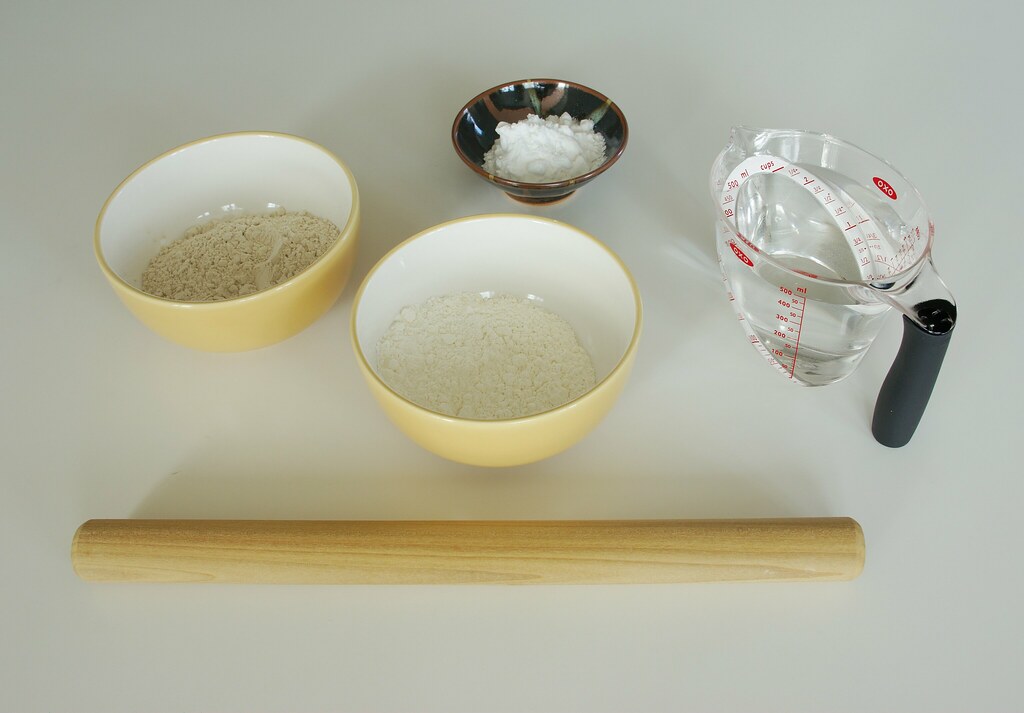
The ingredients: Buckwheat flour, wheat flour, potato starch (actually "katakuriko", dogtooth starch, but potato starch works the same) and water. We'll need a rolling pin and a bowl too. I used equal parts buckwheat and wheat; for a bit more authentic noodle you should use 8:2 but that's a bit harder to work. Water is about half the flour by weight.

Mix

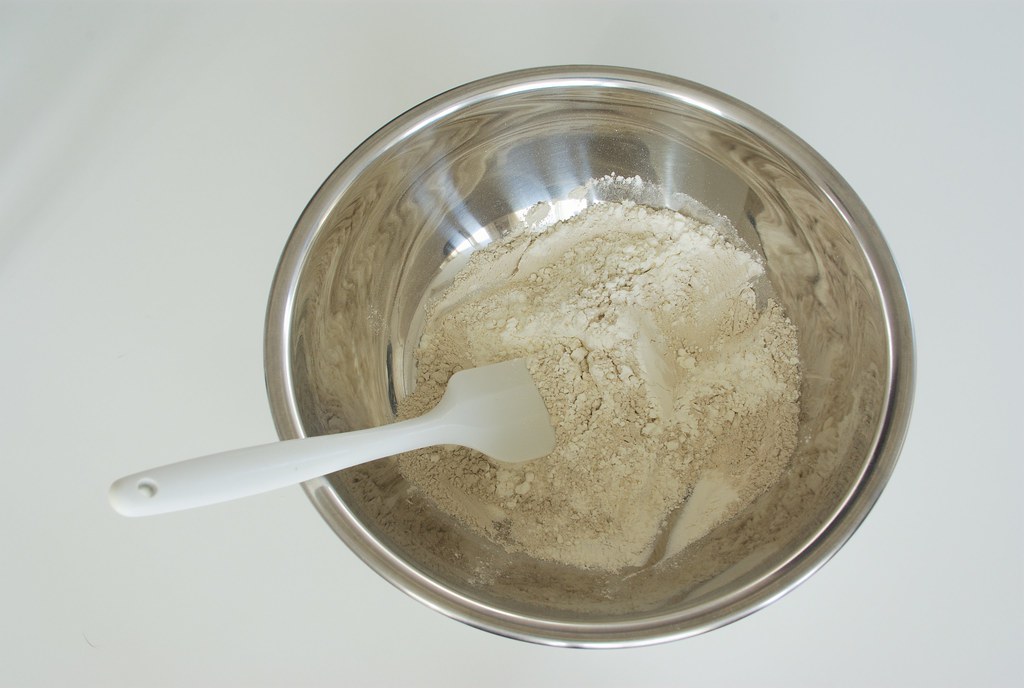
First, mix the buckwheat and wheat flour together. Make a dent in the center of the flour mix and pour in some water. Mix it well together; it should become a fairly dry ball of dough. A rule of thumb is that the dough should feel like pinching an earlobe.


Work the dough

Work the dough very well, by repeated folding and stretching. Here is where I made a major mistake: I worked the dough only for about five-ten minutes, like I do when baking bread. You should work it longer. Shape the dough into a smooth ball with no air pockets.


The reason you work dough is for the gluten in the flour to attach to itself and start forming long protein chains, and those chains are what holds the whole thing together. But with a dough that is only part wheat the gluten proteins has a harder time finding copies to attach to. Also, a wet, loose dough lets the molecules slip around and move about quite easily but in a dry dough like this it is much more difficult for them to move around and attach to each other.

A wheat-only dough or a really wet dough does not need to be worked much. But a dough like this needs to be worked a lot, much more than the few minutes I gave it. There is in fact a long sequence of steps for working soba dough, and if you follow those steps you will have worked the dough enough at the end.
Roll out the dough

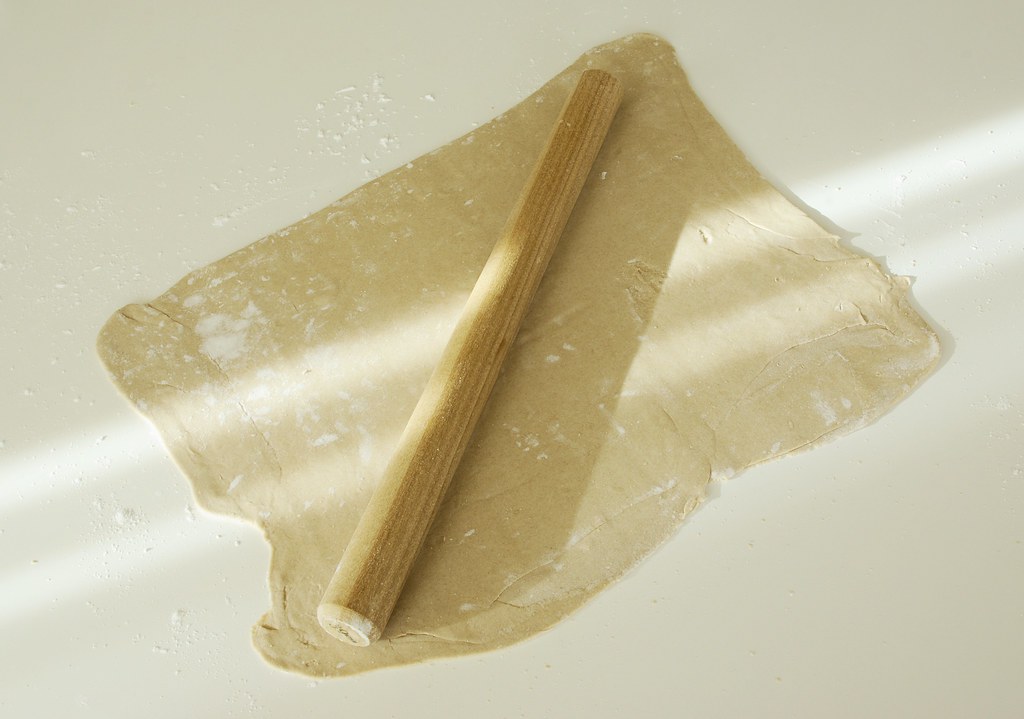
Roll out the dough with the rolling pin, using the katakuriko (or potato flour) to avoid it sticking. First make a large round sheet, then you make it square by repeatedly rolling up the dough on the rolling pin, roll it out, then repeat at a 90 degree angle. Sprinkle katakuriko (or potato starch) to avoid sticking. However you do, you should have a square or rectangular sheet in the end.


Fold the Sheet

Fold the sheet into thirds, with plenty of katakuriko to avoid any sticking. Put the dough on a cutting board.

Cut the Soba

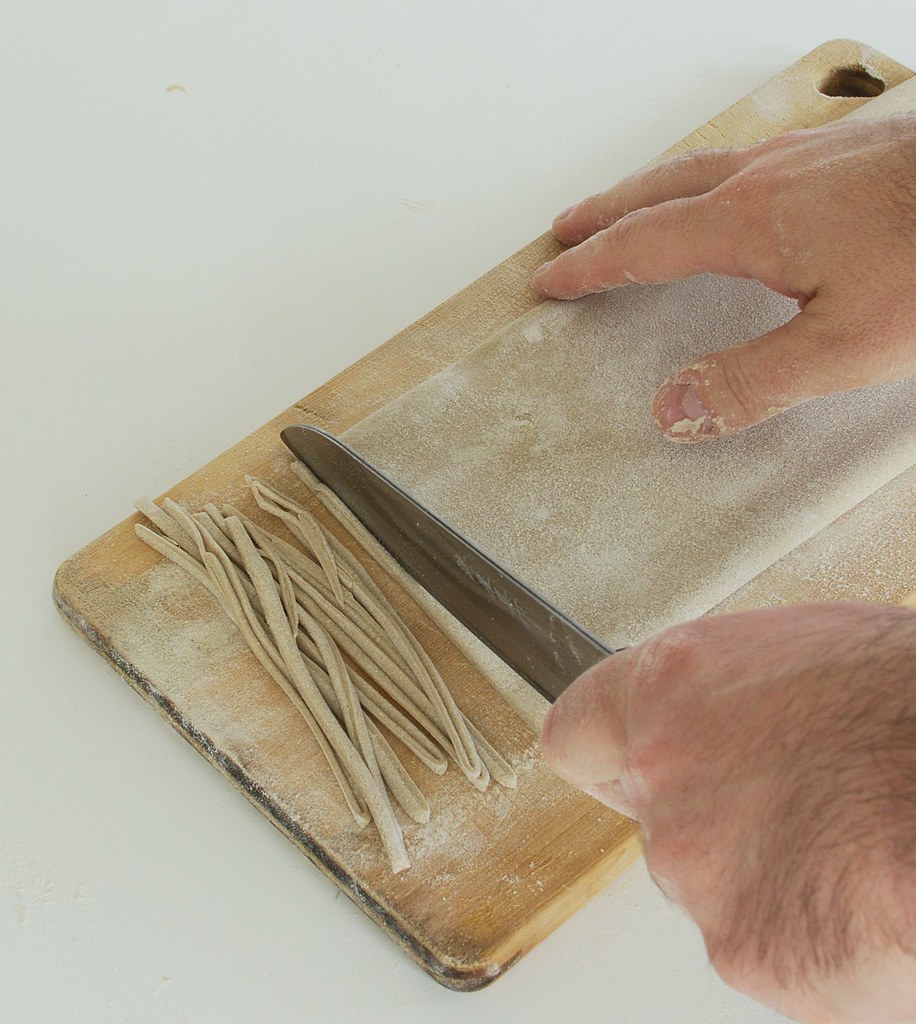
Use the largest knife you have to gently cut the dough into thin, thin strips. This is not that easy. Ideally you should have a special sliding board on top to guide you and a huge, cleaver-like soba-knife to cut the noodles. Just using a large, sharp kitchen knife works though.

Finished Soba

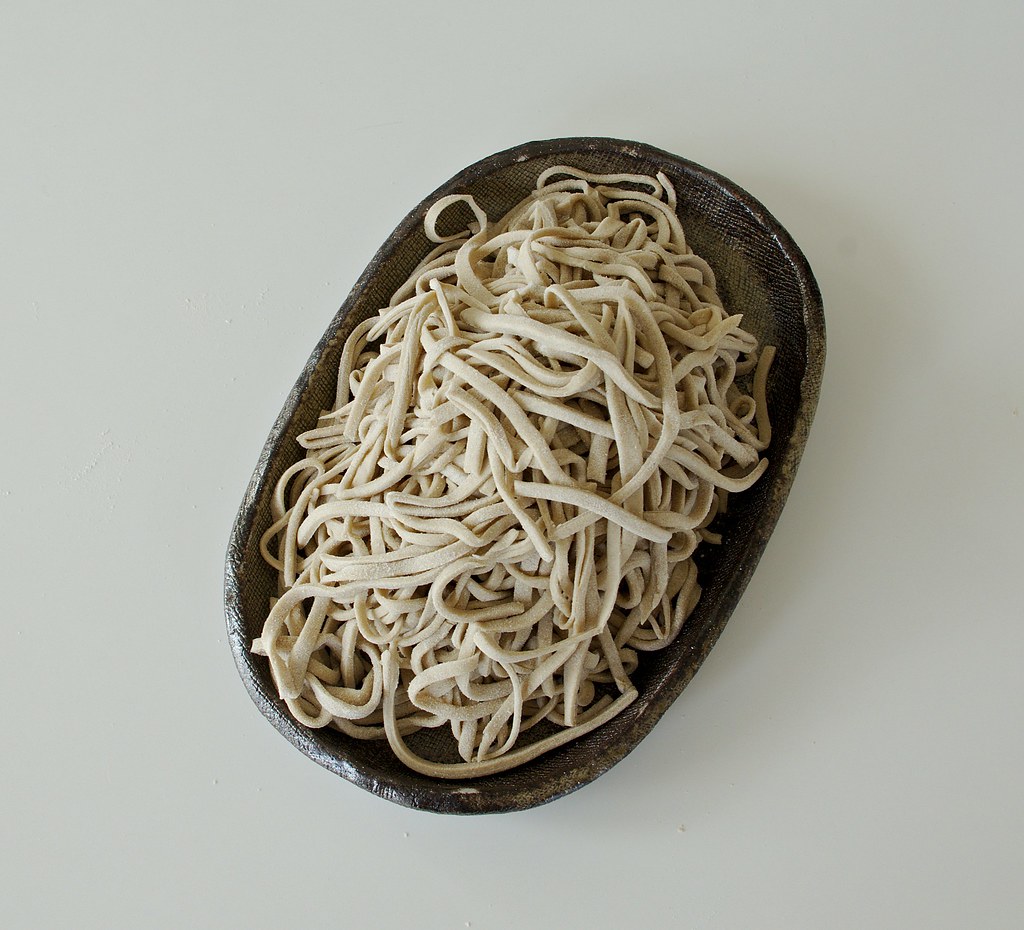
Fluff up the noodles a bit to make them separate properly and get rid of excess starch. Boil up water, then boil the soba for 1.5 minutes or so. Immediately dunk them in cold water to stop them cooking further. As I didn't work the soba enough previously, our noodles tended to fall apart as they cooked, giving us short, stumpy noodles rather than the long ones we're supposed to have.


Bowl of Soba

You can eat soba cold with a dipping sauce (boil up dashi stock, soy sauce and mirin at about 5:1:1 ratio, then chill) or as here in a hot broth (3dl dashi, 15ml soy sauce and 1/2 tablespoon mirin per portion mixed and heated) with finely cut spring onion and deep-fried vegetables.

Wednesday, December 10, 2008

The Devotion of Suspect X

Or, "容疑者Xの献身" in the original. The book, a murder mystery, is part of a series by Keigo Higashigo. It's fairly recent and due to be turned into a movie. Compared to Reason it is a significantly easier read, and the book is shorter as well, so it should be reasonably quick. On the other hand, as it is easier I have time to really make sure I do understand everything so it may not be that much faster overall. I started it on the 1st of December and have read the first chapter. I thought I'd summarize each chapter here as I finish them. If you intend to read the book and don't want to know the plot it may be a good idea to skip these posts in the future.

Chapter 1

Our tale starts with Tetsuya Ishigami, teacher in mathematics, on his way to work in a Tokyo school. He is sharp-eyed and friendly, as evidenced by his reflecitions on the people he meets during his walk. On the way, he stops by the Bentencho lunch-box takeout place. This is not strictly because he needs lunch, but because of his secret crush on the shop assistant..

..Yasuko Hanaoka, divorcee and former bar hostess. She left hostessing for a shop assistant job when her daughter Misato was getting old enough to start school. When shop owner Sayoko Yonezawa points out that the teacher guy seems to have a crush on her and knows which days she comes to work, Yasuko freaks out. She has no favourable impression of the middle-aged and chubby Ishigami and worries he may be stalking her. The reason for her distrust soon becomes clear as the shop gets a visit from her estranged former husband..

..Shinji Toshige, smooth-talking former car salesman; you can practically hear the oily hair and too-sharp suit in the text. He swept her off her feet when they first met at a bar; they married, had Misato and Yasuko quit working. But soon Toshige was fired for embezzlement and he settled on a life of drinking and gambling while Yasuko returns to bar hostessing to earn money, money which he promptly takes from her. Tired of the abuse she finally files for divorce, but he continues to stalk her and her daughter and demanding money until she quits her job and moves away to start over at the lunch-box restaurant. I don't think we're supposed to like this guy very much.

He insists that they get together again for unstated reasons and he threatens to catch Misato at her school if Yasuko doesn't agree to meet him after work. He sneers, he even laughs evilly. She meets him after work and refuses his advances. Once she gets home, however, it turns out he's followed her. He forces himself in, smokes against her wish, makes a general nuisance of himself, and pockets some of her money almost absentmindedly. Really, all the guy needs is a goatee and a cape and the character is complete.

As Misato comes home he is naturally a complete bastard towards her as well. As she flees into another room, he follows her briefly then returns and starts to leave. As he bends to put on his shoes Misato shows up - and swings a heavy copper vase at the back of his head, felling him like an ox. Is he hurt? Is he dead? Is he going to be not happy at all about this? Ah, but that will be made clear in the next chapter...

Monday, December 8, 2008

JLPT 1

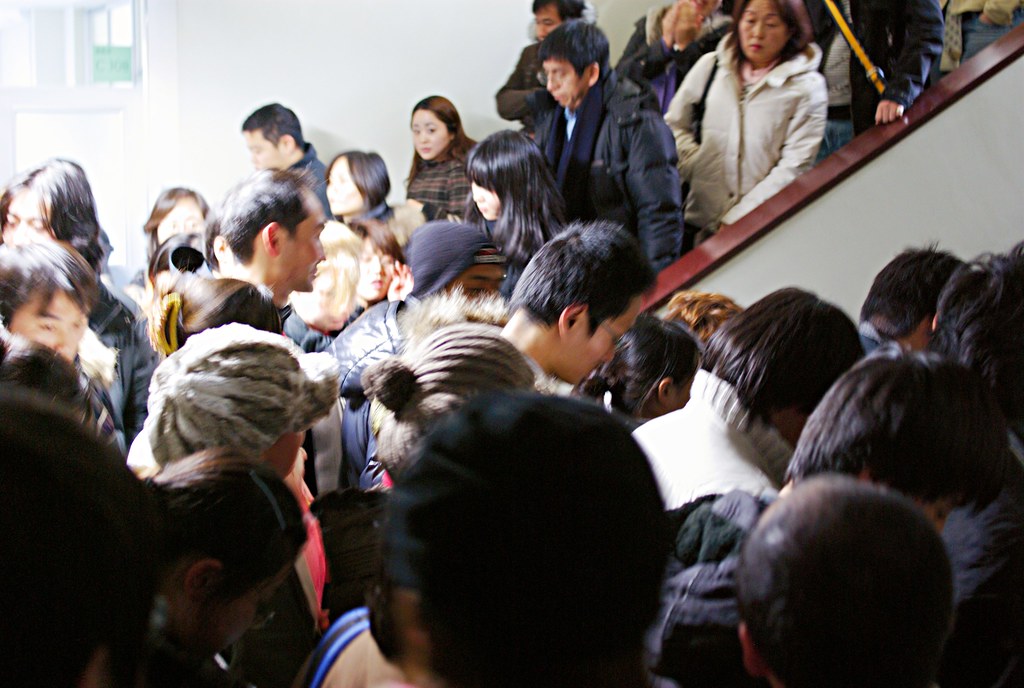
Yes, it's this time of year again, when Japanese learners of all levels leave their solitary dens to gather and mingle like lemmings, if lemmings were to mingle in unheated university lecture halls on an early Sunday morning in December. And today, after one years absence, I gathered with all the rest.

Flow
Flow.


As I accidentally passed level 2 two years ago, my next - and last - level is level 1. I plan to try to take it next year, and so I took level 1 now just to have a base of comparison. That means I did no studying or preparation whatsoever for this year, not even looking at an earlier test; I want to see what I know and what I don't. So of course I'll flunk this one. That's OK; it's on purpose.

Testing

This is not an easy event to photograph. Worn classrooms aren't intrinsically photogenic, and I think it'd be impolite and perhaps even a breach of privacy to post an easily recognizable image of a test-taker. Oh well.


First of all, kanji and vocabulary. It is a lot more difficult than level 2 was and I didn't stand a chance. This is the most criticized part of the level 1 test as the questions frequently go beyond just testing your knowledge and into the realm of word puzzles. You may be asked to match words using the same kanji given only their pronunciation, for instance. Ugh. Some practice is called for here. So far my kanji studies have been piecemeal and ad hoc; it seems I'll need a more structured approach the coming year.

The listening part went so-so; not very difficult as such, but I did miss a fair few questions due to my deficient vocabulary. I didn't expect to have to work a lot on my listening and it looks like I won't have to.

Reading was the positive surprise of the day. I managed to pass level 2 mainly on the strength of this section and again I did a lot better than I thought I would. Spending every weekday morning the past couple of years with my nose in a book has been paying off I guess. Again my limited vocabulary tripped me up a lot, but I even though I thought I was too slow in reading everything I still managed to have almost 40 minutes left for the grammar section. Again, I won't need any specific reading practice for next year.

The grammar... I've never enjoyed studying grammar, and I've only just started covering the frequently obscure or rare grammar that comes up at this level. I actually knew a couple of the grammar questions, could make informed guesses on some but basically just answered most of them completely at random. I really need to get to work on this.

The maximum score is 400, and the passing score is 280. If you just guess on everything you can expect around 100 points. Me, I should have somewhere around 150-180 points or so I think. Which is fine - the lower my current score, the more I'll have improved when I retake it next year after all.

Friday, December 5, 2008

H.M. Has Passed Away

In the news today, H.M. has passed away. "H.M.", well known by anyone who has ever studied brain science or neuroscience, are the initials for a patient who had radical surgery in 1953 in order to stop his debilitating epilepsy seizures. The surgery involved removing both Hippocampus and Amygdala on both sides.

This did indeed stop the seizures, but it also gave him profound anterogade amnesia - he could no longer form new memories. He could remember most things up until a few days before his surgery, but could not form any new long-term memories after this point. Think about it: every morning he woke up believing it was still 1953 and he was still 27. Doctors and nurses that had seen him for years had to introduce themselves to him if they left his side for a few hours.

He became one of the most studied people in modern medicine, and his tragic case taught us an enormous amount about how memory actually works. Generations of brain researchers know about him and the research his case has spawned. It is through him, for instance, that we know that semantic, or episodic memory - remembering events, for instance - is different and distinct from short-term memory and procedural memory. You can learn to do something without ever remembering having learned it.

At one time a researcher brought H.M. a Tower of Hanoi puzzle. H.M. cheerfully admitted to never having heard of the puzzle in his life. He worked on the puzzle until he somehow managed to solve it, after which the researcher left, taking the puzzle with him. The next day the researcher returned. For H.M. this was all new again: he had never heard of the puzzle (or the researcher) in his life. He worked on the puzzle until he solved it, and the researcher left.

This went on for some days. And every day, H.M. would manage to solve the puzzle faster and better until he clearly had "got" the way you solve it. But while he clearly had learned the optimal solution to the puzzle - procedural memory - he still had no recollection of ever having heard of the puzzle. Procedural memory and declarative memory are different systems in the brain.

In 2002 Nature Neuroscience published a review article (PDF) that summarizes half a century of research with H.M. and his life during that period. It's well worth reading.

Henry G. Molaison, now no longer anonymous, passed away at age 82. In accordance with his wishes, a detailed autopsy will be performed on his brain.

Wednesday, December 3, 2008

Hanko Typography

The owner of Neat & Grog here in Osaka sometimes holds barbecues at his parents place. His father is a former hanko maker. A hanko is the namestamp you use here instead of a signature. It's usually the kanji comprising your family name laid out in a circle or, sometimes, oval or square. In my case I have no kanji of course so my hanko spells out my family name in katakana instead. They can be simple, like mine, or very large and complex, as in the case of official hanko for businesses or public authorities. People will usually have more than one stamp, with one official hanko, and one or more casual stamps. The official one is registered to your name at the local ward office; you'd use that one only for important business like buying a house or car, or dealing with your bank. Then you have one or more casual stamps you use for signing post packages, receipts and so on.

Hanko are sometimes criticized as being inherently unsafe, since it is possible, if somewhat tedious, to copy the exact image. But then, a signature is just as insecure - if not more so, as a persons signature varies quite a lot, making it even more difficult to determine if it's the "same" signature. But that is beside the point. The real value of signatures and hanko lies not in the markings on a piece of paper but in the act of applying the mark. You have a standard gesture where you show that you accept or approve whatever the document is stating. Making that gesture, especially when witnessed by third parties, is what confers validity. The resulting mark is secondary.

Book of Hanko

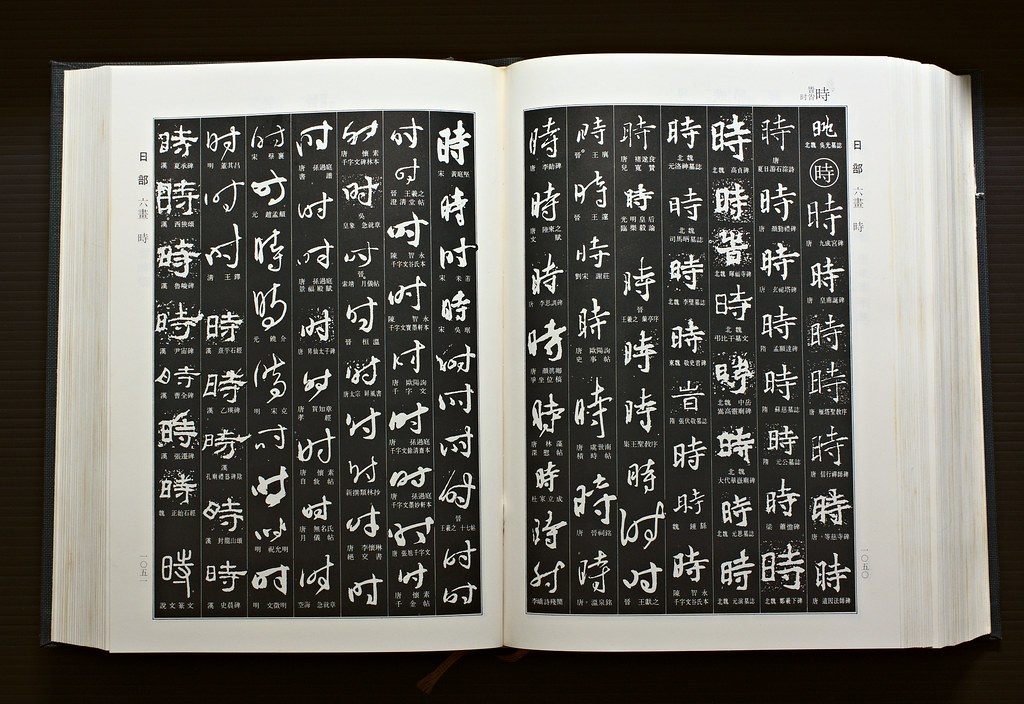
Book of hanko. This page has variations on the character "時", "time". Click on it to see it larger.


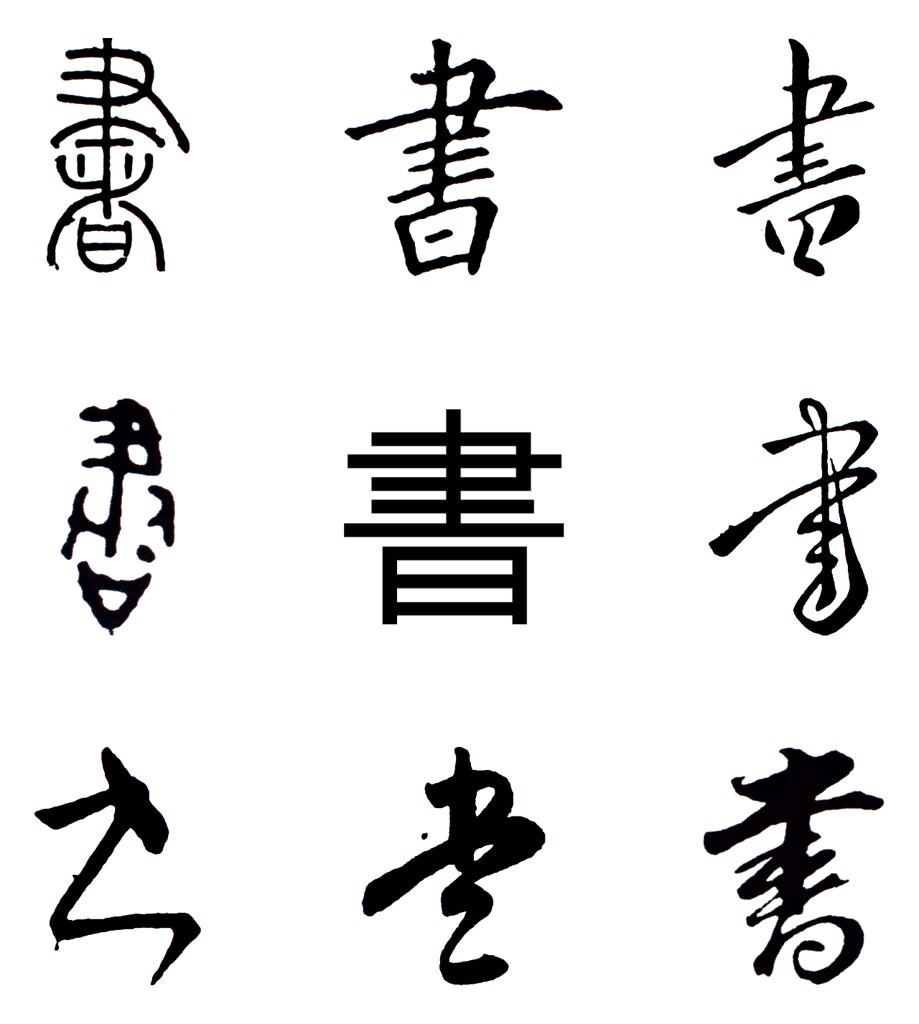
Anyway, as a hanko maker he has a lot of books related to the business, and one I found intensely fascinating was a collection of hanko from different makers, grouped by character. It gives a focused view of just how large a variety of graphical forms can still be considered the same in some abstract sense. Those of us who have grown up using the roman alphabet are quite used to seeing wildly varying letter-forms and think nothing of it, even when they're so obscure as to be unreadable out of context. The enormous variety hits you more when you see to see it in graphical forms you're not familiar with to the same intimate degree.

Write

The character "書", "write", with the standard block-type version in the center, surrounded by a selection of forms from the book, inverted and resized to be easily comparable.

Monday, December 1, 2008

Minolta SRT 101

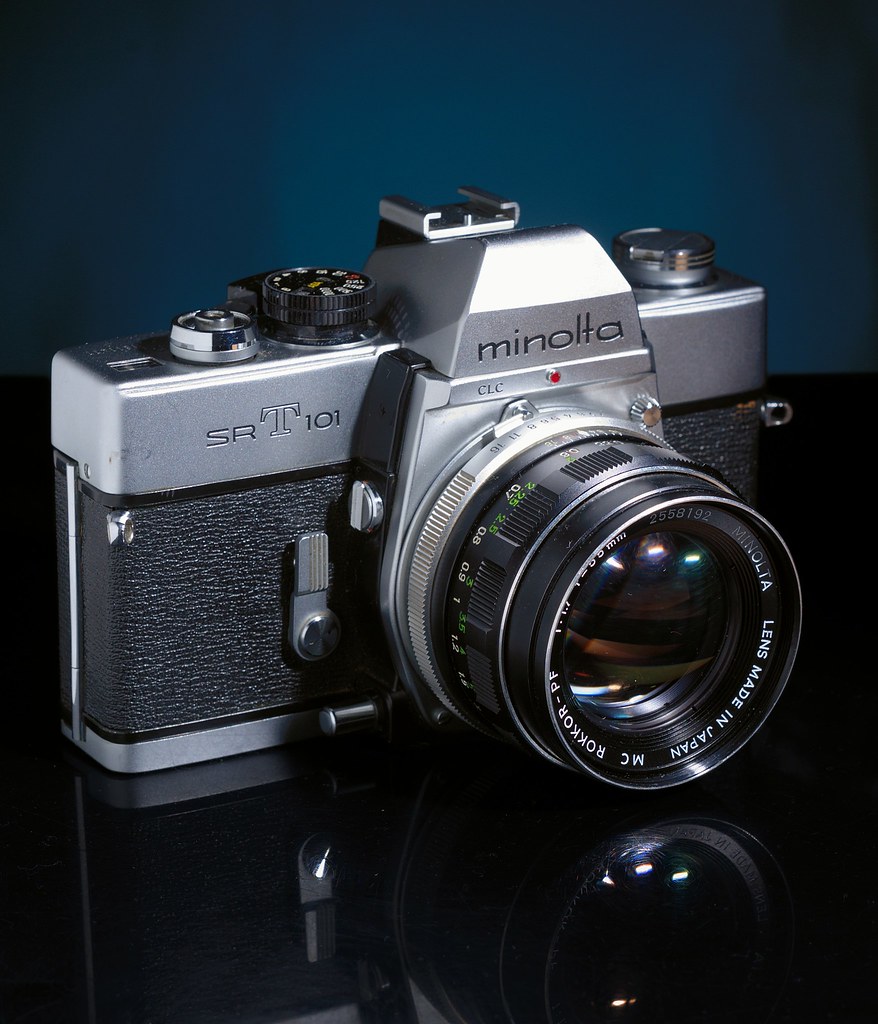
Minolta SRT 101
Minolta SRT 101


The Minolta SRT101 is one of the classic cameras of the 1970's. It was introduced in 1966 and was in production for fifteen years - an eternity by today's standards. It was hugely popular, in part because of its light-metering system, but also because it is an extremely solid, reliable camera with a large array of high-quality lenses available. This is not a "vintage camera"; it is quite capable of excellent results used today, and apart from autofocus there is nothing this camera lacks compared to its modern counterparts. Except for it being a film camera, of course; I'll come to that.

This is notable for being one of the first mainstream cameras with "open aperture metering". It meant that unlike earlier SLR cameras, the lens aperture setting is coupled to the body, so the camera knows which aperture you would be using. The light meter measures the light with the lens wide open, then compensates for the aperture you'll actually use. Very convenient, and perhaps obvious today, but it was a real innovation at the time.

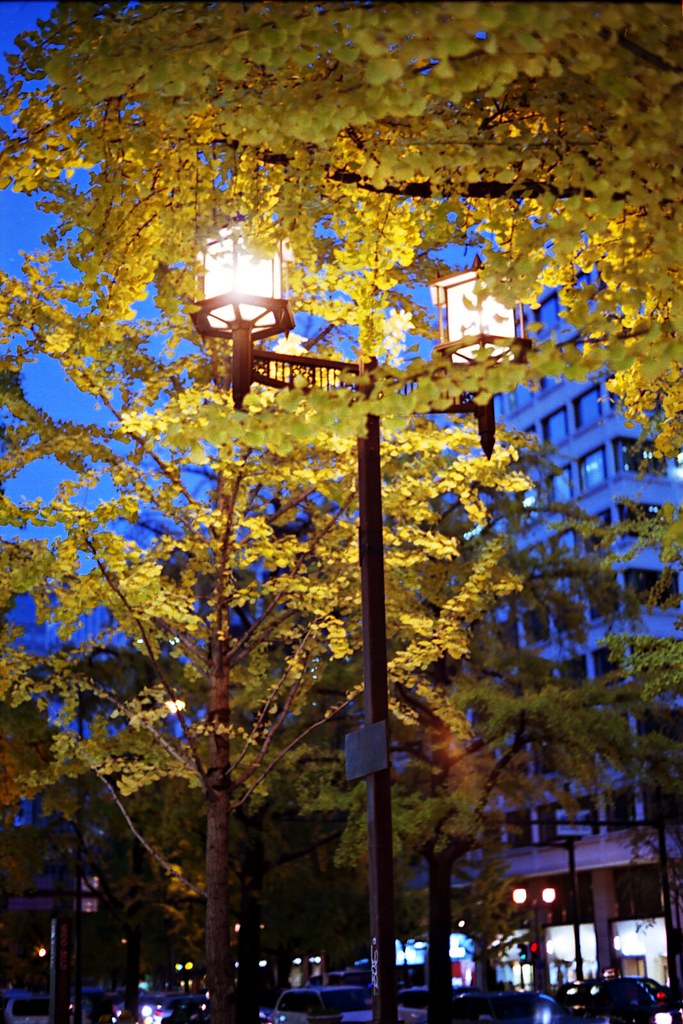
Evening Light
Autumn, Midōsuji street
Mirror lockup used

This camera has several other real benefits such as a dedicated mirror lock-up knob. When you take a picture, the mirror inside slams up so the light can reach the shutter instead of the viewfinder, but that jolts the camera and creates blur at lower shutter speeds. To avoid that, especially on a tripod, you want to fold up the mirror beforehand. Many modern DSLR cameras unfortunately hide this useful function in some obscure menu (Pentax, to their credit, have a really smart function for this). This camera has a very convenient dedicated lever for it. And when something is convenient you tend to use it, which results in better images.

But the most notable feature of this camera is the body itself. It's squared-off, all metal, and built to last. To make it short, it feels like a steel ingot in your hands. This is good and bad. Good thing is, it can probably take quite a lot of abuse with only superficial wear and tear. On the downside, it really is quite heavy; it certainly feels heavier than my K10D despite being a lot smaller. It's dangerous in a way; it feels so solid and reliable you tend to forget to be careful. And solid or not, if you bang it hard enough the small mechanical assemblies inside are not going to like it very much. In reality, of course, modern camera design with a rigid metal cage surrounded by a plastic shell is lighter, cheaper and just as durable, if not more so.
 
But while the time of all-metal bodies have gone, the shape is a different matter: A square slab with well-defined edges feels much better in your hands than the rather bulbous, swollen camera bodies of today. A modern DSLR feels like a large balloon-animal toy version of the Minolta. They look like they have the mumps. I really, really wished camera makers could return to this kind of sleek, well defined body shape.

As far as taking pictures with the Minolta, things are remarkably simple. Look through the viewfinder, adjust aperture and shutter speed until a little paddle thingy matches the light meter needle, focus and shoot. Film has a remarkable latitude so this simple light meter is plenty accurate enough, and as the camera has an old-style coarse ground glass it's very easy to see when you're in focus (unlike today's brighter but smaller viewfinders).

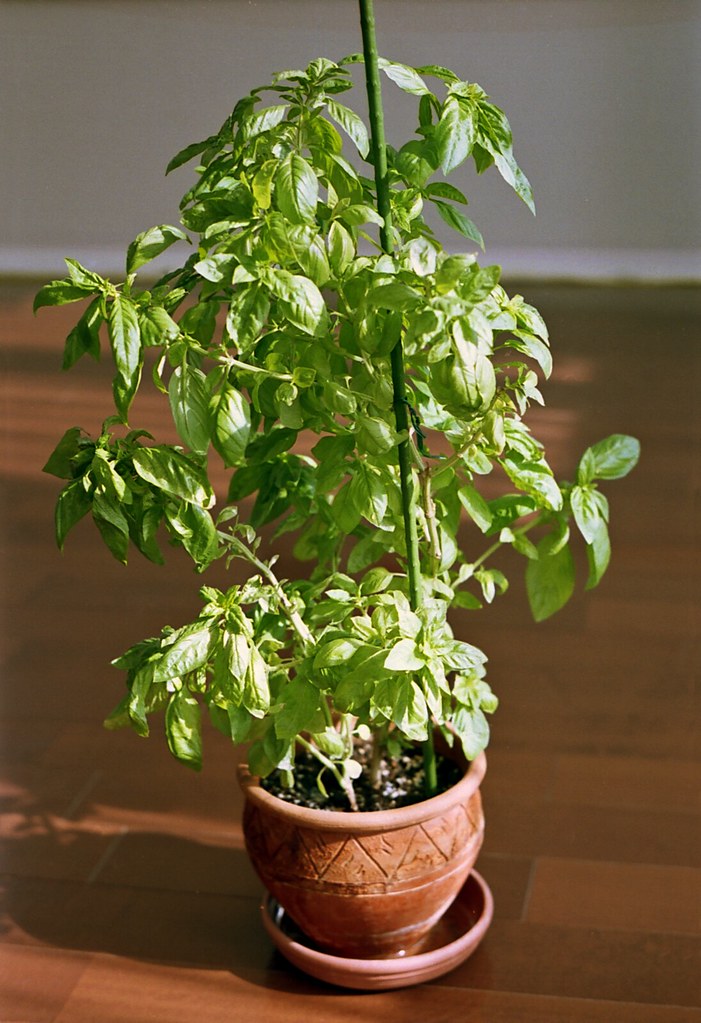
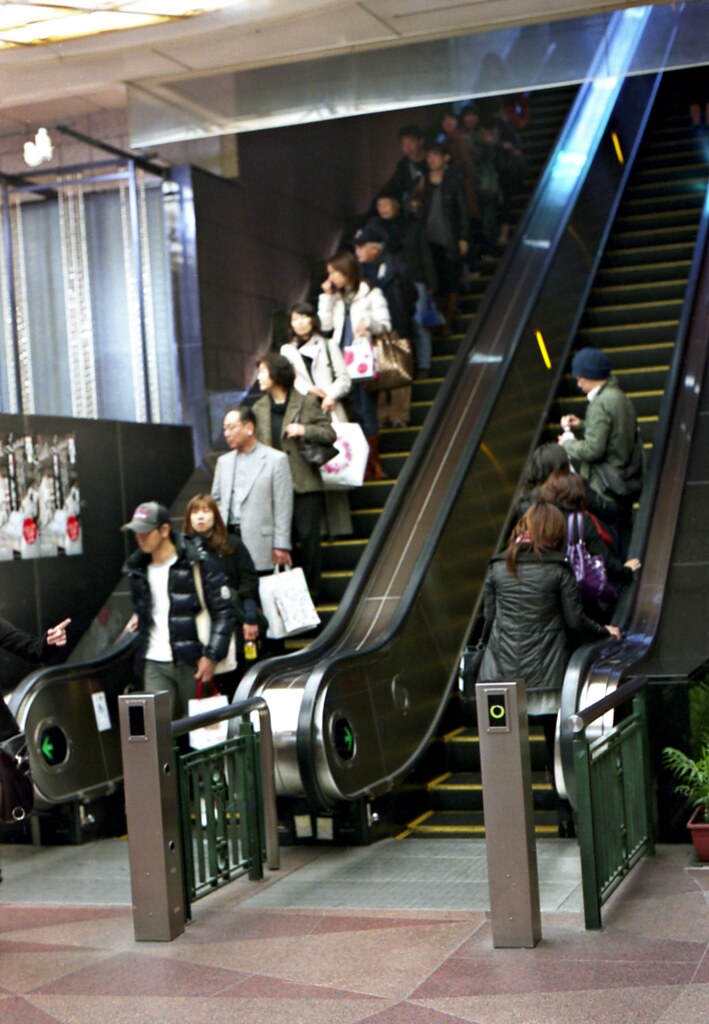
Basil Crysta

Our basil plant just before we cut it down to make pesto; and the escalators in Crysta Nagahori leading up to the street level. White balance used to be an issue with film, but when you process the images digitally you can tweak it as much as you want.


And About That Film Issue?

The last issue is that of film. I've already mentioned that I've started to use film in addition to digital. But that is medium-format film, and black and white rather than color. the thing is, the larger the film area the easier it is to get good results, and the easier it is to scan. We may think of 35mm - and APS format digital SLRs - as a consumer format, if we even realize that other formats exist. But because the film or sensor area is relatively small it needs higher quality lenses and higher precision than medium format to achieve good results.

Medium and large-format lenses are usually less sharp and resolve less detail than 35mm lenses, and - counterintuitively for a "professional" format - they are cheaper as a result. Sure, there are medium format lenses that approach the resolution of a good 35mm lens but they're relatively rare and expensive. With all that sensor area medium format lenses don't need to be very sharp; instead some sharpness is sacrificed in exchange for lower noise and higher dynamic range.

Basil and Mikan Basil and Mikan

The same scene shot with 35mm film (left) and digital SLR (right). Somewhat different colors, and a somewhat more muted rendering with the film version than the digital one. I think I prefer the film version in this case.

As far as resolution there's no meaningful difference I can see when comparing the negative with the digital file. In reality, neither film nor digital camera sensors are constrained by resolution any more; it's other factors like lens aberrations and resolution, diffraction and so on that are the limits today.


This same principle holds at the other end too. Medium format negatives are really large and forgiving so even a mediocre scanner will still get a high resolution, decent quality scan out of it. But with the small frame size of a 35mm negative you need a better scanner for decent results. We have two scanners at home - an old but good quality flatbed that Ritsuko uses for work and I scan medium format with, and our HP all-in-one printer, copier and scanner which also has the ability to scan 35mm film.

The good quality flatbed does a decent job, with low noise and OK color rendering, though white balance needs to be adjusted afterwards. Flatbed scanners normally achieve only half their theoretical optical resolution or even less, however, so at a practical limit of 1200 dpi this one gives rather small images for 35mm. The all-in-one is a fine document scanner and copier but for film it gives results so bad that I won't even show them here; they're completely useless, with lots of shadow noise with some strange random shot noise, blocked highlights, striping and wonky color rendering (not just a white balance problem, but wrong altogether). Lesson: for scanners the low end really can be worse than nothing.

In the End

I'll keep using this camera, I think. It's a stellar camera and the 50/1.7 normal on it does it justice. For all its bulk it is still smaller than my MF cameras, and it should be fun to keep it in the bag as an always-around camera. Not sure if I'll keep using color film or if I go with BW here too, and start developing 35mm myself as well. Time will tell. The whole set of images is available here.

Thursday, November 27, 2008

No Reason

I've finally finished "Reason" by Miyuki Miyabe, after just about a year of reading, mostly on the morning train. To recap, the story begins with a multiple murder in a Tokyo high rise; four people are dead - three stabbed inside the apartment, one jumped or pushed from the balcony. It turns out they are not related to each other in any way even though they lived together as a family.

Miyabe explores the reasons for the murder by looking at the lives and backgrounds of all the people involved with or touched by the events. It is written in a documentary style where the author interviews people about a year after the crime, trying to piece together the events leading up to the murder. We often get to hear about the same event or situation from different viewpoints; sometimes the recollections differ so much they could be different events altogether. Some characters are appealing and likable, others are truly disagreeable. But Miyabe treats them all evenhandedly and with a surprising amount of sympathy and understanding.

「理由」 means "reason" or "motive" but also "pretext". The title alludes to unearthing the reasons for the murder, but the actual murder is really only discussed in the first part of the book, and then again at the very end. The crime is just a pretext for Miyabe to delve into the lives of a disparate group of characters that would otherwise have little in common. And I really mean delve; even staffage characters that would otherwise come and go within a single paragraph can still get a page or two with their life story, their concerns and their worries. It seems clear to me that Miyabe is really writing about the lives of all these ordinary people, and the crime story is there mostly to give her a reason to do so.

So, how was it?

The book is difficult. Really difficult; in fact, my teacher first recommended it to me but soon had second thoughts. She realized that it was too difficult for my level, but decided not to discourage me by telling me so. At first I could barely manage two or three sentences over one commute, and even now towards the end I manage perhaps five or six pages on a good day. One reason is that we have a lot of people in the book, more than a dozen central characters and perhaps twice as many again in supporting roles. All of them have their own way of speaking, often using Tokyo dialect, schoolyard slang or rough spoken language. In one chapter a lawyer was using legal language and terminology to such an extent I basically gave up on understanding it all and just focused on getting the gist of his explanation. When a plot follows just a few central characters you get used to the way they speak, but here we keep shifting from person to person, never staying long enough to really get comfortable.

The second source of difficulty is her use of unusual or archaic writing. A Japanese word can often be written either in hiragana or kanji, and sometimes with a choice of kanji. Problem is, Miyabe has never met an unusual kanji she didn't like. Some words are normally written using hiragana, such as "ある", to exist; but Miyabe prefers to use the unusual kanji form "在る" whenever she can. The word "listen" is normally written as "聞く" but Miyabe prefers to use "訊く" instead, with the same meaning but rare enough that my Japanese-English dictionary doesn't even have it. ALC has 774 example sentences using "聞く", and 1 (one) using "訊く". A few unusual forms like this is OK, but she uses them a lot, and that slows down my reading something fierce. It's like linguistic flypaper, trapping the freeflowing tale in a sticky mess of obscure language.

With that said, the book is good. It is, in fact, excellent. I spent a year slowly reading through the slow story, endless digressions and asides, and getting caught in the language traps she litters throughout the text - and yet I never once thought about quitting, that's how good it is. She is simply a very engaging storyteller, and can relate something seemingly banal, like the business difficulties of a sandwich shop, in a way that makes it interesting, even engrossing. The most ordinary lives cease to be ordinary once they get depicted with skill and flair. If you can read Japanese (and better than me, preferably) you could do much worse than to pick this one up.

What's next? Don't know yet. I'll wait a bit before I decide what to tackle next. Another mystery or crime novel would be good, though a little easier and faster to read. I'll see what my teacher will recommend; this one was an excellent choice so I have no doubt her next suggestion will be good too.