Showing posts with label books. Show all posts

Wednesday, March 14, 2012

Britannica Gives Up The Printed Encyclopedia

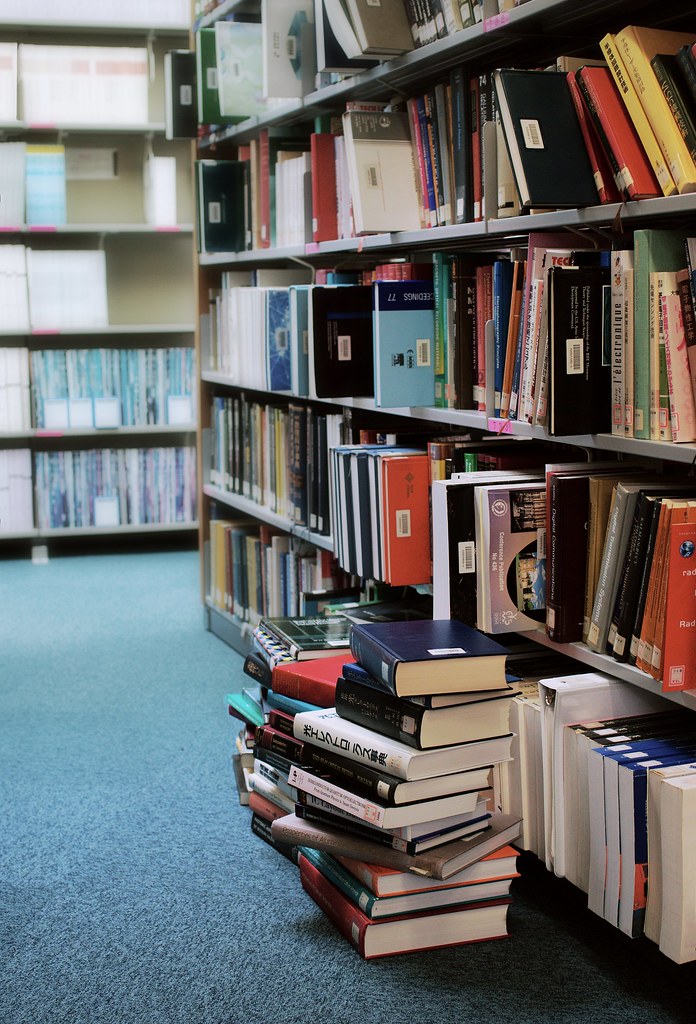
Library

So, Encyclopedia Britannica sees the writing on the wall and stops publishing a printed version. I'm not surprised, and neither is, I suspect, anyone else. Searchable collections of facts is exactly the kind of thing that an online resource does very well and a paper version does badly.

The printed encyclopedia is limited by the practical size of the books, by the lack of portability, by the lousy search interface (good luck finding it if you don't know the name) and by the lack of updates. It is expensive, cumbersome to use, rarely there when you need it, and obsolete before it even leaves the printing press. There is no question that abandoning the printed version is the right decision.

A better question, I think, is if this kind of encyclopedia has any future, online or not. They are getting badly mauled by Wikipedia, true, but even more by the net at large. If you want to know about, say, the Minamata disaster then you're not going to Britannica.com. You search Wikipedia or simply google for it and check the promising links off the first couple of pages. If that happens to include a Britannica link then fine, but usually it does not.

People like to argue that a tightly curated resource like this is far better than, say Wikipedia — to say nothing of the net at large — but the truth is, the rate of errors is about the same. Wikipedia also tends to be far more comprehensive, both in breadth of subjects and depth of coverage, and with timely updates. And even Wikipedia pales compared to the resources of the whole net.

Yes, you do need to read Wikipedia critically, and the wide internet even more so. The world is full of pranksters, trolls and people with an axe to grind. But you need to read an encyclopedia with the same critical eye. You can't trust them blindly any more than you can trust any one resource. And no, you can't normally cite Wikipedia in a scholarly work, but then, neither can you cite Britannica.
 

Compare "Minamata disease" for Wikipedia and Britannica. Note the difference in the amount of detail they give you. Also note that Wikipedia has detailed references to external resources — scholarly works as well as general media, on-line and off — for the facts in the story, as well as extensive cross linking to related aspects of this item. If you want to learn about this disaster, there is no doubt which is the better starting point. And if Britannica has fewer errors here it is only because it has almost no information there to get wrong in the first place.

And if you leave the neat Wikipedia compound and venture out into the net at large, you'll find a huge trove of information. Tens of thousands of images, articles, film clips and eye-witness accounts; thousands of books and research papers about the medical, environmental, biological, chemistry, nursing, political, societal, cultural, legal, economic and mental health aspects of the disaster; and more opinionated writing about anything related to it than you can shake a very long stick at.

It is simply not possible for Britannica or any single resource to match this array of content. Wikipedia makes itself very useful by adding a large collection of links to other resources about every aspect of the story. But Britannica does not; its article just sits there, isolated and kept apart from the great, messy web of information surrounding it. It gives you no help in finding more and better resources, and thus gives you little reason to go there the first place.

I wonder how long Britannica can stay afloat on dwindling institutional subscriptions and advertising sales. I wonder if anyone will notice when they no longer do.

Monday, March 5, 2012

Don't Buy From Amazon (Before you Browse Around)

Kanda
Kanda, Tokyo

I've come to realize, recently, that Amazon is not always the best place to buy books. Not because I've had any problem dealing with Amazon and not because I'm concerned about their business practices (though there may be reason to be), but simply because they often don't give you the best deal on the books they sell.

A few months ago I bought "A Practitioner's Guide to GNU Autoconf, Automake, and Libtool", which, by the way, is an excellent primer on the very underrated Autotools — if you know what Autotools is, you need this book. I bought it from Amazon as usual, but discovered later that if I had bought it directly from the publisher, I could have received the ebook along with the physical book for just a little more money than the physical book alone. An searchable ebook version would be very useful for a reference work like this. In fact, No Starch Press (linked above) seems to give you that deal for every book they publish.

And last month I bought "Liars and Outliers" by Bruce Schneier as an Amazon ebook (it's a good read so far). Ebooks from Amazon are locked; you can't copy the book or make backups, and you can only read them using Amazons own Kindle software. Amazon have on occasion removed access to books from people who have paid for them. You don't really own the book when you "buy" from Amazon in other words, and I don't get important books as ebooks from them as a result. This book is the kind you only read once, though, so it didn't really matter to me.
 
But again, soon after getting the ebook I discover that I should have looked elsewhere first. O'Reilly (see the link above) offers the book for about the same price and completely unlocked. Had I bought it there I would now own it outright, not just rent it from Amazon, and I'd be able to use my favourite ebook reader, not the one Amazon forces me to use. And O'Reilly also gives you a deal like the No Starch Press above for many of their books, with a paper book and ebook combination for much less than buying each separately.

The take-home message? Browse on Amazon by all means — their site is great for finding things and checking reviews — but don't blindly click that "Buy" button until you have looked around a bit:

  • Check the other major online stores, both the big international ones like Barnes and Noble and the local stores in your country. When you add postage, exchange rates and payment fees it may well be cheaper to buy elsewhere.

  • Check the publishers' own websites. The price may not be lower, but the product you get — book and ebook together; unlocked ebook; choice of formats; buy three books and get one free — may be vastly better than what you get from Amazon.

  • For recently published books, take a look at the authors own website (yes, they all have one nowadays). They will have links to all the places you can buy their books. They may also have links to all special deals, and they may offer an extra discount through their site as well.

Amazon may have been the best book deal around when they started. But the publishers and other stores have caught up and sometimes surpass them today. Don't be lazy; it's worth looking around.

Thursday, February 9, 2012

I met Lassie
— Drip Of Death!

There's an expression in Swedish translated as "I met Lassie"; it signifies an accidental and somewhat pointless encounter with the rich and famous. Can be things like seeing a political pundit in the supermarket line, having a c-level celebrity ask you for directions, or that sort of thing. Perhaps "A brush with fame" has similar connotations.

A couple of years ago, on my way to work, I spotted a small lizard on the walkway by the Kita-Ikoma train station. I was trying to take a picture of it (I failed) when an older, affable man on the way to the station stopped to look. We got to talking; he's a doctor at a clinic in Osaka and lives in Kita-Ikoma so he commutes the opposite way from me. Since then we often greet each other when we meet in the morning, exchange brief pleasantries, complain about the weather and so on. Seems like a fun guy.

So this morning he waves at me as we meet and pulls out a book: 死の点滴 — "Drip Of Death" — a harrowing mystery of poisonings, murder and hospital intrigue. A mystery that, it turns out, he wrote. And it has now been filmed as an episode for Fuji TV's weekly drama and mystery series, to be broadcast on the 17th of this very month.

Now, I'm sure it's not an immortal classic or anything (what, the title doesn't give that away?) but it's not everyday your random commuter acquaintance turns out to be a published author as well.

Thursday, April 28, 2011

Fold Your Own Book Cover

We got up at 04:40 this morning - hopefully1 - and we've already arrived on Ishigaki island in Okinawa as you read this. We're probably taking a walk around town, looking for lunch and getting a few last-minute things before we take the ferry to nearby Taketomi island where we'll stay for the next couple of nights.

No summer vacation is complete without a shady spot, a glass of beer and a paperback. I feel fully confident in Okinawas ability to supply the shade and the beer (Orion is pretty good), but a paperback I have to actually pick out and bring myself. I'm starting on "Kasha" by Miabe Miyuki; I read her "Riyuu" a couple of years ago, and found it very difficult, but impossible to put down. Now, my Japanese has progressed since then, and Kasha is supposedly an easier read, but Riyuu took me a year, and I expect Kasha will take me months at least. More so now that I read the morning paper on the train, with less time for a novel.

Paperbacks aren't the most resilient of things, and they tend to fall apart when you tote them around in a bag for weeks and months. A book cover is a good way to protect the deathless prose, and not just from wear and tear but also from prying eyes; you can leave your fellow commuters guessing whether that thick volume is Harry Potter or Finnegan's Wake (as if there's any doubt, cover or not).

Book Cover

Kasha, by Miyubi Miyake, and a smallish furoshiki (about 45x45 cm I think). I got this in Kyoto; I like how the two sides are printed in different colors. Any somewhat thick and stiff cloth would do - a cotton sheet might be a little too soft and flimsy to stay in shape, while starched cloth or oilcloth would probably make a very durable cover.


I like furoshiki, those all-purpose squares of cloth you can use to wrap and carry things in. I wrap my lighting stuff in a large blue furoshiki that doubles as a great backdrop. A small furoshiki makes a great book cover. I saw this book cover idea explained in the store I got the furoshiki, and added a step to make the cover show only one side of the cloth.

Book Cover

1) Put the cloth, back side up (our cover will show the blue side) on a flat surface. The vertical size of the cloth needs to be a bit less than three times the vertical size of the book - 2.5 to 2.8 times or so. So, we fold up the bottom edge to make it the right size. You can just fold by hand - especially when you practice - but I like to actually iron each fold to make the cover solid and tight-fitting.


Book Cover

2) Now, the width of the cloth needs to be enough for the entire cover - both sides and the spine - plus at least 4-5cm but less than the side width, for each side. The cloth here is a bit too wide for this book, so we'll fold it to size.

Find where the book will lie in the center of the cloth (fold the cloth in half and place the book in the center, then fold back). We fold in each side enough so that the edge of the cloth - one cm or so at least - will end up under the book itself. Do one side by eye, then measure how much you folded and fold the same amount on the other side. This extra fold will make the book cover an even color.

If your cloth is not wide enough to do this, then don't worry and just skip this step. The front part of the cover will show the opposite side of the cloth. If the cloth is the same color on both sides it won't matter at all, and contrasting colors can make for a cool effect.


Book Cover

3) Here's the tricky fold. Put the book in the center with the cloth folded over it. Then fold back the overhanging cloth on each side back over the book. The edge of each fold should not be flush with the book edge, but should stick out just a few mm - 3-6mm or so - from the edge of the book.

How is this tricky? The amount it needs to stick out depends on the cloth you use, how firmly you want to book to rest in the cover, the thickness of the book bindings, how tightly you do your folds and other things. If it sticks out a lot the cover will be loose. If it sticks out too little, the book won't fit. You may need to redo this a few times to get it just right. You might also want to make this just a little crooked, with the bottom slightly narrower than the top, to make step 6 easier.

Oh, and the extra bit of cloth tucked under the book in step 2 tends to want to slip out, so this is one fold you might want to iron or press firmly. You can use a couple of paperclips to keep it in place until step 5 if you want. If you never did step 2 you don't need to worry about this of course.


Book Cover

4) Now for the vertical folds. Use the book as a measure to fold the top part down. The top part you fold down should not reach all the way down to the bottom edge of the book. Instead, make the part you fold down and the part that is left below the bottom edge of the book about equal in size. Since we made the vertical size a bit less than three times the book height in step 1, this will give you a bit of free space between the folded down top edge and the bottom edge of the book. This is good.


Book Cover

5) Fold up the bottom part to match the book bottom edge. You might want to leave just a mm or two of extra vertical space to make it easy to insert the book.


Book Cover

6) Tuck in the corners from the latest fold under the tabs from the previous fold. Getting this all nice and flat can be a little fiddly. The topmost part of the top fold may be a little wide so you get some extra cloth with nowhere to go. You can sort of adjust the horizontal folds in step 3 a little to account for this (make it ever so slightly narrower toward the bottom), or just iron the extra cloth into a crease; it won't be visible anyhow.


Book Cover

7) Now, slide the book binding into the pockets created by the previous folds on each side. If you got the tricky fold in step 3 right, the book should fit perfectly. If it's too tight the book won't close properly; with too much margin it'll be a little loose. The vertical folds may need adjusting too, though that's much easier. If it fits well you may want to remove the book and iron the cover flat, to make it really smooth and tight.


Book Cover

We're done! Neat and tidy, and it protects the book surprisingly well. The cloth is thickest around the front edge and corners that need the most protection. The cloth will soak up light spills and will keep grime, breadcrumbs, marmalade and other stuff from the book. The front-facing folds make pockets where you can tuck in a pencil or a small notebook2. And when you're done with the book you simply wash the cloth and reuse for the next one. A furoshiki this size will do anything from a small paperback up to a large hardcover.


Book Cover


--
#1 I remember a time, not that many years ago, when four-thirty was still the night before, not the morning after. I'm getting old I guess.


#2 or an electronic dictionary, a cell phone, business cards, subway pass, really flat ham sandwiches (use a rolling pin, go light on the mustard), wads of cash, small screwdriver, tissues, fishing lures, film rolls, filters, condoms, medicine, dried persimmons...

Saturday, March 26, 2011

Nukakas Wedding

I'm still working on The Paper That Will Not Die, and it's draining my enthusiasm for any other kind of writing. Actually, it's draining my enthusiasm for anything, period, and I'm questioning my choice of career1 at the moment. I have daydreams of working as a ramen cook or convenience store clerk; the pay sucks, but the hours are shorter and they don't need to write a paper about their work every few months.

Anyway, I found what seems to be an amazing book at another blog: Nukaka no Kekkon - Nukakas Wedding. The author takes insect behavior and translates it into human fairytales. The resulting stories, written in a children's storybook style, have an almost otherworldly feeling, and they're illustrated in a simple, clean style that goes really well with the stories.

One story is online here: The 100 suitors. It's in Japanese, but only ten pages in total, each one illustrated and with just a short text per page, followed by a page explaining the original insect behavior. Translation below:


1/10 One day, a beautiful woman appeared on a hill overlooking the village.

2/10 It caused an uproar among the men in the village. "Please marry me." "I'm the man for you." "Please choose who you'll marry!" A hundred men were asking to marry her.

3/10 "Please don't worry" she answered, "I'll marry all of you." "Follow me, those of you who want to marry."

4/10 The men jostled to follow her as she left.

5/10 As night fell, they came to a cave high in the mountains. "Here's our wedding place. Please come in."

6/10 As they entered the cave, the men asked impatiently "How on earth are you going to marry all of us?"

7/10 "Like this" she said, and breathed a white mist all over them.

8/10 The men all suddenly turned to stone.

9/10 The woman would turn one man back from stone each year, and marry him for that time.

10/10 Explanation: Many ant species will mate only once in their lifetime, but they will do so with many partners. Winged young queens will mate in flight with as many winged males as possible. The sperm isn't used at once though; instead it is stored in a spermatotheca in her body where it can hibernate for years.

The queen flies off to find a place for a nest. The hibernating sperm is activated, one bit at a time, as needed to fertilize her eggs. In this way ants can mate only once, yet carry the offspring of hundreds of partners. For example, the Japanese wood ant can carry 5000 eggs throughout her 15-year lifetime.


If this free story is any indication it seems like an excellent book. It's out of print, unfortunately, and used copies go for more than I'm really willing to pay. If it gets a reprint, or if I find a used copy at a reasonable price, I'll definitely get it.

Dragonfly

Insects are a different world unto themselves. Kind of wish I'd studied entomology at university when I had the chance.


#1 Well.. what could pass for an actual career in fog, at night, at a distance, if you squint, don't look too closely and get distracted by a circus elephant riding a unicycle at the right moment.

Friday, March 26, 2010

No More Elephants

Book Done

I recently finished "Elephant Time, Mouse Time" that I started last year. Took a little longer to read than I thought. Unlike fiction, you want to read popular nonfiction fairly closely so you don't miss anything, and there's plenty of specialty words even in a very accessible book like this. Not sure when I'll have use of words like "echinoderm" (it's 棘皮動物 for those who want to know) but I'm sure it'll come in handy.

So what's next? For now, nothing. Instead I'm trying to read the newspaper. I select one article from the previous evening paper and read it during my commute in the morning. One article may not sound like much - and the first read-through is fairly quick - but with the heavy kanji use and subject-specific vocabulary the second reading is usually slow going. And if I ever finish a piece before I arrive I have a whole paper worth of other articles to choose from.

So far it does seem to improve my vocabulary more than reading a book. Not surprising, as a book is all about one thing throughout while articles are about wildly different subjects. On the downside, a newspaper is a bit large and bulky to wield in a cramped commuter train. We'll see how it goes.

Wednesday, November 4, 2009

Elephant Time, Mouse Time

Library
In my copious spare time1 I'm reading another book after finally getting through "The devotion of suspect X"2. This time I'm not doing a novel, but a non-fiction popular science book. It's a good change of pace, and as a bonus I get to practice some useful vocabulary you don't encounter in most fiction or news reporting.

The book is "ゾウの時間ネズミの時間ーサイズの生物学" ("Elephant time, Mouse time - the biology of size") by Tatsuo Motogawa. It's a look at how body size affects various aspects of animal life. The title itself suggests the overall theme: An elephant and a mouse have very different life spans, but their lives scale with size. A mouse has a much faster generation time, it moves and reacts much faster than an elephant - it must look hopelessly slow and ponderous to a mouse - and even their internal organs work faster. The mouse may end up doing as much as the elephant throughout its life so they live "as long", subjectively, even though the life span is very different.
 
There's chapters on energy use and food intake, how the size of prey versus size of predator, movement range and population density, cellular activity, speed, organ size and so forth. The book is not just about mammals either; it covers related differences between warm-blooded animals, insects, unicellular animals and water life versus land life as well.

At about 230 pages including appendices it's not a big, heavy book. I've read about a fourth of it so far and I find it both enjoyable and very accessible. There's a bit of specialized vocabulary of course (I'd find it disappointing if there weren't) but his style is clear and direct so it's not a problem. The math is minimal, and what there is, is clearly explained and presented. The appendices give more background for those who need or enjoy such things.

If there's one thing I find a bit annoying it's his occasional tendency to insert largely irrelevant observations on Japan in the text. This is something a fair number of Japanese writers seem to do, though; there's even a thriving publishing genre comparing Japan to other countries, always either doom-and-gloom negative or fiercely patriotically positive.

A less scrupulous blogger would probably spin long involved yarns about how this preoccupation reflects on the Japanese society and its insecurities (and so falling prey to the exact same phenomenon they try to analyze). Me, I don't think this is exceptional at all. Everybody loves to hear about themselves, and it's just the form of self-affirmation that differs. The simplistic "We're Special so We're #1!", "We're Special so We're Doomed!"-format is just one that resonates with part of the Japanese public. It's simply akin to when other people slap their flag on every available flat space, or obsessively compare athletic, technical or historical accomplishments with other countries.

These distracting detours aside - and in truth there aren't many of them - it is a fun book; engaging and inspiring enough that it makes me wish I'd studied ecology as a student. It doesn't seem to have been translated, but if you do know Japanese - or if you study it - you can certainly do much worse than to pick this one up at your local book store.

As an aside, this was published in the 中公新書 (chūkōshincho) book series. There's several series of small, inexpensive pocket books here that are either reprinting older works or publishing narrow-interest books like this one in various fields. This series seem to publish a lot of popular academic (science and the arts) and technical works. I've also bought - but not yet read - a biography on Euler, a work on insect neuroanatomy and a book by a retired JR train driver on the design and operation of railways3. They all seem very promising, so I'm not wanting for reading material once I finish this one.

--
#1 My blessed half-hour of peace and solitude on the morning train. The evening ride is for studying Japanese.

Seriously, even ignoring the money - just the parking fees at home and work would almost reach my current monthly train cost - I wouldn't want to commute by car. This free time is too important to waste on driving.


#2 I know I wasn't very favourably impressed with it. But it turns out it may not completely be the books' own fault. I read it after finishing Reason by Miyuki Miyabe. Ritsuko is also reading another book now, after she finished a Miyabe book series, and she, too, finds that wanting, even though it's a book she should like. It may simply be that Miyabes works are so good that whatever you read afterwards becomes a let-down by comparison.


#3 Why yes, I am a geek. How did you guess?

Sunday, September 20, 2009

The Devotion of Suspect X

I'm finally done with "The Devotion of Suspect X", with the murder exposed, guilty parties behind bars and all the rest. It took almost ten months - much too long, really. I could have finished it much faster, I guess, but by the end I just wasn't all that interested in the story or the characters.

As I wrote already, the problem is that it's a standard murder mystery, meant as a quick, fun read on your commute or during a trip. It's meant as chewing gum for the grain for a few hours. The story is inconsistent, the characters are two-dimensional and poorly motivated and the mystery itself has lots of logical gaps. But these traits don't matter at all; you hardly notice them as you skim through the book.

But when you study a language you don't skim. You're not quick. Instead, you scrutinize every sentence for minutes at a time, looking for clues to the story, to the characters behaviour or simply to grasp the basic meaning. And a quick read like this is simply not written to withstand such close scrutiny. So even though Yougisha X was an easier book to read than Riyuu, it took almost as long, simply because the flaws in the book kept putting me off.

It's not a put-down on the author at all - the exact same is true for, say, Agatha Christie, Ellis Peters, Dan Brown, John Grisham and all the rest (I do like to think that PD James would perhaps hold up better). Their books are fun, but pretty much fall apart if you start thinking too much about the details (and Dan Brown, to be honest, doesn't even need much thinking; I gave up on his bestseller partway through, something I almost never do).

Anyway, the take home lesson is: if you're going to read a book slowly and in detail, you're better off picking a book that is intended to be read that way. Even if they are more difficult you end up having more fun, and probably learning more since you're not tempted to skip or skim.

My next book? I've already picked it, and I've even read a bit already. No, it's not another Miyabe Miyki. We actually bought "Mohouhan" (copycat killer); the problem is, it's a five volume series and according to Ritsuko (who has been reading them) they're just like Riyuu, with lots of characters, asides and detours that only vaguely connect with the main story. It is fun, apparently - Riyuu was fun too, after all - but five volumes worth means I'd be occupied with the series until about 2013, which is a little longer than I want to commit to any one book.

I'll write about the new book once I get started on it properly.

Thursday, November 27, 2008

No Reason

I've finally finished "Reason" by Miyuki Miyabe, after just about a year of reading, mostly on the morning train. To recap, the story begins with a multiple murder in a Tokyo high rise; four people are dead - three stabbed inside the apartment, one jumped or pushed from the balcony. It turns out they are not related to each other in any way even though they lived together as a family.

Miyabe explores the reasons for the murder by looking at the lives and backgrounds of all the people involved with or touched by the events. It is written in a documentary style where the author interviews people about a year after the crime, trying to piece together the events leading up to the murder. We often get to hear about the same event or situation from different viewpoints; sometimes the recollections differ so much they could be different events altogether. Some characters are appealing and likable, others are truly disagreeable. But Miyabe treats them all evenhandedly and with a surprising amount of sympathy and understanding.

「理由」 means "reason" or "motive" but also "pretext". The title alludes to unearthing the reasons for the murder, but the actual murder is really only discussed in the first part of the book, and then again at the very end. The crime is just a pretext for Miyabe to delve into the lives of a disparate group of characters that would otherwise have little in common. And I really mean delve; even staffage characters that would otherwise come and go within a single paragraph can still get a page or two with their life story, their concerns and their worries. It seems clear to me that Miyabe is really writing about the lives of all these ordinary people, and the crime story is there mostly to give her a reason to do so.

So, how was it?

The book is difficult. Really difficult; in fact, my teacher first recommended it to me but soon had second thoughts. She realized that it was too difficult for my level, but decided not to discourage me by telling me so. At first I could barely manage two or three sentences over one commute, and even now towards the end I manage perhaps five or six pages on a good day. One reason is that we have a lot of people in the book, more than a dozen central characters and perhaps twice as many again in supporting roles. All of them have their own way of speaking, often using Tokyo dialect, schoolyard slang or rough spoken language. In one chapter a lawyer was using legal language and terminology to such an extent I basically gave up on understanding it all and just focused on getting the gist of his explanation. When a plot follows just a few central characters you get used to the way they speak, but here we keep shifting from person to person, never staying long enough to really get comfortable.

The second source of difficulty is her use of unusual or archaic writing. A Japanese word can often be written either in hiragana or kanji, and sometimes with a choice of kanji. Problem is, Miyabe has never met an unusual kanji she didn't like. Some words are normally written using hiragana, such as "ある", to exist; but Miyabe prefers to use the unusual kanji form "在る" whenever she can. The word "listen" is normally written as "聞く" but Miyabe prefers to use "訊く" instead, with the same meaning but rare enough that my Japanese-English dictionary doesn't even have it. ALC has 774 example sentences using "聞く", and 1 (one) using "訊く". A few unusual forms like this is OK, but she uses them a lot, and that slows down my reading something fierce. It's like linguistic flypaper, trapping the freeflowing tale in a sticky mess of obscure language.

With that said, the book is good. It is, in fact, excellent. I spent a year slowly reading through the slow story, endless digressions and asides, and getting caught in the language traps she litters throughout the text - and yet I never once thought about quitting, that's how good it is. She is simply a very engaging storyteller, and can relate something seemingly banal, like the business difficulties of a sandwich shop, in a way that makes it interesting, even engrossing. The most ordinary lives cease to be ordinary once they get depicted with skill and flair. If you can read Japanese (and better than me, preferably) you could do much worse than to pick this one up.

What's next? Don't know yet. I'll wait a bit before I decide what to tackle next. Another mystery or crime novel would be good, though a little easier and faster to read. I'll see what my teacher will recommend; this one was an excellent choice so I have no doubt her next suggestion will be good too.

Thursday, August 21, 2008

Halfway

I'm at chapter 10, page 337 of Reason, where Naomi Ishida explains where and why he decided to become an architect. That's just about exactly halfway. Since my last update it's been around 50 working days, and 184 pages, for 3.6 pages per day on average - call it 3.5. At that pace it's 95 days to finish the book, or just over four months. To finish the book within a year I'd have to step up the pace a bit. Which I won't; the pace fits the book, and taking just a few minutes every morning doesn't intrude into anything else.

I just wish Miyabe - the author - didn't have such a ravenous appetite for asides and digressions. This latest digression on the importance of a well-designed internal environment in public buildings for people's well-being is kind of fun, but I don't so far see how this actually relates to the four murders that the book is about; I doubt it was a mad murdering rampage caused by a flickering fluorescent strip.

Saturday, April 19, 2008

More Reason

I started on "Reason", a Japanese crime novel, last December, as I've mentioned previously. It's really addictive - I must know why the Koito family has fled; what Katakura lodging house has to do with the murder; and why the superintendent has to air out one of the empty apartments every week to remove a strange smell (I actually asked my teacher this; she just laughed and asked if I really wanted to know beforehand).

I've been reading it during my morning commute, and yesterday I reached chapter 5 ("The hurting woman") on page 153. That makes 93 weekdays for 148 pages (it starts on page 7) - that's about 1.5 pages per day. Now, my average reading speed lately is a bit more than 2 full pages every morning (dialogue is fast; the digressions on the Tokyo housing market are really slow). I'll keep speeding up as I learn more, to three pages or so. That's 15 pages per week, and as the book ends on... *leafing through the back* ...page 676, that makes 523 pages to go, taking 34.8 weeks, to finish the book in early December.

At 10 minutes per page that's about 110 hours of entertainment, which really isn't bad value for an 800 yen paperback. Japanese fiction is nothing if not cost-effective.

Thursday, February 28, 2008

Rules of Shelving

LibraryThere's a weirdly interesting discussion going on about how to shelve books on a few blogs. It started on the arts side, where one suggested methodology is to only display books that you have actually read (the "pretentious git" strategy). A dissenting voice argues that instead we should display books we would have read had we been the kind of people we would like to be (the "pseudo-intellectual poseur" method). Appearances seem to trump usefulness for these people.

Over in the real world, we have the put the books where they are used strategy, and the put them anywhere but categorize and alphabetize them approach. Either is more or less sensible, and geared towards making their use practical for the owner, not about making some kind of statement to the world.

Me, I have a rather pragmatic, operational approach. If you try to organize too much your system will inevitably break down and you'll feel guilty about not having your books in order any more. Better to be lax about organization - the end result is the same and you can avoid feeling bad about it. Hereby my four rules of librarianship:
 
  • Put books about the same kind of subject close together. Not the same subject, necessarily, but books sharing a methodology or approach to things. That way, when you're looking for info in some book, you can get inspired to broaden your search in related works.

    As a corollary, put all easy-read and favourite fiction together. When you're about to leave for somewhere and scrambling for something to read on the way, or looking for something to read in bed you don't want to run around looking for inspiration all over your home. And if you're the kind of person to read in the bathroom you especially don't want to be wasting time finding a good book.


  • Put books back in the same place. Our memories work much better with visual and spatial information than with abstract facts, so it's much easier to remember seeing a book in a particular place, with a specific cover, surrounded by particular other books, than to remember how to find it in some abstract shelving system. Just think of how often you can't quite recollect the exact title or author but you do remember the size, the color, the cover design, and perhaps even the overall layout of the page you're looking for.

    The corollary is, do not put lots of books with the same cover design next to each other; you'll have the devil of a time trying to remember what those books are. Visual variation is good.

  • Piles of books are fine when you're currently using them. Yes, that includes having book piles on or under the kitchen table, and yes, "using them" includes having used them the past week with a firm intention to get right back on it this weekend. The document pile serves as the short-term memory of a project. The order and composition of the pile tells you what you were doing and reminds you what you should be doing next.

    The pile is good. Embrace the pile. Love the pile.

  • Oh, lastly, Don't put foodstuffs, money, receipts or other stuff among the books. You forget you put it there. Finding forgotten money is fun, but searching all over your home for some receipt or other important document is not. Food will inevitably be forgotten and grow stale, mouldy or both. Trust me on this.


Not a perfect system - the "piles are good" thing is not generally accepted by everybody in our household for instance. Feel free to post any good ideas you're using.

Friday, December 14, 2007

Reason

I've looked for a new book to start on after finishing Harry Potter. My criteria is that it be a Japanese long-form novel; no translation, nonfiction or short stories. I considered Yoshimoto Banana's "Kitchen" and Murakami Haruki's "Kafka on the Shore" but decided against them for now. It's late autumn, after all, with winter just days away. It's a time of falling leaves and wet streets. A time of cold wind and rain cutting you to the bone, of gloomy days and frosty nights. A time of hot drinks, warm blankets - and murder mysteries.

Dripping

Rainy, chilly days ahead.

Miyabe Miyuki is a very popular current Japanese writer. Her works range from contemporary crime novels and historical mysteries to fantasy and science fiction. The book I've started on is called 理由 (riyuu), "Reason", and is a crime novel set in a Tokyo suburb in the late 1990's. I have only read the prologue and the first bit of chapter 1, about twenty pages in all, and I've only just come to the bit with the actual murder so I can't really say anything definite about it yet. It is decidedly more difficult than Harry Potter was, and the lack of furigana isn't helping. At this rate I'll have reading material for my morning commute well into spring.

So far, though, the setup and tone reminds me a lot of the Swedish authors Maj Sjövall and Per Wahlöö and their 1970's series of police novels (available in English). The book has a tone reminiscent of theirs (so far), and just like Sjövall and Wahlöö, Miyabe's book is as much about the setting as about the story itself. They use the plot as a guide to describe a changing city and a changing society and how these changes affect all the ordinary people caught up in them. In the case of Sjövall and Wahlöö it is Stockholm and Sweden during the cold war and economic depression of the 1970's; for Miyabe it's Tokyo and Japan in the post-bubble era of the 1990's.

"Riyuu" looks to be a very enjoyable read despite the difficult (for me) language. That it's been able to hook me already despite my lack of language skills is a testament to how well-written it is. My only regret so far is that it's only available in Japanese so I can't pass it on to other people that I know would love it as well.

Wednesday, November 14, 2007

Done With Harry Potter

I posted in my old blog long ago about my first attempt to read Harry Potter in Japanese (which of course failed spectacularly); and then, this summer I picked it up again for a new attempt.

And now, after about three and a half months, it's finished. I haven't been reading it all day, every day, of course, or I'd been done earlier. Mostly I've been reading it during my crowded morning commute, and occasionally during lunch break. At about 45 minutes per day it's taken me 60 hours to read it, for an average of about eight minutes per page average. Nowhere near my normal reading speed, but a pretty good improvement on the 15 minutes per page I spent in the beginning.

The reading speed, I've found, alters the whole reading experience. Sometimes an author hits a slow patch or goes off on a tangent for twenty or thirty pages. At my normal speed I'd breeze through it in fifteen-twenty minutes; just a quick breathing space before the plot picks up again. But in Japanese those thirty pages translate into a whole week with no plot advancement at all. An insignificant change of pace in English becomes almost painfully slow and drawn out in Japanese.

The practice has paid off in familiarity, though. I don't feel intimidated by large chunks of Japanese text anymore - I may still not understand it but now that just makes me annoyed, not cowed. And I have a much easier time now scanning a text for specific information even if I don't grasp the details.

What's next? I won't continue with the next Potter book yet. Authors tend to stay with the same vocabulary and expressions over time so I'm better off reading a different author, and preferably something written in Japanese rather than translated. For bed-reading I'm working through "Rubyレシピブック" (Ruby Recipebook), a computer language book with short one or two-page programming tips*. I can read a tip each night and it teaches me some computer-related vocabulary. So, while I have some other non-fiction waiting I want to continue with fiction for my morning commute.

A good option is "Kitchen" by Banana Yoshimoto, suggested by my teacher. Another would be something by Junko Sakai; Ritsuko enjoys her books a lot and from what I've seen I probably will too. She is an essayist, though, and I'd really prefer to tackle another novel. I suggested "Snow Country" by Yasunari Kawatabata, but my teacher said it's much too difficult and Ritsuko said it's much too boring. So no Nobel-price winning author for me yet.

If anybody has any ideas for book-length Japanese fiction that's not too difficult I'd love to hear about it.


* "Ruby" is the name of a programming language. It's a clean, well-designed language that has gained a lot of positive attention the past few years. It is also the language with the most.. special online programming tutorial ever (special in the sense of "precious" or in the sense of "special olympics" is up to you): Why's (poignant) guide to Ruby. Seriously, even if you have no interest in computers or programs at all, you owe it to yourself to take a look at the first few pages.