Sunday, May 25, 2008

Stirling

Otona no Kagaku - "science for grownups" - is a hands-on science and technology magazine or mook ("magazine" + "book"), covering a specific technology subject every issue. It contains 100+ pages of layman-level science articles, many related to or expanding on the main subject, while others are about unrelated topics. And to illustrate the subject, it comes bundled with a real, functioning kit or model for you to put together and play with. There's been almost twenty issues so far, with kits like a tea-serving robot, a microscope, a Theremin, a radio receiver and so on.

Otona no Kagaku Otona no Kagaku
Otona no Kagaku, Stirling engine edition. The mook and the actual kit to the right.


Last winter I was asked by a friend to get a couple of these kits for him, and when I did, I got the Stirling Engine kit for myself as well. I've long been fascinated by this kind of heat engine, and I'm a sucker for good working models like this. The model is well designed and put together, with aluminium bottom and top plates and a solid framework. There's plenty of thoughtful small details here, like the fact that the top aluminium plate has not only raised outside edges, but the holes for the center axis and the membrane "cylinder" have raised edges as well. An easy way to increase the engine power is to put cold water or ice cubes on the top and this prevents any melt-water from dribbling into the main cylinder (I'll get to what all these things actually do below).

Displacer and cylinder Stirling engine Stirling engine
To the left, the displacer (a disc of foam rubber) and its thin axis, and the displacement cylinder seen from below. The axis of the displacer goes through the center of the top plate. The white round thing is a rubber membrane that acts as the power piston, bulging up and out when pressure is high, and in when it is low.

The center and right pictures show the engine assembled. The power piston is again the white circle, and it is connected to the big vertical disc flywheel. The displacer is connected to the same flywheel on the other side.


Stirling engine
The engine in operation. There's hot water in the jam jar (a childhood favourite, that jar) driving the engine. Air heats up at the bottom plate over the hot water, and cools at the top. If we put a couple of ice cubes on top we'd make it run even faster.


Stirling Engine Operation


So, how does it work? A Stirling engine is a heat engine. Like many other engines, it uses the fact that pressure and temperature really is the same thing; an increase in temperature is an increase in pressure, and an increase in pressure is an increase in temperature (that's why your bicycle pump becomes warm when you use it). When you heat up a gas, the pressure increases, and when you cool it, it decreases.

A gasoline engine burns a bit of gasoline to quickly generate lots and lots of hot gas in a cylinder, hot, high-pressure gas that pushes down on the piston in the cylinder and moves the engine. The gas is expelled when the piston is pushed to the bottom, and the cycle restarts once the piston is back at the top. A steam engine is similar, except it creates the hot gas (steam) outside of the cylinder, not inside, so it needs a separate boiler for the heat/pressure generation.

A Stirling engine is different. It uses a temperature difference in space - a cold area in one place and a hot area in another - to generate movement. It does not need to periodically burn anything, like a gasoline engine, and it does not need to create and release hot gas like a steam engine. It reuses the same gas, periodically heating and cooling it. And it doesn't need any "hot" heat, all it needs is a temperature difference.
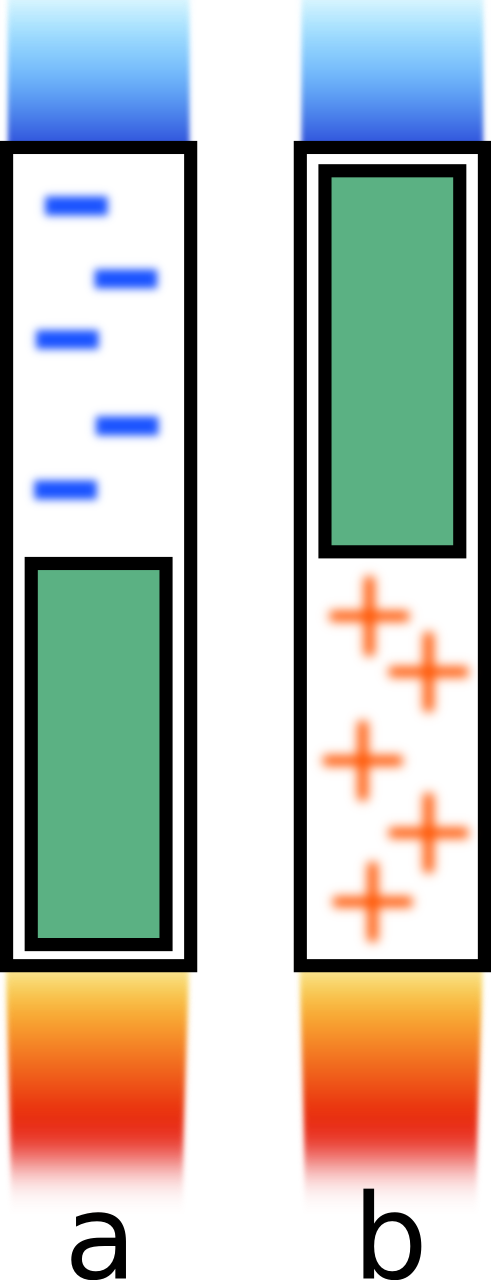
PressurecylsmallTake a look at the illustration on the left. We have a cylinder with a heat source at the bottom and cooling at the top. The cylinder is totally enclosed. Inside the cylinder we have air, and we have a loose block - a displacer - of some kind (the green rectangle). Note that the displacer is not a snug fit in the cylinder; air can move around it. But it does prevent most air from being in the same end of the cylinder as itself - it displaces the air. At left, in (a), the displacer is at the bottom, so most of the air is at the top. The top is cold, so the air cools down as well (the blue '-' symbols), and so the pressure drops in the cylinder (cool means low pressure, remember). If we move the displacer up to the top, as in (b), the air have to move down, out of the way, into the heated part of the cylinder. The air heats up (red '+' symbols) and so the pressure increases.

Now, how do we make use of this? If we could make that displacer move up and down periodically, we would make the pressure increase and decrease along with it. And if we have pressure that changes, we could have a piston be moved by the pressure (like in a steam or gasoline engine) and run the motor. So, what we do is, we add a piston to the top, and connect it to a crank (the mechanical kind, not a person). When the piston moves up and down, it pushes the crank, which will complain loudly rotate a crank-axle. And to make the block inside the big cylinder move up and down, we just connect it to the same axle as the cylinder, with a different crank:
 

Stirlingsmall
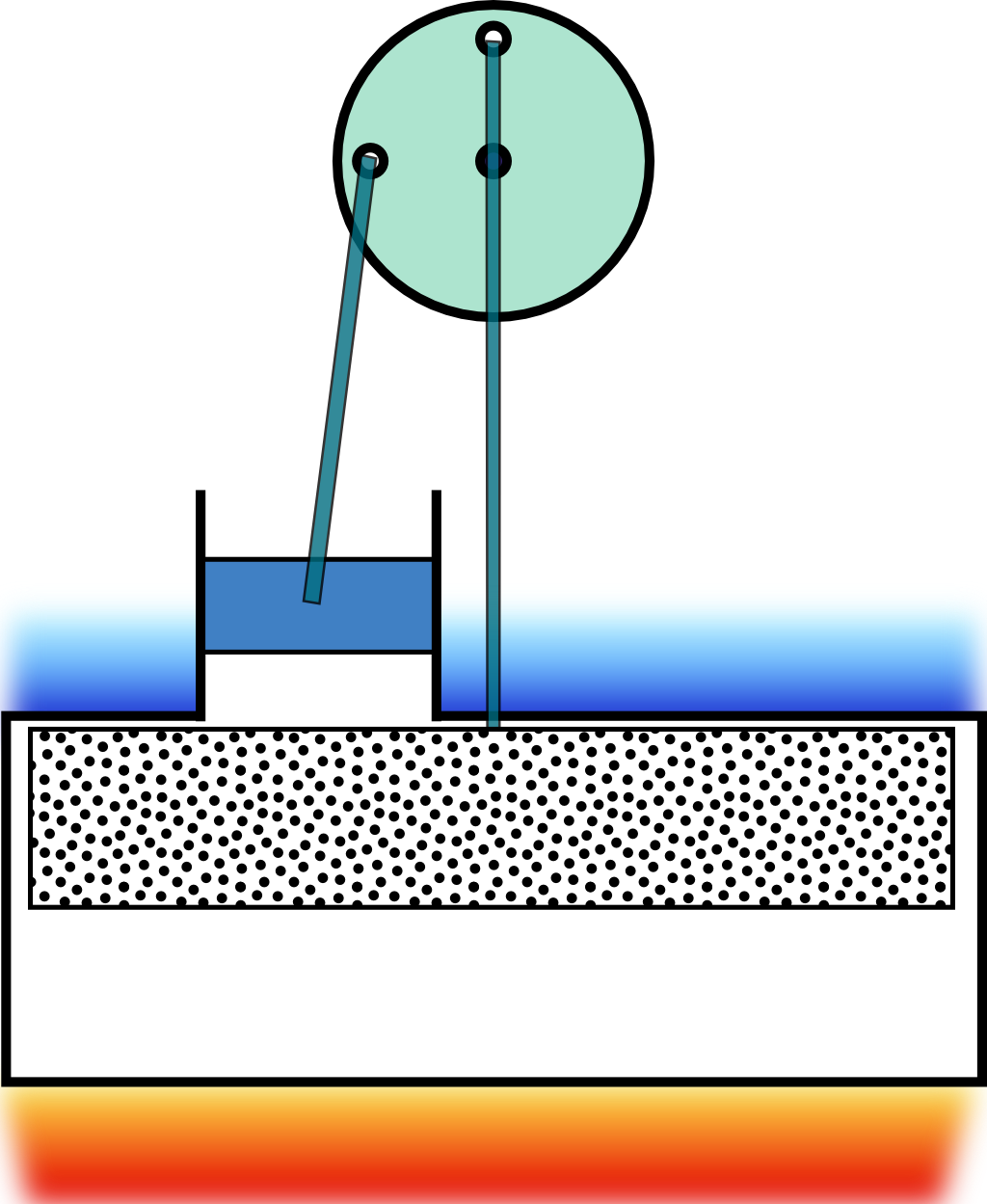
A complete Stirling engine.


This really is the same cylinder as in the first illustration, we just made the whole cylinder wider to match the real Stirling engine model. As before we have a big, flat block to displace the air in the wide cylinder. At the top, on the left side, we have attached a small "extra" cylinder with a piston (unlike the big block, this piston is air-tight). If the air pressure in the big cylinder is high, the piston is pushed upwards and out. If the pressure is low - lower than the outside air - it will actually be pushed down and in from the outside. If you look at the pictures of the real engine at the top, we don't have a cylinder and piston at the top, but a soft rubber membrane that will bulge outwards or inwards instead.

The small cylinder is connected to the wheel at the top with a rod. As the cylinder moves up and down, the rod will push and pull the wheel, making it rotate. The rotating wheel, in turn, will push and pull a second rod that moves the big block up and down in the big cylinder. And as we saw before, the block moves the air from the hot end to the cold and back again, generating alternating high and low pressure.
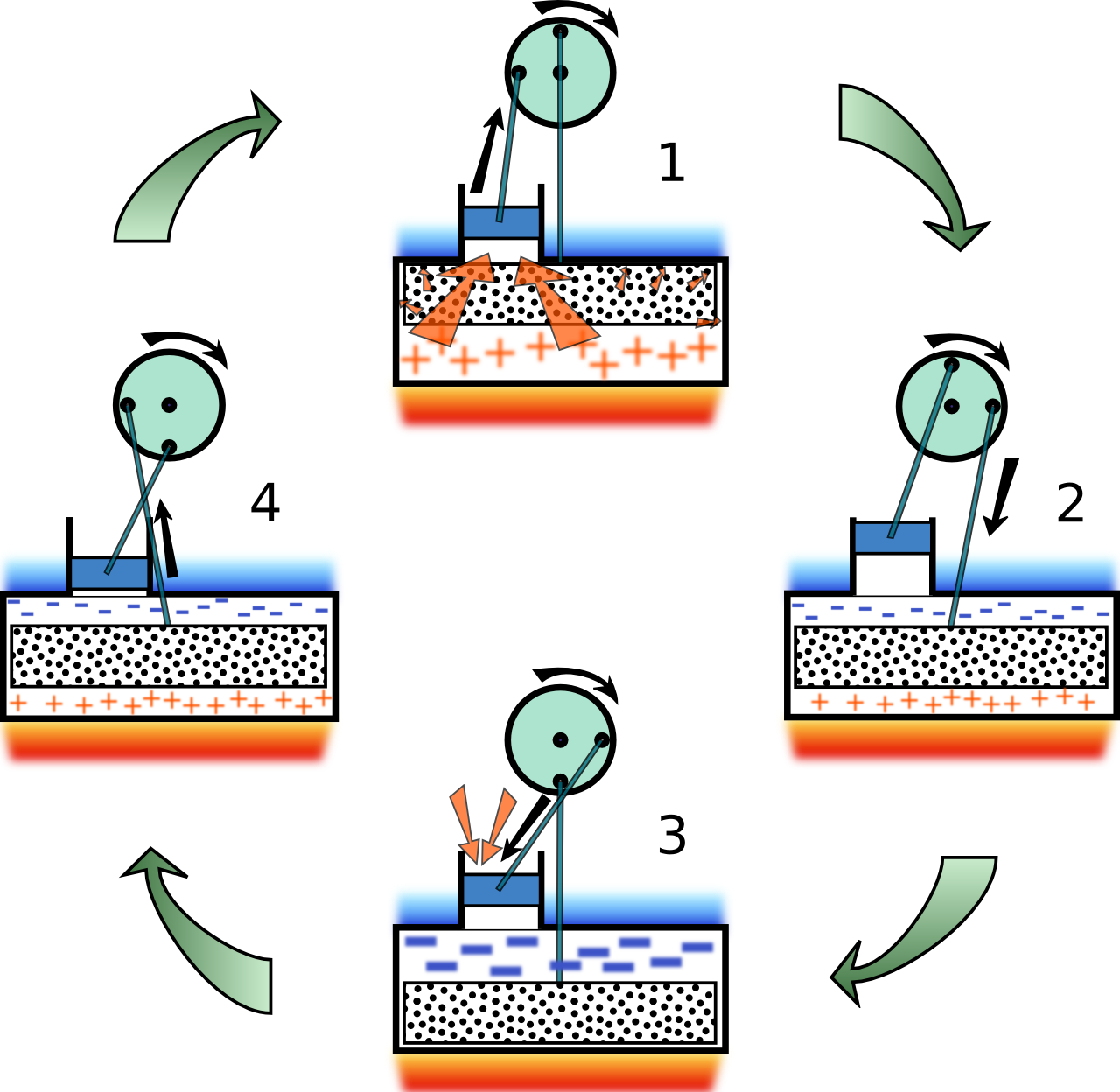
StirlingCyclesmall
Work cycle of a Stirling engine. 1) the air at the bottom heats up, creating pressure on the small power piston, which moves up and rotates the flywheel. 2) This moves the big displacer down, shuffling the air upwards, 3) cooling down at the top, which reduces the pressure and allows the power piston to move down. 4) This drags the displacer upwards and moves the air down to the bottom to be heated again, completing the cycle.


In other words: as the air moves up and down in the cylinder, its temperature, and thus its pressure changes, moving the small piston up and down. The piston in turns rotates the wheel, which in turn moves the big block up and down, causing the air to move in the big cylinder, which changes its temperature...

As long as there is a steady temperature difference between the two sides of the cylinder, the engine will keep running. And the difference does not need to be large; an efficient Stirling engine can run on a difference as small as 7°C - it can run on the heat from the palm of your hand on a cool day. Theoretically, the Stirling engine is as efficient as a heat engine can be; in practice, though, there are lots of conflicting design issues that prevents it from achieving that. For instance, ideally, the air displacer block should have almost no clearance so that it really moves all air back and forth, but with no clearance between the block and the cylinder, the air resistance will make it difficult to move the air without using a lot of energy. There are several other similar contradictory constraints. That said, it can still be made quite efficient in practice as well.

So, what are Stirling engines good for?

Not cars or motorcycles, or airplanes or anywhere you need an engine that is both small and light as well as powerful. While the engine is efficient, it does become larger than the same-power gasoline or diesel engine. For a high-power engine you need a very large heat differential so parts need to be bulky and heat-tolerant, and you may need big cooling fins or a liquid cooling system for a large engine. Also, unlike a gasoline engine it needs a warm-up period, and you can't regulate the speed and power from moment to moment the way you can a gasoline or diesel engine. In this respect the Stirling engine is more like a gas turbine. Of course, if weight, power and quick regulation is really important to you, an electric motor beats all of these.

The steady speed and power means that the Stirling engine is good for power generation, especially if you can use waste heat from some other process to drive the engine. For a generator, the size and weight doesn't matter much. The engine is a pretty simple, robust design with few moving parts so it is reliable and easy to maintain - you can have it mothballed for a long time and still expect it to work when you start it. And as the heating is external, it can run on whatever heat source or fuel you happen to have available, including some (like contaminated diesel oil) that would gunk up and ruin an internal combustion engine. So they're an especially good choice for emergency generators or secondary power generators.

The engine is very quiet, does not vibrate, and does not need traditional fuel-air combustion as a heat source, so it is used in Swedish submarines as a secondary energy source; submarines using this technology has been sold to several countries, and the system has been licensed by Japan for use in their new submarines.

Another cool thing: The Stirling engine is reversible. Instead of using a temperature difference to generate motion, you can rotate the engine to generate a temperature difference. Remember, heat is pressure - as you rotate the axle, the air will be pressured (heated) by the small piston when it is in one end of the big cylinder, and de-pressured (cooled) when it is in the other. The faster you rotate, the greater the pressure difference, and the colder - and hotter - it gets.

If you are a home owner and this sounds like a heat pump, you're exactly right: an electric motor runs the pump (the Stirling engine), which in turn pumps heat from the outside air or from the ground beneath the house, heating the inside. This is three or four times as efficient as just using the electricity to heat a house directly.

This can also be used for refrigeration; while it's not used for household refrigerators (the normal vaporizing method is more efficient for small amounts of cooling), this "reverse Stirling" design is sometimes used when you want to make something really cold, like in a laboratory or a chemical factory, to create liquid oxygen or nitrogen for example.

The Stirling engine is just plain cool technology. I keep wanting to build and use a real one for something, it doesn't even matter what.

Wednesday, May 21, 2008

No Car, no Beer, no Money

The morning news today featured a report on the problem of young people not buying things. Specifically, 20-30-somethings are not buying cars any more; both car ownership and (more ominous for the industry) drivers licence ownership is trending steadily downwards and has done so for a number of years. Of course, owning a car is expensive and becoming more so, and a car is not a symbol of adulthood anymore, unlike for earlier generations.

But it's not just cars; beer sales is steadily diminishing in this age group too, as is the sales of many other consumer items, appearances notwithstanding. To some extent it's of course the vagaries of fashion; consumption patterns change according to prevailing attitudes, and with the current interest in environmental issues, health, and the downsides of materialism, a downtrend is nothing to be surprised about.

Shinsaibashi
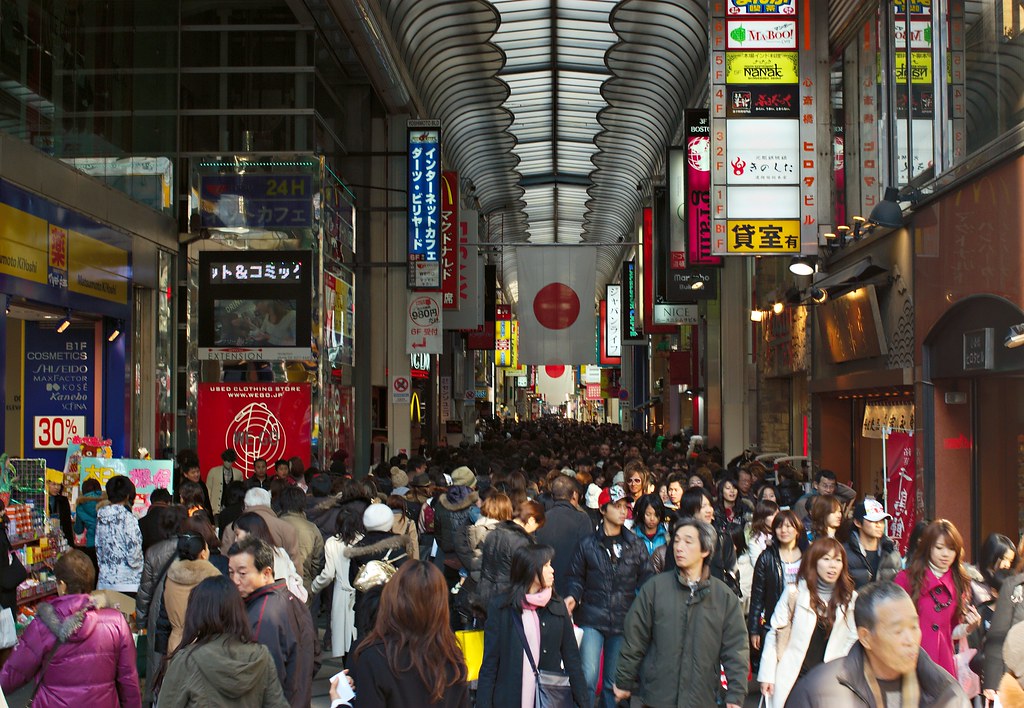
Shopping less.


But that is not the whole explanation. Nor is it the (in)famous population decline; the consumption pattern change does not track population change in this age group. What was brought up as the main culprits was the current state of the economy, and the example of this generations forebears, the so-called "lost generation".

The "lost generation" are those who came of age during the interminable post-bubble recession; people around my age. They graduated into a lousy economy and a dismal job market, and because of the vagaries of Japanese employment (many companies hire only fresh graduates for permanent positions) a disconcerting proportion of these people have never gained a steady foothold in the job market. They are the vanguard of the part-timer and temp-staff trend here in Japan, with no job security, low pay and a very uncertain, poor retirement to look forward to. The current 20-30 year-olds see what happened to them, see their own job prospects trending the same way (fixed employment is down, temp jobs are up), and plan accordingly.

The second issue brought up is the deteriorating state of the pension system especially; this was specifically mentioned by many of the young people in the report. The pension system is clearly failing - it's in a similar situation the old Swedish system was in, with projected payments not able to cover its commitments - and in addition you have the never-ending farcically incompetent mishandling of millions of pension records. Young people suspect they will never get a single yen from the pension system, and save their money instead of consuming it.*

The report highlights one aspect of social security that is often missed: lack of security materially impacts the economy. If a poor country does not have a reliable pension system and social security net it doesn't affect the economy in this manner; poor people are going to spend most or all their resources on necessities anyhow. But a wealthy country, like Japan, has a farirly substantial part of its economy driven not by necessities but by discretionary spending. And when your job is unstable, child-raising is extremely expensive and your future pension is highly uncertain, you're going to cut down on discretionary purchases - as well as delay marriage, postpone child-rearing and limit the number of children; this is certainly a factor in the declining population, as per my earlier post on the subject. Having people work as temporary staff will save some money for the individual company, but will contract the overall market for everybody. And this is true wven if the salary is the same; is is the uncertainty associated with a lack of job security rather than salary level that makes people anxious and unwilling to spend.

---

* As an aside, as a foreigner I have to pay 9 percent of my salary into the Japanese pension system. But because of the way the rules are set up for foreigners I am unlikely ever to get any pension benefits from that money. There are no reciprocal agreements between Japan and Sweden so I won't be getting any pension from Sweden either, and Japan is famously dragging its feet all it can to avoid such agreements (only two countries have them so far). Japanese part-timers get into trouble too, as you need to pay for a minimum of 25 years to receive anything at all, and many part-time jobs generate no pension benefits. This is a cheap, tawdry way of treating people in the abstract; it's milking contributions from people with no intention of ever paying them back in turn. I'm not all that upset about it in practice, though, since I agree with the current 20-somethings that by the time I retire there won't be money for me or anybody in the Japanese pension system anyhow.

Monday, May 12, 2008

Hotchkiss

[Repost] You've never heard of mr. Eliphalet Hubbell Hotchkiss? He was an American business owner whose company started production of a paper stapler at the end of the nineteenth century, and exported a lot of them to the Japanese government. Which is why a word for "stapler" in Japanese is "ホチキス" (hochikisu). Which I found strange, started to look around and found this site on antique staplers. Which, if nothing else, it's a good place to get your fill of esoteric knowledge you can bore people to tears with.

Thursday, May 8, 2008

Golden Dentist

Golden Week, the back-to-back string of holidays making up one of the big vacation times of the year is over. As it fell over a weekend it was unusually short this year, resulting in fewer foreign travellers and more people staying in Japan, to the joy of the domestic tourist industry and dismay of overseas travel companies. On a personal level, too, has the holiday been a good news-bad news kind of time. On the good side, a couple of friends from Tokyo came over for dinner to the joy of everybody. On the bad side, I've cracked a tooth, so I'm having a brush with the Japanese dental system on Friday evening (I already went once, for a temporary fix).

Construction Work Now, I have nothing personally against the hard-working men and women of this challenging health profession, but I do have a reasonable fear of dentists. No, not "unreasonable"; a masked person holding you down in a chair while tearing your gums with steel implements and grinding down your teeth with power tools is a perfectly reasonable thing to be afraid of.

Tomorrow is not a time I'm looking forward to, in other words, and it's been showing. So yesterday Ritsuko brightened my mood instantly by pointing out that our favourite kushikatsu place is right on the way from the clinic, and why don't we stop there on the way back for dinner and beers? She knows me too well, I think.
 

Thursday, May 1, 2008

"Easier visa for Japanese Speakers" plan announced

I wrote in January about a tentative suggestion that Japanese language ability be counted in your favour when applying for visas.

Now, Asahi Shimbun reports in Japanese and English that a firm plan is being announced today. And it seems it might really be an easing of restrictions as a way to encourage language ability (rather than a roundabout way of imposing further restrictions on those with little language skill). Among other things, the article mentions extending visa durations to five rather than the current three years; and relaxed qualifications for the professional visas. As it happens, the vague rumours of a revamped Japanese Language Proficiency Test seem to be solidifying as well, with documents floating around suggesting the possibility of testing language use in some manner, not just understanding.

Tuesday, April 29, 2008

The Dangerous Brain from Planet LDP

(This post is far outside my area of competence; for excellent political coverage by people who - unlike me - actually do know what they're talking about, look no further than MTC at Shisaku, Jun Okumura at Globaltalk 21 and Tobias Harris at Observing Japan)

To an outsider with no direct stake in the outcome, Japanese politics is a wonderful combination of spectator sport and soap opera (to the affected insider, of course, it more resembles a Greek tragedy re-imagined by Samuel Beckett). Even so, however, the behavior of the perpetual government party LDP has been stranger than usual lately.

To very briefly recap, LDP together with minor religious party New Komeito holds a two-thirds majority in the Lower House. Opposition DPJ has the majority in the Upper House - a rarity in Japanese politics. The Upper House needs to vote in favour of any legislation passed in the Lower House for it to become law. But, with a two-thirds majority, LDP and New Komeito can override the Upper House vote after 60 days for most (but not all) legislation.

On the face of it, it means LDP can ignore the opposition and do what it wants. The current reality is messier. First, the supermajority is slim, and dependent on a small coalition partner (granted, New Komeito has the role of doormat to LDP down to a fine art, but they're still a different party, with a different agenda) and an increasingly independent-minded diet membership to bring the needed votes. And some legislation, like personnel appointments, can't be overridden; LDP must get the assent of the opposition, or get enough opposition Upper House members to defect their party over the issue.

Also, the next lower house election is due no later than next year with LDP virtually certain to lose the supermajority, so they are facing years of governing with divided houses. Plainly, obviously, high time to find ways to work with the opposition DPJ and accommodate them in order to get things done. Governments in many other countries are able to do so in this kind of situation after all.

The LDP, however, seems incapable of doing so. They have been pushing through legislation using the supermajority override with little regard of the effect on any future cooperation with the opposition. In fact, and more strangely, they have been acting as if the opposition did not exist; as if the LDP still had control over both houses. One example was the appointment of the new head of the Bank of Japan. As I mentioned above, personnel appointments are among the legislative acts that can't be overridden. And yet, the LDP managed to field a total of four candidates in a row guaranteed beforehand not to be accepted by the opposition, overrunning the end of the previous chairman's term, leaving the chairmanship vacant for weeks. In the end, the acting chairman was promoted almost by default.

Another current example is the botched renewal of the perpetual temporary gasoline tax used to fill the coffers of road and bridge construction industries (a major LDP supporter). The DPJ opposed the earmark to the construction industry as Japan has a large surfeit of rarely used motorways and bridges to nowhere already, leaving LDP to use the supermajority to get the bill through. They inexplicably failed to do so on time, however, letting the tax expire and making a lot of motorists happy with the opposition for opposing the bill. This leaves the government with the self-inflicted unenviable task of reintroducing an publicly unpopular tax by walking roughshod over an opposition they desperately need in a year or less.

The LDP is clearly not acting sensibly; but as it happens, I have seen behavior just like this in another field:

The Prefrontal Cortex is a collection of brain areas that regulate and inhibit other areas as needed when the situation changes and their behaviour is no longer appropriate. Some psychologists talk about "executive function", and while I don't like the term, here it is appropriate. Malfunctions in these areas can be diagnosed by a simple test called the "Wisconsin Card Sorting Test".

The subject has a pile of cards with various symbols and colors, and sorts them into piles according to some rule (like "red cards to the left, black to the right"). They don't know the rule for sorting, but are told if they are sorting correctly or not; most people quickly find the right rule. Then, without telling the subject, the rule is changed. Normal subjects get confused for a little while as the old rule no longer applies, but then explore and find the new rule. But subject with damage to their prefrontal cortex frequently can not do this - they will continue to follow the old rule even as it is obvious that it no longer applies. They can sometimes articulate this, telling the experimenter that the rule no longer applies; some can even say what the new rule must be, and still they can not change their own old rule-following behaviour.

Now take a look at LDP behaviour: repeatedly enacting legislation that won't pass the Upper House and missing deadlines as if the supermajority override was not going to be necessary; acting as if the opposition didn't even exist. Then the expressions of incredulous bafflement when the opposition does what it's supposed to be doing: statements that "the situation is intolerable"; that it must be unconstitutional to oppose the government; accusing the opposition of "playing politics" with passing a bill (when, pray, are you ever supposed to "play politics" if not as a politician in the nations premier political arena)? They are, in fact, acting remarkably like a patient with impaired prefrontal cortex function.

The reason for this, I believe, is in the nature of the LDP: it (like the opposition DPJ) isn't really a political party in the the sense of being a coherent political organization tied together by a common ideology, shared history and worldview. It is rather a Frankensteinian agglomeration of multiple small political parties, factions, organizations, special interest groups, ministries and agencies. A look through LDP history shows it constantly splitting off and reabsorbing smaller organizations and members. It is less a party than a political mini-state of its own, with complex internal processes for determining the outward policy stance.

And as any Byzanthine administrator would have been able to tell us, keeping such a diverse array of selfish interests together requires lots of procedures and formalisms for any decision, lest the party tear itself apart. A large, complex set of explicit and implicit rules and regulations become necessary within such a party for all decisions in order to balance out interests and factions with each other. Appointments must be weighed carefully, with a candidate beholden to this faction and beneficiaries from that bureaucracy being repayment to some other group, and creating new obligations to yet other groups in turn. Any legislation must also be very carefully weighed, vetted and gradually moulded in a complex internal process to finally emerge as the consensus decision of the party.

This process has, I'm willing to bet, been gradually solidified and formalised into a "decision machine" over many years of party power until it by now largely is the party. The value of most positions within the party is after all due to how much influence, direct or indirect, the position gives over these decision-making processes. LDP depends utterly on following them; breaking them means losing internal support as the power bases that depend on the process erode. Abandoning these processes mean disintegrating the LDP.

But now the process is disrupted by a viable opposition with power to wield. But people within the LDP can not alter the process even when they see the end result will not be viable; any attempt to change the outcome will inevitably rob some participant or other of a benefit they were counting on, leading to destructive retaliation. And as there is no leadership strong or unified enough to inhibit and alter this decision-making process - no prefrontal cortex, to stretch the analogy - the process continues as it always has, unable to accommodate the widening rift between the past political world it codifies and the changing reality.

So, is LDP doomed to oblivion? Of course not. If you take people that fail to adapt to the changed card sorting rule out of the test room and bring them into a different one, they can suddenly adapt their sorting behaviour just fine. The learned rule is learned within the context of that test, in that room; all they need is for the context to change. Likewise, if the political landscape would really shift - say an opposition Lower House win in the election after the next - that would probably create enough of a context shift for LDP to reform and adapt to current reality.

Sunday, April 27, 2008

Spring

The winter in Osaka is chilly and grey, and the summer is long and hot, punctuated with typhoons. The intervening spring feels neither as long, nor as well defined as the slow, lingering season of Sweden with the first hopeful sun-driven snow-melt in early March gradually seguing into the first really warm summer days in June. This really is a fairly unmemorable season in comparison. The two things that do set it apart is the cherry blossoms heralding its beginning, and the "Golden Week" holiday signaling its end.

Corvette Corvette, Owner.
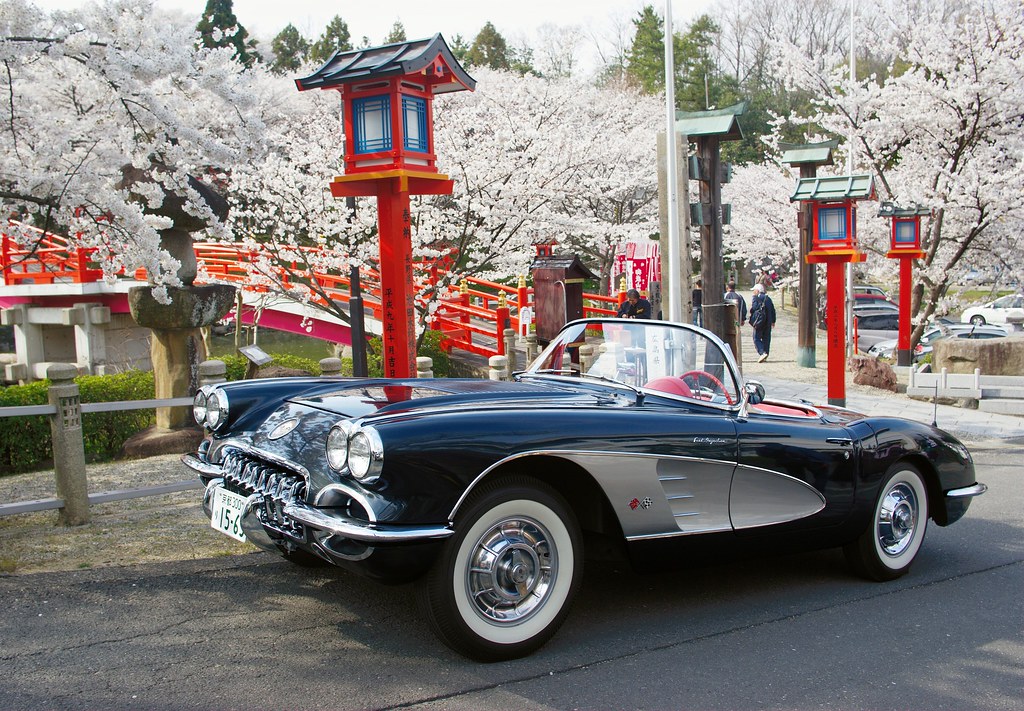
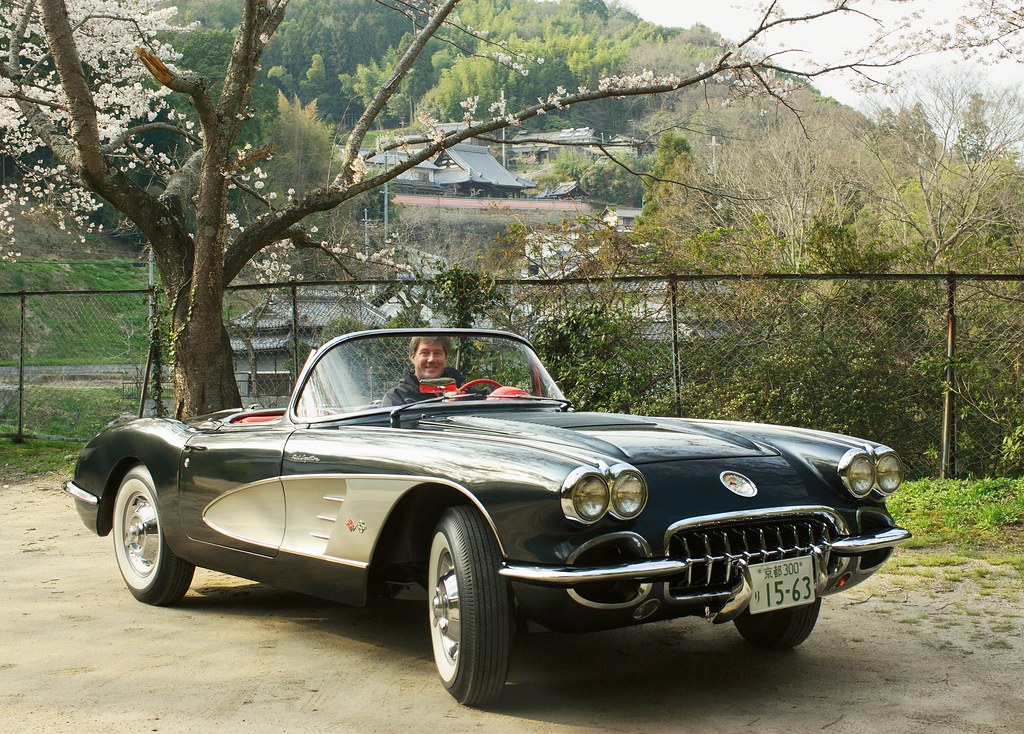
A colleague asked me to take a few pictures of his car during cherry blossom season. "His car" turned out to be a meticulously renovated Chevrolet Corvette in absolutely gorgeous condition. To the left, outside a temple in Takanohara; to the right, in the mountains between Nara and Osaka. A few more pictures here.


Flower Appreciation Fight
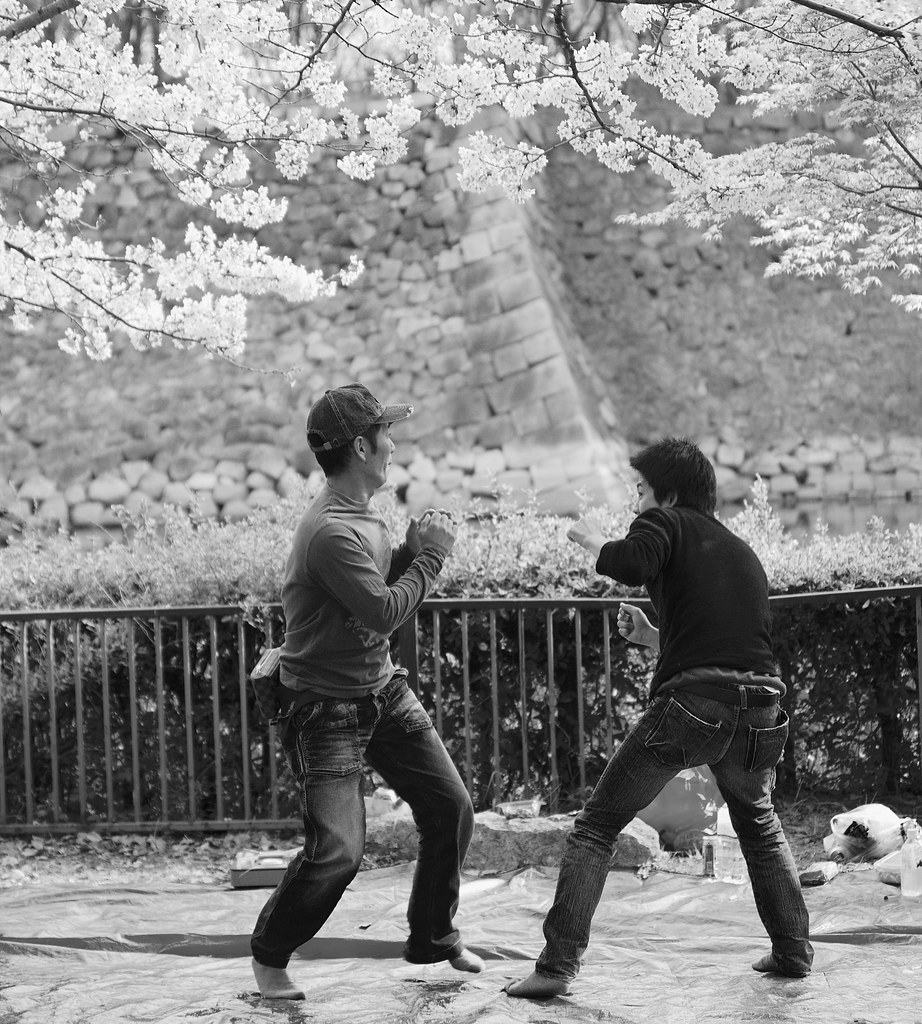
Hanami, "flower viewing" is having a party under the cherry trees. For Osaka castle, that means tens of thousands of people barbecuing, eating, drinking and generally enjoying themselves. And this being the age of the digital camera, I doubt a single flower petal has managed to avoid ending up on picture sites by now, as you can see on the left. On the right, a few too many beers have taken their toll, and a couple of revelers decide to settle some grudges.