Showing posts with label cognition. Show all posts

Monday, January 18, 2010

The False Tap

My scanner is back home again, it's working nicely and I've already started scanning the film I took during our trip to Hokkaido in December. The posts will have to wait a while longer, though, as I don't have all that much time to spend on image editing right now.

However, I thought I'd show you this neat cognitive hack we found at our hotel in Sapporo:
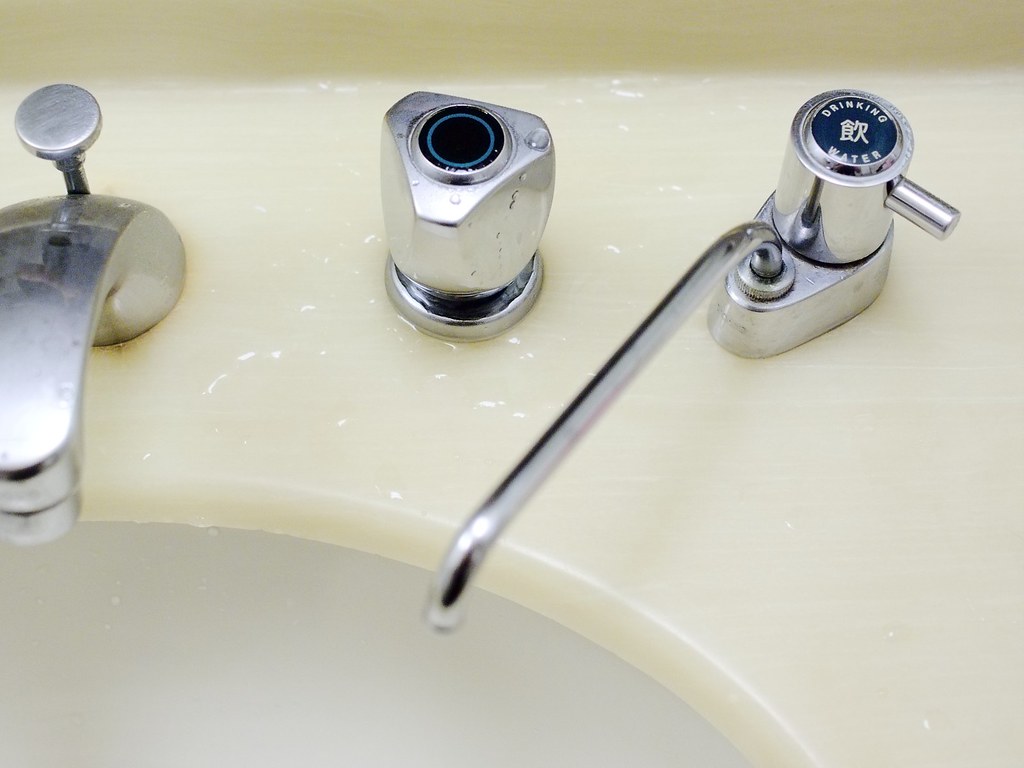
Tap - Above

The bathroom sink, with a normal tap and faucet handle to the left, and a slender tap marked "Drinking Water" to the right.
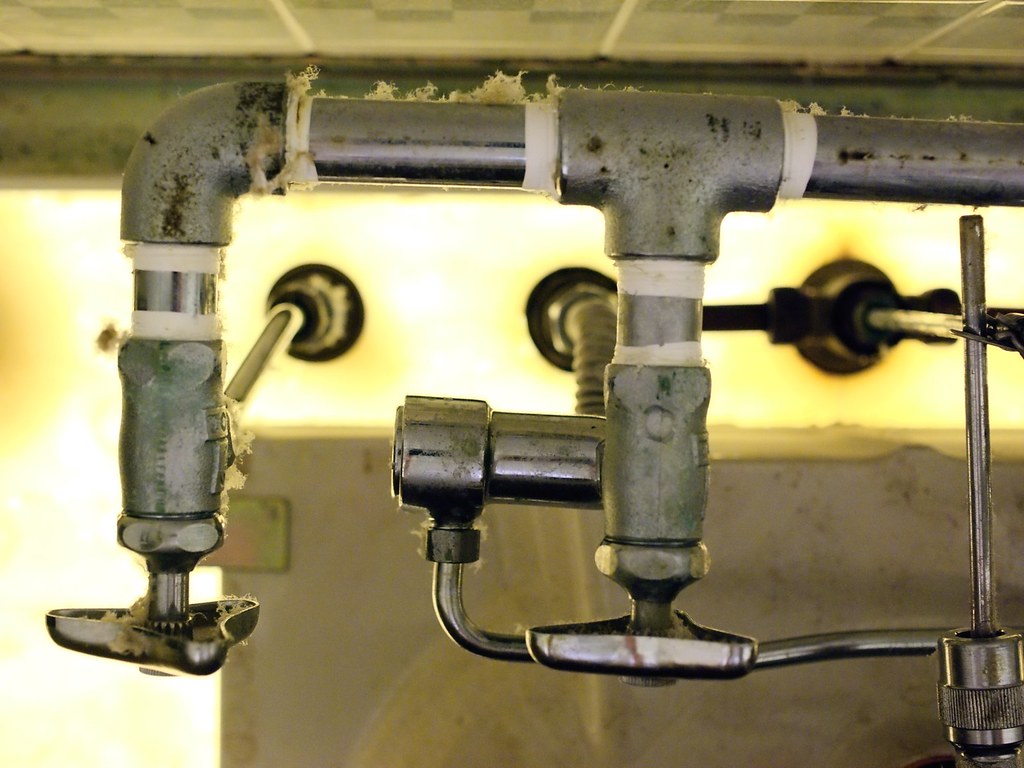

Tap - Below

Here's the same sink from below. The water pipe enters from the upper right, splits, and goes to the "Drinking Water" tap on the left and to the faucet handle in the center, where it continues to the tap itself on the right.


The "Drinking Water" tap and the normal tap right next to it give you the exact same water, in other words. Fraud? Deception? No, not at all. Just a neat psychological trick to make their customers more comfortable.

Tap-water in Japan (as in Sweden and some other countries) is not only safe to drink, but often quite good. If you live here you never need think twice about drinking water directly from a tap. In many countries, however, even wealthy and highly developed ones, tapwater is unsafe, or if safe then not very palatable due to high mineral levels, chlorine or other reasons. If you live in such a place you either drink bottled water or you have a water filter with its own tap1. And so the hotel receives plenty of guests that do not consider tap-water to be drinkable.

The hotel could put up signs of course, telling their guests that the water is safe and good. And indeed, I've seen such signs in many hotels. The problem is, we humans are lousy at heeding signs and directions2, and a lifelong habit prevents many of these guests from trusting the tap water, sign or no sign.

Another option would be to provide each room with bottled water. And they do that already, for a fee, in the hotel bar and in vending machines. But most people aren't very happy with having to pay for plain water when they're thirsty or need to take some medication. It smacks of greed, like having to pay extra for towels. Supplying free water bottles would add another ongoing expense, and create a small mountain of empty bottles - an environmental PR headache as well as increasing garbage disposal costs.

Instead, they add this tap. Mind you, it is completely accurate and on the level - it really is good, clean, tasty drinking water. It's in fact likely to be the exact same water as the local bottled water. The tap doesn't change the water; all it does is package the water to make it palatable for its guests. And really, that's all bottled water does too, just at added cost and with environmental and disposal headaches.

And I bet this really works. Our low-level emotions - such as disgust, which deals with what is safe to eat, drink and touch - aren't very analytical. They tend to work on concrete and immediate things, not abstract or long-term ones. Many people from places with bad water won't drink tap water even when they know it's safe and good. Their low-level emotions have learned that "tap = bad" and their sense of disgust will kick in whether they want it to or not.

But this tap looks and feels different - and it's just the kind of tap you'd have from a water filter. Even though the guests may well realize it's just tap water, their low-level disgust never reacts since it doesn't look like the kind of tap that is dangerous. And it really needs to look and feel different; the more different the better. Had they added a second, normal tap with a sign it wouldn't have worked at all, even if that tap had been connected to an actual water filter.

It's all about fooling your low-level emotions. They have a huge influence on our behavior and they don't do subtlety, foresight or abstractions very well. We spend a fair amount of our high-level mental resources subverting, co-opting and otherwise manipulating our own low-level systems in order to make ourselves do what we want.

When you put away the cake or the bowl of snacks just so you'll stop eating; when you turn away and bite your lip to distract yourself and lessen the fear of an injection; when you bring a lucky charm or other "safe", familiar object to an anxiety-inducing test or interview; when you deliberately buy groceries when full so you won't impulse buy, you're engaged in a battle or wits with your own low-level emotions.

These low-level emotional systems are really fascinating; I used to work in that area and sometimes wish that I'd continued doing so. I may return to that field someday.

--
#1 Or you're poor and have no choice but to drink bad water. Or you don't have ready access to water at all. Which is an outrage, but off-topic to this particular post.


#2 When was the last time you bothered to actually read the instructions for a gadget? Especially for a simple one, like a tap, that you already think you know all you need to use.

Monday, December 24, 2007

Choice Blindness

A couple of colleagues of mine in Lund made quite a splash a couple of years ago with a fun experiment on "choice blindness". Petter went to Tokyo University for a post-doc, and now Asahi Shinbun has a good write-up of it in their weekend section. It is available online (for now) here.

The premise is really simple. You show a volunteer two pictures of women. The volunteer looks at the pictures and points at the one they like better. Both pictures are put down on the table face-down, and the chosen picture is given to the volunteer. They look at the chosen picture and answers why they picked that picture. When they are giving their answer they only see the chosen picture, in other words.

But there's a trick to it: sometimes the researcher does not pass over the chosen picture, but the other, less liked, one. The volunteer is actually looking at the picture they didn't pick, and be asked why they picked it.

So the subjects get confused, perhaps angry, wondering why the picture changed? Nope. Usually people don't realize that anything happened. Most subjects happily describe why they picked that picture - that they didn't pick, remember - with no hesitation. It didn't matter if the pictures were of fairly similar or dissimilar faces, and changing the time allotted to choose only affected it a little.

When they look at how people motivate their choice, there is little difference between switched pictures and unswitched ones. People are just as confident about their reasons, and describe their reasons in just as much detail. When asked outright if they would have noticed if the picture had been changed, most people (84%) said that they most certainly would - even as they were sitting with a changed picture in their hand. Once a participant had detected a change did they become more vigilant and more difficult to mislead.

Change Blindness

This experiment is making use of a phenomenon called change blindness, an inability to detect visual change in some situations. Basically, if a change is somehow masked so that we don't see the actual change take place, we can miss it completely even if the change is substantial. One way to hide the change is to have it occur very slowly so we don't notice a difference from one moment to the next; another is to distract the viewer at the critical moment (a favourite tactic of stage magicians). A third is to "mask" the change - instead of switching from one image to the changed image directly, we hide it altogether for a moment so that everything changes at once.

Briefly, change blindness works because we do not keep in memory every single detail out there. We have neither the visual nor memory capability to do so - besides, normally it would be quite useless since we can just take a look at any detail whenever we want. Instead we seem to create a rough sketch of the situation, and then depend on us detecting and taking note of any changes. But when we miss the change, we never update our sketch. There's an entertaining example from British TV on Youtube here, and of course, you can search the site for lots of other examples.

I Am (not) The Decider

OK, so we're lousy at detecting change. But what about that choice blindness we started with? That wasn't just a failure to detect change - indeed, the participants were specifically asked about the very details that they had noticed in the original picture, and that changed in the subsequent one. We don't have the whole answer - this goes deep into questions about intentionality and (gulp) consciousness - but it lends weight to the view that our deciding bits and our self-aware bits are somewhat independent, with our conscious selves mostly along for the ride.

The "real" us - all our perception, context, and evaluation systems - chose a picture, the picture got switched, and then our consciousness makes up a story about why we chose that picture. A story that is patently, obviously untrue, but sincerely believed by the participant. And since there is little difference in the explanations when the picture is changed and when it is not, the perhaps uncomfortable conclusion is that we always lie to ourselves. We have no idea about why we do what we do - we have no direct access to the real, lower-level systems; instead we observe our own behaviour, then make up some post-hoc explanation for it. This is not the only experiment that points in this direction; there are data from many different sources, including split-brain patient experiments, that confirms this view.

This view has a number of interesting consequences. With Christmas coming up (it is a couples' holiday here), let's consider what it can tell us about scary movies and dating. Everybody knows that going to a scary movie with your date is often a good idea, and this can explain why. We sit there and see scary events unfolding. Our minds, who aren't all that sophisticated, believes the scenes to be real, and reacts with fear and excitement - pulse races, blood pressure changes, we might even raise our hairs and break out in a cold sweat. Our conscious minds, however, know this is just a movie and not for real. There is really nothing to be upset about. But we are upset or excited about something, and since it can't be the movie it must be something else. Like that really very attractive person sitting right next to us, perhaps - we seem to like them a lot better than we thought we did.

Sunday, November 11, 2007

Cognitive Marketing

Below is a picture of a bottle of "Gilbey's" brand gin.

Gilbey's 12

Gilbey's gin. Click for larger sizes.
It's an inexpensive brand, made in the Philippines. Not bad at all; it makes for a perfectly good Gin and Tonic. Of course, the expected marketing bits are all there: the English-sounding name (even with an "by the authority of" and the address of a presumably authentic London distiller); the British Racing Green label frame and cap; a serious-looking seal; the neck proudly declaring it's 12 years old...

12 years? Gin isn't aged - how can it be 12 years? It can't, of course. Look closely on the label and it's "a delicate blend of 12 natural ingredients". Which is a great way to exploit our cognitive peculiarities. We - our minds - are basically lazy. We try to do as little as possible. We only really notice something if it breaks our expectations, we don't reflect on or observe anything unless we get suspicious, and we only commit things to memory when we must.

As most people well know, whisky is aged in barrels, and the longer it is aged, the better it is - 12 year old whisky certainly implies a respectable quality. So whisky bottles all prominently display their age, often on the neck. And here comes another liquor bottle with a "12" on the neck. Our minds - we - don't make the extra effort to figure out that it's nonsense in this context. We just take a mental shortcut and assume that any liquor with "12" on the neck must be good and never bother with the inference that would show us the logic is not applicable.

It's a neat, well-executed bit of harmless sleight-of-hand, and both legally and morally beyond reproach. Really, the world around us abounds with this kind of associative mimicry. Just think of all the slow-poke family vans with "racing wheels" and body line details designed to remind you of a sports car; consumer sound equipment with metallic-seeming plastic and visible screwheads to make you think of high-end custom gear; or food packages with old-style lettering and an illustrated nonexistent farm or farmer to make you think of a family operation rather than a large-scale factory in some industrial park.

Tuesday, November 6, 2007

i-1

The reason for my relative silence the past month or so has been due not only to the Open House at ATR last week. The i-1 robot - アイワン in Japanese - our humanoid robot, has also at last been unveiled, with press events, very important visitors, demonstrations and its own web page.


The i-1 in its full glory. It can readily balance by itself, so we have it freestanding for these pictures; normally we do keep a tether on it just to be safe. We can't just go down to Den-den town and buy a new one if it breaks after all.

The robot is human proportioned; it's human sized, with weight, power and joint movement angles and speed similar to humans. On the sensory side we have two eyes, with two cameras each (one wide-angle and one telephoto, to mimic our own visual capabilities to some degree), and we have stereo microphones for audio. The body is of course riddled with force and angle sensors. The aim is a system that can be comparable to human capabilities.

Projects include human-like balancing and walking (current bipedal robots do not really walk or balance the same way humans do and it shows),reaching, manipulation and gesticulating. I'm involved on the sensory side, doing early visual and auditory attention. Other people are working on object segmentation and recognition. And most everybody is interested in how to get the robot to learn new capabilities by itself or by example.

So why a humanoid robot? Aren't we pretty good at producing new humans already? That's perfectly true of course. And as a "robot", or worker (the original meaning), this creation would make little sense. Anything i-1 does can be done faster, safer and more reliably by your average 8-year old, and he wouldn't need half a dozen support people standing by every moment.


i-1 striking an explicatory pose. Body expressiveness doesn't just look cool; it's a communication channel. And as anyone learning a foreign language knows, when that channel disappears - talking over the phone rather than in person, for instance - communication becomes much more difficult, sometimes impossible.

Replacing a human is not the goal, of course. What we aim for is a system that can interact with us in a natural way and help us understand our own, human capabilities. To do so, we need the robot to have human-like capabilities, and that means having human weaknesses and deficiences as well as our strengths. We could have a robot with wheels instead of legs, for instance, since that is much easier and more stable, but that would not teach us anything about how human walking is done, or learn anything new about the perspective get from being walking, rather than rolling, creatures.

We're also not just looking at perception in general - we're interested in human-like capabilities specifically. If we had a whole array of microphones we could pinpoint sound source location quite accurately, and with laser rangefinders we'd have no problem getting the distance of things around us. But we humans have only two ears, not dozens, and not a single laser anywhere, so we have just the two microphones, two eyes, and we embrace the resulting loss of precision - the same lack of precision humans have.


i-1 examining an object. Probably my favourite picture.

Now, for natural human-machine interfacing it's certainly not critical that we have the exact same abilities. We humans vary quite a bit from each other after all, and we can interact well enough even with someone as different from ourselves as a dog. We do have some design leeway, in other words, and do not need to make it completely identical to get useful results.

But dogs and humans interact well in part because we've coevolved over time; dogs are by now innately very good at reading human intentions and expressions on one hand, and signaling their intentions to us on the other. Wolves or other wild relatives to dogs are not at all good at it, on the other hand, which strongly suggests dogs have acquired these abilities through breeding along with the other specifics of dogdom. So we may not need the exact same perceptual and motor capabilites on an interactive robot, but the more we diverge our abilities, the more we need to compensate for it with sensor and motor behavior that can help close that gap.

To understand human abilities on the other hand, we do want to be as close as we possibly can. Understanding humans and human abilities is of course an important goal in, but we also need that understanding so we can create the kind of reciprocal empathy and communication abilities that can close the ability gap between humans and machines.

In a way, if you want to make simple robots - machines that are very different from humans - you first need to understand how to make a very complex human-like system like i-1 in order to find out how to cross the communication gap. As long as we don't know how, we'll be stuck in our current situation where human-robot communication is not natural and fluid at all, but stilted, formal and slow. We communicate only by tightly restricted explicit commands and receive only a limited set of canned responses, with little of the immediacy and effortless understanding of body language, attention display and emotional expression.

It's a really fun project, with lots of fascinating areas to work on. Doing this as my day-job almost feels like cheating.


There's my teddy!