Wednesday, December 31, 2025

Happy New Year 2026


New years card with a picturew of a red and grey horse.


The Year of the Horse 

Happy New Year!

Since people have asked, yes, we're alive and well and enjoying life. This blog is on hiatus; I feel an itch to start writing again, but I'd really prefer to do that on some other site, and perhaps in some other form. Just to have a fresh start if nothing else. Also, I can't help but feel the Blogger platform is living on borrowed time. 

Meanwhile, I am very active on Mastodon. I'm a moderator for the Fosstodon instance, and I write short posts on stuff there fairly often. It's fun! Mastodon is pleasantly geeky, with people more often writing about their hobbies and interests than being upset about politics. And you can follow Bluesky people as well if you want.

Tuesday, December 31, 2024

Happy New Year 2025


2025, The Year of The Snake

A happy 2025 to all! Let's hope that it improves on 2024.

Janne and Ritsuko


Sunday, March 31, 2024

Keyboards

 "Shift Happens" is a two-volume, 1200-page book about the keyboard. It's a tour de force of the history and significance of the keyboard over the past 150 years. The book is a work of art, with hundreds of beautiful pictures, drawings, old advertisements, font samples and illustrations in a high-quality print, presented in a sleeve with a third volume of background notes and commentary on the book itself.

There's an extensive history on the typewriter, with all the different early keyboard layouts; chapters on calculator and telephone keypads (and why they're different); on how (and why) the QWERTY layout was adapted to other languages. There's a whole chapter on the IBM model F and M (one of the best regarded keyboards of all time); and another on the Sinclair ZX81 and Spectrum (one of the worst).

This is one of my favorite books of all time, and if they ever do a second print - a possibility, given how popular the first print was - I urge you to get a copy.

A HHKB keyboard and a book.

My Happy Hacking keyboard, and the second volume of Shift Happens, on the page discussing the Happy Hacking keyboard line.


But - keyboards? Why do I care? Why should you care?

Perhaps you don't care, and that's OK. We live in a world that's managed to make meditation into an equipment sport and a way to flaunt our taste or wealth. Caring about  keyboards, and spending sometimes quite serious money on them, seems like another self-indulgent hobby for the technology-obsessed.

But perhaps you should care. A keyboard is a device we interact with every day, like a monitor or a desk chair - or even like a mattress or pillow. It's a part of your working environment. How much your keyboard — or your chair — matters depends a lot on how much you use it.

If you're sitting on the subway tapping out a message on your phone then neither the seat, the overhead glare or the tiny non-tactile screen keyboard really matters at all. If you only occasionally work from home then your laptop and your kitchen chair is fine for a couple of hours at a time. A laptop is also fine for meetings or business trips.

But as you work for longer stretches, and do it more often, the ergonomics start to matter — for your chair and for your desk, for your monitor, and for your keyboard. When you're at your computer for 8-10 hours every day for years on end, your working environment is critical for your long-term well-being

And yet, we tend to forget our keyboards.

It's not unusual to see people insist on a Herman Miller office chair and a high-end color-balanced monitor, but still use a regular Apple or Dell keyboard that got thrown in for free when they bought their computer. Most people have probably never given their keyboard a second thought, and have no idea that their recurring back, shoulder or wrist problems could be due to the keyboard in front of them.

Mechanical keyboards are all the rage right now — that link goes to a pretty good explainer of the different keyboard types. They're "mechanical" in the sense that each key has its own mechanical switch built in. This tends to make them larger and more expensive (and sometimes more noisy) than a regular keyboard. But they allow for longer key travel; a softer touch; and better, more definitive feedback. Over time it makes for less finger strain and fewer typing errors.

But you don't have to spend hundreds of dollars to get a decent keyboard. The one you got with the computer (even the cool-looking metal Apple one) or built in to your laptop really isn't very good; with really shallow key travel, unsteady keys and a hard, jarring bottom-out that hurts your fingertips.

You can go to a computer store and try a range of keyboards. Even fairly inexpensive ones in the 40-50$ range are probably already better than the one you have. There's no need to get some extreme gaming keyboard or anything.


My personal favourite is the Happy Hacking keyboards. At a research lab I worked at many years ago, they had a couple spare HHKB keyboards with Topre keyboard switches, and I got hooked. I soon bought one for home; it's now almost 15 years old, and still works as new. I still use it daily, now at work, while I got a new one for home (that's the one in the picture at the top). Yes, they're expensive, but they tend to last a long time.

If you are looking to get a new keyboard, a few tips:

  • You may not need the separate numeric pad on the far right of full-size keyboards. If you do a lot of numeric data entry it can be useful, but it takes up space and forces you to stretch to use the mouse. Even if you do find it useful, it may be better to instead get a separate USB numpad that you can put away when you're not using it. A "ten key-less" (TKL) keyboard is usually the better choice for most people.

    The Happy Hacking keyboard (and many other enthusiast ones) are even smaller, with even fewer keys (often called "60% keyboards"). They do that by moving more keys into key combinations. Some of them (Scroll Lock, Print Screen, Pause/Break) are rarely used, and even frequent ones, such as function keys, soon become second nature to press with a function key combination.

    I like these small keyboards and have no problems even playing control-heavy games. But it's very much a matter of taste, and you should maybe not make a 60% keyboard your first good keyboard.

  • Remember that you can always remap your keyboard. I'm in the weird situation where I'm used to Swedish keyboard layout, but I live in a country where getting a Swedish keyboard is difficult and expensive.

    So I've standardized on using Japanese keyboards, but remap the layout to Swedish, with a couple of tweaks. It works fine; my fingers know where the symbols are even if they don't match what it says on the keys.

  • Don't underestimate noise. Klicky keyboards can be very satisfying, but if you're working in an office with other people — or you like to work at night when family members are asleep — then you may be better off with low noise or silent keys. You can still get a clicky feel without the noise.

  • You probably don't need a wireless keyboard. It's most likely going to stay in the same spot on the same desk for months at a time. You may think it's useful for laptops, but you want to plug your laptop in to power anyhow, and as you're probably using USB-C for that these days, you can plug the keyboard into the same hub as the laptop.

    With that said, it can be useful in some circumstances. If you're using the same keyboard for 2-3 different machines, and they all have Bluetooth, then that is one possible solution to share the keyboard with them all.

  • Keyboards often have adjustable feet. In many cases you probably want to have the keyboard closer to flat rather than angled up. But it's again very much a matter of personal preference. Give yourself half a day to type in each position and find out which setting feels best over time.


If you are a heavy keyboard user, take a look at your current keyboard. How does it feel? How do you feel when using it? Are you getting strained and fatigued? Do your fingers and wrists kind of hurt after a couple of hours? A good keyboard will cost less than a night out on the town, and can have a much more positive effect on your life.

Wednesday, January 3, 2024

The Web is broken

Happy New year! The Web is Dead!

No but really, have you noticed how the web kind of sucks nowadays? Search is broken, social media is people screaming at each other, the web is full of useless sites that all seem to copy each other, and it's full of intrusive, noisy, bad ads everywhere. I used to love the web. But it's really no fun any more. Cory Doctorow calls this process "enshittification", and he describes the whole thing much better than I can. Go read that, please.

At First

The pre-web internet content was all created by individuals, who skewed very male, very white and very nerdy (an old joke is that "On the Internet the men are men, the women are also men, and the 13-year olds are FBI agents"). "Content" was mailing list messages and Usenet forum posts.

The early web was primitive and bad, but still a major improvement. Regular people soon picked it up and the web filled up with information about, well, everything. If you wanted to know about an old TV-series or the history of a defunct camera company, somewhere somebody probably had a page about that. Perhaps it wasn't well-written, correct or well designed, but it was earnest - somebody's pet project or deep interest, put out there for you to find, often through the magic of Google search.

Companies and organizations soon joined the web, and by and large they've mostly enriched the web with more information and new services. News, travel bookings, shopping, online gaming, banking, even doing your taxes — this has been a good thing.


The Web was a new wave of communication. OK, that's a bit strained.


Things Change

But things changed. Google bought Doubleclick and transformed from a search company to the largest ad-tech company on earth. Search began to favour company web sites that ran advertising and made them money, over blogs and private sites that did not.

Large-scale social media took over. You no longer made a web page or wrote a blog; you posted on Facebook, Twitter, Instagram or Reddit. The social networks are as dependent on advertising revenue as Google, and so they push you toward staying on their sites, and toward posts that increase "engagement" — by making you upset and argumentative — so they can expose you to more ads and make them more money.


Social media users fishing for comments.
 

Today

By now the net is a full-on garbage fire. It's the chaos of fifty clowns in a clown car, except the clowns all have fangs and rabies, and their fake flowers squirt burning napalm. Any real information is drowned out by millions of machine-generated fake SEO sites with badly copied content and dozens or hundreds of ads. Social media is full of right-wing bots screaming hate and bile into the void.


How the web feels today.


I did a small experiment
recently. I searched for a specific phrase that appears in an older blog post of mine. Google returned two pages worth of SEO garbage sites before my own blog post appeared somewhere on the third page. None of the garbage sites even had the phrase anywhere on their page.

Google is probably OK with this — they make money each time you visit any ad-laden site after all, and the more sites you have to visit the more money they make. But for the rest of us search is becoming unusably bad.

Blame

So who is to blame? The giant online companies that control the web come to mind - Google, Meta/Facebook, Microsoft, Amazon and Apple, as well as regional companies such as Rakuten, Yahoo Japan and so on. They all make money from ads, and their incentives are all pointed towards more SEO garbage and less individual content. Towards removing competition and silencing anything and anybody that don't make them even more money. If that means inciting genocide or promoting racist garbage then that's just the externalized cost of doing business.

Regulators aren't blameless. They allowed these companies to take control over the web in the first place — to buy or kill smaller companies and create impenetrable moats against competition. Yes, the EU is moving in the right direction, but it is very little and very late.

To be clear, I don't believe there's much evil intent on the part of most companies. CEOs are not by and large twirling their moustaches while tying maidens to railway tracks. But their income depends on inciting anger and violence, promoting garbage, discourage civil discourse and suppressing any alternatives to the big tech behemots themselves. As Upton Sinclair put it, "It is difficult to get a man to understand something, when his salary depends on his not understanding it."

We also must blame ourselves. Me, I'm personally to blame. It's partially my fault. And probably yours too.

Over time we have stopped putting stuff online. We stopped making web pages and posting on forums and writing blogs in favour of Facebook, Twitter and other siloed social media. And now, as public social media is becoming increasingly shrill, competitive and nasty, we have started to withdraw from the public internet altogether.

We write less. We post less. And when we do, we increasingly do it in private spaces - in private chats on Whatsapp, Line, iMessage, Slack or Discord. When only you and your friends can see your conversations you won't get harassed by fake followers, far-right bots or some reply-guy high on painkillers and resentment towards your race, gender, political stance or opinion on superhero movies.

But when only you and your friends can see what you write, nobody else can. When you share your neat trick for getting lint out of the washing machine, or a surprising fact about the db V65 diesel locomotive, or explain a new paper your research group published, or that you've discovered that the Kalevala mythos is really cool, or that you have trouble doing a consistent cross-stitch, then nobody else will learn from it and nobody else will give you feedback. Like with open source software, sharing information makes everybody just a little richer. And when we don't share, we all get just a little poorer.

Moving Forward

Over the past ten years my regular blogging has gradually dropped, and a year ago I gave up. It felt pointless to keep writing here, shouting into an uncaring void with only spam comments to keep me company.

I also started using Mastodon. It is, for once, a social media network that doesn't promote "engagement" — that is, make people upset for money. It is a slower experience but, also, I think, a much healthier one. I feel comfortable there in a way I haven't been elsewhere. There certainly are assholes there as anywhere, but it is much easier to avoid them; nobody is pushing posts on to you that you don't want to see. It's easy to block people and filter out subjects.


Looking forward towards the future. Or something like that.

And it is there that I realized that the death of the common web is not inevitable. It was our collective choice to give in to the big tech companies that is killing the web. And it's ultimately our choice to start ignoring those companies that can revive it.

I thought I was writing into the void, but everything I've written is read by quite a few people. I got inspired to search a bit, and found many other blogs and web pages that refer to some old post of mine (especially posts about old cameras). I just never heard about it. I should have realized that's a thing — I read and use other peoples' blog posts in the exact same way.

So what am I arguing for? Not a revolution — nobody can touch the big corporations running the web. Instead, perhaps, an escape. We can't do anything about the dissolution of the web at large; but hiding in private chats is not our only way out either.

What we can do is simple: Start writing stuff again. And recording stuff. And filming stuff. And put it out in public ­- not on the corporate social media, but in your own blog, in your own web page, on Mastodon, on Peertube and wherever; put it where anybody can find it and react to it and link to it. Anil Dash has a great piece in Rolling Stone about this.

And link to other people's stuff. Tell your readers, listeners or viewers where you got your ideas. Where they can go for more information. Where they could get inspired. Could be individuals, could be companies' sites. Yes, it could still be on Youtube or other corporate social media — not everybody is on board with this and it's still really valuable.

Me, I'm going to start writing here again.  How, exactly, I don't yet know. I will probably take some pointers from the idea of a digital garden and start treating this space as more of an ongoing notebook, not a set of essays. That's how this blog began almost 20 years ago after all, and I think it's time I returned to that.


Sunday, December 31, 2023

Happy New 2024


The Year of the Dragon

Happy New Year everyone!

Janne and Ritsuko

ps: I have plans for this blog! ds.


Saturday, March 18, 2023

Something funny happened

Hi, is this on?


Yes, so it's been a while. Turns out I'm sticking with Mastodon this time around, so a lot of random thoughts I'd have posted here now go there instead.

Also, my Japanese lessons involve a lot of short essay-writing nowadays. After I spent several hours writing something in Japanese, I'm not really in the mood to turn around and do more writing in another non-native language.

Meanwhile, here's something that happened.


Another winter holiday in Osaka. Midosuji is decorated with light from Namba up to Nakanoshima every December. Very cool, and lots of people stop to take pictures at dusk.

Ritsuko's phone was getting old. It's a Pixel 3a that's out of support by now. We've both long liked the Google Pixel series; they're the best unlocked phones you can get in Japan. The phone market here is still broken, with most new models available only from the providers, and only if you sign up for an account. Anyway, she picked the Pixel 6a.

It's a solid choice and a great mid-range phone. But unlike the earlier Pixel phones, Pixel 6 onward have an optical fingerprint sensor embedded in the screen, rather than a capacitive sensor on the back. That optical sensor works fine for most people, but is erratic or even unusable for some. It's seems related to having dry or cold hands, or shallow prints. Unfortunately Ritsuko is one of those people.

She understandably didn't want a phone without a fingerprint sensor, and we didn't want to return the phone — it's a good phone, bought at a nice discount. Our solution: she took my year old Pixel 5 and I got the 6a. The 5 is far more "premium" (and cost twice as much) and still decently new; and it has the capacitive sensor that works well for her.


Big Friendly Duck made another appearance! Rainy, but otherwise a fun evening.


So, I had a high-end phone for almost a year, and now a mid-range one for a few months. What's the actual difference between them? 

So first the obvious things. The 5 is a bit smaller and shorter, a bit lighter and just a little thinner. The 6a has a larger screen and a larger battery. That's not a reflection on quality or price; it's just a design difference. Phones come in different sizes and which one you prefer is personal. I think I may prefer the larger screen on the 6a.


You do what you do with what you have. I hope they arrived OK.


Things that makes no difference at all.
The 6a has a faster CPU, but I can't detect that in use. The Pixel 5 has a more premium screen, but when I put the phones down side by side, match the brightness and show the same image, I can't tell the difference.

The Pixel 5 supports one oddball satellite navigation option and some older wireless standards the 6a lacks; the 6a has support for Wifi 6. None of which matter at all to me (and I suspect most other people). The 5 has 8GB memory to the 6a:s 6GB, but Android is really good at managing memory use so again, I never even notice.


Stuff that differs but doesn't really matter. The 6a camera is slightly better to my eyes. They're basically the same hardware but the 6a has some newer tweaks. Bluetooth also seems to be a bit more stable on the 6a (not that the 5 is bad or anything). And the 6a speakers are louder.

The Pixel 5 sandstone-textured back looks and feels better, more premium. The 6a does look fairly striking in white with a black camera stripe. Either way you're going to cover the phone with a case anyhow.


Stairs.

Actually important differences. This is the points you'd actually care about when choosing a phone.

The Pixel 5 has wireless charging. The 6a does not. This is the one thing I miss. It's so nice to put the phone down on your desk and let it charge without messing with cables and gradually wear out the USB port.

And finally, the fingerprint sensor. The back sensor on the 5 is reliable and fast, and great when you hold the phone in your hand. But it does suck when it's on your desk. The 6a sensor works fine for me, but some people have lots of difficulty with it. And the front screen location is truly useful — you can unlock the phone when it's sitting on a table without picking it up.

25000 yen, or 40%. That's how much more expensive the 5 was compared to the 6a. The actual difference is even larger as we bought the 6a on sale. That's a fair amount of money.


In the end, was it a fair trade? Yes, I think so. I'm as happy with the 6a as I was with the 5, and Ritsuko got a major — and much needed — upgrade. Would I consider getting another "budget" model the next time? Again, yes. Nothing about the 6a feels cheap or compromised in any way. 

Phones are a settled product by now; for the most part they all do the same stuff, in the same way, as any other. And the 40% premium for a high end phone feels frankly a lot to pay for, in my case, wireless charging and nothing much else.


Reflections. On phones, that is.


Saturday, December 31, 2022

Friday, December 23, 2022

Christmas, Hokkaido and A Certain Kind of Woolly Mammoth

Merry Christmas! Long time no see! 

Things have been quiet around here, but I have been busy writing — homework, in Japanese, for my teachers' eyes only. Every couple of weeks I write a short essay on something, anything, just to work on my skills. Writing is probably the best way to improve your grasp of a language, but it does take forever and a half to finish anything, leaving me with little energy to write anything here as well.


Christmas light festival in Sapporo.
 

Meanwhile I've also become active on Mastodon. It is a distributed social media system that can be used as (but is not limited to be) a sort-of replacement to Twitter. I tried it once before but gave it up. Due to certain shenanigans at Twitter lately there's a lot more people and more activity there now, and I find myself sticking with it.

My address is @jannem@fosstodon.org. I mostly follow other people but I also tend to post shorter comments that just don't fit well in a blog like this. Another reason I post here less nowadays I guess.


Toya train station.

In other news, Japan has had another round of "Go To Travel!", a travel promotion system to help the hospitality industry recover (and promote bad English slogans, but I digress). You get a heavy discount on your travel costs, and vouchers to spend on site. 

The promotion is well designed; at check-in the hotel hands you 3000 yen of vouchers per person and night to spend. But you have to use them by the next day so you really have to spend them locally on food and drink, gifts and so on, not take the vouchers home to pay for groceries. It makes sure more of the money is spent in local travel destinations, not just the major cities.


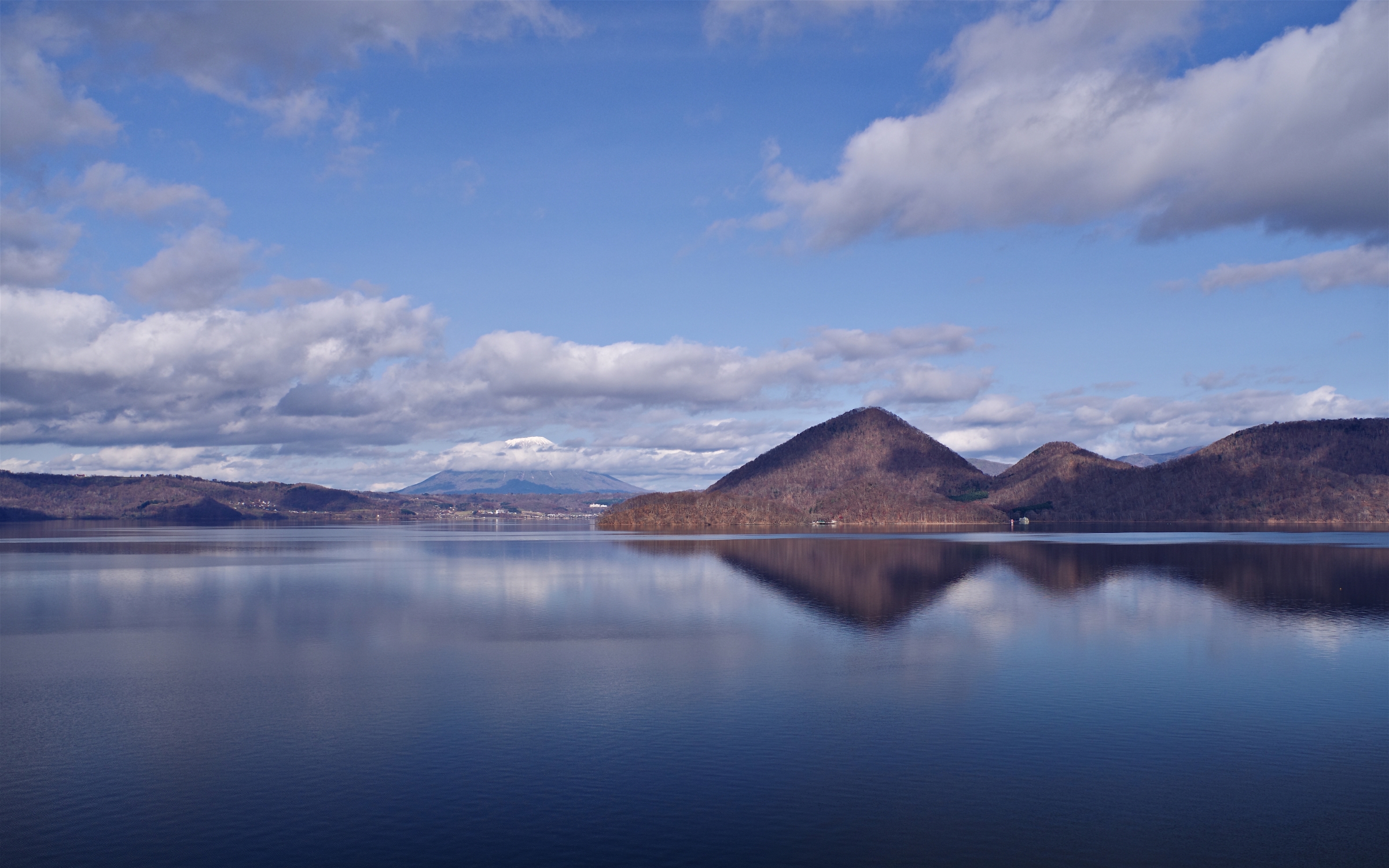
Lake Toya, a crater lake in Hokkaido. To the right is an island in the center of the lake. In the far distance you can see Mt Yotei, another volcano, and already snow-covered even though we had no snow in Toya yet.


The lake village is a strip of resort hotels along the shore, then a few streets worth of houses behind them. Shame about the view, but I guess it pays the bills.


A cozy cafe with good coffee.

We took the opportunity to stay a night in Sapporo, then two nights at Ko No Sumika, a ryokan by Lake Toya in Hokkaido, about as remote and free of people as you can find without ending up camping or something — COVID is still very much a thing on one hand; but we do want our creature comforts on the other.


First place I've stayed at with coffee filters and an actual coffee grinder. Made the morning coffee before breakfast all the more enjoyable. 


We had a traditional dinner the second evening.

It's a cool place (literally - bring warm clothes). There's absolutely nothing there except the crater lake. You have no choice but to relax and take in the scenery. The place has an onsen of course, and each room has its own bath with a view to the lake.

It wasn't cold enough for snow, but the views were still very beautiful, and the whole trip really relaxing. Even the train ride along the coast is an event with lots of views - if you go, do take the train, not a shuttle bus.


A view from the rooftop onsen. Life could be worse.


It's been a very pleasant mini-holiday. Three nights is perfect - long enough to experience a place, but not so long that you get bored, or have to make arrangements for your plants at home or anything like that. We're already planning another one for next year.


Mt. Yotei at sunrise


Sunday, October 23, 2022

Coffee surgery - the aftermath

How did the coffee plant pruning turn out? Exceedingly well!

This was the plant right after cutting the trunk:


The coffee plant right after cutting the trunk.

And this is the plant after one month:


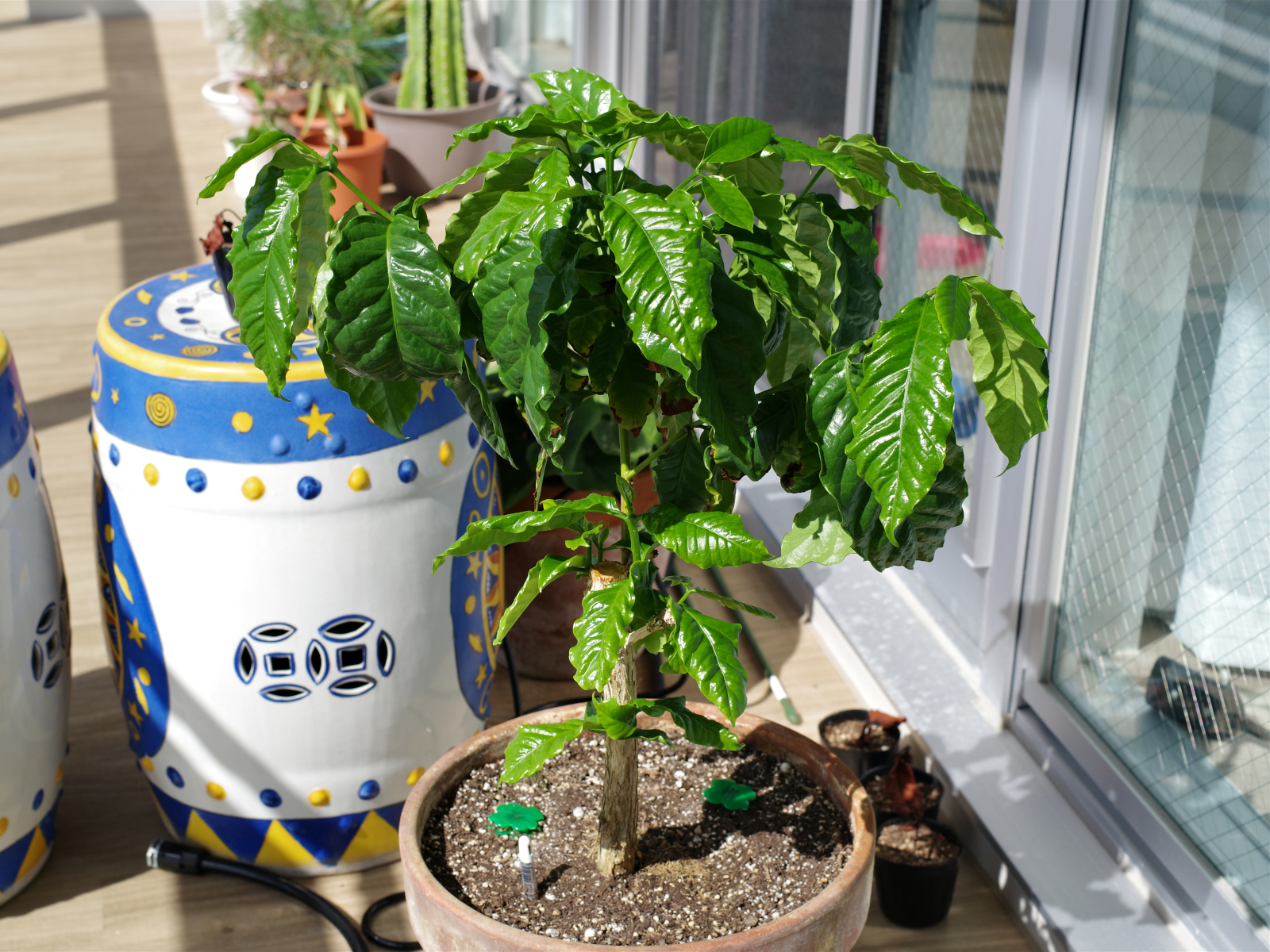
The plant almost exactly one month later.

OK, so the camera and the light are both better in the second picture. But it's still fair to say cutting that trunk has done the plant a world of good. There's lots of new, dense growth and little to no leaf browning. 

That last may be in part because I'm more restrictive with watering; a Reddit post suggested a common cause was overwatering. I now wait until it seems dried out, then way for one more day before I completely drench the pot. It certainly seems to work.

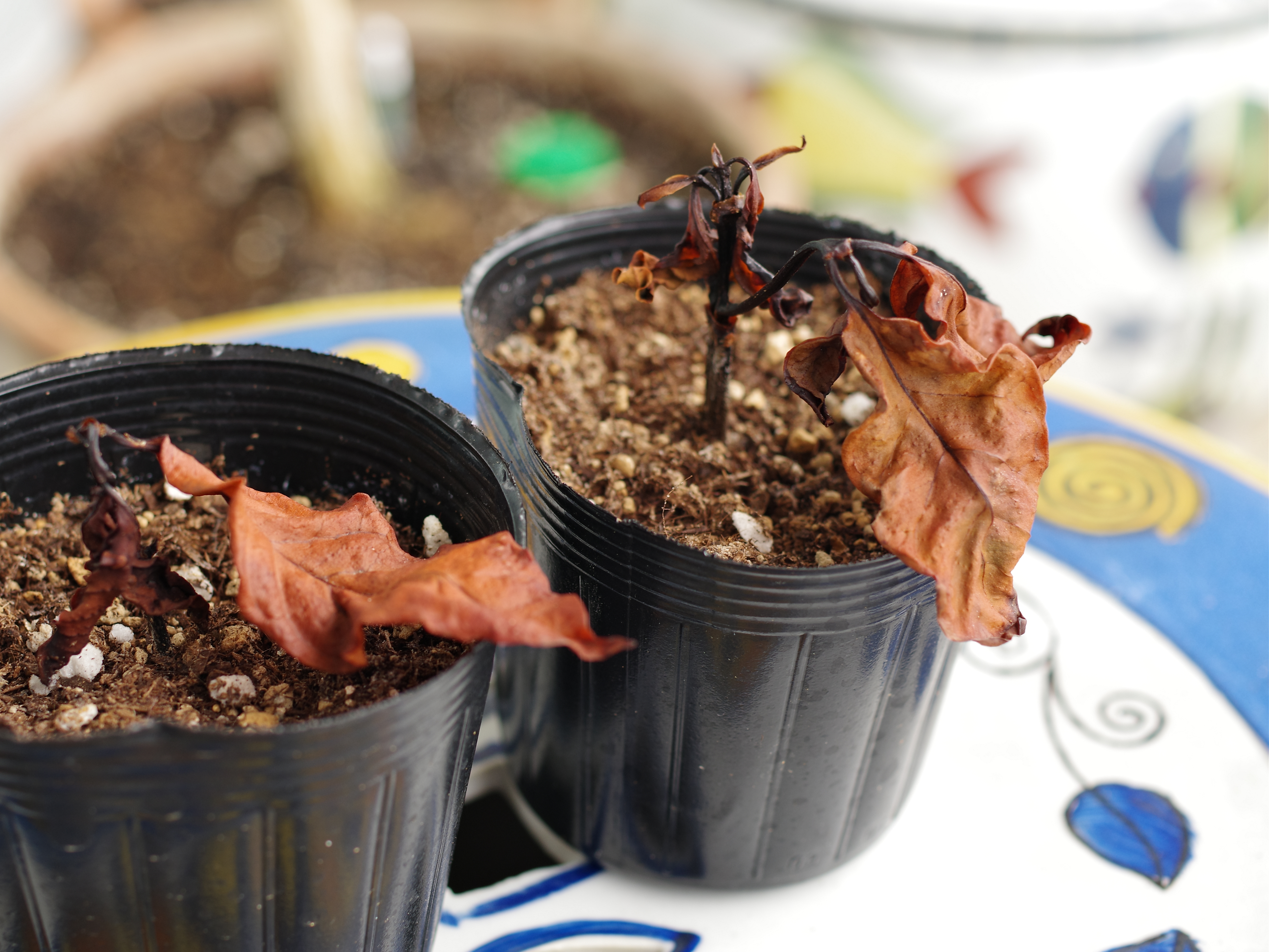
The cuttings didn't fare nearly as well:


Yeah, that didn't work.

No idea what went wrong. I still want a second plant so I may try again in spring. Will need to first look up a better way to do it — this time I just dipped the cuttings in growth hormone then pushed them into the soil. I also tried putting one in water first, but it never formed roots either. Anybody know how to take proper cuttings, let me know.


Friday, September 16, 2022

Coffee Plant Surgery

Some of you may remember my coffee plant? I first got it in 2016, from the UCC Coffee Museum in Kobe. It came with us to Okinawa, where it thrived in the hot, humid climate. A few years ago it even gave me enough coffee cherries that I could brew a cup of my own homegrown coffee.

But as I noted above, the regular typhoons and other weather have been a bit harsh on it. Over time it's become decidedly lanky, with long branches and sparse foliage. This is what it looked like yesterday:


Life's been a bit rough for it lately. Long branches that catch the wind so it loses leaves every time we get a typhoon coming through. When most leaves are lost the branch dies. You get a ball of foliage at the top of a janky, unstable trunk.

Sorry about the picture, by the way; it's a cellphone, and we have another plant right behind it (that we also cut at the same time, for much the same reasons).

 
Actual coffee farms cut down their plants every five years or so. And they do it in part to avoid the plant growing too tall and lanky; a shorter, denser plant produces more coffee and is easier to harvest. So, this is what my plant looks like now:


The coffee plant cut down. It already had this new "side branch" coming out of the base, so I cut it above that point. Hopefully this will let it handle the Okinawan weather better, and grow a thicker, more stable trunk this time around.

I know it's the right thing to do, but it's still nerve-wracking. I have no idea if it will survive this. So, to give it a bit more of a chance I took some cuttings as well:


Six cuttings. Let's see if any of them survive. If all of them do, I have no idea what to actually do with all of them; our new balcony is large, but not so large we can keep half a dozen coffee plants around.


If we're unlucky, they will all die. If we're lucky, the main plant will survive, and perhaps one or two of the cuttings will take root. If we're too lucky, they will all thrive and I'll have more plants than I need or want. Not a bad problem to have; by next spring we'll know.

Friday, September 2, 2022

A tale of a single-dish restaurant

In November last year me and Ritsuko are out on a walk in Naha on a rainy Saturday when we run across an Italian restaurant called Pastida. We're looking for a place to have lunch, so we go inside.

It's an interesting place. They serve lunch only — in fact, they're renting the space from an izakaya that opens at night. And they serve only one single dish, pasta Bolognese. No side dishes, no salads; if you don't feel like Bolognese, you need to go somewhere else.

It was very tasty; a real Bolognese with bits of meat simmered in a wine sauce, fresh pasta and topped with lots of Parmesan cheese. This was my lunch:


Spaghetti Bolognese

I've been back in Osaka for my summer holidays, and Ritsuko happened to see a magazine article about a pasta place in Kansai run by a young couple. It was a small place serving only lunch, and serving only a single dish: Spaghetti Bolognese. Not just the concept, but the picture looked very familiar. 

And when you search online there's a lot of these restaurants around. Here's a picture from Google Maps:


Spaghetti Bolognese


The pasta, the cheese, the plating, and yes, even the plate is almost exactly the same. Hmmm. 

It turns out these restaurants are way cooler than I thought. They are not chain restaurants, but they all obviously get their pasta from the same place. That place is Bigoli (also a name for the type of pasta they use). This company makes a single thing: fresh pasta and Bolognese sauce. But what they sell is a restaurant in a box.

You buy a license from them, and you get everything you need: the food, the plates and cutlery, printed menus, promotional material and so on. Yes, you still need to find a good location and come up with a name, and you still need a license to serve food and learn how to prepare this properly. 


This seems to me to be a pretty good way for somebody to dip their toes in the food service business; to figure out if they really want to do this sort of thing long term. Starting any kind of business is a big financial risk and lot of work; at least here you start out without having to figure out what to serve on top of all the rest.

If you look at the list of shops they have, there's single-dish restaurants like above. But there's also cafes and bars that add this as their one proper food dish. A low-workload way to add a proper food item to their menu.

Two reasons I don't feel cheated: First, they don't hide this. When you actually look a the menu, they clearly print that the food comes from Bigoli. In fact, they make it a point of pride. Second, the Bolognese really is quite delicious. They make this one dish and they really do make it well. You can even order online if you want to try it at home.

Chain restaurants — fast food, especially — get a bad reputation because they serve low quality or unhealthy food, not because the food has been prepared beforehand. "Ghost kitchens" (multiple online order-only "restaurants" all served from one physical kitchen) try to fool you and trick you into thinking you're getting something you really are not. 

This is doing neither. It is a healthy amount of good quality food. And they're open about it having originally been prepared elsewhere. This is fine by me.


Tuesday, July 12, 2022

Fireworks

Ginowan has a large fireworks show every year. It's normally in April, but due to you-know-what-virus it was postponed to July this year. 

Good thing: we can see the area right from the balcony. So we set up with dinner (homemade rice bowls) snacks, folding chairs and camera with a tripod. 

As it happened, the first typhoon of the season passed by just the day before. The weather was still really bad the same morning, but they insisted it would go ahead as planned. The rain let up literally minutes before it was due to start — a testament to just how good short-term weather forecasts are these days.


The fireworks happen near Tropical Beach and is sponsored by JAL, and by the resort hotel next to it. The view from the hotel is probably pretty spectacular. 


I elected to take just long-exposure shots this time around. Typically 4-10 seconds per shot. You treat the fireworks much like you'd treat a strobe; you control the brightness with your sensitivity and aperture, not shutter speed.


The display was designed by Junko Koshino, a clothing designer. It did feel more focused on creating interesting patterns than on just big explosions. And the long exposures really bring that forward, I think. These fans look as good as a still picture as they did live.


Trees with leaves, I think


Cool overlapping patterns


A dandelion fluffball and an orchid. Welcome to summer!


Friday, July 8, 2022

2020's

 You know, if the 2020's could just stop trying to be "interesting times" then that'd be great....


Thursday, June 30, 2022

Moving House

We've moved house. From Naha in the south we've moved about 10km north to Ginowan. From a fun but really old apartment, to a new, fresh place. From a backstreet in the center of a city, to a residential area by the sea.


Ginowan at night. Not a dense city, exactly, but not rural either.
 

Our entire existence right now is one of cardboard boxes and chaos. We're slowly digging ourselves out from the pile of stuff we've accumulated over the years. My computer is still packed away, so I've got no real pictures to show.

Why move? One reason: the Naha rental apartment was expensive and aging badly, and the landlord wasn't willing to do much more than the minimum necessary. For instance, the water pressure was so low that you'd lose the hot water in the shower if you turned on the tap in the kitchen at the same time. That was always fun in winter when I was showering after work while Ritsuko was making dinner.

Another reason: Our new place is 10km closer to my place of work than the old. But as those 10km were through Naha and Urasoe — very busy during rush hour — that makes my commute about 25-30 minutes shorter in the morning, and 30-60 minutes shorter in the evening. I now drive the 30km to work in only 45 minutes each morning, giving me lots more free time each day.

We also get a nice views, and we're now close to Chatan and Rycom; the Convention Center mall and the seaside park is right down the road; and the Parco City shopping center is only minutes away. 

On the down-side, we lose walking access to the Naha city center, with its restaurants and shops. And we're more car dependent than before; while our new place lets us have two cars, we also need two cars, a mixed blessing at best. Time will tell if we'll get used to it or not.

Sunday, May 22, 2022

Here's Osaka

So I start a post about something. I write half of it, then life gets in the way, I focus on other things and I forget about the post. A few weeks pass by and I can't pick it up again because I no longer really remember the point of writing it. 

But it's still sitting there, silently waiting for me to finish it. The guilt I feel for not doing it stops me from writing anything else - which is ridiculous of course. I'm the only one who even knows what I was trying to write in the first place.

So forget about that. We've been to Osaka, both over New Year and Golden Week. Here's a few pictures, selected not because they mean anything, but just because I like them:


The old Osaka City Hall on Nakanoshima. Today it's a conference center, and the surrounding park is a popular place for festivals and events. The new Osaka City Hall is a grey concrete box just off to the right.


Umeda JR station in Osaka.


Vending machines — is there anything they can't sell? This one sells COVID antigene tests for 1900 yen, less than 50 meters from home.


This way.


Namba, Osaka. This is obviously a story in the making, and I really want to know what was going on and how it turned out.


Fugitives.


Kawachi-Nagano is less than half an hour away from Namba by train, but as quiet and peaceful as you'd ever want. Feels like going 30 years back in time, in a very good way. A friend of ours works at a ryokan in the area, so we went there for a delicious lunch.


The pinball hall in Big Step, Amermura. Almost a hundred machines, from really old to the newest releases. Well worth a visit if you've ever enjoyed pinball. Even more worth it if you've never done so. Bring 100 yen coins!


Lilo Coffee Roasters is currently my favorite coffee place in Osaka. They do some excellent specialty coffee. You can get your choice of beans brewed almost any way you want, and buy a bag home.


A quiet evening sit down outside the shop. Minamisenba.


You never really see your neighborhood until you leave it for a while. Minamisenba.


Sunset.