Showing posts with label society. Show all posts

Tuesday, October 20, 2009

Konkatsu

The Japanese language has a thing for coining new words by abbreviation. A common pattern is to take one syllable or character from each of two words to create a new one. For instance, "結婚 約束" (kekkon yakusoku, "marriage-promise") is today abbreviated to "婚約" (konyaku, "engagement"). "京都 大学" (Kyoto Daigaku, "Kyoto University"), my current employer, is normally referred to as "京大" (Kyodai); other large universities tend to follow the same pattern. A common word among the students here is "就活" (shūkatsu, "job hunting"), which comes from "就職 活動" (shūshoku katsudō, "employment-finding activity").

Today I learned of a fairly new, increasingly popular word borrowing the same "katsu"-ending: "婚活" (konkatsu, "marriage hunting"), from "結婚 活動" (kekkon katsudo, "marriage activity")1. The longer phrase does not (to my knowledge) exist; the pattern is copied straight from "job hunting" above. Apparently "konkatsu" can be used in any marriage-seeking context; the tv show this morning was showing "konkatsu hair styles" and "konkatsu meiku" (makeup) which I assume is some style that makes you look eligible and desireable for marriage or something like that. A "konkatsu event" is a matchmaking party, and so on.

Of course, there's no way of knowing if this neologism will have staying power. Most new, trendy words have their time in the sun only to fade away again after a while. My guess is it will hang around. Marriage - or lack thereof - is a constant worry for a lot of younger people here2, and konkatsu is a useful and catchy term for all matchmaking and marriage-seeking issues. Of course, tv shows and advertisements blaring "婚活しよう!" ("Let's seek marriage!") and "婚活は20代から!" ("Marriage hunting starts at 20!") could well turn people off the word permanently - to say nothing of turning people off the idea of marriage itself.

--

#1 To the best of my knowledge, the origin of "tonkatsu" has nothing to do with hunting pigs.


#2 You know, maybe if this society was not so single-mindedly focused on marriage as the sole approved form of partnership, it would not be such a major hang-up for so many people. The current idea of a formally married nuclear family with breadwinner and housewife is a very recent invention after all; it's not like you'd be giving up an age-old tradition or anything if other forms of partnerships would be legally and socially recognized.

Thursday, April 2, 2009

A bit of good news from Sweden

Happy Couple
Osaka Gay
Parade 2007

In a happy bit of news, the Swedish parliament have just overwhelmingly (261 out of 349 in favor, with only 22 against) voted to extend marriage to same-sex couples. Notably, every party but the Christian Democrats (never saw that one coming, did you?) - from the Conservatives to the Communists - were in favor and with just smattering of members from the conservative end dissenting. A sex-neutral partnership law has existed for a number of years already, and public opinion has been solidly in favor of extending all the rights of marriage to same-sex couples for a long time. In the end, the debate had been reduced to whether it would be called "marriage" or something else. I'm happy to say that it is "marriage" and nothing else no matter what the gender distribution of the couple.

There is one thing they missed, I think, that the Japanese system gets right: Marriage in the legal sense should only be a legal contract between two individuals, and not have any religious or other ceremonial connection. When I and Ritsuko got married we went down to the ward office, turned in an application and documents of eligibility, and that was it. No ceremony - civil or religious - necessary. The current Swedish system is an awkward hybrid where the state has granted the power to marry to various religious organizations, along with people eligible to perform nonreligious marriages. That nonreligious marriage is still a ceremony of sorts, though, with witnesses and all. There's ongoing legal friction as to whether somebody invested with a power of civil authority can legally refuse marriages they do not accept for religious or other reasons.

Better to have a completely clean break: Legal marriage as a a strictly legal procedure, then let churches have their ceremonies for whomever they want, in whatever way they desire. As a bonus you no longer need to wrestle with who should be allowed to marry people - this religion is OK, that cult is not; that sort of thing. I'm willing to bet, though, that this will change eventually too.

Tuesday, December 23, 2008

Automation

Baseball
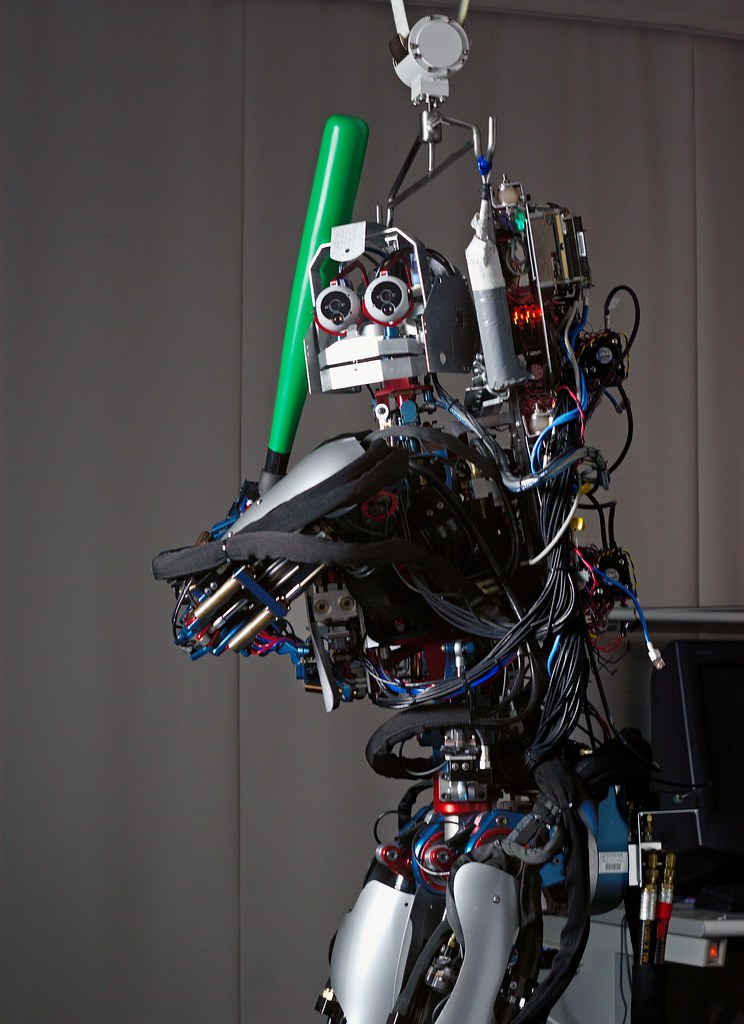
Pro Baseball Material?
From Slate, an interesting take on the automation of manufacturing. While people in the US (and Japan) worry a lot about the outsourcing of the manufacturing base and the resulting loss of jobs, a surprising amount of work today is automated, not outsourced.

Automation has a long history and it's easy to lose sight of just how much it has changed the workplace over the years. Early in the industrial era nuts and bolts were actually made one by one, turned by a skilled machinist, and matched to each other so you'd have parts that fit. As late as mid last century companies maintained typing pools where skilled women neatly typed out documents based on handwritten notes. Not that long ago "Calculator" was still a job title, rather than a counting machine.
 
We have been losing work - production and service jobs alike - to machines for centuries already. This has periodically flared up as a hot-button issue, last time in the 1980's when there was a lot of fear that industrial robots and computers would cause permanent mass unemployment. Suddenly, though, the issue seemed to vanish. Industrial robots of the era were large, expensive and complex and unsuitable in most factory settings, and office automation created lots of new jobs and business opportunities that soaked up people even as old office professions disappeared. When opening markets and improved communications created an outsourcing boom in the 1990's, any thoughts of machines competing with humans were forgotten.

Outsourcing - specifically, outsourcing to emerging countries like China, India, Vietnam, eastern Europe and so on - is not a new phenomenon either. For well-to-do families in northern Europe a set of china (sic) with the family monogram and illustrations, commissioned and imported from China, was the very thing to have in the 1700's. The recent boom is probably noteworthy mostly because this time the driver is cost and because of the large number of industries involved more than anything else.

This trend to outsource is not permanent. It is arbitraging the wage differences between industrialized and emerging markets, but over time those differences are lessening and mostly remove any simple cost-related reasons to outsource production. This is overall a good thing; a huge amount of people in emerging markets are pulling theselves out of poverty. While the wage differential may have been the prime driver this time around, other reasons to outsource to other countries are as valid as ever so some outsourcing will persist no matter what. Some people hope that as costs rise - from wage level increases, transportation costs or import duties - that production will return to the industrialized countries. The production may well return, but the jobs, by and large, will not.

Outsourcing is really only a side show - a dress rehersal if you will. Many tasks today are done manually not because we can't automate them, but simply because a machine that can do it is still more expensive than a human, and especially a poorly paid human in a third-world sweatshop. The spread of automation did not stop, as the article shows, it just slowed when it had to compete with some very low production costs in the emerging world. But robotics and information technology continues to become cheaper and more capable even as salary levels increase. A shirt that once was sewn in France or England is now being sewn in Vietnam or Bangladesh, but will at some point in the future be made by a sewing robot. And where that robot is located will no longer really matter as far as sewing, cutting and trimming jobs are concerned.

The range of professions being touched by automation is increasing. Far from big, dumb metal arms doing repetitive welding or painting, industrial robots are very capable machines already, and the possibility exists for far more autonomous, resourceful systems that can handle very complicated tasks without supervision or detailed instructions. Again, to a fair degree it is already a matter of cost rather than ability. Imagine a sewing robot that can take shirt design CAD files - perhaps measured for a particular customer - a pile of cloth and by itself sort out the materials, cut the cloth, sew the panels, and add all trimming. The next week it'll do jeans. The next week in turn a special order for a boat sail, and all without any explicit programming or expensive reconfiguration. If there's too much work, just add another unit on the factory floor. If business is slow, just idle a few of them - or rent them to another producer - until things pick up again.

The rise of very capable dataprocessing and communication is changing service jobs in the same way. In Sweden, economic information about your wage, loans, real estate ownership, capital transactions and so forth is submitted by employers and banks, and is complete enough that for most people the tax office can prefill and precalculate most of your taxes automatically, including deductions and benefits. The tax code is as complex as ever, but whereas we all had to manually figure it out one by one, the tax office now has enough computing power and know-how to easily encode the very complex rules and regulations and apply them for the inhabitants of the entire country over the span of a few weeks, and improvements in communications technology and standards mean the tax office now has the data needed to do those calculations directly. This capability really is new, and it really is significant. After all, much of the complexity and anxiety of doing your taxes was to figure out which rule to apply when and how to go about it. That complexity is now automated.

The remaining job of checking the data and adding any additional info is now very easy - easy enough that most people need no help or further instruction at all. Very convenient, a big money and time saver for people and the tax office alike, and a major yearly stress moment gone for a lot of people. But it also destroyed the whole individual market for accountants and tax lawyers, how-to books and tax preparation software. Sure, a few people still need or want tax assistance but it's become a purely high-end boutique service, not a mass market. Automation has removed a class of service jobs, in other words, and not a low-end kind of work either.

So, disaster for humanity then? No. As I've written above, this is a very old trend, and we have seen this played out several times before. Once upon a time, the vast majority of people where more or less directly involved in agriculture and fishery while today only a small percentage are, even as production improvements mean the yield is much higher than ever before. But that never gave rise to 80% unemployment, as changes were slow and people adapted. Our streets are notably empty of roving gangs of feral typists and calculators attacking other people on sight. People who would have been farm hands, typists, calculators or shirt makers in an earlier generation are working in other fields today.

Library
Education. Good for
what ails you.
One thing is changing, though, and that is education. When people mostly worked farms, most had little or no education at all. Twelve years of education, to say nothing of a stay at university, was an unimaginable (literally) luxury for the few and the male in the wealthy upper classes. Factory workers and others did need basic schooling to do their jobs, and some years in school became the norm; a full twelve years was for the well to do, and university a rare privilege. Later nine years or so became compulsory, and twelve years - high school or so - became the norm for employability. Today having just high school is the bare minimum for societal participation, and a short college/university education is common. I'd expect that two-year or three-year college will be the minimum education level another generation or two from now, and I certainly expect this trend to continue further still.

But this is not the problem it may seem. An education level once seen as appropriate only for the upper class movers and shakers of the world - and certainly too demanding for fragile female minds - is today a level that any construction worker, Macdonalds fry cook or TV personality sees as a completely natural level to have attained and surpassed (well, attained at least, for TV personalities). A university degree, once a rare thing, a mark of distinction and an automatic portal to high status is today something rather common, if not banal, attainable by the likes of me.
 
The point is, we tend to be capable of much more than our own expectations allow. Female heads did not in fact overheat and explode once subjected to rigorous education; instead women are surpassing men in all intellectual disciplines. The "lower classes" and their educationability that was the cause of such worry a century or two ago turn out to be exactly as proficient as upper-class kids if given the same opportunities. More to the point, when 10-12 years of education is the norm, you get the same success rate as you did when 3-4 years was the standard. Kids seen as failing today still manage more - much more - than a level considered successful a century and a half ago. Expectations and opportunity govern our educational outcome more than ability does. Check back in in another fifty years and you'll have people anxious about the students that never manage to finish two-year college.

It does mean that our adolescence will continue to lengthen. Once you were an adult once your voice broke; today you're not effectively an adult until 20 or even older. Once three years of college is the minimum, you'll be adolescent at least until 25. As life expectancy also rises there will be a shift in working life, starting later and retiring later than now. Sure, 25 will be the new 18 and 50 may be the new 40 - the age of menopause is rising - but expect 75 to be the new 65 as well.

Thursday, November 13, 2008

Gender Gap Rankings

World Economic Forum has posted their annual survey (pdf format) of the gender gap in different countries. They measure criteria like political and economic opportunities, access to health care and education. The index measures the male-female gap only; the absolute level available is not taken into account. A poor country with very limited health care resources may thus score highly on health care access if those limited resources are available equally to men and women, for example. An explanation of the criteria (from last year) is available as a pdf file here: index2007.pdf

My home country Sweden drops to third place after Norway and Finland, with Iceland and New Zealand rounding out the top five; the United States is at 27, ahead of Belgium (28) and Canada (31); China is at 57. Japan sits at 98, slightly ahead of Kuwait (101) and Nigeria (102) but behind Malaysia (96) and Indonesia (93). Sad to say, I don't think that ranking is in any way unfair. Japan does very well in health care access and access to primary schools but pretty much drops the ball on the other criteria. With a contracting population ahead, the last thing this country needs is to discourage half its citizens from being full economic and social participants, or for everyone to have to choose between family or working life.

Sunday, September 28, 2008

Osaka Crime

Police
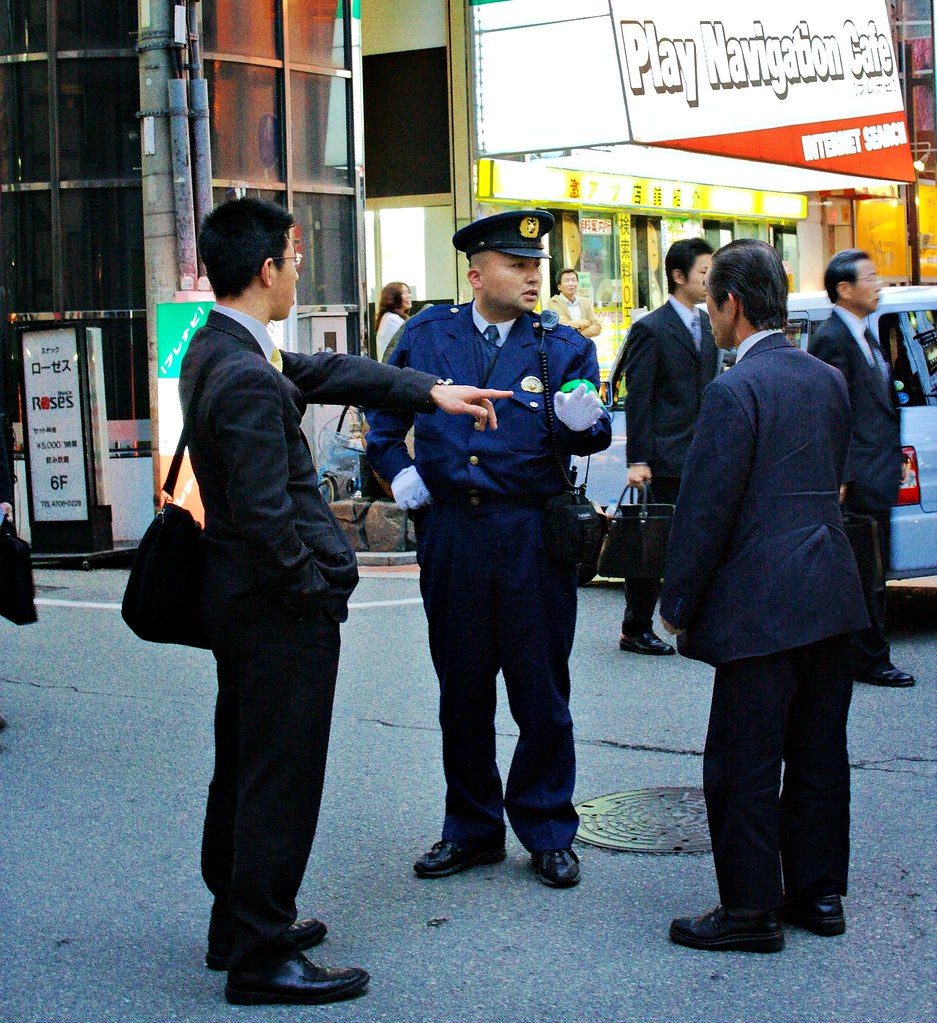
Policeman breaks up
a fight between a
drunk and a taxidriver

It can't have escaped any reader of this blog that I like Osaka. I really like the place, in fact - the always surprising architecture included.

But Osaka has another side. It has a reputation for being a crime-ridden, yakuza-infested dump, a place where you should be careful going out at night. And there is something to this reputation. Asahi Shimbun published some comparative crime statistics recently, but the statistics they printed are pretty useless - they don't adjust for population for instance, and they only look at the largest cities in Japan. The printed table is also quite sparse, with only the first two cities and Tokyo listed (it seems Tokyo uses a different basis for their statistics so comparisons are dificult) so it's difficult to adjust the data. Osaka is certainly among the top cities for crime in Japan, but it's clearly not as bad as popular sentiment would make you believe; most statistics I've seen place it only third or fourth for violent crime, for instance.

But how unsafe is it actually? Anecdotally, I have never felt threatened or unsafe anywhere I've gone in Osaka, day or night. Being a scruffy-looking foreigner does have something to do with it of course; there's easier- and wealthier-looking targets out there if you want to rob or harass somebody, and targeting a western foreigner tends to bring a lot of police scrutiny. It doesn't help that I have the situational and social awareness of a half-brick. So, let's do a quick comparison of Osaka and the largest Swedish cities.
 
Below is the yearly rates per 100,000 people for Osaka compared to Stockholm, Gothenburg and Malmö, the three largest cities of Sweden. I took only the statistics for a few crimes that seem comparable (we just don't have enough vending machines in Sweden to even record vandalism of them as a separate crime), that are relevant for the feeling of safety on the street, and that I had readily available figures for. The last column is the percentage of occurrence for Osaka as compared to the highest incidence in Sweden.


Crime rate in Osaka and the largest Swedish cities
 OsakaStockholmGothenburgMalmö% Osaka
Purse-snatching94505666143%
Bicycle Theft662480631159242%
Car Theft545616753538%
Street Robbery51491842083%


The street robbery column does look pretty incredible. It is quite possible that Sweden and Japan have different definitions of street robbery (some snatchings in Japan could be counted as robberies in Sweden for instance), but even the most skewed interpretation I could make will not make much of a difference. Street robbery and street violence in general just isn't very common in Osaka compared to Swedish cities.

To get a fuller picture we'd have to look at more crimes (assaults, rape and so on) and we'd have to be much more careful about interpreting the statistics so we know we are counting the same thing, That's quite a bit of work, however, and this quick comparison already shows what I suspected: the feeling I have that Osaka is a very safe city is fully justified, and spending time out on the streets here poses very little danger.

Tuesday, September 16, 2008

Sport, Religion and Civil Society

Jun Morimoto brings up an interesting thread on violence in sports and why we allow sports to sidestep civil and criminal law. It's related to the increasingly contentious conflict between sports league rules and employee and human rights. His stance is basically that as the participants freely signed up to play, they have accepted the risk of violence, though to a greater or lesser degree depending on the sport. I agree on his distinction between what you freely signed up for and could reasonably expect, and what you did not. When you start boxing or judo, you agree to get beaten up as part of the game. Jun brings up tattoos and body piercings as another kind of activity that, since it is completely voluntary, is not criminal.

But the "implicit consent" of violence beyond that which is expected is just that - implicit, and quite possibly non-enforceable would it come to that. When Zidane headbutted Materazzi in a soccer game, that went beyond implicit consent. Mazeratti did very much not sign up for the possibility of a headbutt (a move that can potentially kill the victim if it hits badly) when agreeing to participate in the match. If, just to take a pure hypothetical, he had chosen to sue Zidane over it, it is not at all clear that the suit would be dismissed. And I, at least, don't think it should be.

There are other areas with a large "don't go there" legal gray zone; the largest is probably religion. Many societies give religious organizations a de-facto jurisdiction over their congregations, including children (that can't reasonably have said to have given free, informed consent). On one end you have a recent case in the US where a 17 year old girl was held captive against her will for two days and beaten up as part of an involuntary exorcism. The court ruled that it had no standing to try the case since in their view it would collide with the separation of church and state.

Overall, though, the trend seems to go the other way, with civil society claiming pre-eminence over special interests. There is a fair amount of debate about gay marriage in many countries, for instance, with proponents and opponents in heated debate. But that is really just a consequence of an earlier, far more fundamental shift of marriage from a primarily religious institution to a primarily civil one. In many countries you can get married today without asking a church for permission; indeed without having any religious input at all. You can also get named, be considered an adult, own property and be buried - all without involving religious authorities or asking them for permission.

This was not always the case (and still isn't in some parts of the world). In the not so distant European past, the various christian churches wielded political and secular power at least equal to - and frequently greater than - the secular rulers. With the continuing rise of civil society (including the rise of the national state) as the dominant force, the religious rulers have lost much of their power - and lost it quietly, unnoticeably through the emergence of legal rules for areas once religious. Once there is a law or rule regulating something, civil society has taken ownership of and responsibility for it.

In the same way, the recent conflicts between the sporting world and civil society is, I think, a reflection on the latter's increasing dominance. I believe this is mostly a good thing. It does not mean that religions or sports leagues should never be allowed exceptions to regular laws, but it does mean that any exceptions be made explicit and transparent, rather than remain enacted by default.

Tuesday, July 1, 2008

Fertility in the New York Times

A Sunday Times article asks the question of why there are so few babies born in parts of Europe. This is of course the same issue that Japan, Korea and some other countries are grappling with as well, and one that I've tried to cover before. The piece is rather verbose (yes, yes, I know - "pot, meet kettle. I'm sure you'll be god friends!") and light on detailed statistics, but it's a good read.

The piece describes how fertility has plummeted the world over, but fallen far below replacement in in southern and eastern Europe (the focus of the article) as well as in some parts of Asia, notably Japan and Korea. The reason is not the loss of religion or traditional values as some would argue; indeed, low-fertility southern and eastern Europe is a lot more conservative, family oriented and religious than the European north (which has a much healthier fertility rate).

And that is the key. In economically backwards, conservative, agrarian societies the fertility rate is high. A conservative, rigid lifestyle is well adapted to the economic situation - is perhaps necessary for social cohesion to be maintained.

In economically advanced, liberal societies with equal opportunities and help to combine children and an uncertain working life the fertility rate is, again, fairly high. The Scandinavian welfare state model provides assistance to parents with accessible daycare, paid parental leave, free schooling and so on. The US free-market model give parents enough workplace and societal flexibility to easily change occupation and working hours and allow people to leave and reenter the workforce without career stigma - the normally conservative USA has a notably liberal view of family life with regards to career and workplace issues, belying the idea that US moral conservatism is the reason for the fertility rate.

But the southern European countries along with Japan and Korea only modernised halfway. They are economically liberal, advanced societies that demand a great deal of flexibility and career committment from its citizens. But they still expect family life to conform to agrarian family values that are incompatible with their own societies; values that prevent them from providing the same support and flexibility to their citizens that the above societies do. They refuse to change their family and lifestyle values, and they can't renounce modernism and go back to a pre-industrial agrarian life. Stuck in the middle, prospective parents end up not having the children they wished they could have.

The greatest risk is being pointed to by Germany, as the article shows. There, being childless is increasingly seen not just as another lifestyle choice; it is gradually coming to be a desirable one. In most societies with a low fertility rate people want ot have more children than they do. But if people have fewer children than they want for long enough, that lower level will increasingly become the social norm. When people look around and see most of their peers and their parents generation with only one or no children, that becomes normal. If the societal tension between conservative family values and modernism persists for long enough - a couple of generations or more - then people may simply no longer want to have enough children even if they can.

Wednesday, June 11, 2008

What is Normal?

There's a constant low-level political argument in Japan about "becoming a normal country". This is often trotted out as a part of arguments for changing the constitution to allow a "real" military with offensive as well as defensive capability, and allow it to participate in military operations abroad.

Tobias Harris of Observing Japan takes a look at what's actually normal as far as nation states go. He argues (convincingly in my view) that the renouncing of military power in favour of economic weight and dense links with other nations today is the normal state of being, while the obsession with territory and projection of military power has become an anachronism.

Go read it; it's good.

Wednesday, May 21, 2008

No Car, no Beer, no Money

The morning news today featured a report on the problem of young people not buying things. Specifically, 20-30-somethings are not buying cars any more; both car ownership and (more ominous for the industry) drivers licence ownership is trending steadily downwards and has done so for a number of years. Of course, owning a car is expensive and becoming more so, and a car is not a symbol of adulthood anymore, unlike for earlier generations.

But it's not just cars; beer sales is steadily diminishing in this age group too, as is the sales of many other consumer items, appearances notwithstanding. To some extent it's of course the vagaries of fashion; consumption patterns change according to prevailing attitudes, and with the current interest in environmental issues, health, and the downsides of materialism, a downtrend is nothing to be surprised about.

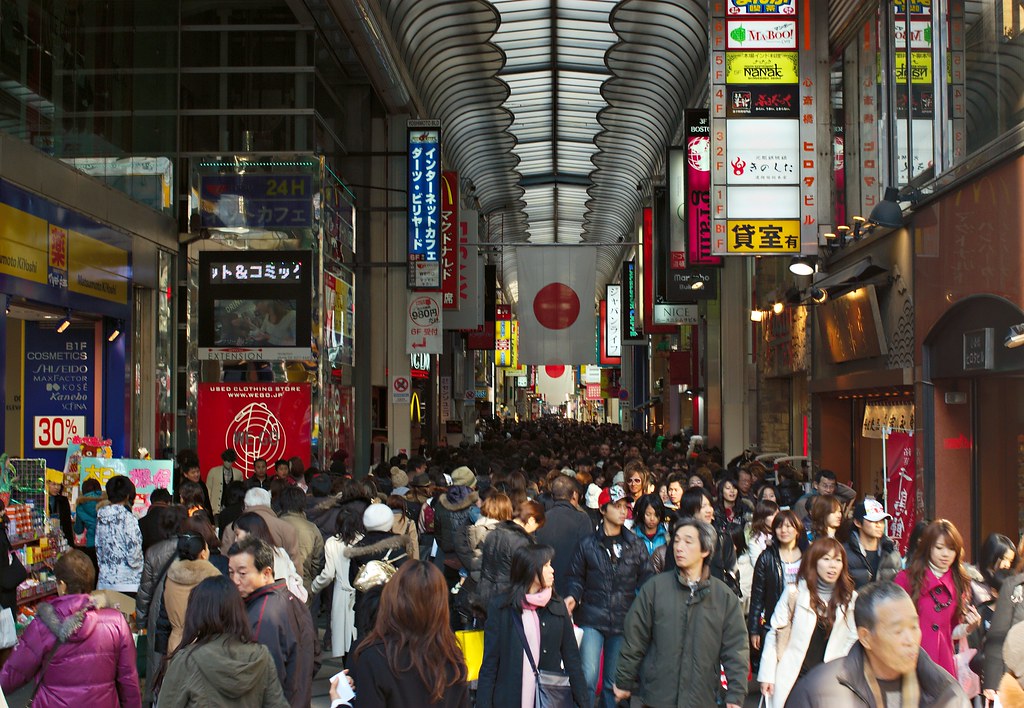
Shinsaibashi
Shopping less.


But that is not the whole explanation. Nor is it the (in)famous population decline; the consumption pattern change does not track population change in this age group. What was brought up as the main culprits was the current state of the economy, and the example of this generations forebears, the so-called "lost generation".

The "lost generation" are those who came of age during the interminable post-bubble recession; people around my age. They graduated into a lousy economy and a dismal job market, and because of the vagaries of Japanese employment (many companies hire only fresh graduates for permanent positions) a disconcerting proportion of these people have never gained a steady foothold in the job market. They are the vanguard of the part-timer and temp-staff trend here in Japan, with no job security, low pay and a very uncertain, poor retirement to look forward to. The current 20-30 year-olds see what happened to them, see their own job prospects trending the same way (fixed employment is down, temp jobs are up), and plan accordingly.

The second issue brought up is the deteriorating state of the pension system especially; this was specifically mentioned by many of the young people in the report. The pension system is clearly failing - it's in a similar situation the old Swedish system was in, with projected payments not able to cover its commitments - and in addition you have the never-ending farcically incompetent mishandling of millions of pension records. Young people suspect they will never get a single yen from the pension system, and save their money instead of consuming it.*

The report highlights one aspect of social security that is often missed: lack of security materially impacts the economy. If a poor country does not have a reliable pension system and social security net it doesn't affect the economy in this manner; poor people are going to spend most or all their resources on necessities anyhow. But a wealthy country, like Japan, has a farirly substantial part of its economy driven not by necessities but by discretionary spending. And when your job is unstable, child-raising is extremely expensive and your future pension is highly uncertain, you're going to cut down on discretionary purchases - as well as delay marriage, postpone child-rearing and limit the number of children; this is certainly a factor in the declining population, as per my earlier post on the subject. Having people work as temporary staff will save some money for the individual company, but will contract the overall market for everybody. And this is true wven if the salary is the same; is is the uncertainty associated with a lack of job security rather than salary level that makes people anxious and unwilling to spend.

---

* As an aside, as a foreigner I have to pay 9 percent of my salary into the Japanese pension system. But because of the way the rules are set up for foreigners I am unlikely ever to get any pension benefits from that money. There are no reciprocal agreements between Japan and Sweden so I won't be getting any pension from Sweden either, and Japan is famously dragging its feet all it can to avoid such agreements (only two countries have them so far). Japanese part-timers get into trouble too, as you need to pay for a minimum of 25 years to receive anything at all, and many part-time jobs generate no pension benefits. This is a cheap, tawdry way of treating people in the abstract; it's milking contributions from people with no intention of ever paying them back in turn. I'm not all that upset about it in practice, though, since I agree with the current 20-somethings that by the time I retire there won't be money for me or anybody in the Japanese pension system anyhow.

Thursday, April 17, 2008

Osaka Population

Prodded by Shisaku's post on the Tokyo population rebound, I felt a sudden urge (aided and abetted by a too-long to-do list and gloomy weather) to take a look at some Osaka demographics.

Shisaku shows how Tokyo is growing at a healthy clip of about 0.7% last year. He (she? they? I don't actually know) attributes it at least in part on a reversal of the previous trend of moving out of the city and into surrounding suburbs. If we look at Osaka prefecture, which, like Tokyo, is actually several completely interlinked cities (a major reason, I believe, for large cities being so dominant over medium-sized ones in Japan - but I digress), it produced essentially zero growth the past two years (about 0.07% this year).

But if we break the data down the story is more interesting. The first one is that urban Osaka (at 8,636,197 people) is growing very slightly while rural Osaka (at 191,288 hardy souls) is shrinking. The big surprise here is of course that Osaka even has a rural population, even with the rather relaxed definition of "rural" in this country (where the presence of actual nature seems to be an optional extra).

If we look closer, Osaka city is growing at a fairly healthy clip at 0.31%, which would make it the seventh fastest growing city in Japan; and within Osaka city, Chuo-ku (where we live) is growing the fastest at a very quick 2.8% this year and 3.17% last year. Not hard to believe; looking out the window it seems like new apartment buildings are sprouting around us like mushrooms after an autumn rainstorm.

By contrast, places like Toyono (-2% per year), Tonbabaya and Kawachinagano are losing people (almost 1% per year).In general, the central and western parts of Osaka city - and Osaka prefecture - that face the sea or abuts Kyoto or Kobe, is growing. The east and southeast areas facing the mountains and farmland, and Toyono up in the mountains of the north, are shrinking (so that's where the rural parts are, I guess; should go there sometime).

Osaka Population Change
Osaka prefecture population change over last year.


In general we should expect that rural, sparsely populated areas are losing people, and densely populated centers should gain. So I took a peek at two years worth of population data, and sure enough, there is a positive correlation between density and growth in Osaka, but with a correlation of 0.22 it's pretty weak indeed; nothing I'd want to make anything of. Of course, two years is not a lot of time, and especially for small areas one single event - a factory opening or closing for instance - can make a big difference. Also, the influx of people does depend on other, unrelated factors too, so we'd want to have numerous cities of each size to average out those factors. Many years of data, from a number of population centers, in other words. Not something I really have the time for unfortunately.

But there is another possible factor here as well. Osaka is densely populated - really dense. Southern Swedish city of Malmö has a density of 1700 people per square km, and Stockholm has a density of 4200/km2. Osaka city, by contrast, has a density just shy of 12000/km2. Were Stockholm a city in Osaka prefecture, it would be right on the median, and Malmö would be considered one of those sparse areas out toward the southern border. So perhaps the connection breaks down for very high population densities. Urban enough is urban enough; above a certain point the advantages no longer increase much, while negatives like living costs and crowding does. Take a look at this graph.

Osaka population change and density
Population growth as a function of density, Osaka prefecture.


Above is a graph of population density (on the horizontal axis) and growth (on the vertical axis). The dark green dots are the individual cities and towns in Osaka. The blue line is a polynomial fitted to the data to show the general trend. The orange bars show the average population change for ranges of densities (in the upper X-axis). And true enough: the lowest density areas (0-1499/km2), areas you'd describe as semi-rural or suburban, are losing a significant amount of people (over 1% per year), while urban areas gain people. The densest areas are on average shrinking slightly, but there are so few data points that it's not possible to draw any firm conclusions. It does sort of suggest that there is an optimal density that people will gravitate towards if given the choice, but we'd need a lot more data to tell if it's a real effect.

So, one interpretation is that the same thing is happening locally in Osaka as in Japan at large: Overall population numbers are mostly flat, but the rural areas and small towns are shrinking while the big population centers are growing. And what Shisaku is describing for Tokyo - a return from the suburbs - is possibly exactly the same process; but the vagaries of city borders means it shows up as a net inflow for Tokyo and an static population for Osaka. What will be interesting to see over the next generation or two is what will happen with the three types of area. One possibility is that the superdense areas stay flat while the dense areas slowly approach them and the semi-rural areas empty out. Another possibility - the most likely, I think, is a partial reversal, with the superdense areas shrinking somewhat and the semi-rural areas closest to the urban ones becoming urban areas themselves. A flattening of the density curve as transportation systems improve.

The question mostly on my mind now is of course if or when Shisaku will post a quick analysis of movement patterns in Tokyo, so we have something to compare with.

Wednesday, November 21, 2007

Population Decline

It's been all over the news lately that Japan's population is now stagnant and expected to shrink over the next generation or so. The immediate reason is a low birth rate - the fertility rate has hovered at around 1.3 since 2000 - rather than high death rate or significant emigration. And the reasons for the low fertility rate are grounded in the disconnect between the traditional norms of official society on one hand, and the realities of modern life for people - and especially women - on the other.

As far as child rearing, the society is organized around the idea of the mother working at or close to home, with nearby or live-in grandparents as extra support. Meanwhile the father works farther afield (literally for farmers, and career workplace for others), earning most of the needed funds for supporting the family. Children cost a lot of resources of course, but were the main "retirement benefit"; they'd be taking you in and supporting you in your old age. And as an aside, this supposed family structure forms the basis for the career "salaryman" as well; the punishing office hours presume a stay-at-home wife to provide constant ground service and support.

But society doesn't look like this anymore. On one hand, the kind of stable solid-income employment needed for a single person to support a family is becoming rarer; all the increase in employment figures here has been in temporary positions and part-time work, while the famed "lifetime employment" positions have been declining. The new kind of jobs do not pay as well, and are nowhere as secure as real full-time work. So having two incomes is becoming more important for more families.

On the other hand the work opportunities for women have steadily improved, and young women especially expect to be able to have a career and an independent income. And more young people are embracing the uncertainties of the temp workplace over long-term employment in a conservative company with excruciatingly long hours and perhaps weeks without seeing their families.

But those career opportunities and flexibility is not supported by a society that still views the traditional setup as the norm. Child care - if available at all - is very expensive, and there is very little in the way of child care leave, sick leave for children, or indeed a right to keep your job once you marry or have children.

Also, single households are becoming more and more common. The reasons vary but are a combination of more people studying at university; lack of funds to move away from parents household and together with somebody; or just an unwillingness to throw away the freedoms of single life to comply with the strict societal demands accompanying cohabitation or marriage. And while being a single parent is a daunting task anywhere, it is all but impossible in Japan.

The attitude from governmental Japan so far ranges from denial to outright hostility towards the idea of any kind of nontraditional family circumstances. A year or so ago, the minister of health referred to women as "birth giving machines" and paternity laws still refuse to accept DNA testing as definitive since, in the view of conservatives, it would undermine public morals (How? Beats me). For children born within 300 days after a divorce they can end up in a no-mans-land where they are not recognized as full citizens and cannot get passports or other essential services.

The end result is that people are choosing to have fewer children; or they have their children later (which of course leads to declining population as well); or may in some cases decide against having children altogether.

Japan is not alone in this trend. Italy is grappling with low birthrate for very similar reasons - a conservative societal structure out of step with the more open, changing and economically uncertain reality. Societies that are not grappling with this have either gone through this stage in one way or another (my native Sweden would be one example, but many current first-world countries would qualify) or have yet to encounter this dissociation (again, any number of societies would qualify).

A lower population is by itself no danger to Japan in general or to rural Japan in particular. Population predictions (see this article for a summary and really good links) for 2050 puts the population at somewhere between 90-110 million people versus about 127 million today. But as recently as 1960, the total population of Japan stood at less than 95 million (lots of stats here). For most of Japans history, including much of the past century, it has had a substantially smaller population than today - and managed a thriving economy and lively countryside just fine. How low a population could you have? Sweden is about the same size as Japan - around 20% larger, in fact - and has about 9 million inhabitants. It manages to have a thriving high-value export economy and standard of living right up at the top along with Japan.

Economically, fewer people means less economic output. But as far as living standards go, this is irrelevant; it's economic output per person that matters. And of course with a smaller population you have fewer people to share the economic wealth, as Scandinavian countries give example of. Yes, it will mean that Japans economic clout out in the world shrinks, but that is not really a societal problem. Most countries have no problem not being among the top ten economies of the world, and the public - unlike status-seeking politicians - can probably take that loss of status with equanimity.

While having fewer people than the present is not a problem, having the population change rapidly is. Whether population grows or shrinks, any society will have to struggle with keeping up. Crowded schools and insufficient number of teachers during child boom years; empty schools and redundant teachers now. Population changes are slow, but so are understandably large-scale infrastructure changes. And just like managing population growth is all about slowing it enough for the society to keep up, so is managing a decline. As long as the change is slow enough for services and planning to keep up, things will be fine. If not, you'll face growing or shrinking pains until it does.

Along with the population decline comes an aging population. And this can be serious if not handled correctly. Much of the reason for it is due to people living longer, though, not just the decline of young people, and it is a general problem Japan shares with many other countries (Sweden included). In a way it's a good problem to have - it means people are living a lot longer after all. There's two problems with an older population, both related to retirement. The first is that Japan - like a number of countries, but unlike Sweden - still has a pension system where the current workers pay for the current retirees. It's a pyramid scheme that depends on having a steadily increasing pool of new payers coming in at the bottom. That system was usually set up at a time when you had perhaps three or four working people for each retiree, and it breaks down when the proportion is closer to 1.5 workers per retiree as is now the case.

In the case of Sweden (I'm from Sweden; it's the country I know well, bear with me) we used to have a similar system, but a fairly severe financial crisis in the 90's gave the impetus needed to reform it into a system where each retiree is paying for themselves. Your retirement is thus not fixed but what you receive depends on how much money you've paid in and how well the economy (and thus the pension investments) have grown during the years. The connection to the long-term economy is thus made clear, and you aren't nearly as dependent on demographics as in the old system. That kind of change again needs a crisis to effectuate though, and there hasn't been a sufficient one here yet.

The second issue is the pension age itself. In short, 60 is the new 40. The pension age in most systems (about 60-65 in almost all countries) was selected early last century, at a time when 65 was old, and most work was literally back-breaking. Those people who even managed to reach retirement age were generally worn down, in poor health and could normally not expect all that many years of retirement. Today is very different. Your average life expectancy is up into the late seventies (and is of course even higher for the cohorts actually reaching retirement age). Many people in professions that allow you to retire at will, like physicians, researchers and artisans choose to work far up into the 70's and it's becoming more and more common for retirees to launch "second careers" to capitalize on their knowledge or to do something related to their interests.

The problem is not that people are getting older, but that people aren't working longer as they do. I've seen a figure of 69 years as a retirement age as the cutoff for basically solving the retirement crisis in Japan. That might just shuffle the problem ahead another generation, though, as people continue to get older. Perhaps connect the retirement age to cohort life expectancy would be more prudent - and fairer too.

But this is all "easy" problems; easy in the sense that the proximate causes are known, as are the solutions - you even have a good sampling of other societies you can study to find out the anticipated effect of various approaches. The only thing lacking (severely lacking, in the case of the LDP) is political will to actually implement solutions they see as distasteful and socially and morally bankrupt; and yes, to LDP hardliners women with a career qualifies as distasteful - to a fair number of them, female suffrage undoubtedly does. I expect political Japan to come around eventually but it probably needs a political crisis moment of some sort, and a gradual decline doesn't offer one naturally. Having the LDP lose the lower house to DPJ at some point would qualify, I think, or an internal LDP scandal or even party split between the mainline conservatives and the far right.

So what of the decline of rural Japan? The population of Japan peaked last year; up until a year or two ago it was still slowly increasing. By contrast, the countryside depopulation has been going on for well over twenty years now, and perhaps longer. The countryside was more vibrant and alive in 1960 (with, as we saw, a far smaller countrywide population) than today. The rural depopulation has been progressing even as the total population has still been increasing. Population growth is thus not a major factor; it will tend to affect the rate of change, of course, but does not actually determine the fate of the countryside.

Population size change is not a driving factor, but what about the aging of Japan? After all, rural areas have not lost people equally. As communities shrink it is disproportionally the young that leave and the old that stay, making the countryside not just smaller but grayer as well. With fewer young people you get fewer children and with more old people you get higher health and retirement costs with fewer workers. It becomes an exaggerated over-the-top version of Japanese population change, with every problem blown up to caricature size. But the reason for that is not population size, but population movement and specifically urbanization, the subject of the next post.

Monday, November 19, 2007

The Decline of the Japanese Countryside

There's been a lot in the news lately about two population trends in Japan. One trend is the disappearing countryside and rural towns in Japan. The other trend is the declining birth rate and the resulting decline in total population. Many commentators take it for given that one is the cause for the other. I'm going to maintain here that it is not; instead it is the third - largely silent - trend of urbanization that is the main cause.

The reason for this long post is that Shisaku, an always interesting blog on political life in Japan, posted a series of posts (here, here and here) which I replied to. I realized, however, that I hadn't really formulated my thoughts on this in a clear manner and came off as somewhat disjointed. So here an attempt to argue my standpoint at length.

In short, I will argue that population decline is not connected to the disappearing countryside while urbanisation is; that population decline is unlikely to be a truly long-term trend or all that serious if it is; that none of these trends are actually large-scale bad; and that far from making Japan a population basket-case these trends are simply making Japan become more like most other industrialised countries in the world.

First, though, a disclaimer: I am not a social scientist of any kind. I don't actually know any more about this than any random guy pontificating in a bar. But I am an academic in a different field however, so writing belaboured, authoritative-sounding prose comes naturally. Which may lure the unwary to falsely conclude that I seem to know what I am talking about. I don't.

I will talk about population decline and urbanization in later posts - the whole thing gets too long otherwise - but first, the depopulation of the countryside.

Most famous lately has been the town of Yubari in Hokkaido. It is a former mining town that tried to spend itself out of a declining population and financial difficulties. By the time it went bancrupt it had spent billions of yen on various well-meant but ultimately doomed projects and is now forced to close all non-essential services including six out of seven schools and the hospital and lay off the majority of all town employees (the largest employer in town after the mine closed).

The problem for Yubari is of course that it only became a town only because of the mine, and without it the town really doesn't have any particular economic reason to exist anymore. With most service now trimmed off - and to be fair it was all scaled for a long-gone population several times the current size - and employment crashing, it now risks following a lot of other similar towns in Japan into oblivion.

And indeed, as Shisaku posts above, many other small communities are struggling or already dying. In the news a year or two ago was a small village that decided to disband and sell the land to become a landfill. The villagers were all old and frail and expected to need to move to the nearby city soon in any case, and the landfill operator preferred to use an area already marked by human use over unspoiled countryside. But for every village you hear about in the news there are many that silently succumb to depopulation and old age.

So, what could the causes be, and what can be done about it? The next post will be a look at the other recent headline trend: population decline.