Showing posts with label religion. Show all posts

Friday, February 13, 2009

Darwin at 200

It's Charles Darwin's 200th birthday this year, on February 12th1. He is one of the giants of science along with Newton, Gauss, Einstein, von Neumann and so forth. Darwin's greatest contribution really is in putting biology firmly on a naturalistic footing, obviating the need for theological or supernatural explanations for life or our own existence.

It's sometimes said that the reason evolution is controversial is because it's so easy to misunderstand. The basic ideas of evolution can be expressed in a few catchphrases, so people think they understand it. The consequences of those ideas are deep and far-reaching, though, and modern evolutionary biology has had a century and a half to build on Darwins initial work. Consider for a moment just how different modern physics or medicine is today compared to 1850 or so. That's not the reason some religious people refuse to accept evolution as settled fact, however.

Other controversies like heliocentrism, the age of Earth, germ theory of disease and so on are peripheral to most faiths, but evolution speaks about the fundamental causes of our own existence, and that challenges the very core of most religions. Literalist religious strains, especially, feel that the foundations of their faith are threatened. And with good reason; evolution and modern biology really is incompatible with it. You'll have to either accept a deep-seated contradiction between reality and faith, or accept a "god of the gaps" at the most, a hands-off deity that perhaps started the universe but lets things run their course largely on their own. Of course, if your hypothesized god is absent and inactive, why believe in it at all?

Teapot

A teapot. Yes, it's on topic.


--

#1 I know I'm a day late. I'm off by only 1 part in 72950 or 0.0014%, however; well within any reasonable margin of error wouldn't you think?

Wednesday, October 22, 2008

Atheist Bus Campaign

Not about Japan or Osaka in any way, I know, but this is just too cool not to share. Apparently, some rather unsavory religious organization have run advertisements on London buses warning people about damnation and hellfire unless they give their money, loyalty and brains open their hearts to the church. This rankled a columnist in the Guardian who floated the idea that perhaps atheists should collect some money and advertise too.

The campaign to raise the needed money started yesterday, 21st of October. The plan was to perhaps raise as much as 5500 pounds by the end of the year; Richard Dawkins pledged to match any donations up to that amount. That would give the campaign £11000, enough to run an advertisement ("There's probably no God. Now stop worrying and enjoy your life.") on 30 buses for four weeks.

The donation page has been open for only a day now but the amount donated already stands at £50000, almost ten times the original expectation - and that's before the £5500 Dawkins is pitching in - and it's still climbing. I'd say there's a fairly significant untapped constituency there for any politician willing to stick their neck out in defiance of religious groups. The campaign website is here, and the donation page is here.

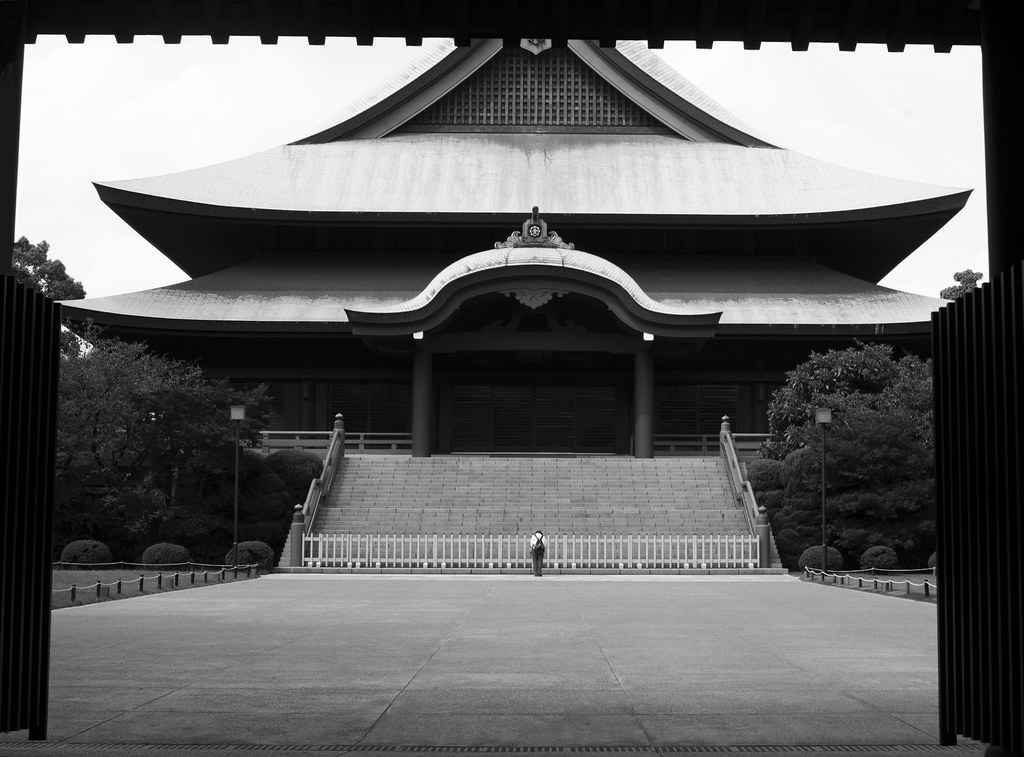
Alone
Alone.

Tuesday, September 16, 2008

Sport, Religion and Civil Society

Jun Morimoto brings up an interesting thread on violence in sports and why we allow sports to sidestep civil and criminal law. It's related to the increasingly contentious conflict between sports league rules and employee and human rights. His stance is basically that as the participants freely signed up to play, they have accepted the risk of violence, though to a greater or lesser degree depending on the sport. I agree on his distinction between what you freely signed up for and could reasonably expect, and what you did not. When you start boxing or judo, you agree to get beaten up as part of the game. Jun brings up tattoos and body piercings as another kind of activity that, since it is completely voluntary, is not criminal.

But the "implicit consent" of violence beyond that which is expected is just that - implicit, and quite possibly non-enforceable would it come to that. When Zidane headbutted Materazzi in a soccer game, that went beyond implicit consent. Mazeratti did very much not sign up for the possibility of a headbutt (a move that can potentially kill the victim if it hits badly) when agreeing to participate in the match. If, just to take a pure hypothetical, he had chosen to sue Zidane over it, it is not at all clear that the suit would be dismissed. And I, at least, don't think it should be.

There are other areas with a large "don't go there" legal gray zone; the largest is probably religion. Many societies give religious organizations a de-facto jurisdiction over their congregations, including children (that can't reasonably have said to have given free, informed consent). On one end you have a recent case in the US where a 17 year old girl was held captive against her will for two days and beaten up as part of an involuntary exorcism. The court ruled that it had no standing to try the case since in their view it would collide with the separation of church and state.

Overall, though, the trend seems to go the other way, with civil society claiming pre-eminence over special interests. There is a fair amount of debate about gay marriage in many countries, for instance, with proponents and opponents in heated debate. But that is really just a consequence of an earlier, far more fundamental shift of marriage from a primarily religious institution to a primarily civil one. In many countries you can get married today without asking a church for permission; indeed without having any religious input at all. You can also get named, be considered an adult, own property and be buried - all without involving religious authorities or asking them for permission.

This was not always the case (and still isn't in some parts of the world). In the not so distant European past, the various christian churches wielded political and secular power at least equal to - and frequently greater than - the secular rulers. With the continuing rise of civil society (including the rise of the national state) as the dominant force, the religious rulers have lost much of their power - and lost it quietly, unnoticeably through the emergence of legal rules for areas once religious. Once there is a law or rule regulating something, civil society has taken ownership of and responsibility for it.

In the same way, the recent conflicts between the sporting world and civil society is, I think, a reflection on the latter's increasing dominance. I believe this is mostly a good thing. It does not mean that religions or sports leagues should never be allowed exceptions to regular laws, but it does mean that any exceptions be made explicit and transparent, rather than remain enacted by default.


Tuesday, December 18, 2007

Fushimi Inari

Fushimi inari shrine lies in southern Kyoto, along the Keihan line to Osaka, just a few stations north of my so-far favourite ramen joint. Of course, when you say "shrine" you tend to think of a collection of buildings aroudn a courtyard. Fushimi Inari is different; a 3km walkway up and around a mountain, with small and large shrines and altars - and tea houses and restaurants and souvernir shops - dotting the path. Inari is a god of enterprise, so having "merchants in the temple" seems perfectly appropriate. Inari uses foxes as messengers, and the place is filled to the brim with fox statues and symbols.

Prayer Priest
Fushimi Inari main shrine at the base of the mountain.

The path itself is an absolute orgy of "torii", red-painted wooden arches donated by compaines and individuals, over tenthousand of them in all. Along most of the path you're walking in a red, wooden tunnel, so closely are they standing to each other. And as the path winds itself up along a densely forested hillside the light is decidedly dim, even on a sunny day.

Torii New Torii Torii
The torii stretch out all along the mountain side to form a long, red, wooden tunnel. In the center a painter is filling the donor name on a new gate.

The torii are donations from people and companies, giving thanks for successful enterprises. As the wooden toii don't really last in the humid climate (I've heard 15-20 years mentioned), there'll be "openings" for donations dotted all along the way, and old, half-rotted gates will stand next to ones so fresh the paint has yet to dry. Along the way there are many small shrines or offer mounds for all kinds of special needs; there's shrines not only for all kinds of manufacturers, but also for advertising and for PR work, and for various ailments. The shrine for back pain is memorably accessible only via a steep, narrow set of stairs sure to test the faith of everybody with spinal trouble. More pictures in my photo set


Shrines Candles
Small shrines are plentiful, sometimes enclosed, often out in the open, but always with foxes and small and large red gates everywhere.