As you may know, Ichiro Ozawa, general political heavyweight in Japan, is now on trial for his office having accepted some 400 million yen in illegal campaign contributions, after his secretaries have been found guilty of the same. Opinions seem sharply divided if there was criminal intent; whether 400 million is a lot or not; and whether Ozawa knew about it or should shoulder any blame if he didn't.
If we want to get a sense of what is acceptable, it would certainly help to compare with other places. We're (not so) fortuitously right now getting a point of comparison in Swedish politics. Håkan Julholt is the recently elected leader of the largest opposition party. He has now been found to have received too much reimbursement for his working apartment.
A bit of background: House members in the Swedish parliament have a right to an allowance for a place to live in Stockholm if they don't live there already. The (quite reasonable) idea is that they represent their area in the country and shouldn't have to move away permanently to work as House members. On the other hand they do need to spend a substantial part of the year in the capital, which is an expensive place to live. So you get reimbursed for your share of any accommodation in Stockholm — the operative point here being "your share". Most members do not use this; they stay in accommodations provided by the House.
What Juholt has done for years is claim the entire rent on his apartment, while living there with his partner (they're not married, and I don't think the rules would be any different if they were). He should have been claiming only half. The total disclosed amount he has received improperly is 160 000 crowns, about 1,7 million yen. At this point there are people claiming he was informed this was improper, while he and his people say he was not. There is no publicly disclosed evidence either way.
So, 160k crowns — 1.7 million yen — in allowance he should not have received, knowingly or by mistake. As a result, the police and prosecutors have started a criminal investigation. Every newspaper (including those loyal to the opposition party) are combing through years of old receipts and documents to find more. Some party members are already publicly calling for him to step down. Everybody seems to agree that if he hasn't disclosed the total amount or lied in any other way; if there is credible evidence he was warned about this and went ahead anyway; or if the police investigation leads to charges being filed; then he is most certainly gone as party leader and most likely gone from national politics altogether. Even if nothing more surfaces it's an open question whether he can stay on and be an effective leader of his already wounded party.
Politics is a game of trust. Whether you actually do something wrong matters far less than the perception that you did. I'd give Juholt a 50% chance of political life after this, and that's given that nothing more happens. Similarly, whether Ozawa has done anything illegal or not is up to the courts to decide. But Unfairly or not he is already being judged by the media and the public, and ultimately that's what determines his fate. If you're playing a game of trust it doesn't matter if you're technically legal. The perception of you as upright and honest is the only thing that matters.

Showing posts with label ozawa. Show all posts
Showing posts with label ozawa. Show all posts
Wednesday, October 12, 2011

Thursday, June 2, 2011
Ozawa Rebels
The opposition parties have submitted a no-confidence motion against the government. By itself it's kind of a pointless gesture, and a bit hard to understand; they don't have the votes to make it pass, and they've been getting plenty of criticism for wasting time with this. The DPJ government has been making the expected hash of things of course, but the opposition has also been obstructing things at every turn.
But Ozawa is urging his followers to vote for the no-confidence motion. In a by now familiar pattern, when he realizes he won't be Prime Minister within his current party he leaves and takes his followers with him, and damn the consequences. It's unlikely that he'll be able to round up the 86 DPJ rebels he'd need to topple the Kan government, but the DPJ leadership (what's left of it) has stated that anyone voting for this motion will be expelled from the party. This includes at least five fairly high-ranking party members.
Effectively, the DPJ is splitting down the middle. MTC argues that this is the end of the DPJ. While it's likely the end of the DPJ as an amorphous big-tent alternative to the similarly sprawling LPD, I'm not as sure it's the end of the DPJ party brand.
The rebels are unified mostly in their fealty to Ozawa himself, but to some extent the rebelling diet members all share an ideology beyond that as well. Ozawa has tended to recruit candidates that can subscribe to his vision of Japans political future. They'll leave, and, I guess, either try to build a new party together with a rump of members from the LDP; or possibly try to merge with another existing party.
But that also means the remains of the DPJ are free of a long-running ideological and personal split. The DPJ, like the LDP, has never really made much sense, with members representing almost every conceivable point on the political map. The remaining DPJ will possibly be a fair bit more unified in its political outlook, and with less personal acrimony to thwart coherent policy-making.
And of course the same thing can be said of any future Ozawaist party; if they manage to create a viable organization then it, too, should be able to present a clearer alternative to the voters than its members ever could as part of the DPJ. The New Komeito, Everybody's Party, the long-established small parties all have a coherent ideology of sorts (though the Social Democrats and the New Komeito seem to share "being in power" as a major part of it).
That leaves the LDP as a sprawling "everything-for-everyone" big-tent party. But LDP support is more and more concentrated in the rural Japan, areas that have been losing population and influence for a long time now. They rely on a voting district division that gives disproportionate power to rural areas at the expense of urban Japan, but the supreme court has recently ruled this discrepancy as illegal and unconstitutional. It is very likely that the LDP power base will be substantially reduced when the redistricting happens. That disruption will hopefully be enough for LDP members to split into more coherent parties as well, and will in any case lessen the LDP influence no matter what.
We might see the beginning of the end of the current Japanese political system. A good thing in the long run. Hopefully.
Edit: MTC reports the rebels may have the needed votes, and Kan may be ready to resign. In any case, that doesn't really change the longer-term outlook; the party is falling into pieces, the question is simply who owns what piece.
But Ozawa is urging his followers to vote for the no-confidence motion. In a by now familiar pattern, when he realizes he won't be Prime Minister within his current party he leaves and takes his followers with him, and damn the consequences. It's unlikely that he'll be able to round up the 86 DPJ rebels he'd need to topple the Kan government, but the DPJ leadership (what's left of it) has stated that anyone voting for this motion will be expelled from the party. This includes at least five fairly high-ranking party members.
Effectively, the DPJ is splitting down the middle. MTC argues that this is the end of the DPJ. While it's likely the end of the DPJ as an amorphous big-tent alternative to the similarly sprawling LPD, I'm not as sure it's the end of the DPJ party brand.
The rebels are unified mostly in their fealty to Ozawa himself, but to some extent the rebelling diet members all share an ideology beyond that as well. Ozawa has tended to recruit candidates that can subscribe to his vision of Japans political future. They'll leave, and, I guess, either try to build a new party together with a rump of members from the LDP; or possibly try to merge with another existing party.
But that also means the remains of the DPJ are free of a long-running ideological and personal split. The DPJ, like the LDP, has never really made much sense, with members representing almost every conceivable point on the political map. The remaining DPJ will possibly be a fair bit more unified in its political outlook, and with less personal acrimony to thwart coherent policy-making.
And of course the same thing can be said of any future Ozawaist party; if they manage to create a viable organization then it, too, should be able to present a clearer alternative to the voters than its members ever could as part of the DPJ. The New Komeito, Everybody's Party, the long-established small parties all have a coherent ideology of sorts (though the Social Democrats and the New Komeito seem to share "being in power" as a major part of it).
That leaves the LDP as a sprawling "everything-for-everyone" big-tent party. But LDP support is more and more concentrated in the rural Japan, areas that have been losing population and influence for a long time now. They rely on a voting district division that gives disproportionate power to rural areas at the expense of urban Japan, but the supreme court has recently ruled this discrepancy as illegal and unconstitutional. It is very likely that the LDP power base will be substantially reduced when the redistricting happens. That disruption will hopefully be enough for LDP members to split into more coherent parties as well, and will in any case lessen the LDP influence no matter what.
We might see the beginning of the end of the current Japanese political system. A good thing in the long run. Hopefully.
Edit: MTC reports the rebels may have the needed votes, and Kan may be ready to resign. In any case, that doesn't really change the longer-term outlook; the party is falling into pieces, the question is simply who owns what piece.
Friday, February 18, 2011
What's Eating Ozawa
I've never met Ozawa, I have no background in Japanese politics and I have never studied political science in my life. Take this - and all my political posts - with the consideration it deserves. Caveat lector.
In my previous post, Claire comments on the possibility that Ozawa join forces with one of the new regional parties:
I don't agree.
Ozawa is an enormously skilled politician. He has a rare ability to take a disparate group and unify them into a well-oiled political machine. Out on the stump he is a master of organizing local efforts to get out the votes and make candidates connect with their voting public. Before Ozawa, the DPJ was a bumbling, ineffectual merger of disparate political groups that were unable to agree on most anything. He, more than anybody else, turned this discussion club into the sharp, unified party that was able to rout the long-time LDP in a general election. The DPJ really is his creation as much as anyones. He has always been - and still is - an enormous asset for any burgeoning political party.
So where does he go wrong? In short, his ambitions do not match his abilities. He wants to become Prime minister, and it is his repeated failed attempts to achieve that position that has been his undoing over the years. It's not that he lacks ability - he is quite possibly the most skilled politician in Japan - but his abilities and his ambitions are misaligned.
Building a political organization and creating an election strategy takes very different skills from being a party leader and prime minister. Ozawa is excellent at the first task; not so much at the second. He is very much like a genius movie director that really rather wants to play the leading role, or the acclaimed conductor that desperately yearns to be the solo violinist.
As long as he is working the back office he is pure gold for any party that has him. But whenever his burning ambition gets the better of him things tend to fall apart. It's not just that he isn't Prime minister material - with the possible exception of Fukuda none of the recent office holders are either - but things go badly because he is such a gifted organizer. Most party members could fight for power without harming their party, but Ozawa can't. He has been a key figure in forging the party into a unified whole, so his power struggles can't but help tearing down that unity again.
A regional party would find Ozawa - his towering skills, his vast national contact networks - almost irresistible. And as long as they can keep a lid on his power ambition he would be an enormous asset. It's telling that the public doesn't resent a party with Ozawa when he is being his organisatorial self. It's only when his ambitions rear their head that the public takes notice. So a regional party may well figure that they can enlist his help for a few years, at which point he may have become too old or frail to continue in politics. Or they may believe that their current political fortunes are better with Ozawa than without, no matter what may happen in the future.
He is called "Ozawa the Destroyer", but what he is mostly destroying is his own impressive legacy, and it is his misplaced ambition that is doing the destruction.
In my previous post, Claire comments on the possibility that Ozawa join forces with one of the new regional parties:
I see what both parties think they could get out of such a tie-up, but it seems like joining up with Ozawa would actually be the kiss of death for someone who's seeking to brand himself as a fresh face.
I don't agree.
Ozawa is an enormously skilled politician. He has a rare ability to take a disparate group and unify them into a well-oiled political machine. Out on the stump he is a master of organizing local efforts to get out the votes and make candidates connect with their voting public. Before Ozawa, the DPJ was a bumbling, ineffectual merger of disparate political groups that were unable to agree on most anything. He, more than anybody else, turned this discussion club into the sharp, unified party that was able to rout the long-time LDP in a general election. The DPJ really is his creation as much as anyones. He has always been - and still is - an enormous asset for any burgeoning political party.
So where does he go wrong? In short, his ambitions do not match his abilities. He wants to become Prime minister, and it is his repeated failed attempts to achieve that position that has been his undoing over the years. It's not that he lacks ability - he is quite possibly the most skilled politician in Japan - but his abilities and his ambitions are misaligned.
Building a political organization and creating an election strategy takes very different skills from being a party leader and prime minister. Ozawa is excellent at the first task; not so much at the second. He is very much like a genius movie director that really rather wants to play the leading role, or the acclaimed conductor that desperately yearns to be the solo violinist.
As long as he is working the back office he is pure gold for any party that has him. But whenever his burning ambition gets the better of him things tend to fall apart. It's not just that he isn't Prime minister material - with the possible exception of Fukuda none of the recent office holders are either - but things go badly because he is such a gifted organizer. Most party members could fight for power without harming their party, but Ozawa can't. He has been a key figure in forging the party into a unified whole, so his power struggles can't but help tearing down that unity again.
A regional party would find Ozawa - his towering skills, his vast national contact networks - almost irresistible. And as long as they can keep a lid on his power ambition he would be an enormous asset. It's telling that the public doesn't resent a party with Ozawa when he is being his organisatorial self. It's only when his ambitions rear their head that the public takes notice. So a regional party may well figure that they can enlist his help for a few years, at which point he may have become too old or frail to continue in politics. Or they may believe that their current political fortunes are better with Ozawa than without, no matter what may happen in the future.
He is called "Ozawa the Destroyer", but what he is mostly destroying is his own impressive legacy, and it is his misplaced ambition that is doing the destruction.
Thursday, February 17, 2011
Ozawa
The man who just keeps bouncing back over and over again after everybody thinks he's gone - no, not Jason, Ozawa - may really be gone this time. Unfortunately, he may decide to bring the DPJ and the Japanese government down with him.
Ozawa was recently formally indicted for his role (if any) in a campaign finance case. DPJ party leader Kan has tried to persuade him to step down ever since, and after he refused, the party governing board decided to suspend him for the duration of the court case. A suspension is apparently according to the internal party rules in such cases.
Now, here is where it gets complicated (it always seems to get complicated whenever Ozawa is involved). He is a strong campaigner and a talented vote-getter. A large group of new DPJ lower house members owe their seats - and their future careers - to Ozawa more than to the party. Ozawa is also very hungry for the prime minister post; that's the one position he has been aiming for for most of his career. In the DPJ leader election last year, Ozawa lost against Kan, but only by a small margin, and he's been looking for another chance ever since.
And it looked like the chance might come soon. The Kan administrations ratings with the public are lousy. The houses are divided, so they need support from at least a couple of small parties to pass any significant legislation - support that the DPJ if finding desperately difficult to drum up. It now looks likely that they will not be able to pass the spring budget. The LDP say they won't vote for any DPJ budget no matter what it contains unless Kan first agrees to call a reelection (and let's generously ignore that the budget bills would be pointless if an election is called), and the smaller parties don't want to attach themselves to a sinking ship. It is only a matter of time until Kan throws in the towel. Enter Ozawa to pick up the fallen mantle, restore the DPJ To Its Full Glory and lead His Glorious Party Into the Glorious Future Under His Glorious Leadership!
Except... He is under suspension, and will be for the duration of the court case. Which might go on for months and months. And under party rules he can't hold any position or stand for election. So if, as seems likely, Kan steps down this spring then Ozawa will be sitting on the sidelines and watch someone else grab the position he so very, very much wants for himself. It'd mean another year or more before another opportunity presents itself, and with his age and health he may not have another couple of years.
So now he is considering leaving the DPJ, taking his supporters along and bringing the governing party down around him. He's done it before - he's called "Ozawa the Destroyer" for a reason - and there's no reason to think he won't do it again. He may well reason that with his chances for premiership gone within the DPJ, he is better off in a new party (with one of the increasingly popular prefectural governors perhaps), and the more damage he can cause to the DPJ on his way out the better.
Sixteen of his lower house members have somewhat incongruously stated that they are no longer part of the governing coalition - although they apparently want to remain in the party. They are threatening to vote against the coming budget bills in revenge of Ozawas suspension; the budget bills presented by their own party, that they seem to think they still belong to. They are effectively saying that unless Ozawa is reinstated and Kan gets the boot, they will leave the party. There's more than a whiff of 3rd-grade "I'll kick and scream until I get my way" playground mentality there.
Now, if Kan actually listens to Ozawa and to whatshisname of the opposition LDP and calls a new election then things could get really interesting. Kan and the DPJ are in dire straits, support-wise, true, but they're not the only ones. For all their bluster about demanding elections, the LDP is completely unprepared for a general election. Newspaper reports say they don't even have viable candidates for many seats around the country, and they're still in the process of downscaling the organization to fit their slimmer economy. Ozawa would not be in a position to contest a general election from the outside at this point either, and he risks having many election-weary voters blame him in part for the whole thing.
So who would win? Seriously, who cares any more? Nobody in this soap opera seems to consider the effect on Japan at large. They're all playing internal politics, manoeuvring for power, while ignoring the corrosive effect this has on Japanese politics. Necessary bills and broadly accepted reforms get lost because somebody can earn a few points by killing them, or they just don't want to give an opponent the satisfaction of achieving something. I'd call these people childish but that'd be doing children an injustice - children grow up, while these sad people never will.
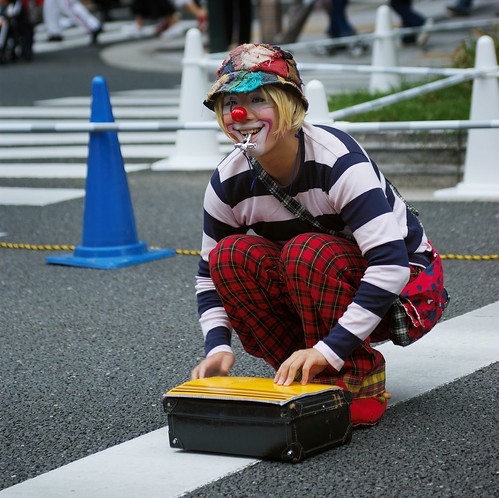
This is not a Diet member. They don't exhibit this sense of responsibility and gravitas.
Ozawa was recently formally indicted for his role (if any) in a campaign finance case. DPJ party leader Kan has tried to persuade him to step down ever since, and after he refused, the party governing board decided to suspend him for the duration of the court case. A suspension is apparently according to the internal party rules in such cases.
Now, here is where it gets complicated (it always seems to get complicated whenever Ozawa is involved). He is a strong campaigner and a talented vote-getter. A large group of new DPJ lower house members owe their seats - and their future careers - to Ozawa more than to the party. Ozawa is also very hungry for the prime minister post; that's the one position he has been aiming for for most of his career. In the DPJ leader election last year, Ozawa lost against Kan, but only by a small margin, and he's been looking for another chance ever since.
And it looked like the chance might come soon. The Kan administrations ratings with the public are lousy. The houses are divided, so they need support from at least a couple of small parties to pass any significant legislation - support that the DPJ if finding desperately difficult to drum up. It now looks likely that they will not be able to pass the spring budget. The LDP say they won't vote for any DPJ budget no matter what it contains unless Kan first agrees to call a reelection (and let's generously ignore that the budget bills would be pointless if an election is called), and the smaller parties don't want to attach themselves to a sinking ship. It is only a matter of time until Kan throws in the towel. Enter Ozawa to pick up the fallen mantle, restore the DPJ To Its Full Glory and lead His Glorious Party Into the Glorious Future Under His Glorious Leadership!
Except... He is under suspension, and will be for the duration of the court case. Which might go on for months and months. And under party rules he can't hold any position or stand for election. So if, as seems likely, Kan steps down this spring then Ozawa will be sitting on the sidelines and watch someone else grab the position he so very, very much wants for himself. It'd mean another year or more before another opportunity presents itself, and with his age and health he may not have another couple of years.
So now he is considering leaving the DPJ, taking his supporters along and bringing the governing party down around him. He's done it before - he's called "Ozawa the Destroyer" for a reason - and there's no reason to think he won't do it again. He may well reason that with his chances for premiership gone within the DPJ, he is better off in a new party (with one of the increasingly popular prefectural governors perhaps), and the more damage he can cause to the DPJ on his way out the better.
Sixteen of his lower house members have somewhat incongruously stated that they are no longer part of the governing coalition - although they apparently want to remain in the party. They are threatening to vote against the coming budget bills in revenge of Ozawas suspension; the budget bills presented by their own party, that they seem to think they still belong to. They are effectively saying that unless Ozawa is reinstated and Kan gets the boot, they will leave the party. There's more than a whiff of 3rd-grade "I'll kick and scream until I get my way" playground mentality there.
Now, if Kan actually listens to Ozawa and to whatshisname of the opposition LDP and calls a new election then things could get really interesting. Kan and the DPJ are in dire straits, support-wise, true, but they're not the only ones. For all their bluster about demanding elections, the LDP is completely unprepared for a general election. Newspaper reports say they don't even have viable candidates for many seats around the country, and they're still in the process of downscaling the organization to fit their slimmer economy. Ozawa would not be in a position to contest a general election from the outside at this point either, and he risks having many election-weary voters blame him in part for the whole thing.
So who would win? Seriously, who cares any more? Nobody in this soap opera seems to consider the effect on Japan at large. They're all playing internal politics, manoeuvring for power, while ignoring the corrosive effect this has on Japanese politics. Necessary bills and broadly accepted reforms get lost because somebody can earn a few points by killing them, or they just don't want to give an opponent the satisfaction of achieving something. I'd call these people childish but that'd be doing children an injustice - children grow up, while these sad people never will.
This is not a Diet member. They don't exhibit this sense of responsibility and gravitas.
Wednesday, February 2, 2011
On Ozawa's Indictment
So, Osawa has been formally indicted for dirty money deals. I have more than a few thoughts on this, so bear with me.
Very briefly, Ozawa's office engaged in some very dodgy and likely illegal land deals that landed him with unlawful campaign money. The subordinates that were directly responsible have already been indicted and have apparently confirmed the facts (though with Japanese prosecutors there's no guarantee it's genuine). The question has been whether Ozawa himself knew about it or approved it, and what responsibility he has as the head of the office.
The prosecutor's office has twice investigated him and twice declined to indict him, citing a lack of any evidence or wrongdoing. Ozawa himself has refused to give a sworn account for the money deals in the lower house. He has refused to leave his party posts, has refused to leave the DPJ and has refused to step down as lower house member. The refusal to give account is probably the most damaging thing; it's difficult to come up with any reason for him to refuse if he doesn't have things to hide.
A panel of citizens were tasked with going through the material, and they determined Ozawa should indeed be indicted. After a second panel did the same thing, the decision became binding, and the prosecutors are obliged to bring him to trial with the material they have. The reason for the citizen panel thing is of course that the Japanese police and judicial systems are anything but clean and trustworthy, and the judicial panels are supposed to make it harder for police and prosecutors to protect their own corrupt members or corrupt politicians from the law.
So far so good. But I agree with Ozawa - he should not step down from the lower house as a result of this indictment. For a normal indictment it's all but given that a lower-house member will resign. But this isn't a normal indictment. Remember, the prosecutors twice determined they didn't have evidence that would actually hold up in court, and they're only going to court because the citizen panel forces them to. A citizen panel that does not have legal experience, and that may well be driven as much by animosity towards Ozawa as by the strength of any evidence; he is a very polarizing political figure here, and his refusal to testify makes him look very suspicious in the eyes of the public.
A panel of private people, with no judge, no accountability, few legal limitations and no way for the accused to defend themselves, should not be able to drive an elected representative out of office. They may have simply decided they dislike Ozawa and want him gone, any actual illegal activity or not. They may of course have found that the prosecutors protected a powerful political ally and he is guilty as sin. The actual trial will (well, may - this is Japan, remember) find that out.
But whether he should occupy his lower-house seat is not up to an unaccountable panel. It is not up to prime minister Kan. It is not up to a howling press. That is between himself and the people in the fourth district of Iwate to decide. Nothing less than an actual conviction should ever force an elected member out of office. Especially a disliked, despised member - would we want majorities to be able to disenfranchise disliked local minorities at will?
Now, the DPJ may well decide he is not fit to hold a position within the party and that is fine. They may decide he is damaging the party enough that they kick him out altogether (and I would agree with such a decision). But the actual lower house seat is not - and should not be - up for discussion. It is true that a deeply unpopular figure like him may not be the most effective representative for the good folks at Iwate 4. But that's up to them to decide - not us, not the DPJ and not an impatient public.
Very briefly, Ozawa's office engaged in some very dodgy and likely illegal land deals that landed him with unlawful campaign money. The subordinates that were directly responsible have already been indicted and have apparently confirmed the facts (though with Japanese prosecutors there's no guarantee it's genuine). The question has been whether Ozawa himself knew about it or approved it, and what responsibility he has as the head of the office.
The prosecutor's office has twice investigated him and twice declined to indict him, citing a lack of any evidence or wrongdoing. Ozawa himself has refused to give a sworn account for the money deals in the lower house. He has refused to leave his party posts, has refused to leave the DPJ and has refused to step down as lower house member. The refusal to give account is probably the most damaging thing; it's difficult to come up with any reason for him to refuse if he doesn't have things to hide.
A panel of citizens were tasked with going through the material, and they determined Ozawa should indeed be indicted. After a second panel did the same thing, the decision became binding, and the prosecutors are obliged to bring him to trial with the material they have. The reason for the citizen panel thing is of course that the Japanese police and judicial systems are anything but clean and trustworthy, and the judicial panels are supposed to make it harder for police and prosecutors to protect their own corrupt members or corrupt politicians from the law.
So far so good. But I agree with Ozawa - he should not step down from the lower house as a result of this indictment. For a normal indictment it's all but given that a lower-house member will resign. But this isn't a normal indictment. Remember, the prosecutors twice determined they didn't have evidence that would actually hold up in court, and they're only going to court because the citizen panel forces them to. A citizen panel that does not have legal experience, and that may well be driven as much by animosity towards Ozawa as by the strength of any evidence; he is a very polarizing political figure here, and his refusal to testify makes him look very suspicious in the eyes of the public.
A panel of private people, with no judge, no accountability, few legal limitations and no way for the accused to defend themselves, should not be able to drive an elected representative out of office. They may have simply decided they dislike Ozawa and want him gone, any actual illegal activity or not. They may of course have found that the prosecutors protected a powerful political ally and he is guilty as sin. The actual trial will (well, may - this is Japan, remember) find that out.
But whether he should occupy his lower-house seat is not up to an unaccountable panel. It is not up to prime minister Kan. It is not up to a howling press. That is between himself and the people in the fourth district of Iwate to decide. Nothing less than an actual conviction should ever force an elected member out of office. Especially a disliked, despised member - would we want majorities to be able to disenfranchise disliked local minorities at will?
Now, the DPJ may well decide he is not fit to hold a position within the party and that is fine. They may decide he is damaging the party enough that they kick him out altogether (and I would agree with such a decision). But the actual lower house seat is not - and should not be - up for discussion. It is true that a deeply unpopular figure like him may not be the most effective representative for the good folks at Iwate 4. But that's up to them to decide - not us, not the DPJ and not an impatient public.
Tuesday, September 14, 2010
It's Kan
In the DPJ leadership election today, Kan beat Ozawa - and pretty handily too. He got just over half of Diet member votes, 60% of the prefectural chapter votes and over 80% of individual member votes.
The DPJ Diet was evenly split between them, which at first blush would seem like a party breakup just waiting to happen. But the large overweight of chapter and especially individual votes should convince the Ozawa supporters that the party - and the lower house election voters - are not with them on this, and that a defection or split would risk their own Diet seats.
Ozawa would seem to be finished. He's old, he's in failing health, he's under police investigation and he's just lost his last, best hope of becoming Prime minister. But he's been written off so many times only to come back that he's one hockey mask away from being a grumpy political horror-movie cliché.
So Kan wins - what does it mean? Not much. Kan stands for a continuation of the current policies whereas Ozawa would have meant a minor shift. Kan is reluctantly in favour of the US base move to Futenma, but that looks like a completely dead issue, what with all relevant Okinawan political offices populated by a majority of opponents to the move. Kan seems more reluctant than Ozawa to divest power away from Tokyo and to the regions, but the emergence of strong regional politicians in combination with the never-ending circus that is Japanese national politics may force his hand.
And while he got through this scrape OK, he still has 167 days to go to avoid becoming the next record holder for shortest prime ministership. When you consider recent Japanese political history those 167 days are by no means a given.
The DPJ Diet was evenly split between them, which at first blush would seem like a party breakup just waiting to happen. But the large overweight of chapter and especially individual votes should convince the Ozawa supporters that the party - and the lower house election voters - are not with them on this, and that a defection or split would risk their own Diet seats.
Ozawa would seem to be finished. He's old, he's in failing health, he's under police investigation and he's just lost his last, best hope of becoming Prime minister. But he's been written off so many times only to come back that he's one hockey mask away from being a grumpy political horror-movie cliché.
So Kan wins - what does it mean? Not much. Kan stands for a continuation of the current policies whereas Ozawa would have meant a minor shift. Kan is reluctantly in favour of the US base move to Futenma, but that looks like a completely dead issue, what with all relevant Okinawan political offices populated by a majority of opponents to the move. Kan seems more reluctant than Ozawa to divest power away from Tokyo and to the regions, but the emergence of strong regional politicians in combination with the never-ending circus that is Japanese national politics may force his hand.
And while he got through this scrape OK, he still has 167 days to go to avoid becoming the next record holder for shortest prime ministership. When you consider recent Japanese political history those 167 days are by no means a given.
Tuesday, September 7, 2010
That other election
Prime minister Kan and former party secretary and overall heavyweight Ozawa are battling it out for the DPJ party leadership (and, incidentally, the seat of Prime minister) in a week or so. They have fairly different stances on various issues (the balance between rural and urban areas on one hand, and local self-determination - and thus the right to keep tax money at home - on the other for instance), but they matter a lot less than the two candidates themselves. This is really a referendum on Ozawa, more than anything else, made possible in part because Kan failed as a leader in the recent upper house election.
MTC thinks the battle is good for the DPJ, what with the constant media exposure and the DPJ message being drummed into everyone's heads. I'm not as sure. "left-shoe-first-or-right-I-just-can't-decide" Hatoyama came down in support of an Ozawa candidacy (after having kicked him out when Prime minister, and after being against earlier the same day), and others are supporting him due to old political debts. Other factions, local party chapters and supporters are similarly weighing what either candidate would mean for them and their position in the party.
It stinks, in other words, of the same backroom political dealing that the DPJ promised to abolish along with the LDP. It's being shoved into the face of the voters every day for weeks, and this time they won't even have the satisfaction of actually voting for either; they're passive spectators as a few hundred insiders decide who'll be their next Prime minister. Sure, the LDP did the same - three times in a row the past couple of years - but not being worse than the LDP is not exactly a lofty goal to aim for. And again, the whole reason to vote for the DPJ is to get away from exactly this kind of behavior.
Okumura of Globaltalk21 thinks Kan will be the winner. Let's hope so - maybe. Ozawa is very unpopular among voters, and he may cause a permanent rift within the DPJ if he wins. Also, changing Prime ministers after three months would be a new, hard to beat record even in Japan. On the other hand, the LDP hasn't really gained on this unfolding saga, so if the DPJ falls apart that could trigger the political realignment that Japan will eventually have to go through, one way or another.
And there'd be something epic about Ozawa the Destroyer tearing apart his own last, greatest creation at the very moment of reaching his lifelong goal.
MTC thinks the battle is good for the DPJ, what with the constant media exposure and the DPJ message being drummed into everyone's heads. I'm not as sure. "left-shoe-first-or-right-I-just-can't-decide" Hatoyama came down in support of an Ozawa candidacy (after having kicked him out when Prime minister, and after being against earlier the same day), and others are supporting him due to old political debts. Other factions, local party chapters and supporters are similarly weighing what either candidate would mean for them and their position in the party.
It stinks, in other words, of the same backroom political dealing that the DPJ promised to abolish along with the LDP. It's being shoved into the face of the voters every day for weeks, and this time they won't even have the satisfaction of actually voting for either; they're passive spectators as a few hundred insiders decide who'll be their next Prime minister. Sure, the LDP did the same - three times in a row the past couple of years - but not being worse than the LDP is not exactly a lofty goal to aim for. And again, the whole reason to vote for the DPJ is to get away from exactly this kind of behavior.
Okumura of Globaltalk21 thinks Kan will be the winner. Let's hope so - maybe. Ozawa is very unpopular among voters, and he may cause a permanent rift within the DPJ if he wins. Also, changing Prime ministers after three months would be a new, hard to beat record even in Japan. On the other hand, the LDP hasn't really gained on this unfolding saga, so if the DPJ falls apart that could trigger the political realignment that Japan will eventually have to go through, one way or another.
And there'd be something epic about Ozawa the Destroyer tearing apart his own last, greatest creation at the very moment of reaching his lifelong goal.
Monday, August 30, 2010
Adèle Blanc-Sec
We're back. Don't expect any long posts about the trip just yet; I'm off on another conference in a couple of days and it's going to be a while until I've scanned or processed the pictures I've taken. And of course we timed the trip to one of the most interesting events in recent Japanese political history, with Ozawa finally making a direct run for the prime minister post, possibly breaking up his own party in the process. To me it feels like a combination of an old warhorse doing a final charge, and a cornered politician trying the Italian gambit of getting immunity from his crimes by assuming high office.
The flight to Paris is about 13 hours, and the flight back is a bit less than 12. An eternity when strapped into an airplane seat. I feel like I've been stuck in a sack and beaten with sticks for a whole day. The Air France flight was a bit of a letdown; you'd think that if any airline would get the food right it would be this one, but frankly, none of it was very good. Both Finnair and Lufthansa are much better in this regard.
On the other hand, they have a good selection of French movies, including Adèle Blanc-Sec. I'm quite ready to forgive them the food just because of this. Adèle is a French adventure comic set in the early 20th century - steampunk before the term was invented, with a cynical and dark tone. A few of them have been translated to Swedish, and I read them over and over in our city library as a child. It was turned into a movie by Luc Besson recently. Normally I'd be quite wary of such adaptations, but hey, it's Luc Besson - how could it go wrong1? And he pulls it off.
It's a film adaptation, so of course there's less material there than in a comic. But the lead character is spot on, and the story and cinematography has much the same blend of the mundane and the fantastic. There's less of the grotesque darkness than in the comic, but there's enough of a hint to make it work without (I guess) falling afoul of film censorship laws and making it an adults-only movie. Fun movie, if a bit uneven. Worth seeing.
The flight to Paris is about 13 hours, and the flight back is a bit less than 12. An eternity when strapped into an airplane seat. I feel like I've been stuck in a sack and beaten with sticks for a whole day. The Air France flight was a bit of a letdown; you'd think that if any airline would get the food right it would be this one, but frankly, none of it was very good. Both Finnair and Lufthansa are much better in this regard.
On the other hand, they have a good selection of French movies, including Adèle Blanc-Sec. I'm quite ready to forgive them the food just because of this. Adèle is a French adventure comic set in the early 20th century - steampunk before the term was invented, with a cynical and dark tone. A few of them have been translated to Swedish, and I read them over and over in our city library as a child. It was turned into a movie by Luc Besson recently. Normally I'd be quite wary of such adaptations, but hey, it's Luc Besson - how could it go wrong1? And he pulls it off.
It's a film adaptation, so of course there's less material there than in a comic. But the lead character is spot on, and the story and cinematography has much the same blend of the mundane and the fantastic. There's less of the grotesque darkness than in the comic, but there's enough of a hint to make it work without (I guess) falling afoul of film censorship laws and making it an adults-only movie. Fun movie, if a bit uneven. Worth seeing.
#1 OK, so Le grand Bleu could have been cut down to about ten minutes without missing anything of the actual story, but he's improved since.
Saturday, January 16, 2010
Ozawa On His Way Out?
Ichiro Ozawa, former DPJ president, former independent party head, former LDP member, kingmaker, power broker and all-around political backroom fixer extraordinaire may finally be on his way out of politics altogether.
His political office has been under investigation for illegal campaign donations and related things for over a year, but now funny money and a shady land deal is being traced directly to his office rather than his campaign organization. His personal secretary received what very much looks like payback from a construction company in return for receiving a dam construction contract, and two aides of his have just been arrested.
The reactions from DPJ has been supportive all along, but the tone seems to have shifted lately. Comments from DPJ members talk about how Ozawa will fight this to the end (but not that the commenter wants him to do so), and that the prosecutors will be in trouble if they fail to come up with credible evidence (but not that there is no evidence to find). Comments about how Ozawa is innocent are conspicuously thin on the ground. Hatoyama - whose own funding scandal seems to be blowing over - says he has no intention of asking Ozawa to step down. Of course, that's exactly the kind of thing you'd say about a week before you "reluctantly accept" the scandal-hit subject's resignation "to spend more time with their family".
Some people such as MTC see a political motive in the prosecutor's zeal in investigating Ozawa specifically, while letting LDP politicians infractions slide. It's quite true that the judicial branch is not nearly as apolitical and independent as it is in other countries, and it would not be the first time the police and prosecutors have affected the political process.
My take? He's dirty and the prosecutors - politically motivated or not - will be able to make a good enough case that he'll have to resign from politics. Just because the police has an underhanded motive doesn't mean they aren't right in this case. Japanese politics is famous for its endemic money troubles and illegal deals - it's frequently stated that you can't win a Japanese election without breaking the law - and Ozawa is practically the poster boy for the scheming, double-dealing Japanese politician. It's certainly possible that he hasn't taken dirty money from the construction industry. It's also possible that the pope is an atheist, that the moon landings were faked and that Elvis is still alive, but I wouldn't want to take a bet on it.
When Ozawa took the reins of the DPJ it was a party in total disarray. It wasn't a unified party as much as a collection of disparate groups with the burning desire to take down the LDP as its only common cause. The party was adrift, rocked by scandals and leadership issues, and he acted as an anchor, giving the party a coherent program and a viable political strategy. It's fair to say that without Ozawa the DPJ would perhaps not exist today, and the LDP would probably still be in power.
However, Ozawa is also an anchor to the old style of Japanese politics. He is also a consummate kingmaker and power broker1 and the media is asking, not unfairly, just how much influence he is wielding over the Hatoyama government. An important part of the DPJ program he formulated is a clean break away from this way, and that ultimately means that Ozawa himself (and, eventually, other old-style politicians) needs to go.
This may be a good time for him to step down, scandal or not. The LDP has been trying (but so far failing miserably) to discredit the DPJ through these scandals. But if these ongoing scandals are still front and center in the news in July and the upper house election they can probably hurt the DPJ. As Ozawa will need to step down at some point anyhow, this development may actually do the DPJ (and Ozawa's own health) some good by forcing his hand.
--
His political office has been under investigation for illegal campaign donations and related things for over a year, but now funny money and a shady land deal is being traced directly to his office rather than his campaign organization. His personal secretary received what very much looks like payback from a construction company in return for receiving a dam construction contract, and two aides of his have just been arrested.
The reactions from DPJ has been supportive all along, but the tone seems to have shifted lately. Comments from DPJ members talk about how Ozawa will fight this to the end (but not that the commenter wants him to do so), and that the prosecutors will be in trouble if they fail to come up with credible evidence (but not that there is no evidence to find). Comments about how Ozawa is innocent are conspicuously thin on the ground. Hatoyama - whose own funding scandal seems to be blowing over - says he has no intention of asking Ozawa to step down. Of course, that's exactly the kind of thing you'd say about a week before you "reluctantly accept" the scandal-hit subject's resignation "to spend more time with their family".
Some people such as MTC see a political motive in the prosecutor's zeal in investigating Ozawa specifically, while letting LDP politicians infractions slide. It's quite true that the judicial branch is not nearly as apolitical and independent as it is in other countries, and it would not be the first time the police and prosecutors have affected the political process.
My take? He's dirty and the prosecutors - politically motivated or not - will be able to make a good enough case that he'll have to resign from politics. Just because the police has an underhanded motive doesn't mean they aren't right in this case. Japanese politics is famous for its endemic money troubles and illegal deals - it's frequently stated that you can't win a Japanese election without breaking the law - and Ozawa is practically the poster boy for the scheming, double-dealing Japanese politician. It's certainly possible that he hasn't taken dirty money from the construction industry. It's also possible that the pope is an atheist, that the moon landings were faked and that Elvis is still alive, but I wouldn't want to take a bet on it.
When Ozawa took the reins of the DPJ it was a party in total disarray. It wasn't a unified party as much as a collection of disparate groups with the burning desire to take down the LDP as its only common cause. The party was adrift, rocked by scandals and leadership issues, and he acted as an anchor, giving the party a coherent program and a viable political strategy. It's fair to say that without Ozawa the DPJ would perhaps not exist today, and the LDP would probably still be in power.
However, Ozawa is also an anchor to the old style of Japanese politics. He is also a consummate kingmaker and power broker1 and the media is asking, not unfairly, just how much influence he is wielding over the Hatoyama government. An important part of the DPJ program he formulated is a clean break away from this way, and that ultimately means that Ozawa himself (and, eventually, other old-style politicians) needs to go.
This may be a good time for him to step down, scandal or not. The LDP has been trying (but so far failing miserably) to discredit the DPJ through these scandals. But if these ongoing scandals are still front and center in the news in July and the upper house election they can probably hurt the DPJ. As Ozawa will need to step down at some point anyhow, this development may actually do the DPJ (and Ozawa's own health) some good by forcing his hand.
--
#1 In an earlier era and different place he'd be the Grand Vizier constantly scheming behind the Caliphs back, complete with pointy beard and evil cackling laughter.
Monday, May 11, 2009
Ozawa is a Goner
Ozawa, leader of opposition party DPJ has resigned, quit, abdicated, taken his leave, thrown in the towel, hung up his gloves, punched out and left the stage. Always the bridesmaid and never the bride, the fat lady has well and truly sung.
His office was under investigation for taking illegal campaign contributions from a construction company. This is a bit of a liability when your party's election strategy and its whole reason to exist is based on opposing the ruling party LDP for being the kind of corrupt party that accepts illegal contributions from the construction industry.
This is putting a bit of a crimp in the LDP plans to use Ozawa's personal impopularity (the guy can apparently antagonize people by simply being in the same building) and the cloud of the bribery investigation as issues in the coming election. Tobias Harris of Observing Japan has fingered Katsuya Okada as a possible successor. Like prime minister Aso he comes from a very rich family (owners of the Aeon supermarket chain) so he's had no need to dabble in the murky waters of campaign contributions. And unlike Aso (and more than half the LDP government) he has not inherited his seat from a relative, the frequency of which is a peculiarly Japanese state of affairs that has been gaining unfavorable attention lately (in no small part due to Okada himself bringing it up).
News in general and political reporting in particular really is a story, in the classical sense. You build rapport with the characters, where some are cast as heroes and others as villains. You see the underdog prevail and triumph, then be brought back to earth by hubris. There is a flow to the reporting that enhances the dramatic tension and maximizes interest in the story.
Nobody consciously does this. No reporter or editor decides that it's time to stop writing nice things about politician A and bring him down (it's unlikely to work if they did), or decide that a browbeaten party has suffered enough and is let back in the press' good graces. This ebb and flow is decided collectively, by reporters, by the readers and by the political actors themselves. There is a rhythm that resonates with the readers; the articles that follow that flow get the readers and web hits, while those that don't are ignored.
The press have spent a lot of time now beating down on Ozawa (and the DPJ) for the construction company money while they've been giving the LDP a bit of a free pass in its current role of recession fighter ("brave Aso battling Impossible Odds"). But the press is now free to shift their focus to speculation on the new DPJ leader ("who will be the Anointed One?") and possibly shift the LDP storyline onto the (not so positive) performance of the coalition during the recent economic disaster. Ozawa has loomed large on the political scene here for many years but has always been a bit of a drag on the DPJ platform; without him the dynamic changes substantially. It looks like the election may become even more interesting than thought.
You may call Japanese politics many things, but "boring" is not one of them.
His office was under investigation for taking illegal campaign contributions from a construction company. This is a bit of a liability when your party's election strategy and its whole reason to exist is based on opposing the ruling party LDP for being the kind of corrupt party that accepts illegal contributions from the construction industry.
This is putting a bit of a crimp in the LDP plans to use Ozawa's personal impopularity (the guy can apparently antagonize people by simply being in the same building) and the cloud of the bribery investigation as issues in the coming election. Tobias Harris of Observing Japan has fingered Katsuya Okada as a possible successor. Like prime minister Aso he comes from a very rich family (owners of the Aeon supermarket chain) so he's had no need to dabble in the murky waters of campaign contributions. And unlike Aso (and more than half the LDP government) he has not inherited his seat from a relative, the frequency of which is a peculiarly Japanese state of affairs that has been gaining unfavorable attention lately (in no small part due to Okada himself bringing it up).
News in general and political reporting in particular really is a story, in the classical sense. You build rapport with the characters, where some are cast as heroes and others as villains. You see the underdog prevail and triumph, then be brought back to earth by hubris. There is a flow to the reporting that enhances the dramatic tension and maximizes interest in the story.
Nobody consciously does this. No reporter or editor decides that it's time to stop writing nice things about politician A and bring him down (it's unlikely to work if they did), or decide that a browbeaten party has suffered enough and is let back in the press' good graces. This ebb and flow is decided collectively, by reporters, by the readers and by the political actors themselves. There is a rhythm that resonates with the readers; the articles that follow that flow get the readers and web hits, while those that don't are ignored.
The press have spent a lot of time now beating down on Ozawa (and the DPJ) for the construction company money while they've been giving the LDP a bit of a free pass in its current role of recession fighter ("brave Aso battling Impossible Odds"). But the press is now free to shift their focus to speculation on the new DPJ leader ("who will be the Anointed One?") and possibly shift the LDP storyline onto the (not so positive) performance of the coalition during the recent economic disaster. Ozawa has loomed large on the political scene here for many years but has always been a bit of a drag on the DPJ platform; without him the dynamic changes substantially. It looks like the election may become even more interesting than thought.
You may call Japanese politics many things, but "boring" is not one of them.
Wednesday, March 4, 2009
Ozawa Comes Through
The opposition party DPJ has a well-deserved reputation of snatching defeat from the jaws of victory. And true to form, party leader Ozawa's secretary has just managed to get arrested for accepting illegal campaign contributions on behalf of Ozawa from a construction company.
Yes, it looks more than a little convenient that this investigation and arrest happens to occur just when it is really, desperately most needed by the ruling LDP - if I understood the morning news correctly the donations happened three years ago - but that does not obscure the fact that the allegations most likely are completely true. This is a disaster for Ozawa, of course, whether he personally knew about it or not, but also a serious blow for the DPJ. As Tobias Harris points out, the only way to even halfway save the DPJ is for Ozawa to step down and anoint a successor before the fallout becomes even worse.
Here's the problem: DPJ and LDP are very much alike. You might imagine them as an old, tired entrenched ruling party on one hand, and a scrappy fresh newcomer full of new ideas and initiatives on the other. That is not the case. The DPJ is very much the same as LDP. Their detailed policies differ, but DPJ and LDP largely occupy the same general area in the political landscape, and they consist largely of the same political old guard, with the same kind of hereditary political background. Ozawa himself is typical: he was weaned within the LDP and left it for the opposition in the aftermath of an internal political fight. The DPJ is effectively more like a broken-out faction of the LDP than like a truly independent party. A hypothetical example for Swedish readers would be if all other current parties were tiny and inconsequential, and the only real voter choice is between two overlapping wings of the Social Democrats.
This is the reason that the relentless decline of LDP in the opinion polls have mostly not been accompanied with a corresponding increase for the DPJ. The DPJ has rightly been viewed as "LDP with another name", and the main challenge for Ozawa has been to break that perception and remake the DPJ into a true opposition alternative. That work has now been well and truly ruined. Taking illegal campaign money - from the construction industry no less; even loan sharks and pachinko parlors have better reputation - is such classic LDP behavior that voters have every reason to ask whether they'd actually get any substantial change with the DPJ. And truth is, they probably won't.
The end result is disconcerting. The consistent winner in opinion polls is "None/None of the above", and that non-answer is likely to gain further if the next election delivers a weak LDP government in the lower house while the disgraced DPJ holds on to the upper house. LDP has consistently shown it is utterly unable to work with the opposition - after almost two years of a divided house the thought hasn't even occurred to them - and so we might see at least another few years of completely ineffectual non-leadership from the political establishment, at a time when leadership is desperately needed.
My fear is that the strength of "None of the above", and the certain decline of voter interest is paving the way for a radical third option, a real alternative to the twins of LDP/DPJ. And while an alternative is desperately needed I'm really worried about what alternative that may be. Had DPJ managed to hold it together and take the reins with an actual mandate, that could have created the opportunity for an orderly transformation of Japanese politics.
But with them falling apart before the election the transformation (which will happen, one way or another) risk becoming anything but orderly. The kind of parties and political movements that spring out of this kind of political chaos are rarely the kind that you'd actually want to have running a country: populist rather than responsible; extremist rather than mainstream; dictatorial rather than democratic; divisive rather than uniting. It's not a substantial risk - not yet - but just the possibility is worrying.
Yes, it looks more than a little convenient that this investigation and arrest happens to occur just when it is really, desperately most needed by the ruling LDP - if I understood the morning news correctly the donations happened three years ago - but that does not obscure the fact that the allegations most likely are completely true. This is a disaster for Ozawa, of course, whether he personally knew about it or not, but also a serious blow for the DPJ. As Tobias Harris points out, the only way to even halfway save the DPJ is for Ozawa to step down and anoint a successor before the fallout becomes even worse.
Here's the problem: DPJ and LDP are very much alike. You might imagine them as an old, tired entrenched ruling party on one hand, and a scrappy fresh newcomer full of new ideas and initiatives on the other. That is not the case. The DPJ is very much the same as LDP. Their detailed policies differ, but DPJ and LDP largely occupy the same general area in the political landscape, and they consist largely of the same political old guard, with the same kind of hereditary political background. Ozawa himself is typical: he was weaned within the LDP and left it for the opposition in the aftermath of an internal political fight. The DPJ is effectively more like a broken-out faction of the LDP than like a truly independent party. A hypothetical example for Swedish readers would be if all other current parties were tiny and inconsequential, and the only real voter choice is between two overlapping wings of the Social Democrats.
This is the reason that the relentless decline of LDP in the opinion polls have mostly not been accompanied with a corresponding increase for the DPJ. The DPJ has rightly been viewed as "LDP with another name", and the main challenge for Ozawa has been to break that perception and remake the DPJ into a true opposition alternative. That work has now been well and truly ruined. Taking illegal campaign money - from the construction industry no less; even loan sharks and pachinko parlors have better reputation - is such classic LDP behavior that voters have every reason to ask whether they'd actually get any substantial change with the DPJ. And truth is, they probably won't.
The end result is disconcerting. The consistent winner in opinion polls is "None/None of the above", and that non-answer is likely to gain further if the next election delivers a weak LDP government in the lower house while the disgraced DPJ holds on to the upper house. LDP has consistently shown it is utterly unable to work with the opposition - after almost two years of a divided house the thought hasn't even occurred to them - and so we might see at least another few years of completely ineffectual non-leadership from the political establishment, at a time when leadership is desperately needed.
My fear is that the strength of "None of the above", and the certain decline of voter interest is paving the way for a radical third option, a real alternative to the twins of LDP/DPJ. And while an alternative is desperately needed I'm really worried about what alternative that may be. Had DPJ managed to hold it together and take the reins with an actual mandate, that could have created the opportunity for an orderly transformation of Japanese politics.
But with them falling apart before the election the transformation (which will happen, one way or another) risk becoming anything but orderly. The kind of parties and political movements that spring out of this kind of political chaos are rarely the kind that you'd actually want to have running a country: populist rather than responsible; extremist rather than mainstream; dictatorial rather than democratic; divisive rather than uniting. It's not a substantial risk - not yet - but just the possibility is worrying.
Subscribe to:
Posts (Atom)