Showing posts with label ldp. Show all posts

Sunday, August 30, 2009

Election Day

After years of coy teasing and feeling each other up, the country and the parties finally embraced for election in late July. The parties' long dormant election machinery quickly rose to the occasion and thrust themselves into the public view.

For the past month the parties have been mumbling sweet nothings to the electorate through their speaker cars and their volunteers have pounded out posters and pamphlets, thrusting them into the hands of an eager public. Today the long campaign is finally climaxing in an orgiastic burst of votes flowing out all over the country.

The worn-out campaigners may well be excused if they lean back and relax for a bit tomorrow, perhaps with a cigarette.
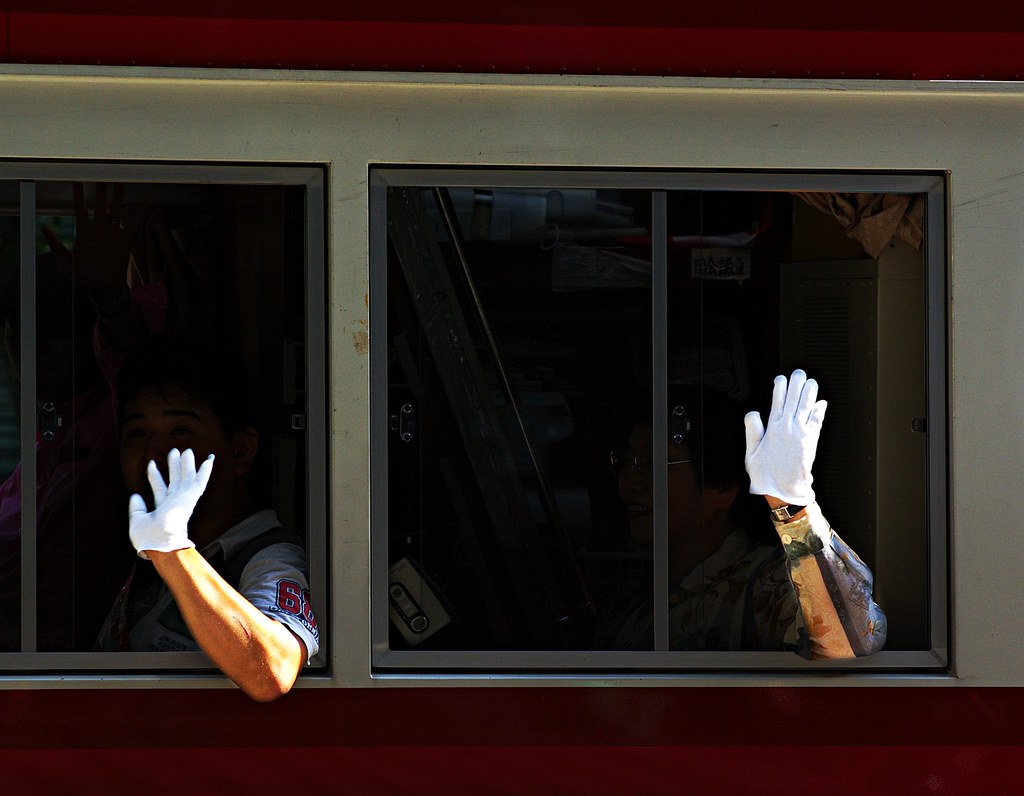
See the hand, Follow the hand

See the hand. Follow the hand. The hand knows.


So what will be born out of this process? It looks like my prediction may have been overly cautious. To my amazement the DPJ did not manage a single self-inflicted disaster, and looks set to achieve a majority. People are even speculating on the (remote) possibility of them achieving a 2/3rds majority on their own. The LDP seems to fall hard, and even the party leadership has had to stay and campaign in their own districts rather than travel and help other members.

Some credit for this outcome must be given to the different campaigns. Tobias Harris points out that the DPJ has run a completely positive campaign, talking only about what they want to achieve and largely ignoring the LDP. The LDP in turn has run a largely negative campaign, and mostly talked about, well, what the DPJ wants to achieve. It's a sad indictment on a party when it's best election efforts only manages to reinforce their opponents message.

We're not going to worry too much about the election here. The weather is good - a little hazy but pleasantly cool - so we'll have lunch at a Spanish restaurant near Midosuji, then take a walk around town. I'll drag my Pentax 67 along, see if I can find something interesting election-related to shoot, and we'll shop for tonight's dinner. Tomorrow is a workday so we're off to bed early; we'll see the election results once we get up tomorrow morning.

If you want to look at the election in much more detail, check out Harris' blog, Observing Japan for a lot of background and analysis. stippy.com has an idiosynchratic cheat sheet of sorts for people that want to follow along in detail. Transpacific Radio (which, to be honest, I have never listened to) will hold a live webcast.

The Mainichi Shinbun has an election site, as does the Asahi Shinbun and Yomiuri Shinbun. I have no idea which one is better; they all get fed the same data though so it probably doesn't matter.

Kyodo news agency has an English-language site with a neat, graphical at-a-glance illustration for those who can't be bothered with actual words or numbers.

I guess there won't be any actual data to look at until after 20:00 when the polls close. If anyone knows of a better source than these to get a good overview of the election, feel free to drop a note in the comments.

Tuesday, July 21, 2009

Diet Dissolution

The party is supported by 36% - one in three - of the population. Only 28% - one in four - thinks its leader is suitable for the Prime minister's office. That's not good numbers, you say? Open goal for the opposing party? This party - the DPJ - is the opposing party and it manages to look good only by comparison to the governing party LDP. Their latest support figure is 18%, and their leader - Prime minister Aso Tarō - is considered suitable in his job by 11%, according to the latest Mainichi poll.

Aso dissolved the diet today in preparation for the upcoming election, and the LDP is showing signs of breaking apart over it. Last week a group within the LDP announced they had the lawmaker signatures needed to force a party general meeting. The idea was to depose Aso and elect a new party leader before the general election. Only, just after rebel leader Nakagawa had his triumphant press conference a number of his signatories started backtracking, removing their names, saying they didn't really mean anything by it. The end result was a non-binding meeting today where Aso listened to complaints and grievances from disaffected members - and likely completely ignored them, of course, as he has nothing left to lose and nothing left to prove anyway. He's been Prime minister of Japan, he'll stand for election and he'll go down in history no matter what the result. From his point of view it's no doubt better to be remembered as "The Last Prime Minister of the LDP" than "Temporary Nobody #4".

The house dissolution kicks off the "pre-campaign" season, until the start of the official campaigns on the 18th of August. I have to confess I do not know the detailed election laws here - I have no authoritative sources in English or Swedish - but they are many, strict and frankly quite strange. Once the official campaign period starts, some ridiculously restrictive campaign rules come into force. They're worth a separate post, but when a single car with a loud-speaker chanting the candidate's name is the most effective allowed means of reaching a couple hundred thousand people in an electoral district something is seriously out of whack.

However, before the 18th any campaigning is forbidden, by anybody. What constitutes "campaigning" seems a muddy, stretchy concept. Any online or mass media discussion of policy or merits of one candidate over another could be considered campaigning if you were in that frame of mind. In the run-up to previous elections the "pre-campaign" period has been short. This time, however, there's a whole month of dead time, with the house out of session and election called but with no legal way to campaign. Expect to see lower-house candidates stretch the definition of "campaigning" to its breaking point in the weeks ahead.

Monday, July 13, 2009

Election, Braindeath

Election time is finally coming around, and the entire Japanese politics blog world just wet itself in collective anticipation.

The LDP took a hammering at the polls in the local Tokyo elections, losing control of the local assembly to the opposition. Prime minister Aso Tarō's position was looking more uncertain by the hour; the long knives were drawn and the push was already on to force another leadership election. So he's pulling the trigger on the only gun he has left and calling for national elections on August 30th.

This most likely means that the LDP will go to the polls with Aso at the helm - the same Aso that is (fairly or unfairly) blamed for the recent election defeats in Tokyo, Nara and elsewhere, and that is openly being called a disaster for his party. Since the alternative - hold a leadership election and trot out yet another new face just weeks before the real event - is even worse, the LDP will probably just have to grin and bear it.

In a bit of delightful coincidence, the Japanese diet today passed a law defining brain death to be legal death. The purpose is to make it easier to obtain consent for transplantation, and to transplant organs from donors younger than 15 years of age (something that up until now had been illegal). It's a welcome change, and one that puts Japan in line with many other countries.

The parallels to a headless LDP still breathing and shedding disaffected members to other parties ahead of its fall is of course purely coincidental, but no less enjoyable for that.

Friday, July 3, 2009

DPJ - No hurdle too low, no goal too open

So, the LDP is crashing in the opinion polls. The party is in complete disarray, Aso has lost what little authority he had but refuses to step down, and an election must be held within months. It's an open goal for the opposition.

Of course, the DPJ has never yet seen a golden opportunity they can't squander. The ink not yet dry on his appointment, new DPJ leader Hatoyamas office is already under investigation for illegal campaign contributions. This time it's money from himself donated to his campaign office with the names of unwitting - and sometimes dead1 - people used as cover. There's a 10 million yen limit for donations by any one individual but this way his campaign aide could transfer several times that from his personal accounts.

Now, when the predecessor Ozawa was ultimately forced from office for illegal campaign contributions, did it even once cross what passes for the DPJ leadership's minds to perhaps vet the candidates for this sort of thing? Couldn't they even have just asked him if, oh, by the way, you don't happen to have any illegal campaign money-related problems do you, the kind that will completely derail our attempts at a once-in-an-era chance at political power? No, of course not. I suspect that if they really did, they'd have a hard time filling a single post in the party.

As the incumbent LDP and the Aso government is exposing itself as a thieving group of dishonest, sleazy, money-grubbing, power-mad, backstabbing selfish bastards, a lot of people seem to be asking why anybody would ever want to vote LDP in the upcoming election.

I do understand why. At least the LDP people are good at being dishonest, sleazy and money-grubbing. The DPJ can't even manage low-grade sleaze competently. Imagine having such clowns bumble about in office, completely fumbling the large-scale corruption that comes with being in office. It'd be embarrassing and painful to watch. It'd be like one of those TV amateur talent shows where an earnest and likeable singer who should never have passed the first round is making a complete and total ass of themselves on a national stage.

I don't vote in Japanese elections of course. And I'm happy I don't; I'd really hate to have to choose between two such miserable alternatives. Let's hear it for a resounding win by mr. None Of The Above.

Facepalm


--
#1 Ah yes, dead "voters". At least he knows the classics in political fraud.

Friday, June 26, 2009

Campaign Money - the Neverending Story

Japan's Finance minister Yosano seems to have been accepting donations from a dummy front set up to pay politicians for more than twenty years. He may possibly have acted illegally in accepting the money, though my guess is he didn't. Maybe he knew the source was dubious, but probably he did not. It hardly matters.

The elections are a couple of months away and as finance minister he's one of the most high-profile members of the cabinet. This is not a good time for the Aso government to remind everyone of the low-grade sleaze and shady deals that has become a hallmark of the LDP era. It's perhaps especially inconvenient that it's the minister of finance, who is supposed to be the man of the hour in this economic crisis. A bit difficult to send him out to calm the electorate if the journalists keep bringing up suspect campaign donations.

Also of note: The monthly Japan blog matsuri is up, with the theme of Living on a budget in Japan. Plenty of good entries there.

Wednesday, March 4, 2009

Ozawa Comes Through

The opposition party DPJ has a well-deserved reputation of snatching defeat from the jaws of victory. And true to form, party leader Ozawa's secretary has just managed to get arrested for accepting illegal campaign contributions on behalf of Ozawa from a construction company.

Yes, it looks more than a little convenient that this investigation and arrest happens to occur just when it is really, desperately most needed by the ruling LDP - if I understood the morning news correctly the donations happened three years ago - but that does not obscure the fact that the allegations most likely are completely true. This is a disaster for Ozawa, of course, whether he personally knew about it or not, but also a serious blow for the DPJ. As Tobias Harris points out, the only way to even halfway save the DPJ is for Ozawa to step down and anoint a successor before the fallout becomes even worse.

Here's the problem: DPJ and LDP are very much alike. You might imagine them as an old, tired entrenched ruling party on one hand, and a scrappy fresh newcomer full of new ideas and initiatives on the other. That is not the case. The DPJ is very much the same as LDP. Their detailed policies differ, but DPJ and LDP largely occupy the same general area in the political landscape, and they consist largely of the same political old guard, with the same kind of hereditary political background. Ozawa himself is typical: he was weaned within the LDP and left it for the opposition in the aftermath of an internal political fight. The DPJ is effectively more like a broken-out faction of the LDP than like a truly independent party. A hypothetical example for Swedish readers would be if all other current parties were tiny and inconsequential, and the only real voter choice is between two overlapping wings of the Social Democrats.

This is the reason that the relentless decline of LDP in the opinion polls have mostly not been accompanied with a corresponding increase for the DPJ. The DPJ has rightly been viewed as "LDP with another name", and the main challenge for Ozawa has been to break that perception and remake the DPJ into a true opposition alternative. That work has now been well and truly ruined. Taking illegal campaign money - from the construction industry no less; even loan sharks and pachinko parlors have better reputation - is such classic LDP behavior that voters have every reason to ask whether they'd actually get any substantial change with the DPJ. And truth is, they probably won't.

The end result is disconcerting. The consistent winner in opinion polls is "None/None of the above", and that non-answer is likely to gain further if the next election delivers a weak LDP government in the lower house while the disgraced DPJ holds on to the upper house. LDP has consistently shown it is utterly unable to work with the opposition - after almost two years of a divided house the thought hasn't even occurred to them - and so we might see at least another few years of completely ineffectual non-leadership from the political establishment, at a time when leadership is desperately needed.

My fear is that the strength of "None of the above", and the certain decline of voter interest is paving the way for a radical third option, a real alternative to the twins of LDP/DPJ. And while an alternative is desperately needed I'm really worried about what alternative that may be. Had DPJ managed to hold it together and take the reins with an actual mandate, that could have created the opportunity for an orderly transformation of Japanese politics.

But with them falling apart before the election the transformation (which will happen, one way or another) risk becoming anything but orderly. The kind of parties and political movements that spring out of this kind of political chaos are rarely the kind that you'd actually want to have running a country: populist rather than responsible; extremist rather than mainstream; dictatorial rather than democratic; divisive rather than uniting. It's not a substantial risk - not yet - but just the possibility is worrying.

Tuesday, February 17, 2009

Nakagawa

More politics, and no, not funny. Japanese finance minister Nakagawa was filmed giving a slurred speech at the G-7 meeting, after which he promptly fell asleep (can't find an online link to it anymore). He and his aides blame the combination of sleeping pills on the plane, some wine for dinner and cold medication. That may be true or it may not. He is suffering from alcoholism, something apparently an open secret up until now. He's had previous "cold medication"-related incidents, but never before on television during a international top-level meeting. He pledged to resign today as the result of the ensuing uproar.

Now, as much as you may dislike the man politically, he is not to blame for suffering a fairly serious stigmatized disease. His alcoholism may or may not make him unsuitable for his current position, but he is apparently unqualified for such a weighty post anyway, medical condition or not. This lack of ability is not something unique, but something he shares with several other members of the current cabinet, (still) prime minister Aso himself included. The blame for his appointment must be laid completely at the feet of Aso. He picked Nakagawa - a personal friend - for internal party political reasons, without regard for his ability to actually do the job and apparently with no regard for the medical consequences of such a high-pressure position on his friend. Callous, thoughtless or any combination thereof, take your pick.

The ministry of finance has of course not ceased working during the latest minister's stewardship, or that of his predecessors. People have undoubtedly worked around any issues or shortcomings of the minister. They've made sure policies are enacted and decisions are made whether the minister has been personally aware of them or not. The same certainly goes for any other minister or other elected official elevated to a position beyond their level of competence.

Now, here's the problem: the Japanese state bureaucracy is out of control. It has grown too big, too powerful, is frequently working completely at odds with the public it is supposedly serving and doing so with impunity. Elected officials may decide on policies and enshrine them into law, but ministries may simply decide not to implement them. The ongoing Pension Fiasco was caused by ministry workers that couldn't be bothered to do their job so they threw away pension records or neglected to update them.The practice of Amakudari is a major cause of the endemic corruption. To some extent the civil service is a state within the state and only tenuously subject to the same laws and regulations as the rest of society.

This is a major problem here. Politicians, Aso included, promise to "reform" the bureaucracy; cut it down in size and power, and bring it back under political control. The main tools for controlling the civil service are the ministers appointed by the prime minister and put in charge of their ministries. But appointments are made for political or personal reasons, to reward an ally or buy the favor of some political group, rather than competence and experience, and that effectively strengthens the bureaucracy to the detriment of the elected officials.

When a minister isn't really up to the task, as above, the ministry career officials will step in. But when they do - and even when it's for the best of intentions - they are effectively grabbing power that belongs in the elected political realm, and taking it for the use by the bureaucracy. The responsibility, of course, stays with the political appointee, further deteriorating the situation. Focusing on the political dimension over competence when populating your cabinet is directly contradicting the promise to reform the bureaucracy. And that is, of course, over and above all the other negatives of a cabinet with people unable to take command over their areas of responsibility. That responsibility falls on Aso of course, but also on the LDP leadership and voting party members more concerned with the right ideological bent and ideas of "who's turn" it is to play prime minister than with questions of actual ability.

Monday, February 16, 2009

Aso, We Know You Can Do It!

A note: I have been (very gently) berated by a friend for posting too much about Japanese politics. I understand of course; these are remote events, physically and mentally, for anyone reading this in Sweden. All I can promise is that I'll post less once the next election is over. Please bear with me until then. Anyway, here goes:


Japanese Prime Minister Aso Tarō is nothing if not persistent. He has a trail of verbal gaffes and bungling of policies that would be impressive in a prime minister serving for years, not months. With deteriorating support ratings and his policies (to the extent he has any) going nowhere, a lesser man would throw in the towel and call it quits.

But with such energy and drive entirely unfettered by reflection and self-restraint it should come as no surprise that he'll boldly grab this opportunity and go for the gold. We saw the first signs of greatness when he got support below the 20% level. Two weeks ago we saw the Aso cabinet hit 14% support and people started to wonder: are we seeing history in the making? Could he do it? Could he actually manage to break the 10% barrier before being forced out and tie or surpass Yoshirō Mori for least popular prime minister of all time? And not only a national record, mind you; those numbers would be strong contenders for a world record among democratically elected national leaders.

Mind you, he has to call an election by September, and might well be forced out once the budget is passed this spring, so time is short. He's not helped by those pesky hard-line party members that will support him no matter what; every party of any consequence have their cheerleeding squad that will need more than a mere policy reversal or political disaster to change their support. Fortunately for Aso, it seem he's found the right combination of hapless waffling and intraparty bickering to uproot even this obstacle to historical greatness: Mr. Harris reports that the Aso cabinet have made it below 10%, and in plenty of time to improve further on those numbers too. He was never close to an Olympic medal but this time it looks like the brass ring just might finally be his to grasp!

Thursday, February 5, 2009

Cheap and Tawdry

The current government of Aso Tarō is not having a good year. With the economy in critical shape, they're being forced by their coalition partner New Komeito to do a very impopular 12000 yen cash giveaway to every resident in Japan. The money will worsen the already critically bad public finances further, and the whole giveaway scheme has also been handled in a remarkably hamfisted way, dragging the government approval ratings further down as a result. The government has support in the 20% range; the economy - and unemployment, and homelessness - is steadily worsening; and there's an election no more than seven months away.

No wonder, then, that LDP members are in full panic over the prospect of losing the next election. So a few of the dimmer stars in the LDP constellation have Come Up With A Plan: Give away more money to the public.

"But.. that's what they're already doing, and it's costing them votes, right?" Right. But they seem to have decided that the current cash giveaway is impopular for two reasons: it's too little, and it costs too much.

First, the thinking seems to go, 12000 yen per person is not enough to bribe comfort the electorate. 12k yen - $150, or SEK1000 - is not chicken feed (the chickens would choke on the tough paper bills) but it's not exactly going to change your life either. So they suggest not another 12k yen, but 600k yen - yes, sixhundred thousand yen, or $6700 or SEK55000 - enough to buy an election revive consumer spending just about anywhere.

The lawmakers suggest a giveaway of around 100 trillion yen, $1.1 trillion or SEK 9 trillion. That's some serious amount of money. Huge, in fact. "Absolutely freaking ginormous" comes to mind. That's about 15% of Japan's GDP. Just about the entire GDP of Sweden - for two years. Real money is what we're talking about here. A financially prudent observer may well pause for a moment and wonder just how they suggest paying for it.

Their suggestion: not pay at all. They propose printing more money - yes, quite literally run the presses and send out the results (by post, presumably) to each and every resident of the Japanese isles. The arguments in favour sound good: the export industry - engine of economic growth - is hurting badly from the expensive yen exchange rate. Also, deflation was a persistent plague on the Japanese economy during the last recession. By diluting the money supply and have people spend it you get a healthy dose of inflation, a drop in the value of the yen, and kickstart the domestic economy. Everybody wins, the LDP lawmakers are hailed as heroes and a grateful electorate will carry them on their shoulders into the Diet and another generation of complete political dominance.

Well, except for one thing - it doesn't really work that way. Printing money without assuming any obligation would generate inflation, sure, and a drop in the value of the currency. But it also destroys the trust in the currency, so there's no reason to expect inflation rate to stabilize or the drop in value to stop. After all, if the government are ready to print money once, why not do it again? And again? Nobody would want to hold Japanese yen, or being paid in yen anymore.

And of course, in aggregate the Japanese households are not poor. They have money; they're just not spending it. Why are they not spending? Worry about the future, worry about the lack of job security, worry about deteriorating social safety nets. Giving each one a big wad of cash is not going to change that. Giving each one a wad of cash in this way will if anything have prudent people lining up to save it in some other currency, on economically safer shores.

And it's the cash giveaway part that really exposes this as the rather amateurish election gambit it is: if you're going to print free money anyhow, how about at least use it to shore up those deteriorating systems - pension, health care, unemployment benefits, social security - that are the main reason people are afraid to spend in the first place?

You know, I wonder: when you become a banana republic, do the banana plants appear by themselves, does the UN send them as part of the first aid programs or are you expected to import them yourself?

Monday, January 12, 2009

Aso Polling Badly

When Tarō Aso was chosen as new prime minister and party leader after Fukuda (becoming the third prime minister in a row not actually elected by the people), my theory at the time was that the LDP would try to capitalize on his grassroots popularity and down to earth image to quickly boost the standing of LDP and call an early election. With his approval rating at a pretty good 48% it seemed possible, perhaps even feasible at the time.

Well, so much for that idea. In today's Asahi Shimbun (not online it seems) a new poll shows that the support rate for Aso is at 19%, and disapproval rating at 67%. These are lousy figures even by the standards of the LDP. Both Fukuda and his predecessor Abe resigned with poll numbers better than this. To put in perspective, Aso has managed approval numbers in only five months that not even Bush managed after eight years of incompetence and cronyism. Even worse, among LDP supporters 43% thinks he should quit, while 48% thinks he should stay on.

These numbers are interesting beyond the immediate popularity of Aso. Politicians and political parties alike have a fundamental base of support. It's the fan club, the cheerleading squad, people born into "the party", the people who will vote for them and support them no matter what the actual politics, and no matter what personal or other failings come to light. It's the people that would vote for their party if it nominated a dead sheep to party leadership; that would still vote for their candidate if he switched from the Conservative party to the Marxist-Leninists after getting caught in a hotel room with a pound of coke, two prostitutes and a pony. These people set an effective floor on any poll numbers and vote results.

For the LDP these numbers seem to say that their floor is not all that high anymore. It is no more than 19% of the electorate, and most likely lower. Remember, Aso has not (yet) done anything grossly incompetent or offensive. Sure, the economy is tanking; the social safety net is a hollow shell unable to help those at the bottom; he's forced to push an impopular and ineffective cash-handout scheme to placate his political allies; and he and his cabinet has managed to insult important constituents with clockwork-like regularity. But there's been no really serious scandal - no Watergate or Profumo affair - that would strip the party bare of all but its devoted core. So yes, these numbers can probably go lower still.

Looking forward, a general election must be held no later than September this year. Aso has to try to get his support way up into positive territory again within that time, and do so in the face of a once-in-a-generation economic recession and an opposition in control of the upper house, using a party that is now at open war with itself. Or, he could resign, give the reins to yet another unelected Prime Minister sure to tank even faster than Aso.

Things look quite good for the opposition in other words. Except that the main opposition party consists of much the same hereditary political families as the LDP - a substantial portion are ex-LDP defectors, has an impopular leader of its own and it pushes a similar center-right agenda, and so enjoy support numbers that only look good by comparison. In fact, the most popular party in most polls is not a current party, but "None of the Above".

Which sounds funny until you realize that at some point a real party may emerge to fill the shoes of "None of the Above". And as we have seen in many countries throughout recent history, there's no guarantee that it will be a moderate, secular or democratic party. There's too many examples where widespread political discontent gave power to some very scary - authoritarian, violent, racist - political movements. As much as I agree that LDP needs to just lie down, roll over and pass away already, I'm deeply uncomfortable with the lack of a moderate democratically "safe" alternative to fill the resulting power vacuum.

Friday, January 11, 2008

On Ombudsmen and Portfolios

There's been a long string of food safety and other consumer scandals here lately - enough that the "kanji of the year" became "偽" (nise), "deception" (with the runner up "食" (shoku) food, and third place "嘘" (uso) lie - you know, just to ram it home properly). This issue hasn't gone unnoticed in political circles, so recently the opposition party DPJ proposed the establishment of an Ombudsman for "consumer affairs". Observing Japan (good blog - read it) just posted that the LDP government now is counter-proposing a ministerial portfolio for "consumer affairs". This shows a significant difference of opinion on what "consumer affairs" is, exactly; or, in any case, shows the appearance of such.

Background

A bit of political background: here we have the perpetually-in-power conservative party LDP. It is a fairly loose organization with a number of internal factions ranging from somewhat liberal to the blackest of nationalistic reactionaries. LDP is currently, with the aid of New Komeito (a small Buddhist party), in power of the all-important lower house. The main opposition party is the DPJ, which is a loose conservative party with factions ranging from liberal to pretty scarily conservative. LDP got trounced in the upper house election last year (as did New Komeito) over the slapstick-tragedy handling of lost pension accounts, so DPJ now has control over the upper house, and if there is a general election for the lower house anytime soon, LDP looks pretty likely to lose power there as well (for only the second time ever).

The actual differences between LDP and DPJ are small by most standards - on most issues the difference between the parties are a lot smaller than the difference of views of factions within each party. Which party is in control is thus not going to make much of a difference in the actual governance of the country; instead, voting is mostly about approval of the current government rather than about any choice of political direction (direction is chosen by internal faction politics, not public elections). As a consequence, framing issues in terms of government performance become all-important for both parties.

Proposals

"Ombudsman" is a Swedish word - one of the very few entering the international vocabulary in current times. It means "representative", and is originally specifically a person or office tasked with representing the public against the government, especially regarding government or institutional abuse of powers. As such, an ombudsman's office is set to be independent of the government or organization it oversees and has powers (sometimes far-reaching powers) to collect information, get access to officials, aid citizens in court cases and take cases to court themselves.

Advocating a ministerial portfolio for consumer affairs effectively argues that the problem is a lack of regulation or oversight. "Consumer affairs" is in this view about dishonest producers, cheating merchants and lack of quality control. Reasonable enough - many of the scandals have been about inappropriate or mislabeled ingredients, expiration date cheating or outright lying to consumers. In this - the LDP - view, the task is to tighten regulations and increase controls so that dishonest businesses won't get away with it, harming the honest merchants in the process. It is a matter of confidence in the industry and making sure that some bad eggs (sic) don't ruin it.

Advocating for an Ombudsman like DPJ does, on the other hand, is effectively saying that "consumer affairs" is a problem with the government and the state and regional bureaucracies; that they are taking sides for producers, manufacturers and other businesses, short-changing the consumer. In this view, errant companies defrauding consumers is not the actual problem but an effect of a regulatory and legal system set up for the benefit of business rather than consumers (and when you look at current and historical events, this frankly seems a rather more accurate view than the alternative "bad eggs" view above).

So here we at have a real, substantive policy difference between these two parties. Either the government is not doing enough policing and needs to do more to combat consumer fraud and cheating; or the government has a damaging pro-business-only outlook that facilitates abuse and has to shift towards a focus on consumer rights.

Except, I can't stop wondering - is it really a coincidence that the party who holds power advocates a solution that exonerates the government while increasing its reach, while the party that does not proposes a solution that blames bad governance and seeks to regulate it? The cynic in me believes that had the roles been reversed, so would the solutions. And it rather strongly suspects that neither suggestion was made with any intention of actually implementing them and any result will be a toothless, purely symbolic one good enough to generate a quick ten seconds on the news.

Friday, December 28, 2007

Interesting Times

Shisaku has a quick analysis of the rollback of the conservative legislative agenda of last year. Prime minister Abe enacted or tried to enact a number of very reactionary pieces of legislation, from whitewashing aspects of Japanese world war history to mandating teaching of "love of your country" in schools. Last summer, of course, the wheels fell off his government, the opposition won a majority in the upper house and he was replaced by Fukuda, the current prime minister. Who, in order to remain in power, has been rolling back much of the conservative agenda over the past six months.

The reactionary conservatives went too fast with too little support, reaching for more than they had a mandate for and with a government that in retrospect was too inexperienced and too unstable to withstand the pressure. They lost the Abe government, their intended instrument of change. And now, in order to even stay in power, the current government has had to roll back almost every gain they managed during the last year.

So, what will be their reaction? The LDP has often (and with some justification) been critizised for being interested in power, pure and simple, rather than in any particular political results. And for once, it seems it's the far right, rather than the centrists, that feel the pinch. They could, I guess, do one of three things:

* Push the party rightward again. Oust Fukuda and put another pliant government in place. Of course, the government relies on New Komeito, a small third party for support and it's not at all clear how far they are willing to continue that support with their own voter base dwindling. They also do not have control over the upper house so a simple majority is no longer enough for the more controversial legislation. And of course, a continued push towards a nationalistic right risks seeing LDP lose even more seats in the next election. They could win the party and lose the country.

* Break out and form their own party. It's been done before, in many parties, in many countries. It usually ends up with the breakout party marginalized and losing all support as the previous mother party soaks up most of the base the breakout party relied on. Or worse, if they manage to form a resilient right-wing party it will erode the LDP support base, virtually guarantee an electoral victory for the opposition.

* Let it be. Realize the window of opportunity is closed for now. Lick wounds, apportion blame, engage in a refreshing bout of internal power politics. Start work to slowly resolidify power base within LDP. The next opportunity will come soon enough. Of course, we're not talking about the most patient people in the world here, and a fair number of the high-profile people are aged enough not to have another chance to look forward to. You'd risk the power politics to blow up into civil war within the factions, destroying a lot of credibility among the supporters and pushing that window of opportunity very far indeed into the future.

In any case I agree with Shisaku that Japan dodged a bullet here.