Saturday, February 28, 2009

Friday, February 27, 2009

Sweet Tools

Valentine's day was two weeks ago. As you already undoubtedly know, this is celebrated a little different from the US (and Sweden, of course, where it's hardly observed at all): it's the women who give chocolates, flowers or similar to men. Next month, on "White Day", any guy who got something on Valentine's will reciprocate with gifts of chocolates or flowers of their own.

Often, women are expected to give chocolates not only to their love interest but to coworkers and bosses as well, so-called "giri choko" - obligation chocolates. New to me this year is the idea of "tomo choko" - friend chocolates - where women give chocolate to close female friends (no, chocolate sauce is not involved. Get your mind out of the gutter). Also, a lot of chocolates and candies are for sale only during this time so most of it is actually bought by people for their own consumption, not for giving away. One member of our household has a habit of buying sweets to last the rest of the year during this time; she is far from alone in doing so.

Of course, most chocolate gift recipients are male. Which is why the chocolate Ritsuko got for me this year is bordering on pure genius:

Chocolate Tools

Chocolate toolset: socket wrench, spanner and pliers, packaged in a metal case. Here shot together with the real thing for comparison.


These chocolate tools actually come as a set in a gray metal case. According to Ritsuko, the shop selling these toolsets was mobbed with people, and I'm not surprised. Seriously, I have no idea how to top this come White Day next month.

Chocolate Tools

Here's another picture. Yes, I had fun planning and taking them. It's the reason this post is kind of late, by the way; I had to find the time to prepare and set up this shot.

The chocolate is also really, really good - dark and bitter but cut with fresh cream to give it a wonderful balance of flavor and smoothness without being heavy.the socket wrench and half the pliers are gone already.

Wednesday, February 25, 2009

Your Last Camera

Have you recently bought a digital camera, or are you thinking of buying one? If you are, it may be the last camera you buy. Ever.

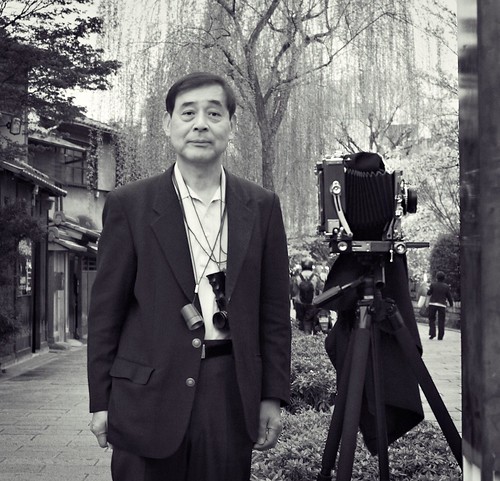
Kyoto Photographer
Not obsolete. Not unused.
Just no longer mass market.

First, film. Film is dead - as a mainstream consumer format, that is. Now, that does not mean that film will disappear; as a niche it looks to be thriving and long-lasting. The number of users are stabilizing, with film era holdouts being joined by amateurs and professionals picking up film again as a complementary medium to digital. I'm one of those recent users myself.

Holga, Diana, Seagull and other cheap-and-cheerful film cameras are making film a popular alternative among some young photographers. Leica, Fuji, Cosina, Mamiya, Hasselblad and Rollei are still producing film cameras. Fuji and Cosina is even jointly launching a new medium-format folding camera this spring (and for the record: yes, I want one very, very much; if any reader happens to have 200k yen cluttering up their apartment and making a mess, feel free to give me one of these instead of throwing the money in the trash).

But any business plan that depends on many hundreds of millions of people using film for their photography is sure to fail today. Fuji and Kodak both seem determined to keep their film and chemicals business going (they're reportedly profitable), but most other film-era companies have disappeared or left the field. More often than not their assets have been spun off or acquired by small companies able to thrive in a niche market where a large company can't. The film photographer has joined the portrait painter as a niche business, as an art medium and hobby.


So, what about the camera itself? We went to Universal Studios Japan with a couple of relatives just before Christmas. The place was absolutely packed. Throngs of people from all over Japan and east Asia were mobbing the attractions and food vendors, watching the live shows and oogling the characters, Christmas decorations and fake street views. And people were constantly taking pictures, of everything and everybody. There were digital SLRs and even a few film users, but easily five or ten times more pocket digital cameras. However, all the cameras combined were completely outclassed by people simply using their cellphones, perhaps ten or twenty people for each one with a "real" camera. It's not just USJ; wherever you go here it's the same thing - "everybody" has a cellphone and only a minority bother with a separate camera.

Ah, the cellphone camera. A low resolution, noisy image with fine detail smeared out by heavy-handed noise reduction and white balance only vaguely related to reality. Fiddly handling, half a second or more focus lag - that is, unless the cam is fixed-focus - and another half a second to actually take the picture. The images are printed (if they are printed at all) in automatic kiosks giving you a strangely colored print the size of one of my medium format negatives.

None of that matters. You don't hear most users complain, and they don't complain because the results are good enough for their use - a memento, something to show your friends and relatives, a memory aid. The motive is everything; image quality and composition is secondary or completely unimportant. To be fair, image quality has increased quite a lot lately. A good cellphone camera in even, natural light will give you a perfectly fine picture. And that increasingly means that a free camera in your cellphone will trump even the best designed, inexpensive pocket camera in the market.

Phone Cam

The future of photography.


It's not easy to find freely available, directly comparable statistics over time, but here's what I could get hold of after literally minutes of googling (what don't I do for my readers). Most of these sources aren't directly comparable; it's the general trends that are interesting, not the numbers.

  • In 2004, 257 million camera phones were sold, already outselling digital cameras 4 to 1 (source)


  • In 2007, around 700 million camera phones were sold (source), while digital cameras reached 101 million (source), for about a 7 to 1 difference.


  • Sales of digital SLR cameras have consistently been increasing faster than the lower-end fixed lens cameras, and the trend is continuing. The CIPA forecast for next year is flat, but with DSLR sales to increase by 6.8%, and fixed-lens cameras to decrease by 1.3% (PDF source)


In other words, camera phones have been outselling "real" cameras for at least five years, have been growing faster and now completely dominates the market for devices capable of taking pictures. There is also a sustained trend for higher-end DSLRs to increase faster than lower-end cameras, a possible indication that camera phones are eating into the market for low-end cameras. It would be interesting to see the figures for low-end and high-end fixed-lens cameras tabulated separately.

The standalone camera is itself becoming a niche market, something for the enthusiast or gearhead. The very idea of buying yourself a camera is becoming unusual. The camera, as the dominant image taking device, is dying.

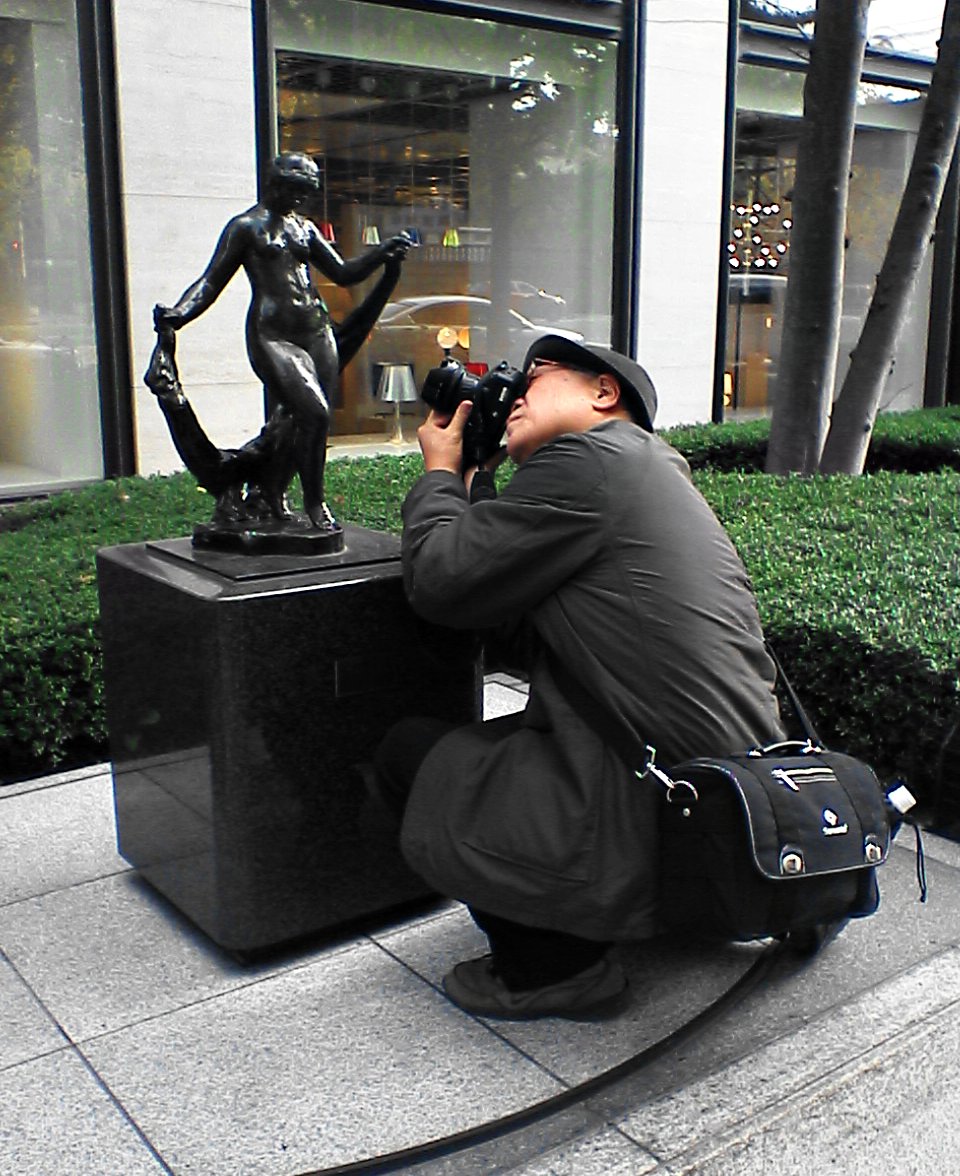
Art Appreciation

It's becoming rare to see people bring a "real" camera and a bag of gear just to take pictures. For most people the ever-present phone cam is already good enough.

This picture, by the way, was taken with my old cellphone; that one would be more than three years old now. My current one gives me higher quality, and models selling today do better still.


As with film, of course, but even more so, it doesn't mean the camera as an object will disappear or anything. We're still talking about 100 million cameras made every year after all. The numbers will dip a bit over the next couple of years, but there's a huge amount of cameras being sold out there. Nor do I think the market shift will be as fast as the shift from film to digital. The decline of the low-end mass-market camera will be gradual.

I do believe that the low-end digital camera market will eventually disappear, while the high-end pocket camera and DSLR continues to thrive, selling to those who take an interest in photography itself. That means that any business aiming for the photographic mass market - cheap printing, image sharing, accessories and so on - will consider cellphone users first and foremost, not camera owners. It means the standard of amateur imaging and man-on-the-spot pictures of significant events will be - and perhaps already is - the cellphone camera.

Saturday, February 21, 2009

Bad Luck

We're bad luck.

Kobe Beef
Kobe beef

Specifically, we're bad luck for restaurants. When we started dating seriously, Ritsuko and I often went to an Indian/Nepalese restaurant in the neighbourhood. After a year and a half or so, the restaurant closed. A great vegetarian Indian restaurant in Kobe we'd started going to disappeared soon after. Sometime later we found this great inexpensive Chinese restaurant doing a pleasantly fresh, modern, unpretentious take on the cuisine. We liked enough that we started meeting there on my way back from work on Fridays. It took less than a year for that restaurant to shut its doors. Last October we found another newly-opened Chinese restaurant with food very much in the clean, modern style we like, and with an unconventional but very relaxing budoir-purple interior (sounds strange, but it worked well). We discovered yesterday they've gone out of business, after only six months.

Of course, restaurants and bars are constantly appearing and going under. It's what restaurants do; the cooking and serving sometimes seems to just be something to occupy the time until reorganization. An only half-joking saying in Swedish is that a restaurant becomes good business once it's gone bankrupt three times. Having four of our favourite places disappear in as many years is perhaps not that unusual.
 
Or maybe it is, and our taste is just far enough from the mainstream that any place catering to it is doomed to fail. This is having us a little spooked. We're almost afraid to go too often to places we like, since we seem to invite disaster when we do. We still have a couple of places we really like, after all, and we'd hate to see any of them disappear.

And I never even got a picture of the budoir-purple interior.

Wednesday, February 18, 2009

Aso's Hidden Reserve

Tobias Harris has a good post about the pointlessness of Mr. Obama inviting Aso to the white house for a state visit, what with Aso being busy with the disintegration of his cabinet and the remains of his political career and all. Go read it, and read his blog - it's way better than anything I can write about this whole thing.

He points out that Mori in fact is not the record holder for low approval ratings; Takeshita Noboru managed to reach 7% in a Bob Beamon-like feat of lining up his political stars into a moment of singular greatness. This is a very, very hard score to beat. Fortunately, Aso may just be up to the task.

He was off to a great start on his record attempt this week, what with throwing his friend with substance-abuse problems to the lions, and manage to look indecisive and out of control in the process. In some inspired waffling, he first decided to keep Nakagawa on; then have him resign later, once the current economics bill has passed; only to finally give in to pressure and have him leave immediately. We should see a very satisfying dip in the polls from this.

But Aso needs something more to put him over the top, I think; something to yank those last few decimal fractions from his support base. And I think I know his ace in the hole: Agriculture minister Shigeru Ishiba. Note how we haven't had a single minister of Agriculture resign in disgrace for almost six months now; an almost frightening period of calm and order, like a tropical storm building strength just beyond the horizon.

And that, I think is Aso's master plan. The agriculture sector is one of his last bastions of support, and something to turn even them away is exactly what he needs. My bet is that any time now - as soon as next week, perhaps, timed to coincide with his visit to the USA, but more likely in early March - the Agriculture ministry will erupt in the kind of spectacular scandal they do so well. Perhaps they'll play it safe and go for the tried-and-true underhanded campaign donation and misused funds with faked receipts-play. Or perhaps they'll do a daring new domestic food scandal with bribed inspectors looking the other way. Only time will tell. But that, I'm sure, would be enough to truly put Aso and his government in the record books forever.

JLPT 1 Results

I got the results from the JLPT (Japanese Language Proficiency Test) level 1 that I took in December. Results are pretty much what I expected, if a little low: 170 out of 400, with 280 as the passing grade.

Not bad. Remember, I took this test before I started studying level 1 material; this is the baseline of what I already know on the test before doing any preparation or studying whatsoever. Since you can expect to score about 100 points by pure chance, I was effectively able to answer 93 points out of 400, with the needed "real" points at 240.1

I'll be taking the test again in December. As I'm not specifically studying for the JLPT I'm not likely to pass on that attempt either, but I should see a nice bump in the score.


--

#1 For those not so mathematically inclined, it's easy to figure out: Let's say the score we got is s, or 170 points. Then, let's say the number of points we actually knew, not guessed, is k. This is what we want to find out. There's four answers to choose from, so about 1/4 of answers we guess at will be correct.

We know that the score s we got (170 points) consists of answers k we actually knew plus 1/4 of the remaining answers (400-k) that we guessed at. we get:


Which comes out to 93 points I knew with a score of 170, and as level 1 requires a 280 point score to pass we'd need to know 240 points worth of answers to have an even chance of passing. For comparison, the passing score is 240 for level 2-4, and that implies you need to know about 187 points to pass. That means the level 1 test actually requires you to know about 28% more of the test material than the lower levels do, a pretty significant difference.

Tuesday, February 17, 2009

Nakagawa

More politics, and no, not funny. Japanese finance minister Nakagawa was filmed giving a slurred speech at the G-7 meeting, after which he promptly fell asleep (can't find an online link to it anymore). He and his aides blame the combination of sleeping pills on the plane, some wine for dinner and cold medication. That may be true or it may not. He is suffering from alcoholism, something apparently an open secret up until now. He's had previous "cold medication"-related incidents, but never before on television during a international top-level meeting. He pledged to resign today as the result of the ensuing uproar.

Now, as much as you may dislike the man politically, he is not to blame for suffering a fairly serious stigmatized disease. His alcoholism may or may not make him unsuitable for his current position, but he is apparently unqualified for such a weighty post anyway, medical condition or not. This lack of ability is not something unique, but something he shares with several other members of the current cabinet, (still) prime minister Aso himself included. The blame for his appointment must be laid completely at the feet of Aso. He picked Nakagawa - a personal friend - for internal party political reasons, without regard for his ability to actually do the job and apparently with no regard for the medical consequences of such a high-pressure position on his friend. Callous, thoughtless or any combination thereof, take your pick.

The ministry of finance has of course not ceased working during the latest minister's stewardship, or that of his predecessors. People have undoubtedly worked around any issues or shortcomings of the minister. They've made sure policies are enacted and decisions are made whether the minister has been personally aware of them or not. The same certainly goes for any other minister or other elected official elevated to a position beyond their level of competence.

Now, here's the problem: the Japanese state bureaucracy is out of control. It has grown too big, too powerful, is frequently working completely at odds with the public it is supposedly serving and doing so with impunity. Elected officials may decide on policies and enshrine them into law, but ministries may simply decide not to implement them. The ongoing Pension Fiasco was caused by ministry workers that couldn't be bothered to do their job so they threw away pension records or neglected to update them.The practice of Amakudari is a major cause of the endemic corruption. To some extent the civil service is a state within the state and only tenuously subject to the same laws and regulations as the rest of society.

This is a major problem here. Politicians, Aso included, promise to "reform" the bureaucracy; cut it down in size and power, and bring it back under political control. The main tools for controlling the civil service are the ministers appointed by the prime minister and put in charge of their ministries. But appointments are made for political or personal reasons, to reward an ally or buy the favor of some political group, rather than competence and experience, and that effectively strengthens the bureaucracy to the detriment of the elected officials.

When a minister isn't really up to the task, as above, the ministry career officials will step in. But when they do - and even when it's for the best of intentions - they are effectively grabbing power that belongs in the elected political realm, and taking it for the use by the bureaucracy. The responsibility, of course, stays with the political appointee, further deteriorating the situation. Focusing on the political dimension over competence when populating your cabinet is directly contradicting the promise to reform the bureaucracy. And that is, of course, over and above all the other negatives of a cabinet with people unable to take command over their areas of responsibility. That responsibility falls on Aso of course, but also on the LDP leadership and voting party members more concerned with the right ideological bent and ideas of "who's turn" it is to play prime minister than with questions of actual ability.