Showing posts with label ramen. Show all posts

Thursday, October 29, 2009

Mabo Ramen

With my recent post about ramen and curry and all, I wanted to mention yesterday's set meal at our university cafeteria: Mabo Ramen. "Mabo" is mabo tofu, a Chinese dish that resembles chilli: a fairly thin, spicy meat sauce with pieces of tofu. It's eaten with rice and is quite popular here. "Mabo Ramen", then, is a bowl of soy-sauce flavoured ramen, but instead of bean sprouts and the rest, you pour a ladle-full of mabo tofu right into the bowl and stir.

Soy-sauce ramen is fairly dark, and the meat sauce thickens it to resemble hot, dark mud. The white pieces of tofu float merrily on top, not unlike winter-pale, overweight guests at a spa enjoying a mud bath. Suddenly the surface erupts as the bone-yellow ramen floats to the surface like some blind, mad Lovecraftian Elder God. Its multitudinous1 tentacled strands glisten as they blindly grope and envelop the first unlucky tofu bather, to drag him under, shrieking in fear, towards the unknowlable insane horror at the center of the huge slithering mass...

..and once I stopped playing with my food I tried actually tasting it. As it turns out, It's really, really good. The flavours complement each other very well, and the meat sauce gives the soup a thick, satisfying consistency. And it shouldn't be too surprising; after all, a mabo tofu and small ramen is a fairly common set menu at cheap Chinese restaurants already. Pouring them into the same bowl is just a natural next step. Anyway, I'm certainly having it again if it shows up on the menu at some point.

--

#1 I really think "multitudinous" is a good word, and used far too little these days. It's not that easy to fit expressions like "multitudinous tentacles" into everyday conversation2, unfortunately. "Multitudinous whiteboard markers" just doesn't have the same ring to it.


#2 If you can, you're probably leading a more interesting life than I do.

Friday, October 23, 2009

Curry vs. Ramen

Ho hum. The new Japanese government is still trying to find its legs and the opposition is looking for a voice; meanwhile voters realize the promised brave new world looks much like the present one. In Sweden the media tries to whip up early election fever to sell copy, but has only succeeded in giving a a small neo nazi-connected xenophobic party some free publicity.

Or in headline form: "New government constrained by inexperience, previous policies, economic situation" and "Fascist xenophobes still dislike immigrants, other cultures". What's next - "Penguins admit to liking fish"? There's nothing much worth commenting on in other words.

Let's take a look at something a little more inspiring. On Saturday Asahi Shinbun took an investigative look at something really important:

Curry or Ramen ?


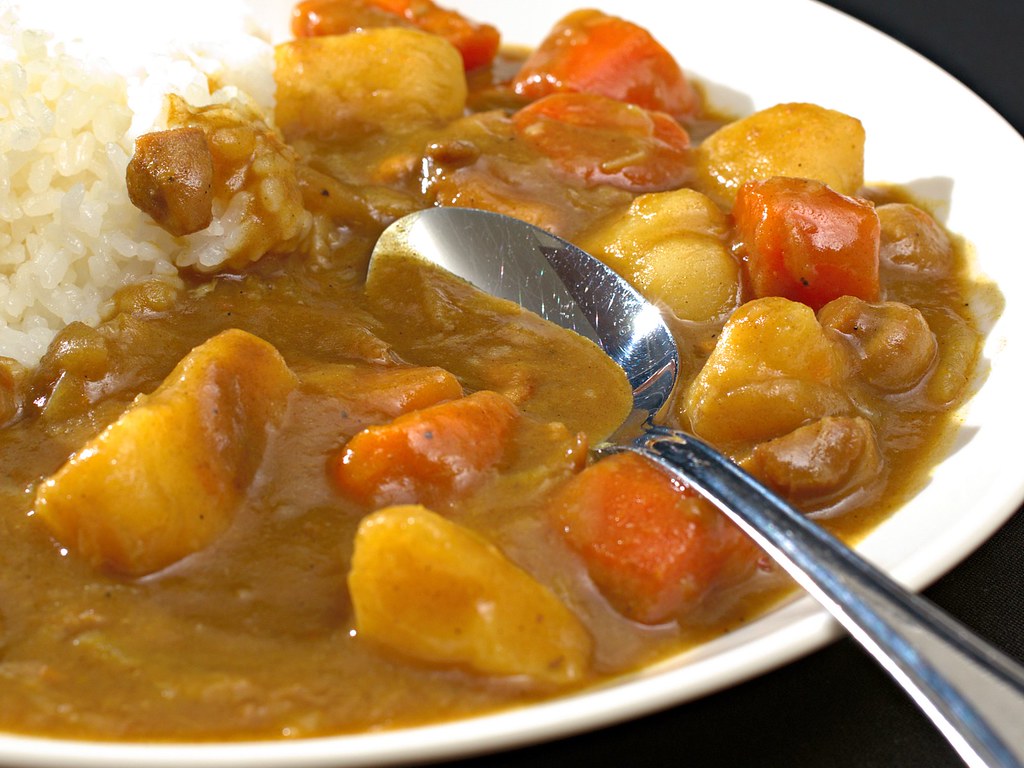
curry Rice

Homemade chicken curry and rice with potatoes, carrots and mushrooms. Leftover curry goes great with udon noodles or spaghetti; you just thin it out a bit to make it more like a sauce.


Curry - Kare Raisu - evolved from Indian curries. Today it's a spicy stew in a thick, brown savoury vegetable sauce. You usually eat it with white rice and pickles, though curry udon (udon noodles in runny curry) is also quite popular. It really resembles a thick European-style meat stew more than anything else, and the only trace of the Indian dish is the spiciness.

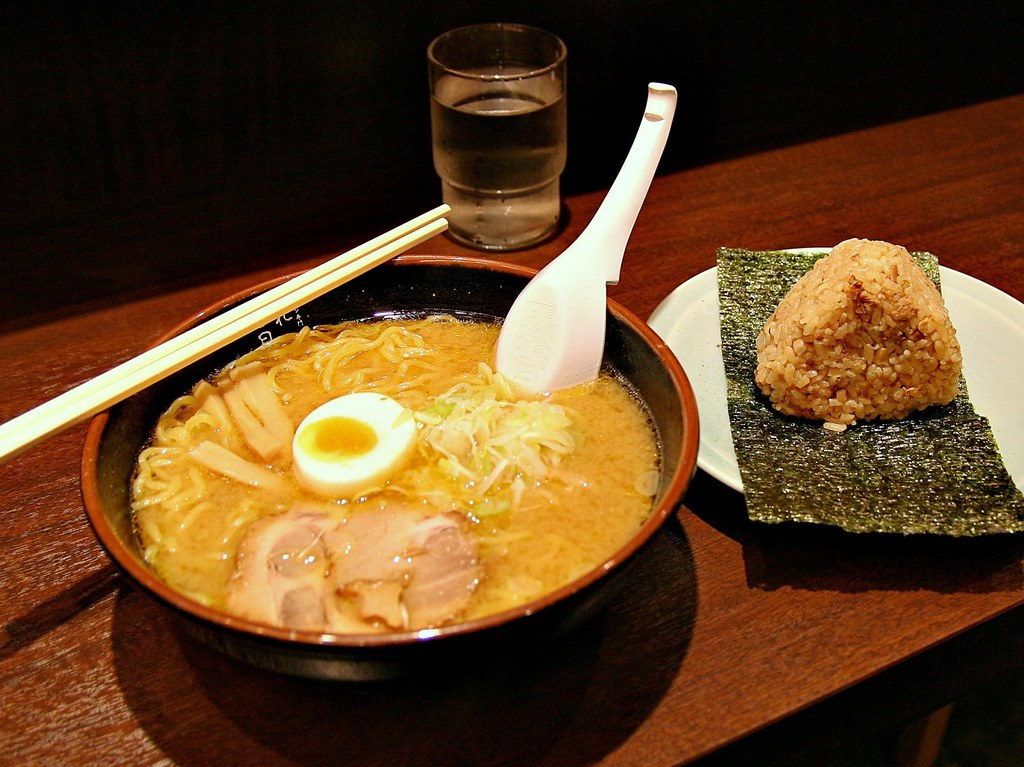
ramen

Ramen at Kyoto station. Old image; for some reason I don't have any good recent shots of this dish; I guess I'm too busy eating it to remember taking a picture.


Ramen is Chinese noodles in a thick soup with fried pork, bean sprouts, green onions, bamboo shoots, boiled egg, nori, corn and any number of other possible ingredients. It's based on a Chinese dish but has evolved far from its roots - ramen is sold in China as a Japanese food.

Both are simple, satisfying comfort foods; the kind that hit the spot when you eat alone, when you work late at night, or when you're nursing a hangover. Both trace their origins to a foreign dish but now have little in common with it. In Europe, pizza, kebab and falafel, originally from Italy and the near East, are dishes much in the same spirit1.

Anyway, Asahi polled over 7000 people on their favourite comfort-food to see which came out on top. So, which won?

curry57%-ramen43%

Curry 57%, Ramen 43%.


Curry is more popular than ramen, 57% to 43%. On the other hand, while only 1 in 4 (27%) curry people eat it at least once a week, over half (55%) of ramen lovers indulged that often.

curry and ramen types

Popular types of curry (on the left) and ramen (on the right). Only types with more than 10% popularity is shown.


Which kind of curry and ramen where the most popular? For curry, more than a quarter picked beef curry, with pork, vegetable, chicken and katsu (fried pork cutlet) all between the 10% and 15% marks. "Real" Indian curry was chosen only by 6%; but then, it really isn't the same dish any more and can't be compared directly.

The defining ingredient in ramen is the soup, an oh-so-thick concoction of pig bones and vegetables that is slowly simmered and reduced for many hours. A dollop of the heavy soup is mixed with lighter, flavoured stock right in the bowl. Soy-flavoured soup came in first with over a quarter of respondents. Miso-flavoured and tonkotsu ("pig bone" - heavy and greasy) where about equally popular with the thinner salt-flavoured soup rounding off the list.

Me, I like curry and ramen both, but given a choice I prefer ramen. Hokkaido style ramen - thick miso-flavoured soup with corn and butter - is great, and so is tonkotsu ramen. We normally eat curry at home, but my favourite curry chain is Jōtō Curry here in Osaka. They do a fairly spicy curry with the meat completely rendered into the sauce that goes great with fried shrimp or a pork cutlet.


--

#1 In Sweden, one of the most popular pizzas is the "kebab pizza", with the contents of a kebab - garlic sauce and all - spread over a pizza pie with cheese and tomatoes. Cultural mashups are great.

Wednesday, April 9, 2008

Ando Momofuku

Busy days; however, I need to make a followup to my previous post on the instant ramen museum in Osaka. Mainichi Daily News reports (in English that a memorial statue of Momofuku Ando has been unveiled outside the museum in celebration of the 50th anniversary of the invention, with is widowed wife and a previous prime minister (an old friend) in attendance. The statue - there's a tiny picture in the article - tastefully (sorry) depicts Ando standing atop a Cup Noodle, holding up a packet of Chicken Ramen.

Unrelated, but I wonder why, in a Japanese-language newspaper, the English-language translation runs a picture of the statue in question while the Japanese-language original - presumably targeting the vast majority of its readers - does not?

Tuesday, March 25, 2008

Cup Noodle Museum

Cup NoodleOne of the great benefits of living in a large city is all the exhibitions, performances, galleries and museums that are readily available to anyone who wants to take an interest. On occasion we go to exhibitions we've heard about, other times we literally stumble upon something interesting on our walks. Last weeks cultural experience was the Momofuku Ando Instant Ramen Museum in Ikeda, Osaka.

Instant Ramen, for those that do not know, is wheat noodles cooked in a broth, then flash-fried in oil to dry them, resulting in a square or round noodle "cake". To eat them you simply pour hot water over them and wait for a couple of minutes. They are usually sold with packets of soup base and freeze-dried vegetables to make a complete meal. They come in flat, square packets; in plastic bowls; or in styrofoam cups. In Sweden I only ever saw the flat packets, while the bowls and cups seem to be most common here in Japan.
 
The inventor was Momofuku Ando, who perfected the idea of drying the noodles by flash-frying them in the 1950's. At first his company, Nissin, sold just the flat noodle packets. He once saw customers cook their noodles by putting them in a coffee mug rather than a bowl, and when he got a styrofoam cup during a flight he hit on the idea of selling the noodles in their own cup. In 1972, the Japanese Red Army took a hostage and occupied a building in the Asama mountains in Japan, in what was to become a ten-day stand-off with the police. Nissin rushed boxes of Cup Noodle to the site of the stand-off, and live national TV coverage of the drama streamed images of policemen gulping down the noodles to households all over the country. The success was complete, and something approaching the perfect fast food was born.

A staple food of students, night workers and busy singles, the savoury noodle soup leaves few people untouched when they encounter it, and opinions are frequently based as much on its perceived status and "naturalness" as on the food itself. They're a greasy, salty fast food packaged in wasteful plastic. But they're also amazingly convenient, inexpensive, long lasting, light and flavourful. You can store them for years, making them not only convenient as a back-up food for harried households, but also for stocking emergency supplies and for disaster relief. Today, a Japanese convenience store or supermarket will have many dozens of varieties of noodles, and there's even pots of hot water by the exit so you can buy your noodle cup and fill with hot water on the way out.

Wall of Ramen Workshop
Ramen currently on sale by Nissin, and the Ando workshop replica.


The Cup Noodle museum is in a residential area, right across the street from the Ando family home, and is surprisingly good. We half-expected it to be similar to other self-glorifying corporate museums but this museum clearly wants to reach beyond that level. It is a fairly big place, two floors, and full of visitors. There's a "wall of explanation" of course, but it - and the museum itself - focuses on the noodles and on its inventor, not the company. There's a whole wall of instant ramen products (it's a big wall, and getting crowded), and a set of display cases with ramen sold in other countries. There's a reconstruction of Ando's workshop and a small movie theater running a fun animated information film on making the noodles.

The centrepiece of the museum, however, is a "noodle factory" where you can mix your own Cup Noodle (there's even an area where people can make their own noodles from scratch, but that seems to be for pre-booked visitor groups only). You get an empty Cup Noodle cup, and start by decorating it at a table using the coloured pens. Then you go to the "Production Counter", where, first, you get the dried noodle placed in the cup, using a small manual version of the machine used in the real factory (the cup is put over the noodle 'puck', then turned around). You choose the soup base and four ingredients, much like you would at an ice-cream stand. The cup then gets lidded and shrink-wrapped, again using small versions of the real machines. Last, you get to put your cup in a nifty "air bag" to protect it until you get home.

Cup Noodle Factory Cup Noodle Factory
Cup Noodle Factory Your own personal Ramen
Make your own Cup Noodle: When you've decorated your mug a museum guy will place a puck of dried noodles in it. Then choose, ice-cream stand-like, a soup flavour and four ingredients. Once the cup has been lidded and shrink-wrapped you place it in a inflatable bag for stylish transport home. We've still not opened ours, but I'm getting really curious how my mix turned out.


The last part of the museum is a café-style restaurant of sorts. It's packed with people; there was even a bouncer with a velvet rope regulating the flow of people. There are no waiters and no kitchen, of course; instead there's a wall of vending machines selling various versions of instant ramen. You have machines selling standard varieties; old-style noodles of previous eras; special versions produced only for the museum, and trial varieties that are not yet for sale in stores. We each had two kinds: Ritsuko had a classic curry-flavoured Cup Noodle and a Japan Airlines mini-ramen cup; I got an experimental bowl of tonkotsu ramen and a Japan Airlines soba cup. All were good, but I must say the ramen bowl was really excellent. It'll go on sale this spring so it is not the last time I ate it, I suspect.

Ramen Restaurant
Instant ramen restaurant.


Who goes to a museum like this? Judging from last Sunday it's school classes, parents with children and - surprisingly - many small groups of young, dressed-up women. Why? Don't ask me; I have no idea. Is a self-designed cup of instant noodles this springs must-have accessory? Is Cup Noodle considered a beauty product? Perhaps fashion-forward young Japanese girls simply love instant ramen as much as everyone else, and they have the free time to visit museums.