I've been posting very rarely lately; I apologize for that. Got a dozen half-written posts that I never found the energy to finish. I've mostly neglected the books I'm in the middle of reading and I haven't baked anything for the past couple of months. Haven't taken much interest in photography either, lately. This listlessness will eventually pass, though, and I will pick up this blog and my other interests again.
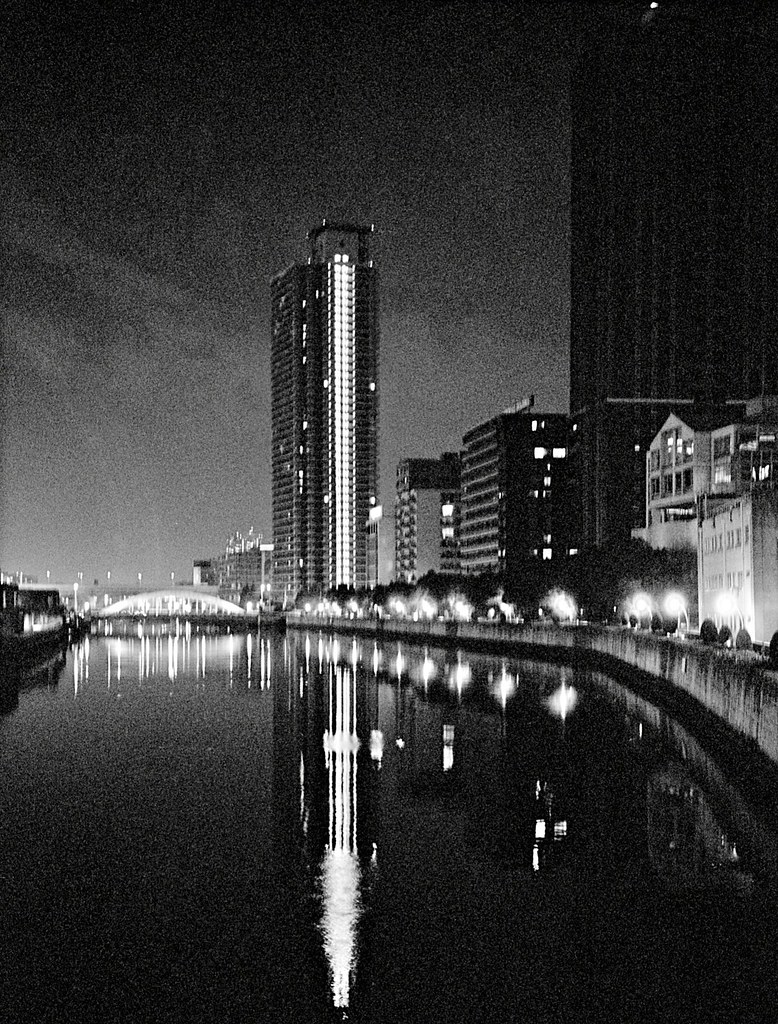
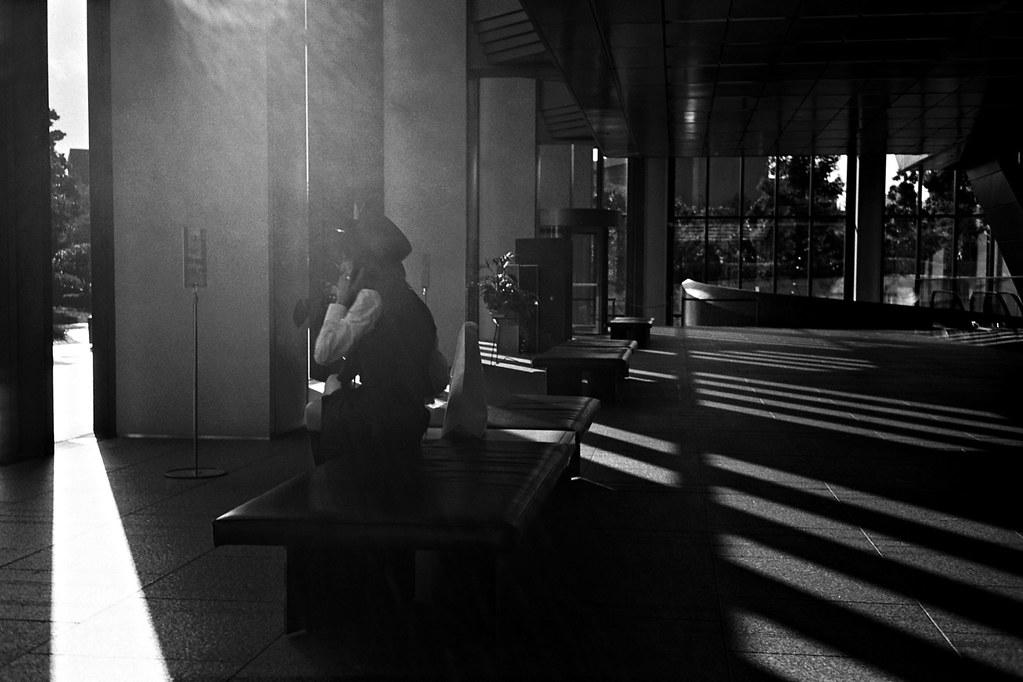
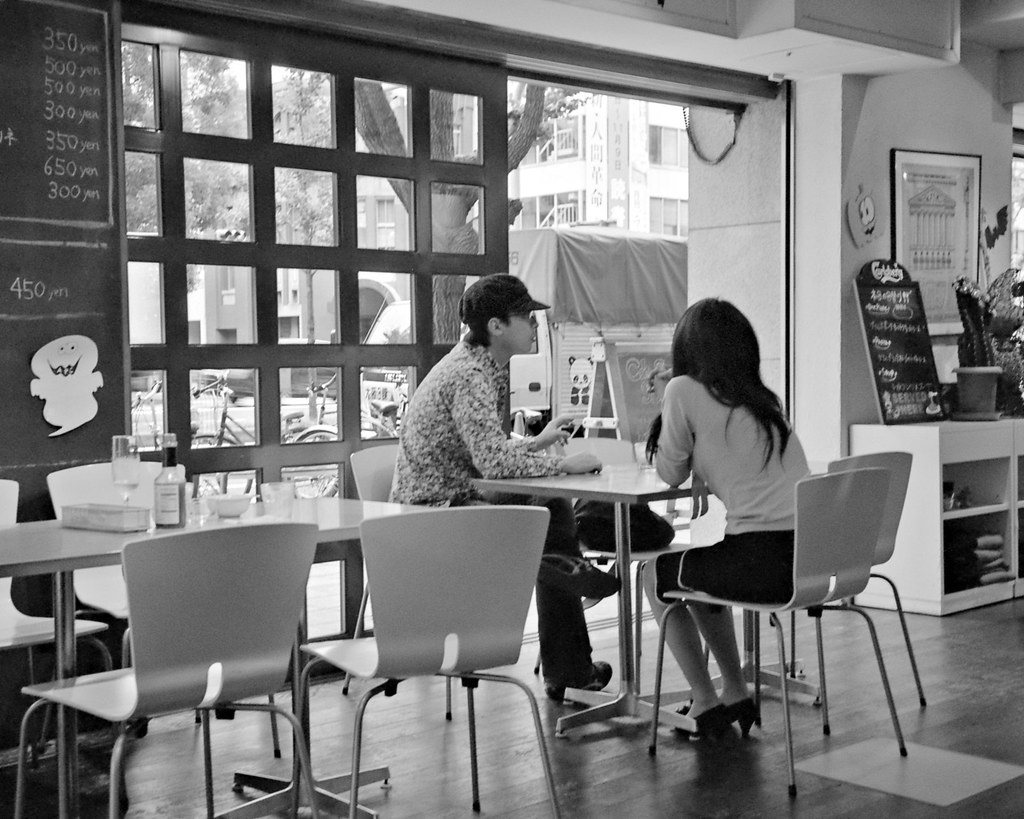
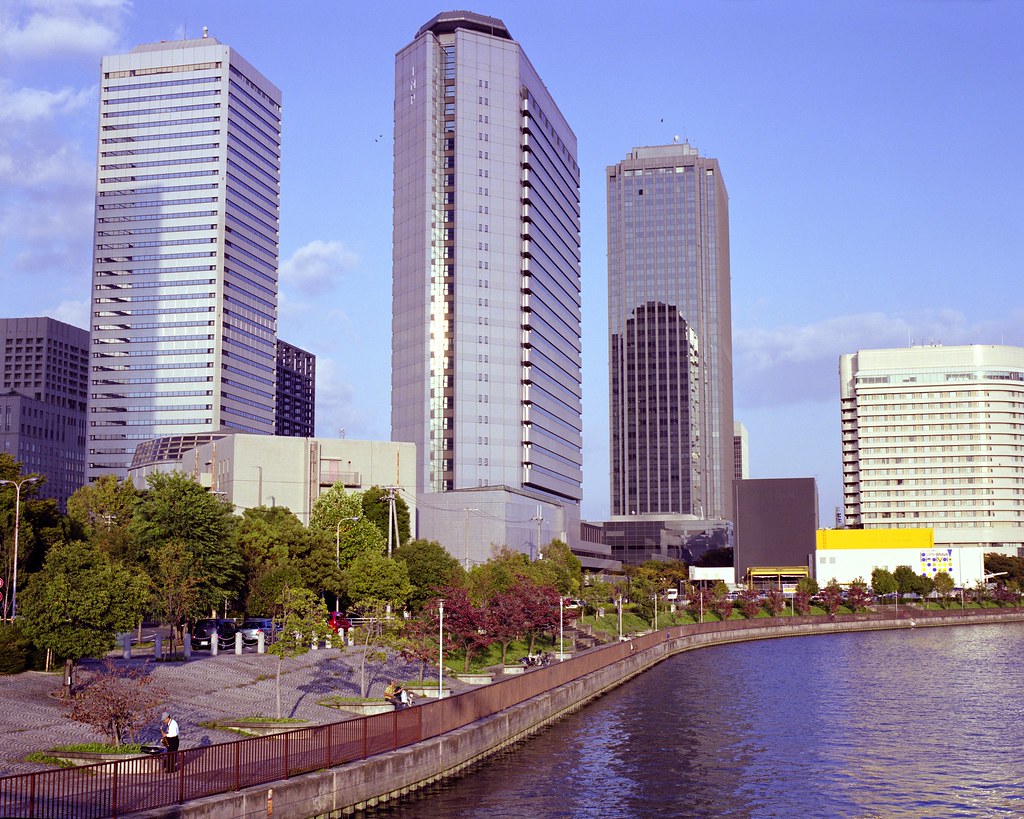
But I haven't been completely inactive. Here's some winter shots of Osaka, using the new Kodak Portra 400 film and the Rollei 35. It's been a grey, depressing and bone-achingly chilly winter. This week has been worse than most. But perhaps the spring is no longer so far off.
Bonus giraffes:
Showing posts with label osaka. Show all posts
Monday, February 6, 2012
Tuesday, December 13, 2011
Not Exactly The…
…single best week of our lives, and it's only Tuesday. While we wait for the rest of the week to improve, here's a few recent Osaka shots as a pick-me-up.
JR has a new, huge station in Umeda, with malls, exhibition centers and several public plazas. Beautiful, well-designed place.
All pictures were taken with a 1970's Minolta SRT-101, using Kodak's new Portra 400 negative film. It takes more time to process and scan, but other than that (a big "other than", to be sure) I find few reasons to recommend a lower-end DSLR over this set-up.
JR has a new, huge station in Umeda, with malls, exhibition centers and several public plazas. Beautiful, well-designed place.
All pictures were taken with a 1970's Minolta SRT-101, using Kodak's new Portra 400 negative film. It takes more time to process and scan, but other than that (a big "other than", to be sure) I find few reasons to recommend a lower-end DSLR over this set-up.
Thursday, June 9, 2011
Nazar
Nazar is a good Turkish restaurant in Shinsaibashi, Osaka. We go there now and again, though not very often - we unfortunately don't have the time to go anywhere regularly. The owner opened another restaurant in Umeda some time ago so the food can vary a fair bit depending on who is working in the kitchen at the time, though I'm sure the menu will settle eventually.
They celebrated an anniversary a few weeks ago, with a buffet, drinks and belly dancing. It was fun: the food was good, the belly dancer managed to really engage the audience, and the people were interesting.
The bellydancer - Japanese, by the way, not Turkish - got people up and dancing along with the music. And no, it was not a costume party.
One group of regulars are military otaku, with an eclectic mix of mostly European uniform pieces - the pike helmets are Polish, apparently, and the white flowerpot thing is colonial British. One of them sported a monocle and an iron cross. We had no idea what they were about at first; Ritsuko thought they could be comedians still in stage costume, while I thought they might be right-wingers that'd lost their minds. But no, they simply dress up in uniform and meet over dinner from time to time.
As a fellow geek I certainly understand and sympathize with such an obsession in general, even while I'm firmly opposed to the tasteless idea of treating military items as something positive or worth glorifying.
They celebrated an anniversary a few weeks ago, with a buffet, drinks and belly dancing. It was fun: the food was good, the belly dancer managed to really engage the audience, and the people were interesting.
The bellydancer - Japanese, by the way, not Turkish - got people up and dancing along with the music. And no, it was not a costume party.
One group of regulars are military otaku, with an eclectic mix of mostly European uniform pieces - the pike helmets are Polish, apparently, and the white flowerpot thing is colonial British. One of them sported a monocle and an iron cross. We had no idea what they were about at first; Ritsuko thought they could be comedians still in stage costume, while I thought they might be right-wingers that'd lost their minds. But no, they simply dress up in uniform and meet over dinner from time to time.
As a fellow geek I certainly understand and sympathize with such an obsession in general, even while I'm firmly opposed to the tasteless idea of treating military items as something positive or worth glorifying.
Friday, February 11, 2011
Snow
Ritsuko woke me up at dawn, telling me it's snowing - not a few pathetic flakes, but a real snowfall that lasted all morning. It was dense enough to cover the ground even as it was melting away. By lunchtime the fall had stopped, but while the streets quickly cleared there's still some left on rooftops, tree branches and balconies. The weather service says we may get another round of snow tomorrow.
I know this is not much; lots of places get many times this every winter. But it is truly rare to see snow like this in Osaka city - I believe this is only the second time I've seen it since coming here.
Narrow, crowded sidewalk; slippery, wet surface and a snowfall to cut visibility - what could be better than throw up a large umbrella right in front of your face and steer your bicycle through the slush with only one hand?
I know this is not much; lots of places get many times this every winter. But it is truly rare to see snow like this in Osaka city - I believe this is only the second time I've seen it since coming here.
Narrow, crowded sidewalk; slippery, wet surface and a snowfall to cut visibility - what could be better than throw up a large umbrella right in front of your face and steer your bicycle through the slush with only one hand?
Wednesday, September 8, 2010
Blessed Cool
The heatwave is finally breaking. Temperatures have dropped from around 38° down to a breezy 33°. Of course, the reason for the drop is an approaching typhoon; if that's what it takes then I'm not going to complain. With any luck the weather will stay cooler after it passes. Autumn really is overdue already.
The peak temperatures haven't actually been that high this year - not a single day over 40° - but the length of this heatwave has been extraordinary. In a typical year you have peaks in the high 30's or even 40's in August but the average is normally around 28-33°. This year the daily temperature has remained at 36-39° for months, and it's continued well into September. Peak temperature records are untouched (except in Hokkaido), but average temperatures have broken almost every record around.
Now, perhaps, we have a chance of reviving the plants on our balcony. Some dark, cosy, dramatic autumn weather will be a nice change of pace after nothing but glaring sunshine. And soon it'll be cool enough to start making winter foods again. I can't wait.
The peak temperatures haven't actually been that high this year - not a single day over 40° - but the length of this heatwave has been extraordinary. In a typical year you have peaks in the high 30's or even 40's in August but the average is normally around 28-33°. This year the daily temperature has remained at 36-39° for months, and it's continued well into September. Peak temperature records are untouched (except in Hokkaido), but average temperatures have broken almost every record around.
Now, perhaps, we have a chance of reviving the plants on our balcony. Some dark, cosy, dramatic autumn weather will be a nice change of pace after nothing but glaring sunshine. And soon it'll be cool enough to start making winter foods again. I can't wait.
Tuesday, August 24, 2010
Dusk
Everyone loves summer sunsets, with their riots of reds and yellows flowing across the sky. But when the sun has set comes dusk, that dwindling twilight as evening turns into night. It's never attention-grabbing the way the sunset is, but the cool blue colors give the mundane streets an otherworldly, almost magical quality.
Thursday, June 17, 2010
Smog
Just a short post: Ikoma city (where I work) has issued warnings about "photochemical smog" for the second time in a week. We should avoid going outdoors and wash our eyes or throat if they start becoming irritated. It feels just a little surreal as we're sitting in a rural backwater, surrounded by fields and forested hills. But of course, this entire part of Kansai is pretty densely populated so the air is probably just as polluted here as in the urban areas the next valley over.
I wonder why you never hear about this in Osaka. It's feels unlikely that central Osaka avoids this problem while small Ikoma does not - of course, Osaka lies along the coast, not in a mountain range, so perhaps not enough pollutants accumulate to cause smog. Or there could be plenty of warnings, but I just manage to miss them; I never listen to radio or watch TV in the daytime after all.
Wednesday, March 10, 2010
Nördkaffe
Have you heard of "Metal Umlauts", perhaps? When a heavy-metal band wants a name that sounds exotic, gothic and vaguely menacing they will sometimes add an umlaut ("¨" - the two dots in "ä", "ö", "ü" and so on) to a vowel or two. Think "Motörhead", for instance. This can backfire; British metal band "Trojan" famously added an umlaut to their name to become "Tröjan". This means "the shirt" in Swedish, and doesn't really evoke the air of menace the band was aiming for - though I guess it did make for some deliciously self-referential concert t-shirts.
There's a recent café in the Umeda underground that's afflicted with a similar case of Umlautitis. It has a Scandinavian theme - the furniture and decorations are Nordic minimalist, and there was even a long text explaining the Swedish tradition of "fika" - an extended coffee break - in passable but "interesting" Swedish and in Japanese. It looks like a very pleasant coffee shop, and I've been meaning to stop by. The name is "Nördkaffe".
Perhaps the owner has lived in Sweden and got inspired to do a Swedish-style café back in Osaka. I think the real name is "Nordkaffe" ("Nordic coffee"), and indeed, the Japanese transcription uses the "nordkafe" (ノードカフェ) pronunciation. The umlaut (and the second "f") is only there to give the name an exotic touch. But as with "Tröjan", this changes the meaning: "Nördkaffe" means "Nerd Coffee" or オタクカフェ. Unlikely to be quite what the owner intended, of course, but the name is memorable and the place looks very nice. We really should stop by next time.
There's a recent café in the Umeda underground that's afflicted with a similar case of Umlautitis. It has a Scandinavian theme - the furniture and decorations are Nordic minimalist, and there was even a long text explaining the Swedish tradition of "fika" - an extended coffee break - in passable but "interesting" Swedish and in Japanese. It looks like a very pleasant coffee shop, and I've been meaning to stop by. The name is "Nördkaffe".
Perhaps the owner has lived in Sweden and got inspired to do a Swedish-style café back in Osaka. I think the real name is "Nordkaffe" ("Nordic coffee"), and indeed, the Japanese transcription uses the "nordkafe" (ノードカフェ) pronunciation. The umlaut (and the second "f") is only there to give the name an exotic touch. But as with "Tröjan", this changes the meaning: "Nördkaffe" means "Nerd Coffee" or オタクカフェ. Unlikely to be quite what the owner intended, of course, but the name is memorable and the place looks very nice. We really should stop by next time.
Friday, March 5, 2010
City Life
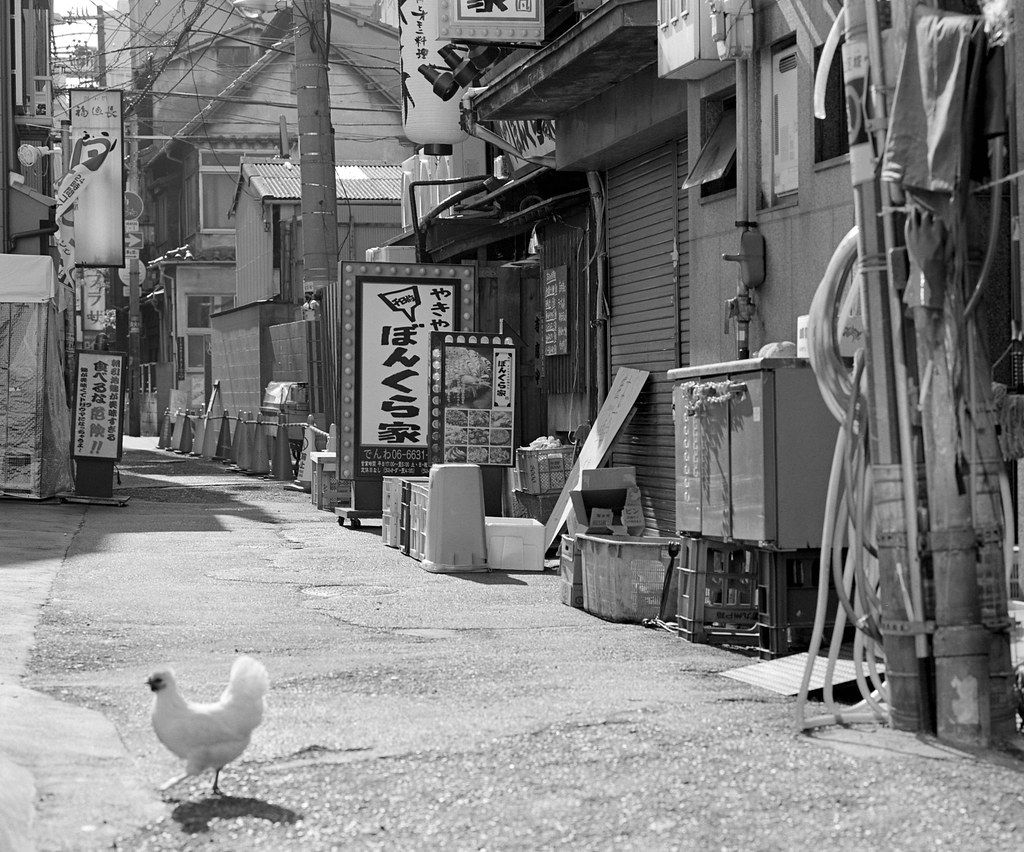
I really love Osaka. Sennichimae is a major east-west thoroughfare through south Osaka, and around Namba it crosses Midōsuji street and cuts right through the south city center, where department stores, train stations and shopping arcades crowd each other for space. Takashimaya, Maruichi, Bic Camera...
But take a turn off Sennichimae, walk ten steps, and you find this:
Side street off Sennichimae. That's a couple of cheap hot-plate eateries and single homes in the background - and, yes, a chicken crossing the road. It has a roost by the wall to the right, so it's not a runaway. Feisty bird - the rats around here are almost as big as it is.
This scene has probably not changed for the past fifty years, and I love that there's still areas like this right in the middle of the city.
A girl stopped to see what I was photographing, and on seeing the bird she promptly emitted one of those ultrasonic "kawaiiiiiii!!!"-sounds that young Japanese girls are want to do. The bird itself is apparently quite used to strangers and seemed to enjoy the attention.
Did I mention that I love this place?
But take a turn off Sennichimae, walk ten steps, and you find this:
Side street off Sennichimae. That's a couple of cheap hot-plate eateries and single homes in the background - and, yes, a chicken crossing the road. It has a roost by the wall to the right, so it's not a runaway. Feisty bird - the rats around here are almost as big as it is.
This scene has probably not changed for the past fifty years, and I love that there's still areas like this right in the middle of the city.
A girl stopped to see what I was photographing, and on seeing the bird she promptly emitted one of those ultrasonic "kawaiiiiiii!!!"-sounds that young Japanese girls are want to do. The bird itself is apparently quite used to strangers and seemed to enjoy the attention.
Did I mention that I love this place?
Sunday, February 21, 2010
Library Without Librarians (sometimes)
Still fighting the conference paper. We got ourselves a deadline extension. That's another week to make the paper presentable (Yay!) - and another week of harried writing, with little time for modelling, Japanese lessons or anything else (Booo!).
Anyway, here's a bright idea (I needed an excuse to use the image on left): A library in Veberöd outside Lund, Sweden, is open on evenings without librarians or anybody else. The light is left on and the door unlocked when the staff leaves in the evening and people can come in to read, borrow and return books by themselves. It closes at ten when a caretaker presumably shoos out the visitors and locks the doors. It's such a success that they now consider extending the opening hours of most libraries in Lund in the same way.
A few reactions of mine:
First, this would probably not be possible without automation. All books are tagged so borrowing and returning can be done automatically - put the books on the borrowing counter, swipe your library card and they're all registered. Also, unchecked books will set off an alarm at the door if someone tries to bring them out; plenty enough to deter dishonest or forgetful patrons. It's not stated outright but I guess you need to use your library card to get inside too.
Also, this says more about the local culture in and around Lund than about anything else. A place like Veberöd is small, and library patrons at least recognize each other by sight. Lund itself is larger of course, but also very dominated by the university (more than a third of the city works or studies there) and libraries tend to have a fairly enthusiastic following. It would be difficult to cause trouble without strong reactions from other people. I'm not sure this would work as well in a large, anonymous city.
This is not about removing librarians; the article is very clear about that. It's about extending opening hours on a low budget. A good thing, as long as no local politician starts fantasizing about truly librarian-less libraries. Once upon a time the Swedish school system (it never saw a crackpot pedagogical theory it didn't like) experimented with "teacher-less lessons" in 7- to 9th grade in order to save money. Students were not impressed, nor were they stupid, and they soon became "teacher and student-less lessons" - an impressive monetary savings, if perhaps not conductive to any academic progress.
As a child I spent an inordinate amount of time in the local library (when I visited for the first time in fifteen years, the first thing the librarian said was "Oh, hi Janne, it's been a while"), and this news inspired me to take a look online for Osaka libraries. The Osaka central library is great with a huge amount of material and open every day, and I occasionally visit. But it takes twenty minutes by bicycle from home, so it's a bit too far to just casually drop in for a book or two. As it turns out, there's a branch library at the Senior Center just a couple hundred meters south of here, with opening hours almost as generous. I must check it out as soon as my workload lets up just a bit. Hey, maybe there's a book on setting up your own darkroom...
Anyway, here's a bright idea (I needed an excuse to use the image on left): A library in Veberöd outside Lund, Sweden, is open on evenings without librarians or anybody else. The light is left on and the door unlocked when the staff leaves in the evening and people can come in to read, borrow and return books by themselves. It closes at ten when a caretaker presumably shoos out the visitors and locks the doors. It's such a success that they now consider extending the opening hours of most libraries in Lund in the same way.
A few reactions of mine:
First, this would probably not be possible without automation. All books are tagged so borrowing and returning can be done automatically - put the books on the borrowing counter, swipe your library card and they're all registered. Also, unchecked books will set off an alarm at the door if someone tries to bring them out; plenty enough to deter dishonest or forgetful patrons. It's not stated outright but I guess you need to use your library card to get inside too.
Also, this says more about the local culture in and around Lund than about anything else. A place like Veberöd is small, and library patrons at least recognize each other by sight. Lund itself is larger of course, but also very dominated by the university (more than a third of the city works or studies there) and libraries tend to have a fairly enthusiastic following. It would be difficult to cause trouble without strong reactions from other people. I'm not sure this would work as well in a large, anonymous city.
This is not about removing librarians; the article is very clear about that. It's about extending opening hours on a low budget. A good thing, as long as no local politician starts fantasizing about truly librarian-less libraries. Once upon a time the Swedish school system (it never saw a crackpot pedagogical theory it didn't like) experimented with "teacher-less lessons" in 7- to 9th grade in order to save money. Students were not impressed, nor were they stupid, and they soon became "teacher and student-less lessons" - an impressive monetary savings, if perhaps not conductive to any academic progress.
As a child I spent an inordinate amount of time in the local library (when I visited for the first time in fifteen years, the first thing the librarian said was "Oh, hi Janne, it's been a while"), and this news inspired me to take a look online for Osaka libraries. The Osaka central library is great with a huge amount of material and open every day, and I occasionally visit. But it takes twenty minutes by bicycle from home, so it's a bit too far to just casually drop in for a book or two. As it turns out, there's a branch library at the Senior Center just a couple hundred meters south of here, with opening hours almost as generous. I must check it out as soon as my workload lets up just a bit. Hey, maybe there's a book on setting up your own darkroom...
Thursday, December 24, 2009
Merry Christmas!
We're in Hokkaido for Christmas, where we're relaxing far away from the stresses of city life. We had a sleep in, had a long walk in the snow-covered countryside, I've just returned from a long soak in the hostel's hot spring bath, and with any luck we'll be stuffed to the gills with sushi and beer by tonight. And just so you see what we're leaving behind:
Crowds gather along Shinsaibashi shopping street to celebrate the true meaning of Christmas. Go ahead, click on the image; it looks much better large.
Monday, December 21, 2009
Huge, Friendly Duck Is Back (And We're Leaving (but only temporarily))
The Huge rubber duck that floated by Nakanoshima island in Osaka this summer is back! There's a winter light festival happening along Nakanoshima southern beach, from the western end up to the City Hall, and the enormous rubber duck is also back for a repeat appearance. Which makes me inexplicably happy. The festival is apparently up until the 25th, so if you happen to be in Osaka, there's still a chance to go see it.
It's my favourite humongous friendly rubber duck, really. Surprisingly difficult to photograph, though. By the way, if you happen to go here, there's a really good, inexpensive Indian restaurant in the basement of the building just next to the duck. You can take the stairs from the riverside right to the back entrance.
In other news, we're leaving for our winter holiday in Hokkaido tomorrow morning. Which partly explains my relative silence here - I've been trying to finish up some stuff before we leave. We're going to Akan national park again, then to Sapporo for a couple of nights. It should be a lot of fun; I've been looking forward to this all autumn.
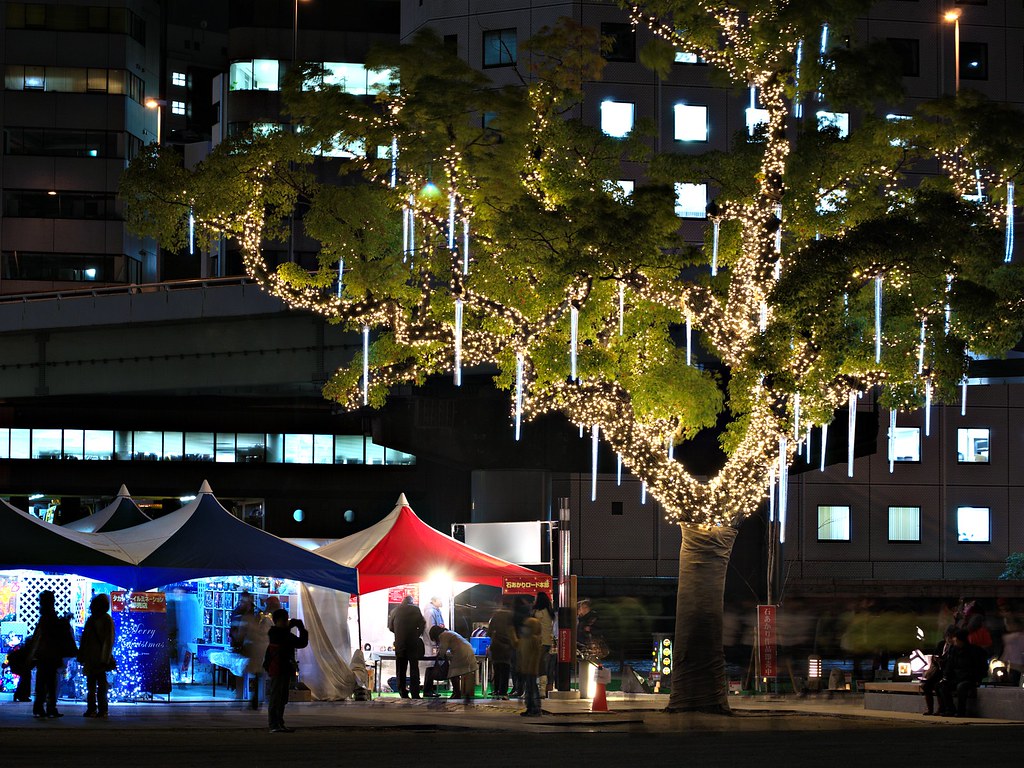
The trees along Nakanoshima are decorated, and there's some hot food stalls and things like that as well. Dress warm; the wind along the river is freezing.
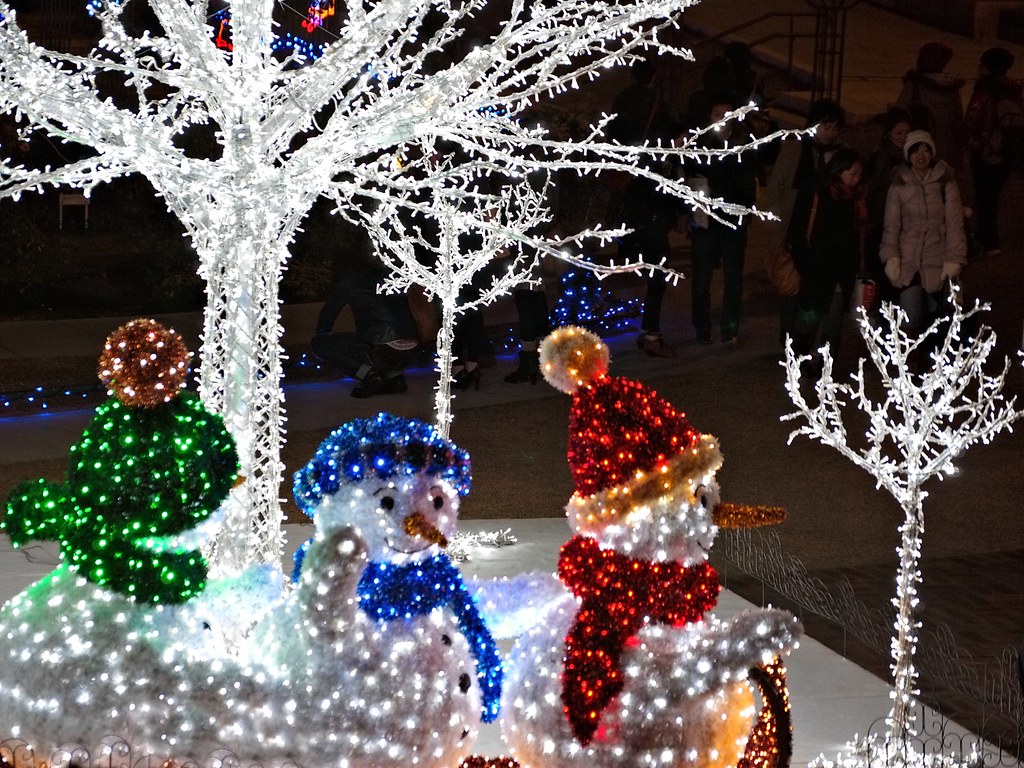
There's some Christmas-themed displays as well. We only got this far before the cold got the better of us, so I don't really know what it looks like towards the City Hall.
It's my favourite humongous friendly rubber duck, really. Surprisingly difficult to photograph, though. By the way, if you happen to go here, there's a really good, inexpensive Indian restaurant in the basement of the building just next to the duck. You can take the stairs from the riverside right to the back entrance.
In other news, we're leaving for our winter holiday in Hokkaido tomorrow morning. Which partly explains my relative silence here - I've been trying to finish up some stuff before we leave. We're going to Akan national park again, then to Sapporo for a couple of nights. It should be a lot of fun; I've been looking forward to this all autumn.
The trees along Nakanoshima are decorated, and there's some hot food stalls and things like that as well. Dress warm; the wind along the river is freezing.
There's some Christmas-themed displays as well. We only got this far before the cold got the better of us, so I don't really know what it looks like towards the City Hall.
Monday, November 16, 2009
Osaka Black and White
I'm a little preoccupied at the moment; the winds of change are sweeping through the economic and political landscape, and buffeting my little corner of it as well. Also, the JLPT Japanese test is held again in less than three weeks or so, and while I don't plan to pass it this year either I still want to prepare a bit. I don't really have the time or the inclination to write any long, substantial posts right now, in other words. But I don't want to go silent either, so in place of anything substantial I'll do some shorter fluff pieces instead.
First, let's do a classic - let's do a picture post!
It's autumn, and the farmers are busy preparing for winter. This woman was digging up part of her rice field - it turns out that soil tends to pile up around the field water drains, so she was moving the excess over to the vegetable garden.
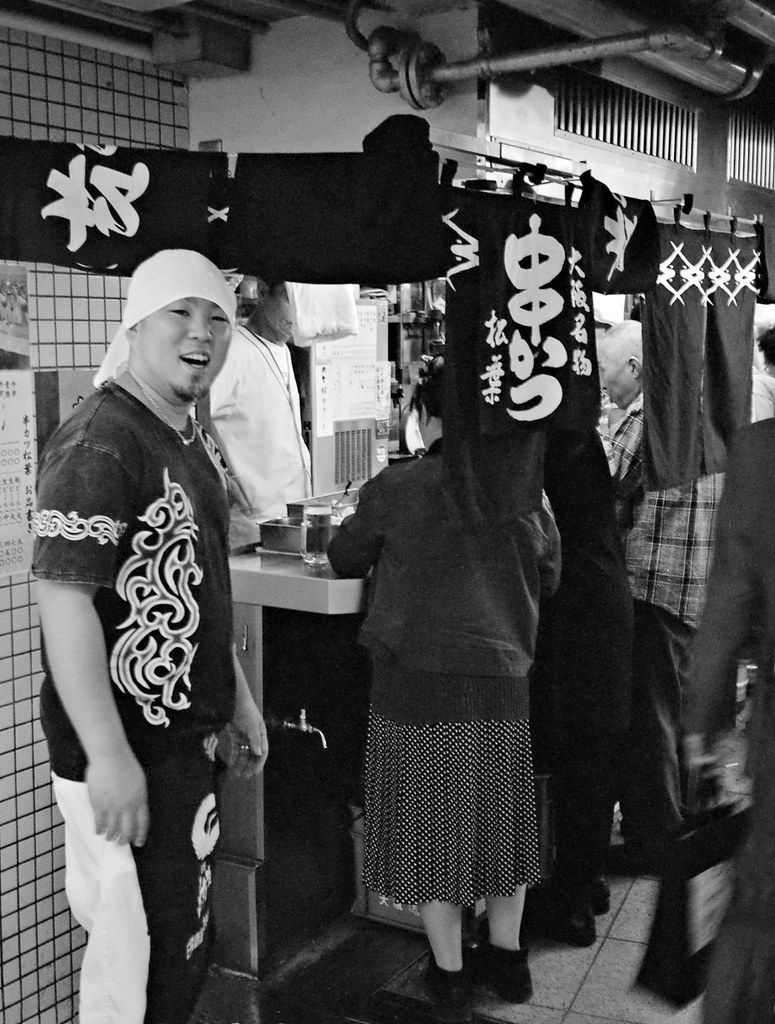
In the Umeda underground, near the Hanshin railways side, you find this counter-only kushikatsu diner. I love the atmosphere, and I keep wanting to eat here but since we're always on the way to eat somewhere else we never get the chance.
Nakanoshima island between Umeda and Namba, from one of the bridges over Okawa. I like the film noir-like atmosphere.
Why is it so grainy? It's 35mm film, and I accidentally underexposed it two or three stops. Push the brightness back up and you get lots of grain.
The lobby of Crystal Tower, one of the highrises north of Osaka castle. There's a café on the bottom floor, but the building is really still and quiet on a Sunday afternoon.
A juggler is entertaining people on the roof of Namba Parks shopping center. This was a few weeks ago; the weather wouldn't really permit this today.
A café around Nishiohashi. This area is kind of hip: there's plenty of cafés and italian-style restaurants; clothing and second-hand stores; art, music and design schools; bicycle makers (if you're a hipster and need a fixie, this is the place), guitar shops and so on. Everything you need to be an offbeat and spontaneous 20-something with an artistic, deep, sensitive side you can pick up right in the neighbourhood.
It's also where our closest large supermarket is, so we get to go wander around this area quite a lot. The atmosphere is relaxed and the shops are fun to watch.
First, let's do a classic - let's do a picture post!
It's autumn, and the farmers are busy preparing for winter. This woman was digging up part of her rice field - it turns out that soil tends to pile up around the field water drains, so she was moving the excess over to the vegetable garden.
In the Umeda underground, near the Hanshin railways side, you find this counter-only kushikatsu diner. I love the atmosphere, and I keep wanting to eat here but since we're always on the way to eat somewhere else we never get the chance.
Nakanoshima island between Umeda and Namba, from one of the bridges over Okawa. I like the film noir-like atmosphere.
Why is it so grainy? It's 35mm film, and I accidentally underexposed it two or three stops. Push the brightness back up and you get lots of grain.
The lobby of Crystal Tower, one of the highrises north of Osaka castle. There's a café on the bottom floor, but the building is really still and quiet on a Sunday afternoon.
A juggler is entertaining people on the roof of Namba Parks shopping center. This was a few weeks ago; the weather wouldn't really permit this today.
A café around Nishiohashi. This area is kind of hip: there's plenty of cafés and italian-style restaurants; clothing and second-hand stores; art, music and design schools; bicycle makers (if you're a hipster and need a fixie, this is the place), guitar shops and so on. Everything you need to be an offbeat and spontaneous 20-something with an artistic, deep, sensitive side you can pick up right in the neighbourhood.
It's also where our closest large supermarket is, so we get to go wander around this area quite a lot. The atmosphere is relaxed and the shops are fun to watch.
Tuesday, October 27, 2009
Autumn
It's finally autumn here. The leaves are starting to turn and daytime temperatures have dropped to 20° or so. The weather alternates between high, dry, brilliantly blue skies and leaden clouds with drizzling rain. The light is just a little subdued, the colors slightly muted. The evenings are cool and crisp, and the chill now lingers in the shadows even on sunny days. And all along comes the smell of damp earth and gently decomposing leaves. This is my favourite season.

We took a walk around Osaka castle last weekend to enjoy the end of summer. Turns out we were not the only ones with that idea; the castle park was teeming with people. Really, this is the best time of year to enjoy this part of Japan.
This quartet was having an English-style picknick in the castle park. Apparently they don't believe in doing things halfway.
Part of the outer moat - really a tributary of Neyagawa river - surrounding the park, looking northeast where a cluster of business high-rises adds some big-city ambience. Panasonic has a neat four-story interior and home-improvement exhibition here; you can while away an hour or so browsing kitchens, bathrooms, flooring and light fixtures.
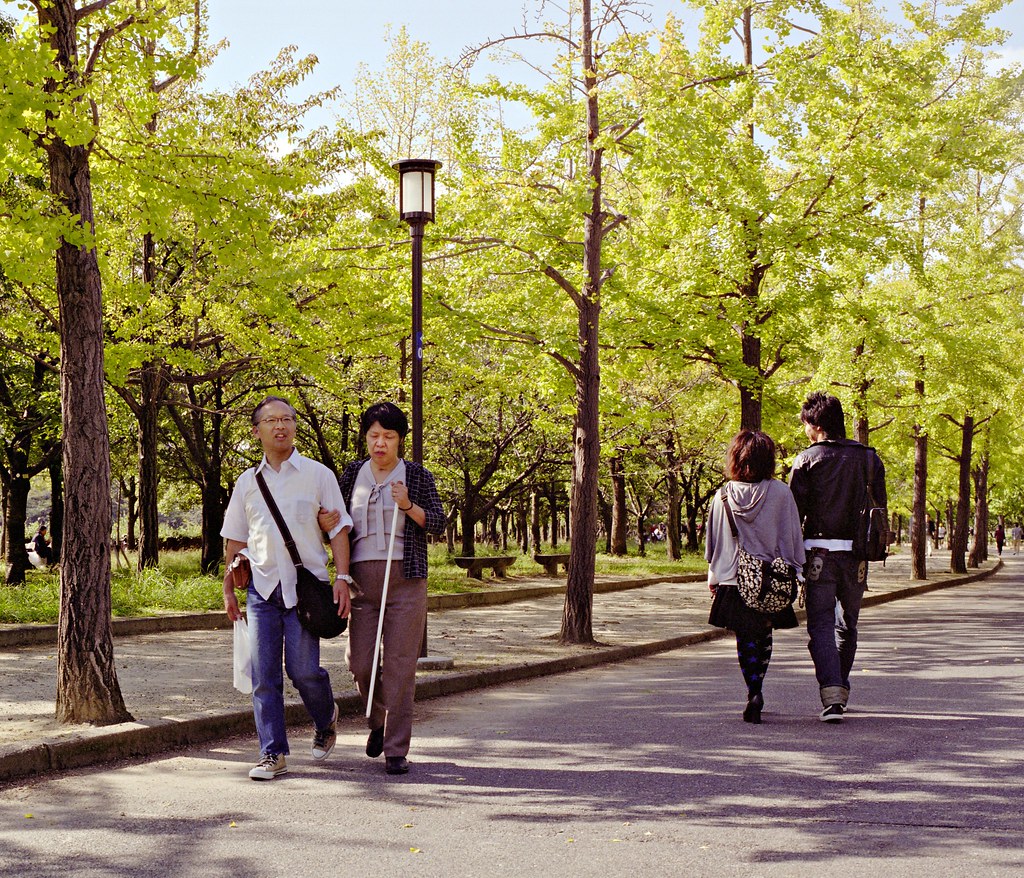
There's several tree-lined roads like this one circling the park and they're very popular among walkers, runners and cyclists alike. These are Ginkgo trees; the leaves will turn a bright, clear yellow in another week or three.
They shed small, round nuts that are pretty good dried and roasted, but they're like ball bearings on the road and a danger to anybody with bad balance or weak legs. I head that the city only plants male Ginkgo trees nowadays, since they don't shed seeds.
The outer northwestern castle ramparts and a guard building. The castle area may not look like much for European eyes accustomed to wading hip-deep in medieval architecture, but it's still a very pleasant park in the city center. Also, it's gratifying to see that not everything in this city is torn down and destroyed once it becomes old and worn.
Saxophone player practising along the northern moat (he's in the big moat picture above too, along with another musician playing the banjo). I love the jazz-inspired clothing.
Homes and apartments don't have a lot of heat insulation due to the mild climate, but that means they're not very soundproof either - thick rock-wool insulation and triple glazing stops sound as well as heat after all. Amateur musicians playing brass winds and other loud instruments are often unable to practice at home. So you frequently find people like this gentleman practising in public parks, along rivers, under motorways or wherever they can without disturbing anyone.
We took a walk around Osaka castle last weekend to enjoy the end of summer. Turns out we were not the only ones with that idea; the castle park was teeming with people. Really, this is the best time of year to enjoy this part of Japan.
This quartet was having an English-style picknick in the castle park. Apparently they don't believe in doing things halfway.
Part of the outer moat - really a tributary of Neyagawa river - surrounding the park, looking northeast where a cluster of business high-rises adds some big-city ambience. Panasonic has a neat four-story interior and home-improvement exhibition here; you can while away an hour or so browsing kitchens, bathrooms, flooring and light fixtures.
There's several tree-lined roads like this one circling the park and they're very popular among walkers, runners and cyclists alike. These are Ginkgo trees; the leaves will turn a bright, clear yellow in another week or three.
They shed small, round nuts that are pretty good dried and roasted, but they're like ball bearings on the road and a danger to anybody with bad balance or weak legs. I head that the city only plants male Ginkgo trees nowadays, since they don't shed seeds.
The outer northwestern castle ramparts and a guard building. The castle area may not look like much for European eyes accustomed to wading hip-deep in medieval architecture, but it's still a very pleasant park in the city center. Also, it's gratifying to see that not everything in this city is torn down and destroyed once it becomes old and worn.
Saxophone player practising along the northern moat (he's in the big moat picture above too, along with another musician playing the banjo). I love the jazz-inspired clothing.
Homes and apartments don't have a lot of heat insulation due to the mild climate, but that means they're not very soundproof either - thick rock-wool insulation and triple glazing stops sound as well as heat after all. Amateur musicians playing brass winds and other loud instruments are often unable to practice at home. So you frequently find people like this gentleman practising in public parks, along rivers, under motorways or wherever they can without disturbing anyone.
Thursday, September 17, 2009
Guardian Spirit of Relaxing Baths
Osaka has a "water festival" of sorts right about now. It's a series of events and happenings along the canals and rivers in the city, lasting up until the end of next month I believe. It's long overdue, I think; the city has a large waterfront and lots of waterways but most of it has been treated as something unwanted and ugly. It's traditionally been a part of the industrial infrastructure - a place to transport goods and dump waste - rather than a scenic feature of the city.
But for the past couple of years there's been work to clean up the water, add walkways and promenades and generally open up the water areas to the public rather than hiding them. Seems Osaka is finally coming around to the idea that canals right through the city might be something people will actually appreciate and enjoy. I hope this water event will be come an annual one.
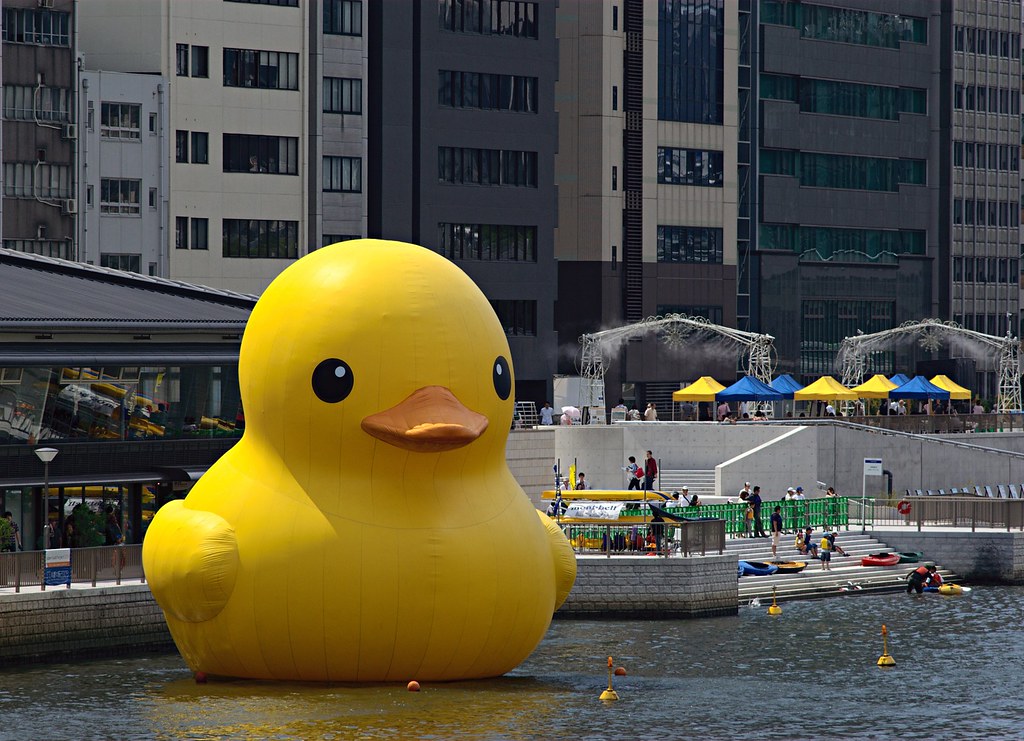
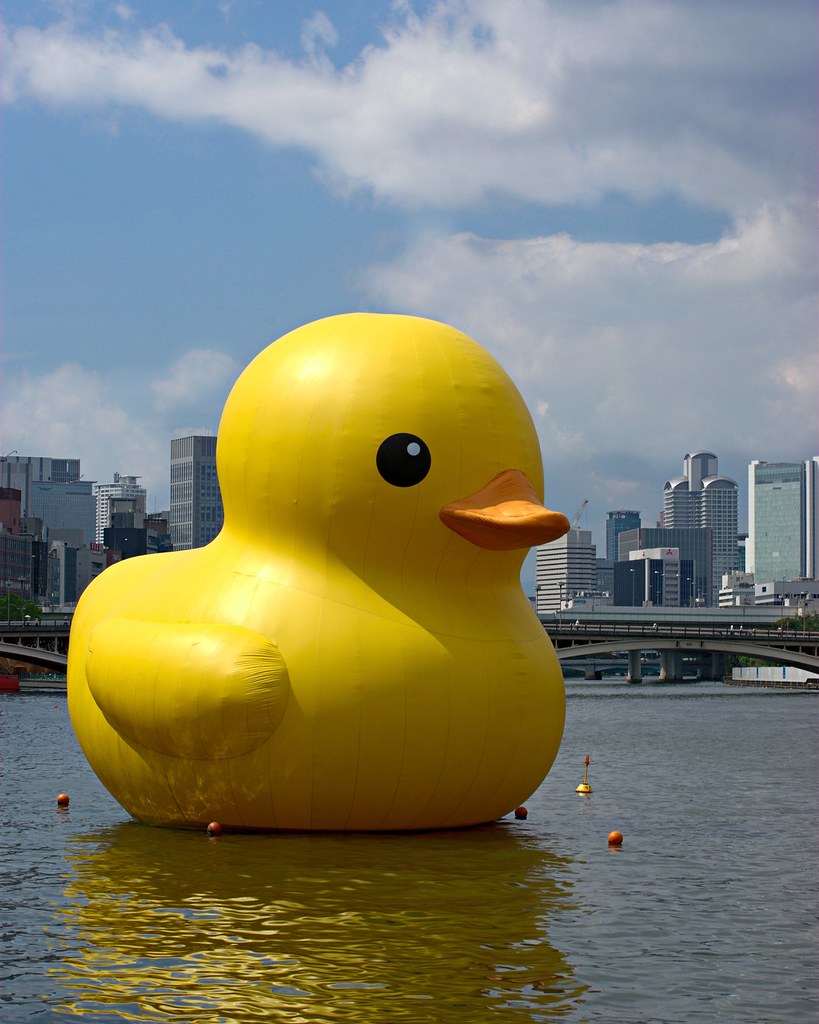
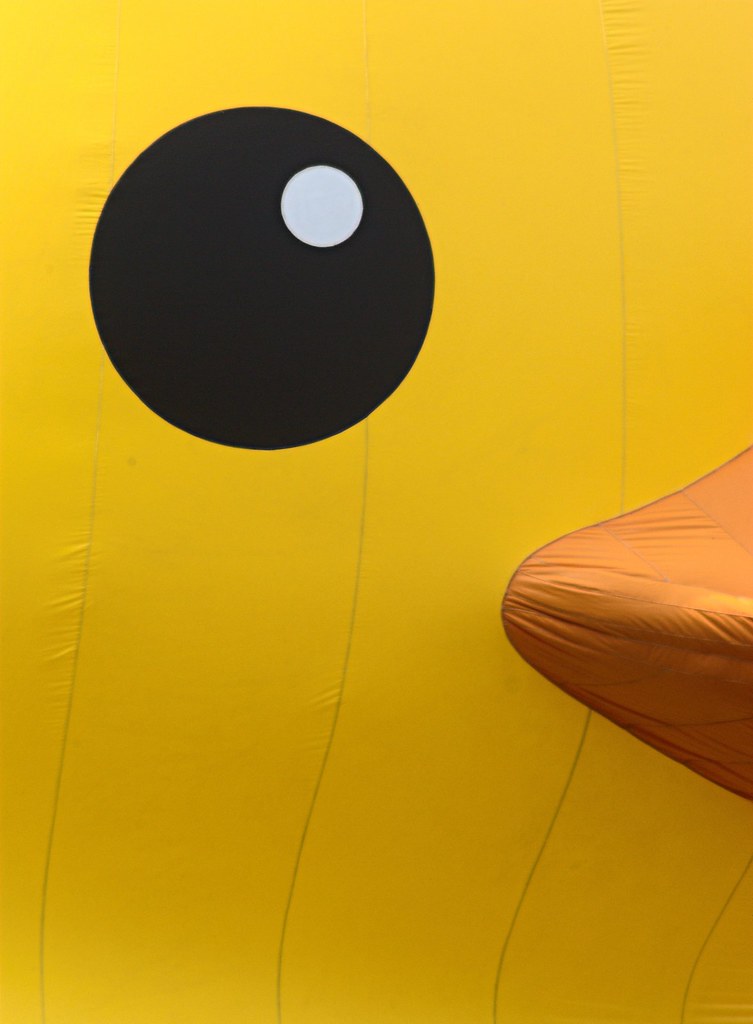
Anyway, one spectacular event is this art installation, a gigantic inflatable rubber duck. It's huge - over 9 meters tall - it's rubber, it's a duck. It's also surprisingly cute, like an enormous, benevolent Guardian Spirit looking out for mellow, unhurried bathers everywhere.
It's part of Dutch artist Florentijn Hofman's rubber duck project. In his words, "The Rubber Duck knows no frontiers, it doesn't discriminate people and doesn't have a political connotation." Which sounds OK to me.
It's really, well, "powerful" is the wrong word for something so I-want-to-take-you-home cute, but it can't help but to dominate the scene and loom over you in the friendliest possible way. It really is an engaging performance, surprisingly so as all it does is gently rock in the water.
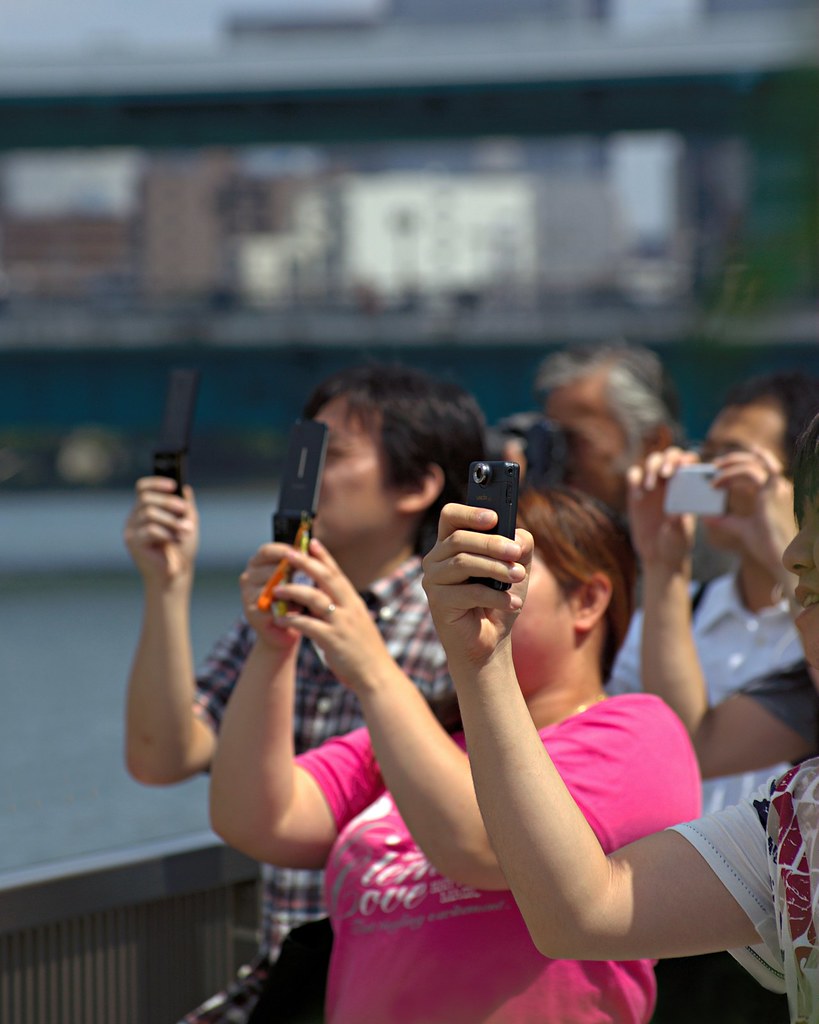
There were lots of people along the canal, on the Tenmabashi bridge and on the easternmost tip of Nakanoshima island (where there's another set of events event and exhibitions about clean water). And of course, everybody was taking pictures - most people with their cellphones of course, but a scattering of all kinds of cameras, even including two people with Diana+ cameras. I'm bringing a film camera too, next time.
Subscribe to:
Posts (Atom)