Showing posts with label flu. Show all posts

Friday, June 5, 2009

Mask Hysteria

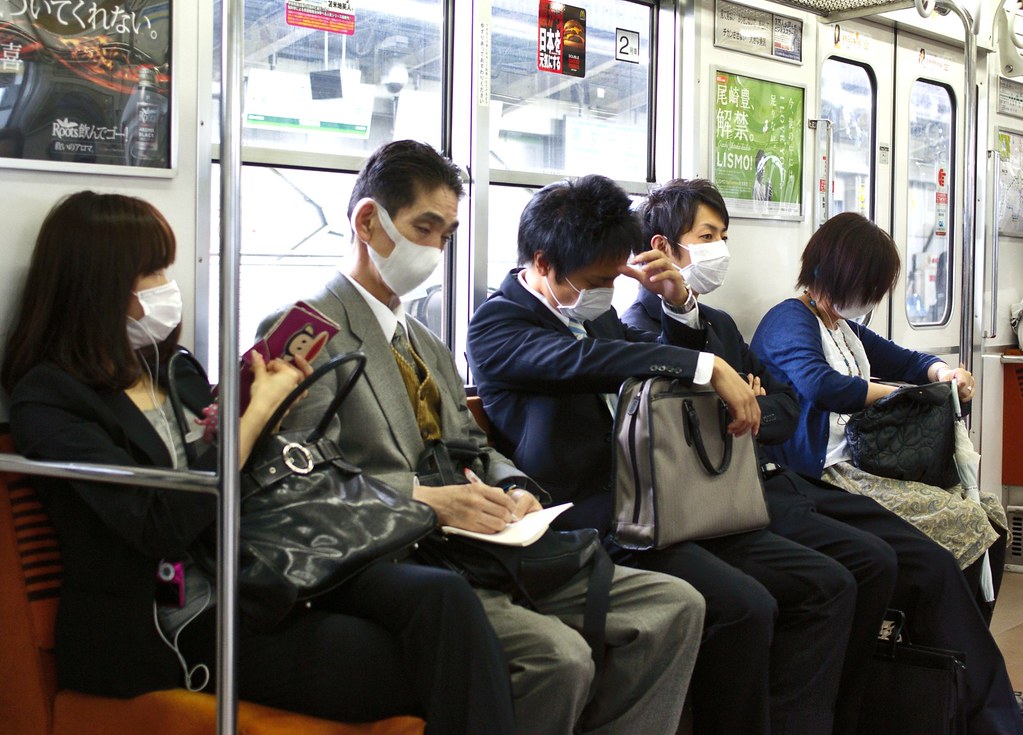
Mask

Kintetsu/Osaka subway, Monday two weeks ago.
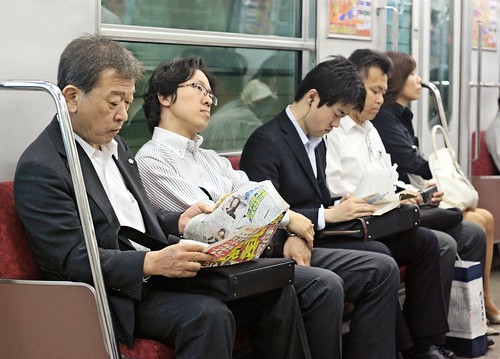

No Mask

Kintetsu/Osaka subway, Wednesday this week.


People here are nothing if not trend-conscious. The top picture was typical for my commute two weeks ago: most people (though far from all) wearing masks. Fast forward two weeks and to the bottom picture. Mask use is now almost back to the levels you'd have before the swine flu outbreak started. And this is despite the fact that the number of cases are still increasing - over 400 are infected in Japan now - and most infections are still in the Kobe-Osaka area.
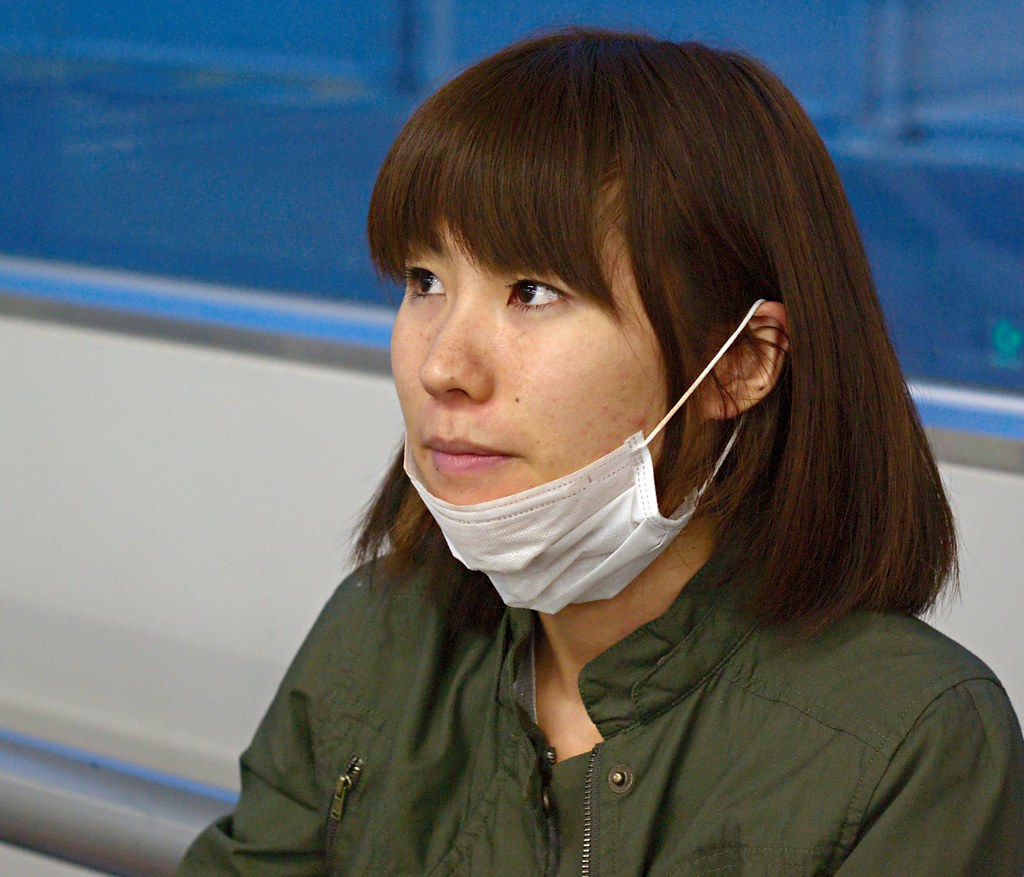
Not Helping
Not really helping much.

Why would that be? I can think of a few reasons. The most optimistic possibility is that people are interested and well informed and, given time, able to make good judgments based on the flow of conflicting news and opinion.

One major difference between mid-May and today is that the rate of infection and severity in Japan is becoming clearer. People are able to consider the risk and they're concluding that the danger to themselves is not great. Also, there's been several high-profile reports showing that a mask really isn't helpful. In one good televised experiment, only three of eight volunteers were actually protected by wearing an N95 (antiviral) mask, fitted by a medical professional. The other five had small facial features, uneven skin or other issues that prevented the mask from working properly. When they tested normal surgical masks on the volunteers, none of them got any protection whatsoever.
 
One reason people aren't wearing masks anymore could be that this message has been widely accepted: the risk of infection is low so there is little reason to panic, and a mask isn't really protecting you to any significant degree.
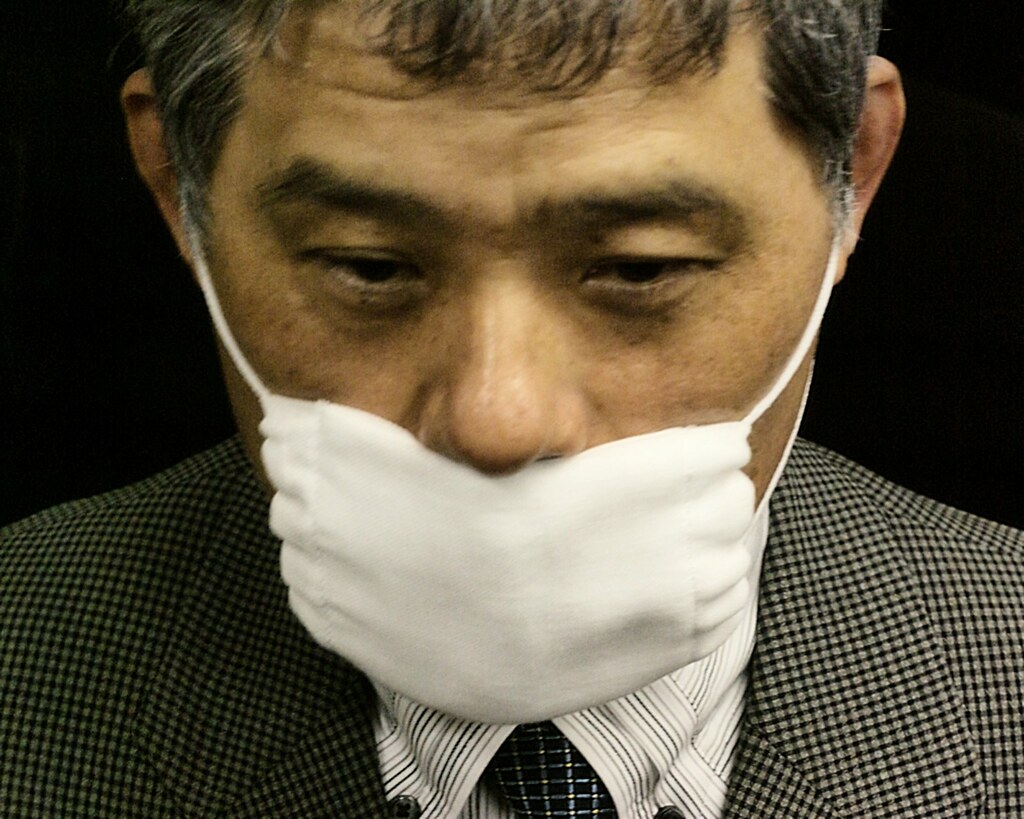
Not helping Either
Ummm, no.

A second, less optimistic possible reason might be that people in general just follow the crowd and have the collective attention span of an over-caffeinated hamster. When swine flu was the disaster news of the day, anxious people reflexively put on masks and risk-averse managers ordered masks for their employees. Other people followed them because, well, you do what your friends and coworkers do. By now the media has moved on and dropped the disaster headlines. And with no fear-mongering to stir people up they've soon tired of it and dropped the masks along with any interest in the story. It would explain all those people wearing masks in ways that could not possibly protect them in any way; they're a symbol of belonging and a token of support, nothing else.

People may have dropped the mask not because of any rational decision in other words, but because worrying about swine flu is just so last week. Masks are no longer trendy.
 
The real answer is of course more complicated. Some people follow the news and other information and make a deliberate decision. Other people follow the group consensus. That's not a bad strategy, by the way: when "everyone" starts doing something there's probably a good reason for it. It's probably initiated by people that know the issue well, whether fashion trendsetters or mask wearing. You delegate decisions you don't know enough about to the group, leaving you free to focus on your particular interests. "Follow the group" may sound spineless and passive, but call it crowdsourcing and it'll be hip and farsighted.

Whatever the dynamic, masks have largely disappeared again, as quickly as they first appeared. Vaccines are being developed, and as there's a real risk that swine flu follows earlier pandemics and comes back with a vengeance within the next couple of years. If the same group dynamic that made everyone don paper tissues can be used to get everyone vaccinated it can potentially save quite a few lives down the line.

Tuesday, May 19, 2009

Flu Closings Not Working As Expected

The number of infected is up to 191 people, and a lot of schools are closed for a week. Most infected people are high-school students so I guess it makes some kind of sense. Not all schools are closed, however; as the link above hints, jurisdiction over things like schools is an unholy mess of overlapping and conflicting responsibilities here. The Osaka prefecture, for instance, can order all schools in Osaka prefecture to close - except for those in Osaka city and Sakai city. They're the biggest cities and their schools are not under prefectural control. And private schools are private and can't just be ordered to close.

Of course, the incubation period of the virus seems to range from a day up to nine days, so a week-long break might really be too short to break the chain of transmission. Besides, it's high-school students we're talking about here; compulsive socializers, with a primal urge to see each other at any cost. The kind of people that would meet up during a hurricane just to show each other how cool and unimpressed they are. What are the chances that they simply meet each other out on the town instead, rendering the school closings ineffective? And true enough, the Osaka evening news featured a broadcast from Amerikamura where large numbers of middle- and high-school students have gathered today to celebrate a few days off school.

Amerikamura

Street corner in Amerikamura, just a few minutes from Namba in Osaka:1. The whole area is full of fashion shops of the more embarrassingly juvenile kind - faux-reggae clothes, belt buckles with skulls, t-shirts with pot leaf patterns, that kind of stuff. Teens are drawn to the place like moths to a flame.


Day care centers are also closing. Which impacts young mothers that work part- or full-time. They can no longer go to work since they need to stay home with their kid. According to a television report this morning, many such young parents gather at each others home. That way the kids have friends to play with, and the parents can help each other out so some can go grocery shopping (or even go to work part time) while the others watch the children.

Great idea - except that it defeats the whole purpose of closing the day care centers in the first place. And instead of having the kids watched by trained nursery staff that knows to look for early signs of infection and knows what to do if they see it, you have parents that of course really have little clue about what to do.

To their credit, a number of people have begun speaking up about this current hysteria, and some of the media is giving them a voice. Some doctors have rightly pointed out that many of the current measures don't really work. All they do is disrupt people's lives and incite panic. Our Fearless Leader, Osaka Governor Hashimoto (who seems to be putting on some weight; might want to go easy on the takoyaki there) has called for a step-down on the pandemic response and start treating it more like a normal flu outbreak. The radical measures are out of proportion to the current severity and spread of the disease. This is already happening to some extent. For instance, Osaka city now disregards the guidelines for a pandemic that requires infected people to be treated at hospitals. As most current cases are very mild, people are allowed to recuperate at home if they wish. This alleviates the pressure on the health care system and it's more comfortable for the patient.

So cooler heads may indeed prevail. But this is a country that will panic over the most trivial health issue, so I fully expect the whole nation to have a field day with this over the next month or so.

--

#1 If this blog were an actual news outlet I'd have to point out that this is archive footage, not taken today. But it isn't so I won't.