Thursday, April 29, 2010

Spring is over, Golden Week is here

Spring ends and summer finally begins. Golden Week is coming up along with several days of good weather. We're going on an overnight trip to Toba in Mie prefecture in eastern Kansai. It's the home of cultured pearls and pearl diving, and there's a good aquarium too if we have time. Should be fun.

I haven't really posted pictures in a while, so here's a selection from this spring.

The Wait

Sakaisuji Honmachi station, and a fellow commuter.


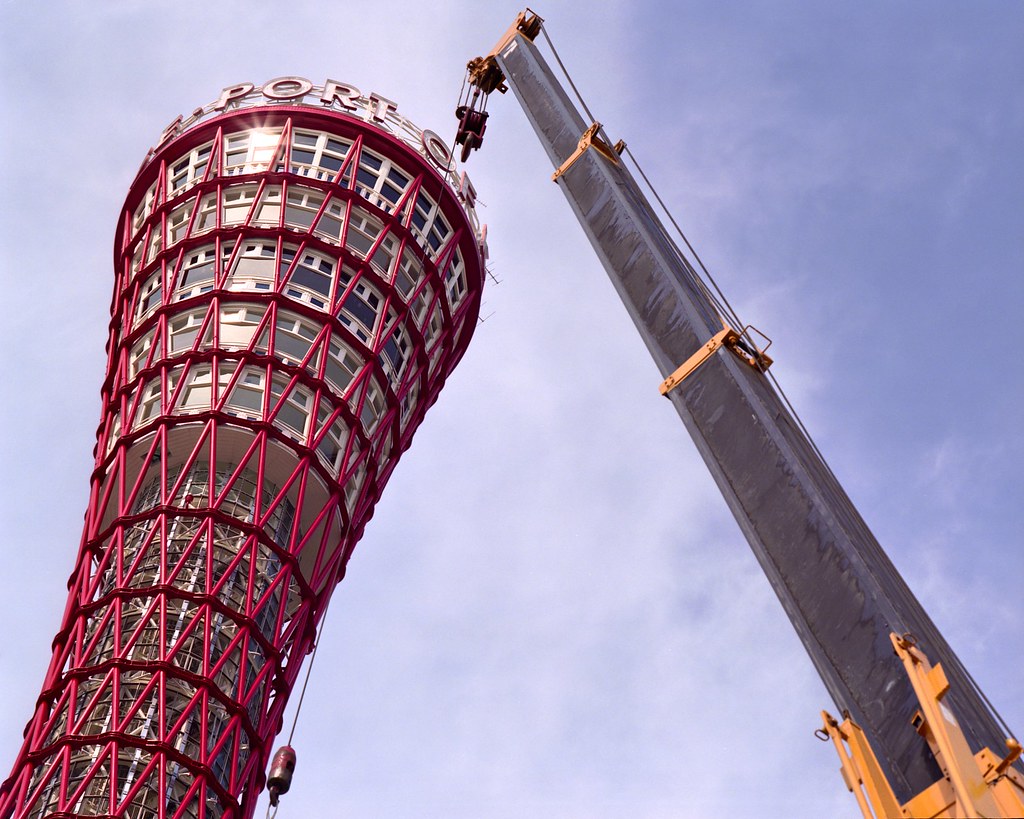
Triton

Hazy day along the Kobe waterfront. In the background Kobe Port Tower covered in scaffolding while it's being repainted.


Port Tower

The scaffolding is removed a few weeks later, and the freshly-painted tower re-emerges.


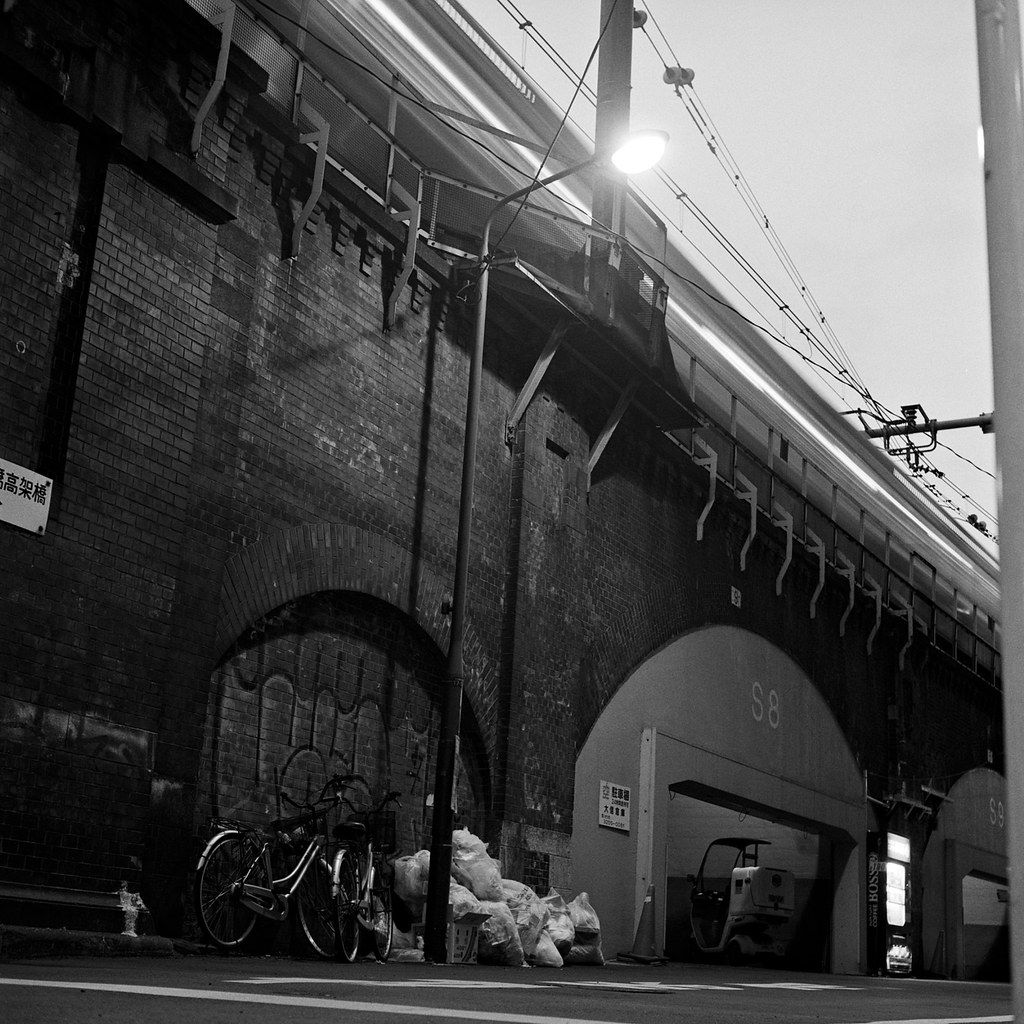
Kanda

I've been doing a fair bit of work-related travel. Here a railway bridge in Kanda, Tokyo.


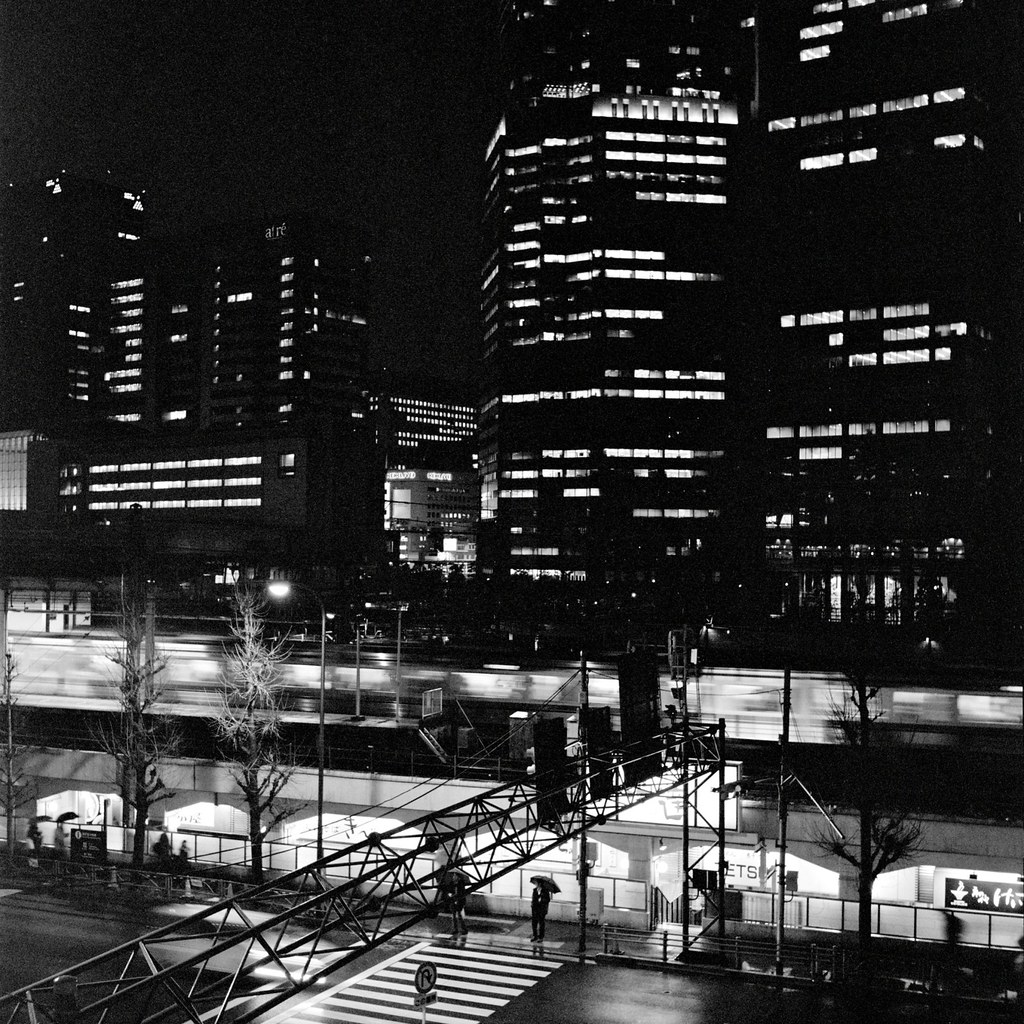
Shinagawa

Shinagawa station, Tokyo.


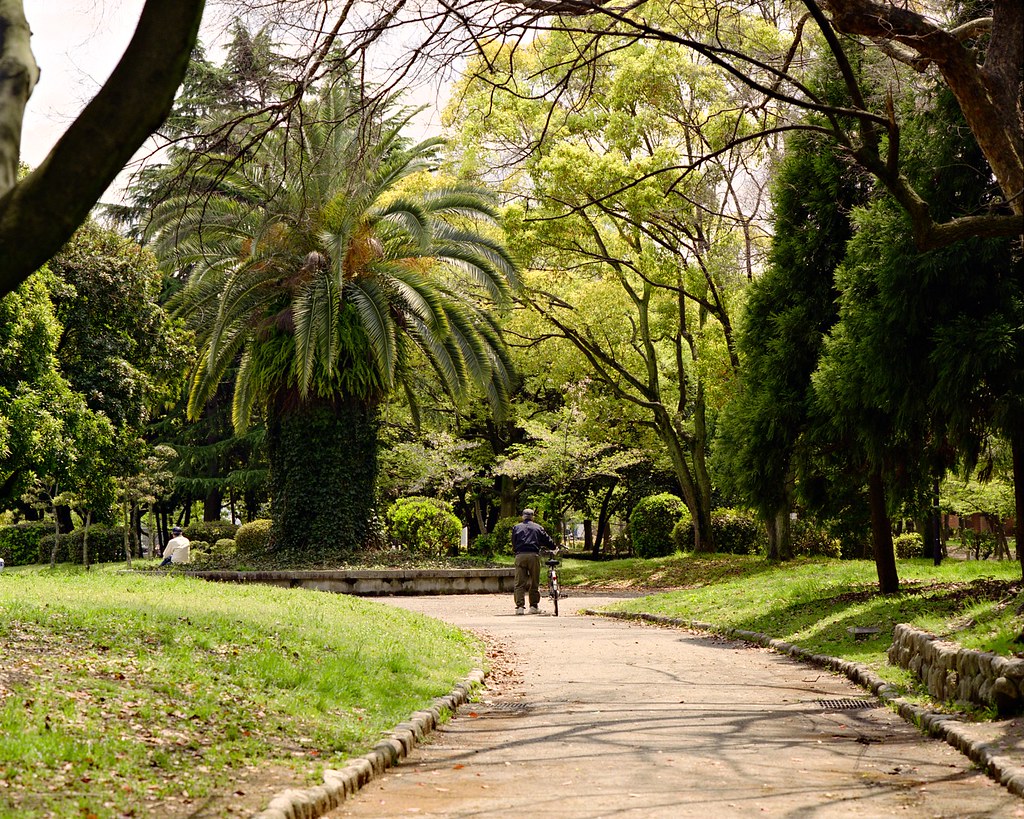
Nagai Park

Osaka has a number of parks that are great to visit during spring and summer. Here a cosy area in Nagai park, south Osaka.


Sakura

Pink, late-blooming cherry blossoms in Nagai, Osaka.

Tuesday, April 27, 2010

Need a New Computer

My laptop computer - a Let's Note R6 from Panasonic - is breaking down on me. It's small, light and rugged, and I use it all day long, almost every day. Simulations and games are right out of course, but it's good enough for programming, writing and things like that. My previous machine - the Panasonic R3 - lasted me for four years of heavy daily use, by which time the screen was growing dim and red, the battery life was down to half an hour and you could no longer reliably type 'P', return or backspace1. The R6 is a little less than three years old.

It started about six months ago: when I plugged in an external monitor, the screen would go blank, forcing me to reset the screen. Later, it would not only go blank, but actually crash the computer; if I want to use an external screen I now need to reboot with the screen attached2. There's also been occasional graphics glitches - disappearing lines, garbled text and the like. Some software bug, I thought, and perhaps some electrical problem with the external monitor connector.

But about two weeks ago the screen started to freeze randomly, once or twice a day. The static screen image is visible, but frozen. Sometimes the mouse pointer will still move. Sometimes the screen is completely frozen. A few times I've gotten an immediate reset and reboot. There is nothing at all in the log; as far as the OS and applications are concerned the graphics system is fine. I can log in remotely from another computer and all software is still obviously working and displaying stuff. Restarting X does not help - the screen image is frozen no matter what you do. It seems pretty clear to me now that the graphics hardware on this machine is dying. The machine runs pretty hot, so I guess thermal damage could be the culprit.

This is very inconvenient. While I don't use this machine for simulations, I do use it for just about everything else. Whenever the screen freezes I need to reboot, and lose the last bit of work I've done. Worse, it completely derails my train of thought. The computer desktop is my short-term memory, with all the open documents reminding me of what I'm doing. After a reboot it takes a long while to get back up to speed again, and some stuff, like writing blog posts, I may completely forget about for days. I need a new computer.

As it turns out, this is a pretty bad time for the computer to break. I use it a lot for work, but the project doesn't have a budget for big-ticket items at the moment, so I'll have buy the new machine myself. The question is which one. My current machine is small - 10.4" screen, and just under one kilo - with decent memory and ok speed. The battery was rated at 7.5 hours, which was about five hours in practice when new (it's down to 3.5h or so now). I'd like to keep the low weight and good battery life, but this time go for a wide-screen model. That would give a bit of much-needed extra screen space without making the computer much larger. Whatever I get needs to be compatible with Ubuntu Linux.

I'm inclined to get another Panasonic, since they're rugged and good quality (my problem notwidstanding). Perhaps an N9; it's the wide-screen version of my current machine but it's a fair bit faster, and has as good or better battery life. It'd be a little heavier at 1.26 kg, but not so much that I'd be bothered by it. The Let's Note series are rugged - they handle drops, falls and heavy weights, and the keyboard is water/coffee-proof. It's got good wireless connectivity with Wifi, Wimax and Bluetooth; there's both analog and hdmi video ports, and an SD-card reader.

Someone suggested a Thinkpad X201 as an alternative. It's about the same type as the Panasonic and it'd be a bit cheaper - though not by that much once you configure it similarly. It has a trackpoint in addition to the trackpad, and of course it's black, not painted silver. On the downside, it'd be heavier, have shorter battery life and not be nearly as rugged. I'd also feel better about buying a machine designed and assembled locally here in Osaka rather than get an import brand. And of course, I know that Ubuntu works fine on the Panasonic; I'm not as certain about the Thinkpad.

Whichever I get, I'm getting it soon. It's distracting - exhausting - to mentally look over your shoulder as you work for any signs of the computer freezing up on you. It's scary in a way, to be so reliant on a piece of equipment.

--
#1 Backspace and Enter I understand, but why 'P'? I have no idea.


#2 Last time this happened when I was giving a short presentation at a project meeting in Tokyo. A good reminder not to be too dependent on your presentation software.

Friday, April 23, 2010

Moon8 - Dark Side of the Moon

So, you're a Pink Floyd fan? You have a soft spot in your heart for obsolete computers and video games? You appreciate slightly out-of-tune, dinky sounding electronic music? Then you need look no further than Moon8, where you can find the entire Dark Side of the Moon album remade using the NES (the original Nintendo console) sound hardware.

It's surprisingly good, and close in spirit to the original. I'm listening to "Money" as I write - using earphones, naturally; I don't feel like being thrown out of the office by irate coworkers.

Wednesday, April 21, 2010

Clocks and Ketamine

So today we had a meeting in the afternoon. I had about an hour and a half until I was leaving for home, so I sat down to read a few research papers. The first paper reported on a set of physiological experiments, and as usual they listed the actual medical procedure used in some detail. They mentioned that they'd used "ketamine" as a prelude the general anaesthesia. Ketamine tends to show up quite often in this kind of reports, and I suddenly realized I didn't really know anything about the drug.

Wikipedia to the rescue. I look up Ketamine, and it turns out to be quite interesting; it's an analgesic - a pain killer - but also causes "dissociative analgesia", which I also had to look up. That lead me to look up analgesia and anaesthesia to become clear on the difference (mainly, analgesia is about blocking the sense of pain specifically while anaesthesia is general loss of awareness).

The history section on anaesthesia is very interesting. It mentioned a Japanese physician that had performed a mastectomy in 1804 with general anaesthesia, mixing traditional Chinese knowledge and Western know-how acquired through something called rangaku. This turned out to be the dissemination of Western knowledge and items to Japan through the Dutch merchants in Nagasaki during sakoku the period of self-imposed isolation between 1641 and 1853. As it turns out, the isolation was not total and a fair amount of medical, technical and scientific knowledge and devices were allowed into the country; even to the point where there were speciality stores for Western goods in the major cities.

One popular item was lantern clocks, an early, and not very accurate clock design. Early clocks used verge escapements, which had the drawback that they slowed as the spring wound down. A much better design is the anchor escapement, a modern variant of which is still used in pendulum clocks. The lever escapement is similarly used in mechanical wristwatches and clocks today, and ...

... and by now it was well and truly time for me to go home. The paper is still unread, but my mind is filled with a fresh supply of odd knowledge. Is Wikipedia the single most significant source of collective knowledge or the greatest productivity killer mankind has known? I suspect it can't be one without the other.

Tuesday, April 20, 2010

Kansai Area Airport Trouble

Air traffic troubles have been in the news a lot recently. The bankrupt island nation of Iceland just got themselves a volcanic eruption, with a dense plume of volcanic ash that's grounded most north-European flights for days (best comment: "The last wish of the Icelandic economy was to have its ashes spread over Europe").

Here in Kansai the problems are more chronic in nature. We have an airport congestion problem - not congestion of airplanes, mind you, but of airports. There's three main airports around here:

Itami

Itami airport. Major noise pollution issues, and not a whole lot of room to grow.

  • Itami airport, also called Osaka International Airport, is an old, long-established airport, so construction is long-since paid off. And it's just north of Osaka city, right between Osaka and Kobe, close to both major highways and several train lines, so it's very convenient for a lot of people.

    But that's the problem. When the airport was established some seventy years ago the area was still largely rural. Today the area is densely populated, and the airport is crammed in among apartment buildings, offices and factories. Most approaches to the airport pass right over some of the densest areas in the city1, so noise, pollution and safety concerns set hard limits on the number and type of aircraft that can use the airport. As a practical matter the airport could not expand to accommodate more air traffic anyhow since there's simply no more space available.

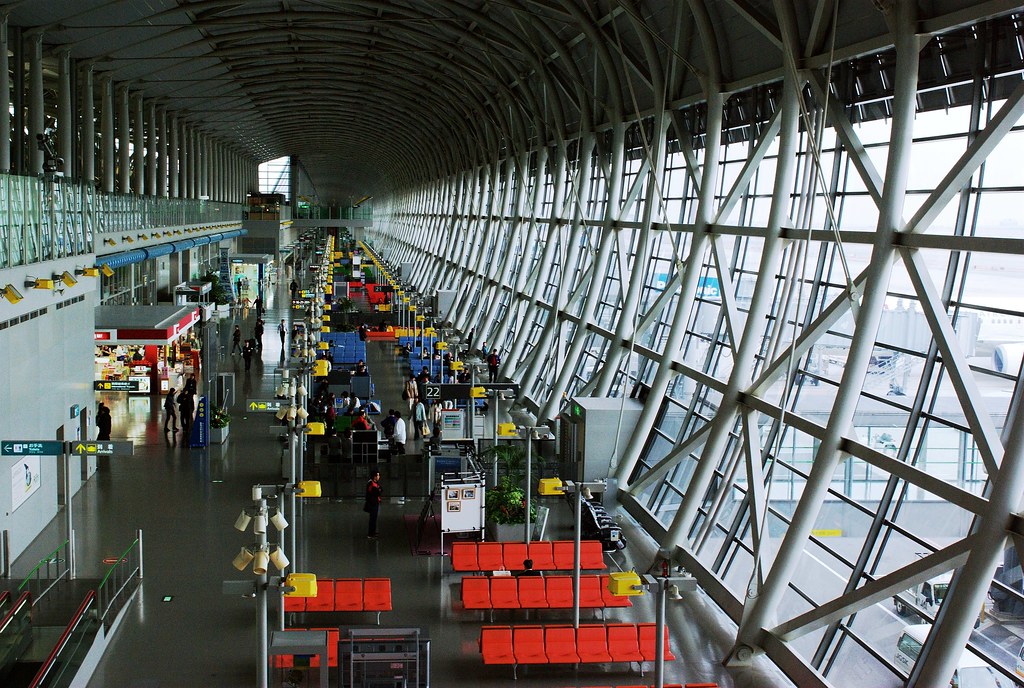
Kansai Airport

Kansai Airport departure hall. Spacious, well-designed airport (consistently highly ranked) with plenty of room to grow. Unfortunately, it's saddled with a very heavy debt load which drives up landing and concession fees.

  • Kansai Airport opened some fifteen years ago to offload the straining Itami. It's on an artificial island in the Osaka bay, so noise, safety and local pollution is not a problem. It can accommodate more and larger aircraft than Itami, and the terminal and other buildings are modern and can handle large passenger inflows. And of course, would the need ever arise, it's always possible to expand the island with a third runway.

    But, the site, well south of Osaka and the main population centers, is a little off for a lot of Kansai residents (I've heard the site was chosen in part as a precondition for southern cities pitching in for the construction). An off-shore site close to Itami around the Osaka-Hyogo border would perhaps have been better. And the construction was very expensive, so the airport is saddled with huge debts. In order to cover the debt payments the aircraft landing fees are very high, which discourages air companies from using the airport and increasing the ticket cost. As a result it has been underutilized even as Itami is full.

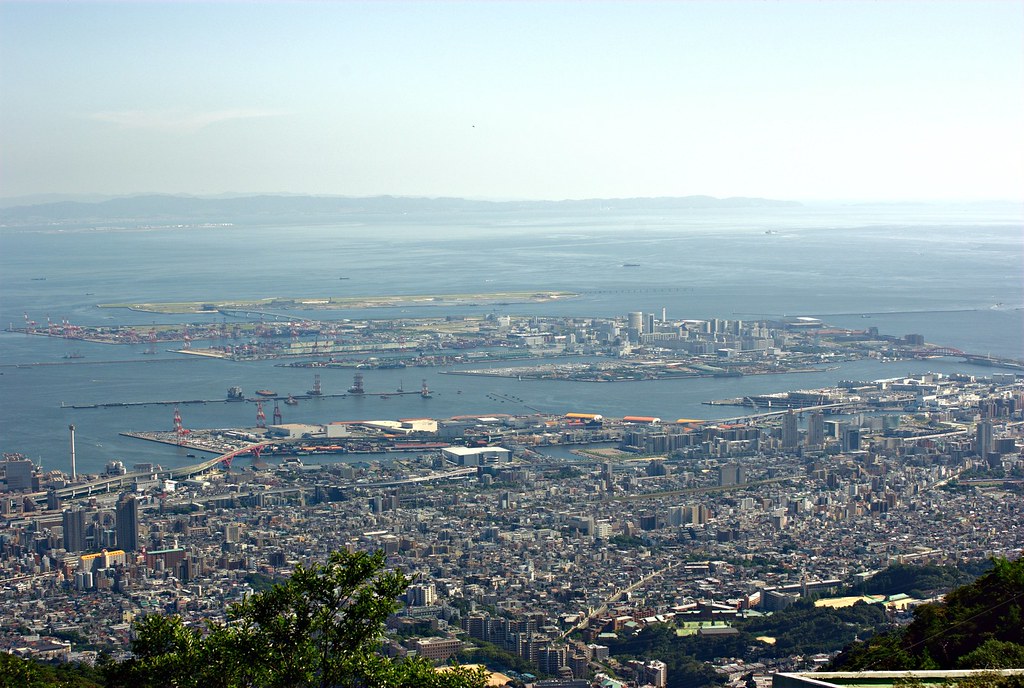
Port Island

Kobe airport. Actually, it's Kobe, followed by Port Island; Kobe airport is the greenish strip of land at the back, right up against Seto inland sea.

  • Kobe Airport is one of those ideas that probably seemed good at the time. The site was first considered for Kansai airport, but Kobe opposed the idea and Kansai airport ended up south of Osaka instead. After the Hanshin earthquake the idea of an off-shore airport was revived and approved and the airport opened a few years ago.

    However, it is small, inconveniently located and usage projections where grossly optimistic. It is underutilized already, and JAL - in effective bankruptcy - is cutting all its routes to Kobe, leaving the airport with only half the current flights. It is, in short, one of those recently opened regional airports that were backed by inflated traffic projections and a distorted subsidy system, hobbled by a lack of demand and large loans and facing a very uncertain future2.

With uneven capacity use and a long economic slump, these three airports - and their respective political champions - have been fighting over the air travel business in the region, with all three losing out as a result. The discord has prevented the region from speaking with one voice on this on the national level. Negotiations with the central government on modifying the debt burden on Kansai airport has gone nowhere, for instance, since the region hasn't been able to present a coherent view on what it wants to see happen to the place. And backers of Tokyo's airport system wants to direct all long-range international travel through Haneda and Narita in Tokyo rather than Kansai Airport3; they've been able to push that vision in part because of the local discord in Kansai.

But last week, the Osaka and Hyogo governors among others held a regional conference to resolve the problem. They managed to produce a vague, tentative agreement on the future of Kansai air travel with lots of unanswered questions and unspecified details. This may sound bad, but it's a major step forward from the sharp disagreements that have hobbled the issue up until now.

The basic idea is to bring all three airports under the same management. Kansai airport would become the main hub for the area - not surprising of course as that's the only one with the required capacity. Itami will be focusing on business flights and small-aircraft aviation, which would relieve both noise and other environmental problems around the airport while still keeping it open as a general airport. Kobe would become a supporting airfield to Kansai - the airports are far away over land, but the ferry across takes less than half an hour, much closer than, say, Kansai and Itami or Haneda and Narita for that matter.

There's a lot of important unanswered questions here, beginning with the crippling debt level of Kansai airport, but for the first time the region is all on the same page on this issue. Up until now, the national government has been able to point at the internal divisions in Kansai as an excuse to avoid having to deal with it; at last that stumbling block seems to be removed. Now, of course, the question is to what degree there's a coherent national government to negotiate with any more, but that's a problem for another day.

--

#1 A night landing at Itami coming in from the south is spectacular. You pass over all of central and north Osaka at low altitude, with the sea of city lights streaming past just below, and the high-rises of Umeda passing by close enough you could almost touch them.


#1 It doesn't help, as last Thursday's newspaper pointed out, that airport management often is split, with the public stuck with the capital intensive, money losing core elements of these airports, while the lucrative parts such as parking management has been given away to private businesses in return for amakudari positions.

If the public - that is we, you and I - has to take responsibility for the money-losing side, we should get the rights for the profitable parts too. Nobody should be able to cherry-pick just the money-making bits; if a business wants a part of the airport business then they should be on the hook for their share of the expenses that enable that business in the first case.


#3 I doubt that'd work though. If Haneda and Narita would become the only gateways for transcontinental flights, it'd be faster and more convenient to take the short hop to Incheon in South Korea and fly from there instead.

Besides, it doesn't sound very prudent to concentrate all international traffic into a single area where one good typhoon or snowstorm could disable every flight.

Friday, April 16, 2010

Ponder Me This...

Did you ever wonder why a piece of bread with a slice of cheese and tomato is a perfectly normal, healthy breakfast...

Toast

Bread, cheese, tomato. Good breakfast.


..but the same bread, with the same cheese and the same tomato becomes an unhealthy, fatty indulgence when you grill the thing?

Grilled

Bread, cheese, tomato. Grilled. Bad breakfast.


Our relation to food just isn't very rational I guess.

Sunday, April 11, 2010

Up In The Air

Beautiful spring weather yesterday, so we went for a walk to Namba and the Toho cinema complex to see "Up in the air" with George Clooney.

Bingham is a "career consultant" (he fires people for a living) that spends most days of the year traveling and dreams of hitting the near-mythical ten million frequent-flier mile mark. We follow him as he meets a kindred soul on the road and deals with changes at work, both of which threaten his insular, rootless existence.

The movie takes a light tone and sometimes borders on comedy. The characters are all likeable and easy to sympathize with. But it is a fairly dark story at heart, and the main character is one of the most tragic figures I have seen outside of a Bergman movie. This is an adaptation of a book, and I get the impression that the book is both deeper - we get only hints of what must be substantial subplots - and darker than the movie. It's probably worth checking out.

A fun, engaging movie, it has also disabused me of any remaining notion I might have had about business travel being attractive or romantic.