Monday, August 31, 2009

Election Short Notes

Here's some short notes from the election:

* The DPJ had a good night, ending up with 308 seats. Not enough for a supermajority, but that matters little; they were pledged to govern in coalition before the election and they need the support of their coalition partners in the upper house. Besides, for the past couple of years the LDP has amply demonstrated how little use the supermajority override has in practice.

* The JCP (the Communist party) and the SDPJ (Social Democrats) stayed pat with 9 and 7 seats respectively. No idea how their support has changed as I haven't found any final vote percentages yet. Still, given that the current system disfafours small parties, they should probably be pleased they didn't lose any seats.

* LDP had a bad night, with 119 seats, down from 300. Not as bad as it could have been of course; they kept well above the psychological disaster zone of 100 seats. And the system exaggerates electoral shifts, so the support drop was not as large as the seat loss may indicate. I'll follow up on that once I find vote percentages.

* New Komeito did something I frankly didn't believe them capable of: losing almost a third of their seats in one go, inkluding that of party president Ota. They dropped from 31 seats to 21, losing every single single-seat district they had (eight seats before the election), retaining only proportional seats. They have an incredibly loyal, stable supporter core of Soka Gakkai members that will literally stay with the party until death. But it appears that the core is smaller than many people have been led to believe, and to me at least the party now looks a lot more vulnerable than it seemed before the election.

* The raving loons of the Happiness Realization party, political wing of the "Happiness Science" cult, didn't manage to do anything. They didn't come close anywhere; the most I've found was one guy in Hyogo that got about 10% of the vote, but typically their candidates got no more than 2%-4% of the local vote and often below one percent. They usually had 1/5 to 1/10 of the votes of the next to last finisher. Even independents of the "My Indignant Letters to City Hall are Ignored - I Will Run In the Election And Show Them All!"-variety frequently outpolled them. That said, I'm not sanguine about religious cults entering politics. The deserve being watched carefully and their insane beliefs called out, not just laughed at1.

* Aso will resign, as will most of the LDP party leadership. Several faction heads and other top members have lost their seats. Koike Yuriko lost, which is especially interesting as she was talked about as successor to Aso. Won't be easy when she lost her district. Noda Seiko, another high-profile female LDP member also lost her seat. The LDP seems to be postponing their party leader election (meant to be held at the end of September).

This makes it very clear just what kind of a pickle the LDP is in right now. Chains of command, orders of succession, carefully balanced power centers and webs of favours and counterfavours are all disrupted by the election. Their own decision structures are no longer fully in place any more and my guess it will take a good deal of time (and perhaps a great deal of infighting) simply to realign the party organization to the new reality of being a 100-seat opposition party and be able to make decisions as a unified body again. They need time to come to terms with not being in power, they need time to elect a new leader, to analyze the defeat and to come up with a constructive new set of policies.

This is time they really don't have. The next upper house election is next year (yay, we get to do this - speaker cars and everythng - all over again!), and they will need to present themselves as chasticed, reformed and unified of purpose if they don't want another beating at the polls. And remember, the upper house election is for half the house each time - the half up for election is weighing even between LDP/New Komeito and the other parties while the other half (elected in 2007) is already solidly DPJ. It means that LDP would need a clear majority win to get control over the upper house; drawing even would not do. Even a small slip would give sole control to the DPJ. And Komeito is clearly no longer in a position to pull their full weight in the next election either.

--

#1 This certainly applies for New Komeito/Soka Gakkai, Christian Democrat parties and others as well.

Sunday, August 30, 2009

DPJ is the winner

Right now we have 224 confirmed seats for DPJ against 49 for the LDP. The combined opposition parties are within a few seats of a majority. It's completely clear that the DPJ will be well over the 240 seats they need for a simple majority, and it seems likely that they'll break the 300 seat barrier, completely reversing the LDP landslide in 2005. A few people are speculating that they may squeeze up to the 320 seats needed for a supermajority.

The numbers don't really matter; as far as the overall result is concerned the election is over, and it's a DPJ landslide. The fallout is already beginning: Aso is reportedly (and not surprisingly) resigning as LDP leader, for instance. Ota, leader for New Komeito may lose his district against a DPJ newcomer (he'll still get in on the proportional block of course). If something really surprising happens before we go to bed I'll post it, but otherwise I'll leave the shot-by-shot coverage to Observing Japan and Our Man in Abiko

Hatoyama

New Japanese Prime Minister Yukio Hatoyama with his wife around 1970.

Remember, kids, posting pictures of yourself on Facebook may be all fun and games, but it may not seem like such a good idea thirty years from now.

Election Day

After years of coy teasing and feeling each other up, the country and the parties finally embraced for election in late July. The parties' long dormant election machinery quickly rose to the occasion and thrust themselves into the public view.

For the past month the parties have been mumbling sweet nothings to the electorate through their speaker cars and their volunteers have pounded out posters and pamphlets, thrusting them into the hands of an eager public. Today the long campaign is finally climaxing in an orgiastic burst of votes flowing out all over the country.

The worn-out campaigners may well be excused if they lean back and relax for a bit tomorrow, perhaps with a cigarette.

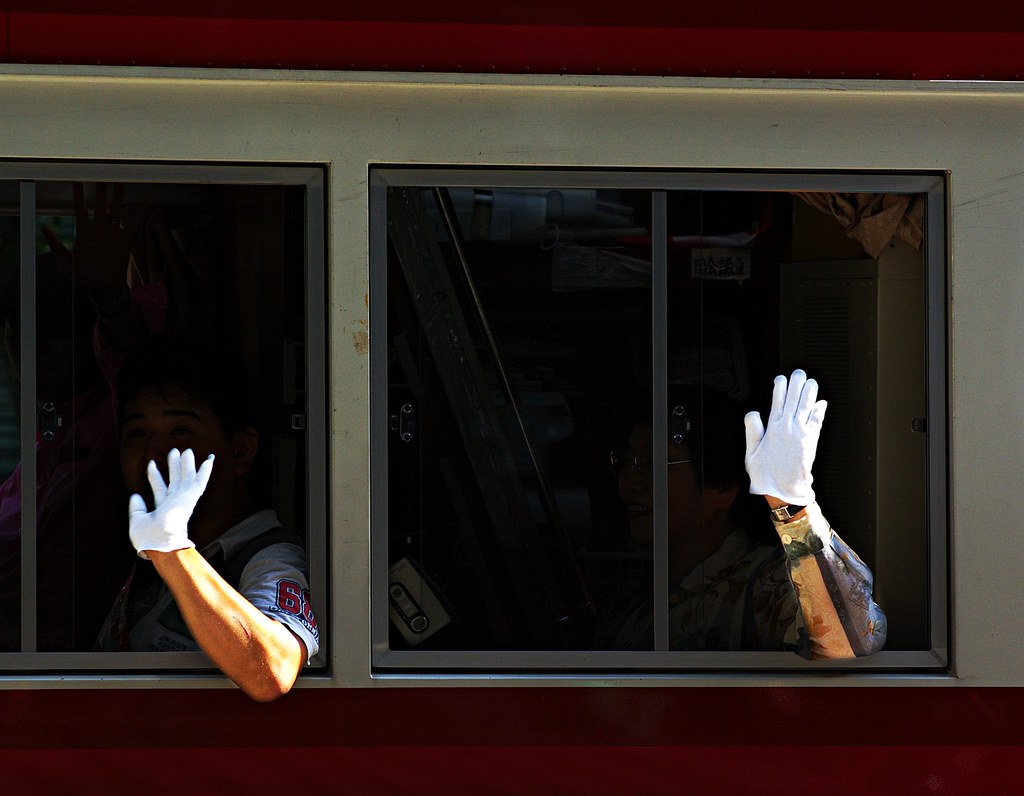
See the hand, Follow the hand

See the hand. Follow the hand. The hand knows.


So what will be born out of this process? It looks like my prediction may have been overly cautious. To my amazement the DPJ did not manage a single self-inflicted disaster, and looks set to achieve a majority. People are even speculating on the (remote) possibility of them achieving a 2/3rds majority on their own. The LDP seems to fall hard, and even the party leadership has had to stay and campaign in their own districts rather than travel and help other members.

Some credit for this outcome must be given to the different campaigns. Tobias Harris points out that the DPJ has run a completely positive campaign, talking only about what they want to achieve and largely ignoring the LDP. The LDP in turn has run a largely negative campaign, and mostly talked about, well, what the DPJ wants to achieve. It's a sad indictment on a party when it's best election efforts only manages to reinforce their opponents message.

We're not going to worry too much about the election here. The weather is good - a little hazy but pleasantly cool - so we'll have lunch at a Spanish restaurant near Midosuji, then take a walk around town. I'll drag my Pentax 67 along, see if I can find something interesting election-related to shoot, and we'll shop for tonight's dinner. Tomorrow is a workday so we're off to bed early; we'll see the election results once we get up tomorrow morning.

If you want to look at the election in much more detail, check out Harris' blog, Observing Japan for a lot of background and analysis. stippy.com has an idiosynchratic cheat sheet of sorts for people that want to follow along in detail. Transpacific Radio (which, to be honest, I have never listened to) will hold a live webcast.

The Mainichi Shinbun has an election site, as does the Asahi Shinbun and Yomiuri Shinbun. I have no idea which one is better; they all get fed the same data though so it probably doesn't matter.

Kyodo news agency has an English-language site with a neat, graphical at-a-glance illustration for those who can't be bothered with actual words or numbers.

I guess there won't be any actual data to look at until after 20:00 when the polls close. If anyone knows of a better source than these to get a good overview of the election, feel free to drop a note in the comments.

Friday, August 28, 2009

Posters - The Last Appeal

The election is just two days away. As the voters walk through town to the polling stations the parties have one final chance to appeal, through the wordless faces of the party leaders pleading with the electorate from their campaign posters. Ignore the words on these campaign posters for the moment and let's read what their faces seem to be saying us.

DPJ Poster

DPJ, Yukio Hatoyama: "We care. We care about you and we're concerned about you. We're concerned and caring. You can see my concern and my care right here, in my eyes. Look into my eyes, and see my concern, and my care, deep in my eyes. Come close and look deep into my eyes. Look deeper, deeeper. You are feeling sleeepyy, so sleeepy. You see nothing but my eyes. You feel relaxed and happy and care only about my eyes. You will vote DPJ on Sunday. You will vote DPJ ..."


Komeito Poster

New Komeito, Akihiro Ota: "Come Sunday I know you'll vote Komeito, right? 'Cause you care about fairness, right? I got this religious cult, see, full of members that are all zealous-like about fairness, and they get disappointed when we don't get our fair share of votes, see. They're like kids to me, these people, just like my own kids, right, and I get real upset when they get all disappointed. We had dis guy disappointin' us one time, see, and I got so upset I freakin' snapped his neck with dese hands here, dry twig-like, just snapped it clean off, so upset was I, see. So you don't want to be disappointin' us in any way on Sunday, understand?"


JCP Poster

JCP, Kazuo Shii: "Hello, um, is this thing on? Hi, we're the radical party! Um, except, you know, not radically radical, don't worry, heh. We're really reliable and stable, in fact. Um, our platform hasn't changed since before the war, and hasn't touched reality in decades, that's how stable and reliable we are. Um, what? Slogan? Oh, OK. Comrades, listen up! Let Us Boldly March - no, scratch that, sorry, forget I said anything - Let Us Gingerly And After Careful Deliberation Slowly Edge Backwards To A Past Where We Still Were The Future!"


asoposter

LDP, Taro Aso:1: "We're so fucked."


[Edit: It helps if you actually spell people's name right]

--
#1 In two weeks of idle searching I couldn't find a single Aso poster anywhere in town, so I had to get this one from the LDP website.

Wednesday, August 26, 2009

Rokko Mountain

Rokkosan

Panoramic view from Rokko mountain. Click on the image for a somewhat larger version. You can also view the really large size, though that one is big.

In the center foreground is Kobe's Sannomiya area, with Port Island (site of Ikea and the airport) to the right. In the background left is Osaka city (I think you technically can see our house from here), becoming Sakai city toward the right along the coast. Way in the back on the right, a narrow strip of lights in the sea is Kansai Airport (in the huge version above you can see the bridge connecting it to the mainland).


Our only excursion during this year's Obon holiday was a day trip to Rokko mountain in Kobe. Eastern Kobe lies along a fairly narrow strip of land between the sea to the south and the steep slope of the Rokko mountain to the north. It's pretty high - more than 700 meters - so the climate is notably cooler and drier, and the views can be spectacular.

Rokkosan Cable Car

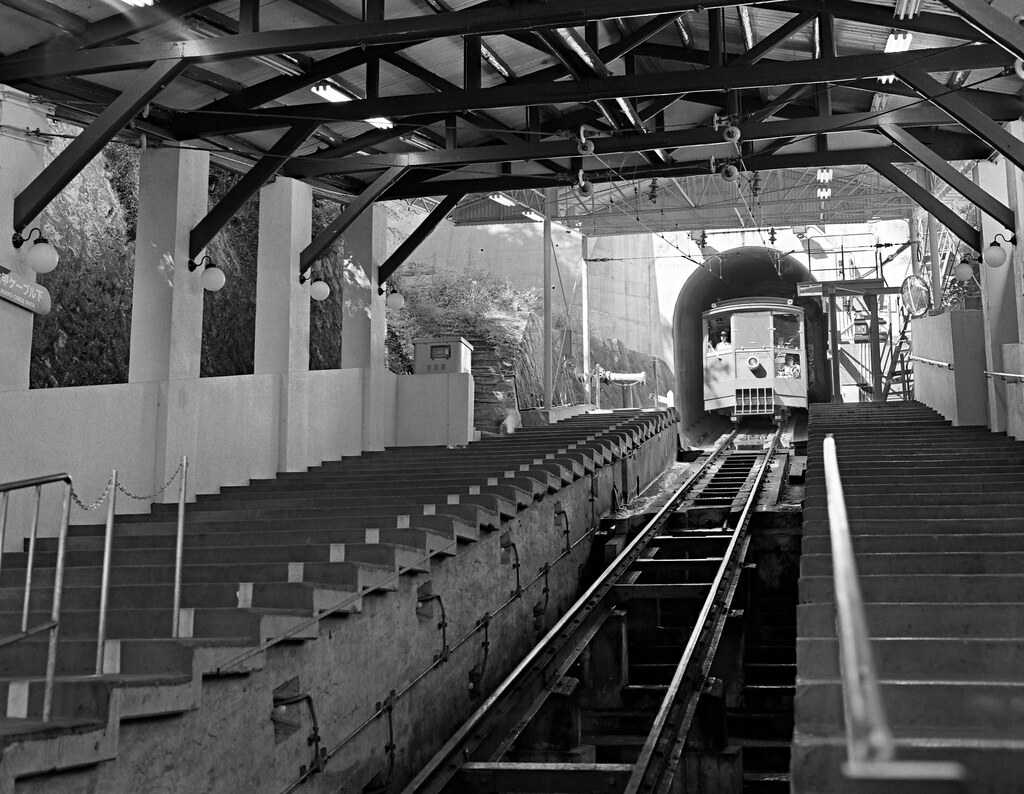
The cable car ground station.


You can go up by bus on steep, winding roads, or you can take the cable car at the foot of the mountain. You get there by bus from any of the three railway stations (JR, Hanshin and Hankyuu lines) passing by below. The cable car itself is fun, with big open windows and a glass roof that gives you a good view as you get pulled up some very steep gullies and through a number of tunnels on the way to the top.

Corporate Retreat

The mountain top is littered with corporate retreats and summer homes, used for conferences and parties. This one seems maintained but clearly unused (that's why I could get right up to it); the company could be bankrupt, or they may simply have sold the place and the new owners have yet to take it in hand.


There's apparently a lot of outdoorsy things you can do up on the mountain, with a sports center, parks, golf course, hiking trails, farms to visit and so on. For those, like us, with a less physical approach to leisure time the Rokkosan hotel is an alternative.

Beer with a View
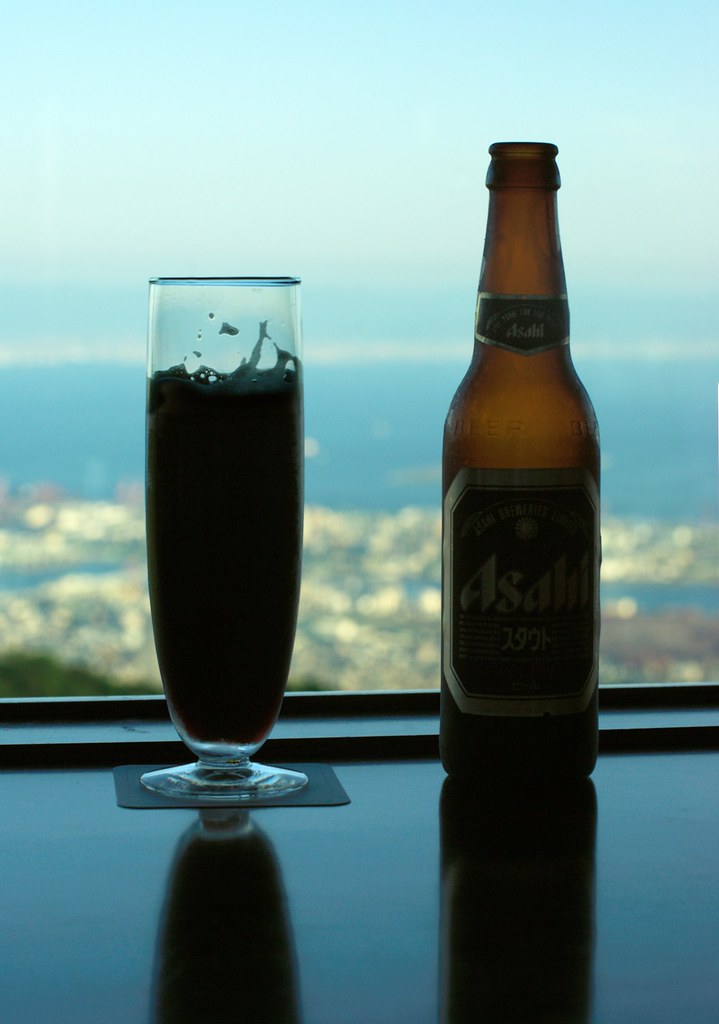
Beer with a view

The hotel is a charming, fairly old but well-kept building with plenty of atmosphere (you could shoot a Stephen King movie here I think, or a murder mystery) and some spectacular views of Kobe and the Seto sea. It seems to do a fair amount of weddings so there's gardens and a wedding chapel right on the hotel grounds. If you're not in a marrying frame of mind you can skip the chapel and go up up on the roof to see the landscape below, or take a break in the bar on the top floor with the same spectacular view.

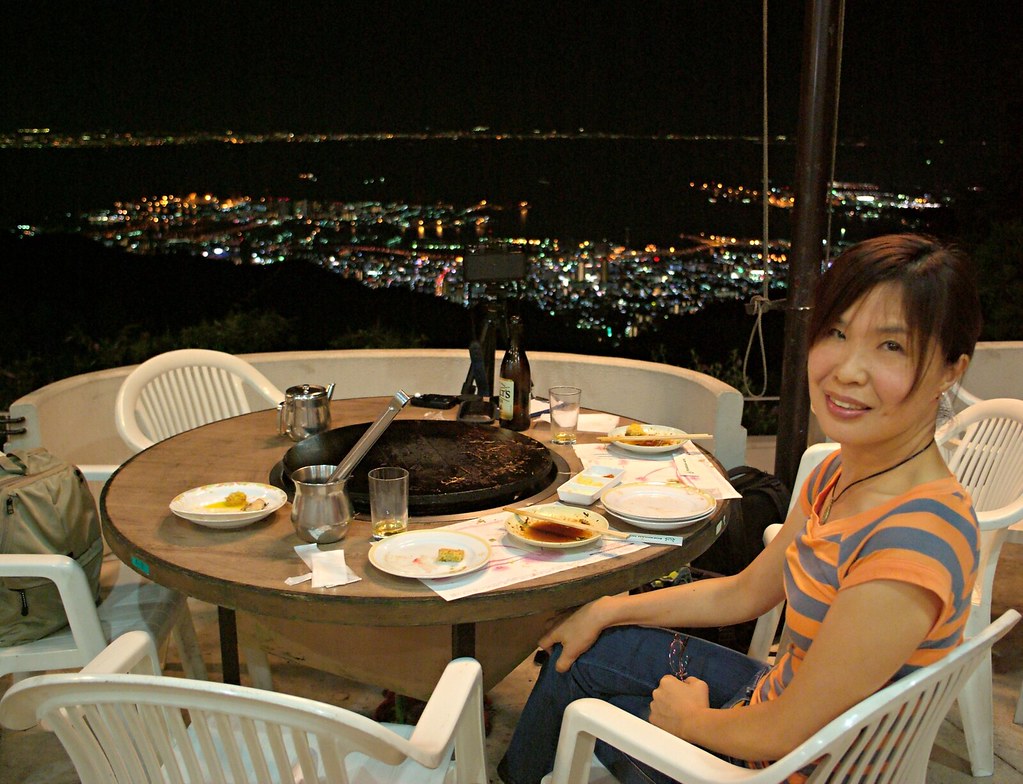
The hotel runs two restaurants in separate buildings right on the edge of the precipice, one an indoor fondue and general Western food, and the other one a mostly outdoor barbecue place with three levels of balconies overlooking the mountainside. We ate at the all-you-can-eat barbecue place ("Djingis Khan" is the Japanese name for it) where you pick up meat, fish and vegetables from the buffet and grill on the hot plate on your table while watching the sun set over the sea.
 
Djingis Khan

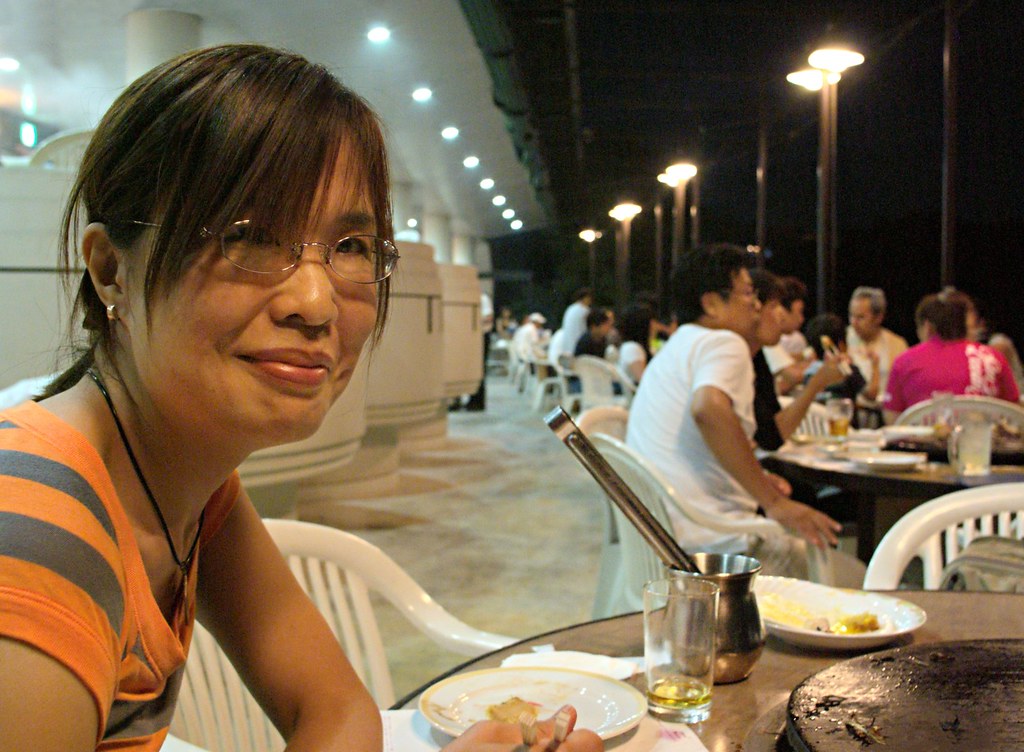
Ritsuko and the barbecue place. Surprisingly good food, and with a good atmosphere.


This kind of place is family oriented of course, and usually aims for affordability over quality. Knowing that, we were very positively surprised. Lots of good quality meats, sausages, fish and shellfish to choose from, and the vegetables, too, were fresh and plentiful. I must have eaten a dozen scallops alone, to say nothing about all the lamb, squid and buttered corn I managed to stuff myself with. For dessert you could pick among an assortment of puddings and cakes, and some really good stick ice cream in three flavours. 90 minutes was either not nearly long enough, or too long already, depending on whether you care more about the food or the resulting waistline.

All pictures and more are in the Rokko Mountain set on Flickr.

Sannomiya

Detailed image of Sannomiya. It really hits you how much of Kobe is just a narrow strip of land between the mountain and the sea. Makes the Kobe subway system layout, with two lines running in parallel, seem much more sensible too.


Rokkosan Hotel Barbecue

The view really is beautiful.

Monday, August 24, 2009

Dwindling Regions

The always interesting Jun Okumura at Globaltalk 21 has an interesting post about the (mis)use of "urban" and "rural" as terms for a very different dichotomy, between densely populated growth areas with much of the political, cultural and economic power on one hand; and stagnating regions on the other. I'm not going to wade into the terminology issue here, since I have no solution to that. Just try give a good term for places like Tokyo, Nagoya, Osaka and perhaps Sapporo on one hand; and Aomori, Miyazaki or the infamous Yubari on the other, and do so without building their differing economic and population trends into the definition. It's not so easy.

Anyway, Okumura asks towards the end what, if anything, can reverse the trend in many regions of stagnation and population decline. I suspect that for some places at least there is no stopping the decline. A flawed but quick assessment of a community would be to ask "If there was no village, town or city here today already, would anybody come here and create it?" Places don't spring into existence without reason, and in the long run they don't continue to exist if their reasons to do so are gone.

Perhaps one of the best, most drastic examples in Japan is Hashima island (also called "Gunkajima" - Battleship island - due to its silhouette on the sea). It was a thriving island city built around a productive coal mine. But once the mine was closed in the 1970's, it was quickly abandoned. There was simply no reason left to stay any longer. Today Gunkajima is an amazing place - a densely urban area left to naturally fall apart without human intervention. If you want to know what a modern industrialized city will look like when abandoned, all you have to do is take a look at some of the excellent photography from the place. Annoyingly there is not much high-quality footage posted online; Yuji Saiga has some stunning images, but marred by huge, annoying watermarks that make them almost unwatchable. A search through Google Images gives you another taste. The island is off limits to casual visitors (it's pretty dangerous), but there are occasional tours to small parts of it.

It's sad to say, but a fair number of places in Japan (and elsewhere) is undergoing the exact same process as Hashima island, but over the span of decades and centuries rather than months and years. Most settlements begin for some specific reason: it's a natural harbour; site of a mine, forest or other natural resource; or a river or train transport hub, perhaps. Or they're a company town, with one or two major employers driving the economy. But few reasons remain indefinitely. Mines become depleted, companies move or go bankrupt, transport shifts from rivers to train to roads (and upstream sources of goods may dwindle). Forestry, fishing and farming may be more stable, but they've seen amazing increases in productivity and efficiency. You need far fewer people to work in those fields (sic) than you did a generation or two back; there may simply not be enough farm or forestry workers left in an area to sustain the community that once grew around them.

If a community has reasons to exist independent of the original ones they may be fine. But if they haven't been able to diversify (such as the famous former mining town of Yubari), there just might not be a way to save the place. It's not that people move out - they do, but people move out of all places all the time. It's that without a reason for the town there is no reason for people to move back in any more. That leaves you a population that is dwindling, ageing and becoming less well trained and educated on average over time. that of course just accelerates the pace of change and makes it more difficult to reverse.

Some regional areas will be just fine. But some will not, and in the end there is no policy that will be able to prevent it. The best course in those cases may be to alleviate the hardship for the people affected and make the transition as painless as possible.

Friday, August 21, 2009

Other People's Predictions

To follow up from my own perfectly accurate (until they're proven false) predictions, some people with actual knowledge of politics have been weighing in with their predictions.

First, Tobias Harris of Observing Japan is compiling an "election handbook" and has done a seat-by-seat survey of the chances of every single candidate in the country (I got exhausted just browsing through it). His prediction sees a possible 279 seats for the DPJ, and believes they will manage to get comfortably over the 240 seats needed for a majority. He sees LDP getting 159 seats and New Komeito 15 seats, a substantial loss for both parties (though again, these are probably worst-case figures for them).

Meanwhile, centrist Asahi Shimbun rather optimistically predicts (japanese) a whopping 300 seats for DPJ, completely reversing the 300 seats now held by the LDP. I say "optimistically" not "deludedly" because the Yomiuri Shimbun (close to the LDP) also sees a possible 300 seats for the DPJ according to their survey. Of course, both newspapers have an agenda and may have their own reasons to push the idea of a DPJ landslide. On one hand, the DPJ will want to create the perception of momentum; that tends to bring in undecided voters and fence-sitters. On the other hand, the LDP might want to exaggerate the possible defeat in order to mobilize their base.

Me, I'm still a firm believer in the DPJ's ability to self-destruct, to screw up and bungle even the most surefire win. And I think it unwise to underestimate the LDP election machine; it has long experience of bagging elections after all, and at least passive support of substantial parts of the theoretically neutral civil service. I still think we'll see the DPJ get just about 240 seats, give or take a few. Unlike the people above I also doubt that New Komeito will lose many seats. They have a strong base, a captive audience, and they could probably keep many of their current seats even without campaigning.

Izakaya

A small Yakitory and pub in Shinsaibashi. It's not election related; I just like the picture. It's a good place and we're going there again tonight.

By the way, I have few election-related pictures. The reason is simple: campaigning mostly happens during the day, when I'm at work. In the evenings it's usually too dark (and I'm too tired) to go out and hunt candidates with the camera.