Showing posts with label election. Show all posts

Thursday, September 23, 2010

Close but No Tube of Smoldering Leaves

The vote count is almost over, and the coalition got one more seat, still two shy of a majority. They lacked nine votes in Värmland and seven votes in Gothenburg for those other two seats. Close, but close is not making it. It's fair enough though; they're also 297 votes short of the majority of votes among the seated parties, so the end result pretty much mirrors the vote totals1.

The center-right coalition is trying to get the Greens to support them, but it seems unworkable; the political differences are just too large in several high-profile questions. Other party combinations are even more unviable, as they'd bring together parties with completely different and opposing agendas.

This, by the way, is another reason nobody speaks to SD: they have an agenda in some important issues that differs radically from all the other parties. That makes them impossible to cooperate with quite apart from moral considerations. The SD would work with the center-right coalition as well as the left-wing of the Social Democrats would be; or be as good a fit with the center-left opposition as the Christian Democrats. They're not the only one; the Communists only got into the center-left coalition after the Social democrat party leadership was pressured from their own far left wing, and this likely cost them a fair number of centrist supporters.

So before the SD supporters go wailing in sack-cloth and ashes about how they're being unfairly shut out of government, they'd better realize a party needs to be politically and philosophically close to the other parties they want to work with. And the SD are not close; they're not even on the same planet as the other parties. For instance, the center-right coalition all accept the moral imperative of helping refugees and they wrote and supported the coalition bill for easy work immigration. I have nagging doubts that the SD would be willing to drop their opposition to immigration and turn in favour of these policies as the price for joining the coalition.

A minority government is thus most likely. Minority governments are nothing new in Sweden, and they normally manage to be quite effective. But things feel pretty polarized this time around, and the Nazi-linked SD risks becoming used as a political weapon by the two sides, to the benefit of SD and to the detriment of Swedish politics.

The coming minority government would seem to be quite safe. After all, they need only two opposition members not to vote against an important bill for it to pass. Having a minority government fall is very rare, and it should be even more unlikely in this situation. But the SD complicates matters. Iẗ́'s always fun to speculate - things are easier when you're not constrained by reality - so here is a possible scenario, with interesting (in the Chinese proverb sense) consequences:


The government writes a budget bill. They approach the Greens for support, but they are not even close to agreement - the Greens view their votes as indispensable and demands an arm and a leg, while the coalition figures the opposition don't want to vote with the SD and offers just a few minor concessions. The talks fall through and the government submits a bill with no input from any of the opposition parties.

The opposition all vote against the bill. The Communists are ready to do so no matter what and the Greens are angry at the failed talks with the coalition. And crucially, they assume at least a few of the SD members will vote for the bill. They figure the SD won't want to risk a new election when they just managed to get in. And if the government passes their budget with the help of the SD - inadvertent or not - then that guilt by association is an excellent club to wield against the center-right coalition in the next election.

But the SD is pissed off. They get no respect. None of the other parties will as much as pick up the phone, never mind hold any actual talks or give them any committee seats. They may say they're anti-politics and speaking truth to power, but now they want some of that power they've railed against, damnit. So in a fit of pique they all vote against the budget. After all, some of the Greens will vote for it anyhow, right?

So inadvertently the opposition makes common cause with the racists in SD and topples the center-right government. At that point there'd basically be two possible paths: The parties make another go at assembling a governing coalition, but that runs into the same issues as now. Or, an extra election2 is called and held.


Such an election would be very interesting indeed. The coalition have shown they lack the flexibility to run a minority government. The small coalition parties will have - in the interest of coalition coherence - been all but invisible throughout the process, raising the question of why you should vote for them at all.

The Greens will have exposed a basic weakness; it's easy to say you're straddling left and right, but when reality hits and you have to choose one or the other you end up alienating part of your own supporter base no matter what. And the opposition parties will have felled a democratically elected government by voting with a neo-Nazi minority party, something that is completely antithetical to many of their supporters.

And the SD will have a parliamentary record of complete political non-action, with a messy, costly and completely avoidable extra election as their sole and only accomplishment. Wasting hundreds of millions of tax money and six months of everybody's time is not what most protest voters like to see in their champions.

None of the parties would come off smelling like roses. And as actions speak louder than words, the floating voters would likely vote based on the performance during the few months since this last election, and would also likely want to avoid a repeat of the messy parliamentary situation. How that would translate into votes is of course a completely open question, but I would guess we'd see some rather more dramatic shift of opinion than during normal election cycles.

--
#1 "Fair" is really the wrong word, though. If, say, the coalition would have gotten a majority of popular votes, but just shy of a majority of the seats it would have been unfortunate, and it would have highlighted a bad corner case of the voting system, but it would not have been unfair. The election system is fixed, it's transparent, it doesn't systematically discriminate one party over others, and the rules are accepted by all parties. The result is always fair, though it's not always desirable.


#2 It's an "extra" election, not a new one. The four-year cycle isn't altered. Whoever wins the extra election only has until the next scheduled regular election. This lessens the value for the opposition of toppling a government since you don't get a full election cycle to rule even if you win.

When the Social Democrats lost a crucial vote in 1990 and resigned, one year before the next general election, the same minority government was simply reappointed by the speaker; it was seen as pointless and wasteful to hold an election for a government that wouldn't even have time to implement a budget before their mandate runs out.

Wednesday, September 22, 2010

Tuesday, September 21, 2010

Not a Done Deal Yet

The Swedish election was fairly close, with the center-right coalition just three seats from a majority. As it turns out, as few as another 7000 votes could be enough to tip three close seats to the coalition. And as more than 100 000 votes - foreign votes, last minute postal votes and the like - are still being counted there's a real possibility that they get it. Another possibility is that the coalition get a slim majority of votes but still not a majority of seats.

Why is this? All the votes are not just shuffled together and counted. Instead we have a number of electoral districts (29, apparently - shows how much I paid attention in high school) each with a set number of seats to distribute. And a given party may be much closer to another seat in one district than in another. So depending on the district the votes were cast, the same number of votes may give different results.

Also, the counting method (a variation on the Sainte-Laguë method) tends to help large parties a bit at the expense of small ones1. For that reason and for the reasons above the final seat allocation may become somewhat different from what the total voting percentages would suggest.

So some of the seats are not allocated directly, but put in reserve and used to even out this discrepancy in the final count on Wednesday2. This time - with lots of small parties and two large, evenly matched parties - the reserved seats were not enough, and the coalition actually has about two seats less than they would have gotten had there been enough reserve seats to go around.

This means that a very small shift in total votes may trigger a rearrangement of final seats and have quite a large effect; enough that the coalition gains those final seats and a majority. Will they? We'll know on Wednesday or Thursday.

[Edit: the method is Sainte-Laguë, not D'Hondt. They're very similar, though]

--
#1 Why is Sweden (and other countries) using vote allocation systems that sometimes give wonky results? It's because there is no system that will always give what we would consider a fair allocation. The criteria we have for fair allocation can't all be fulfilled at the same time, so no matter what system you choose you end up with the possibility of a more or less unfair allocation.


#2 Apparently the final count and allocation is always on the Wednesday following the election, and the numbers we hear on election night are all preliminary estimates. Few people ever cared, though, until this year when it suddenly matters.

Monday, September 20, 2010

Election 2010 - Results

The preliminary1 results of the Swedish election are about as expected. The coalition won, but are a meager three seats shy of a majority. The opposition lost, with the Social Democrats the major losers of the election. Nazi party Sweden Democrats got over 5% of the votes and get into parliament. As the Communists and the Christian Democrats managed to stay in parliament, it means every party I loathe is now represented. Oh well, maybe they all fall out next election.

Within the coalition, the Moderates, the largest party, was the clear winner, at 30% of the vote, with a 4% point improvement on the last election, and just one percentage point away from becoming the largest party in Sweden. It's much smaller partners all lost support, perhaps illustrating the perils of being the small partner in a political coalition. The largest party has most of the power, but all parties equally share the responsibility and blame. I don't doubt the coalition will hold up this period too, but I'd expect to see less discipline and more public disagreement as each small member will try to make their mark in preparation for the next election in turn.


The Social Democrats got 31% of the vote. This is quite a disaster. To put it in perspective, this is a party that's long used to rule the country all by itself, and when the got 36% in the last election it was bad enough that then leader and Prime minister Göran Persson resigned during the election night. Losing another 5%-points from that historical low is bad enough that I doubt current leader Mona Sahlin will get another chance.

Why did they do so badly? One reason is the Moderates. They've successfully transformed from a low-taxes-and-a-strong-army conservative party to a centrist general party that have taken over many of the political issues long held by the Social Democrats. When your opponent agrees with you, and even proposes legislation in line with your own older party programs, it's hard to mount an effective campaign.

Another reason is their coalition. Unlike the current center-right coalition, none of the opposition parties have had any history of formally working together. For most of their existence, the Social Democrats and the Communists have been bitter rivals (Sahlin at first tried to exclude the Communists, but was overridden by her own party), and the Green party doesn't really fit in with the other two on the left-right scale. In fact, the Greens and the Communists probably disagree on as many of their important issues (such as conditions for small businesses) as they agree on. The coalition never really looked like anything more than a tactical riposte to the government coalition, and the need for it exposed just how weak the Social Democrats have become.


The rise of racist neo-Nazi Sweden Democrats is the most distressing result. They have certainly taken voters (mostly young, male and poor) from most parties, but it seems the Social Democrats and the Moderates was harder hit than others. The Moderates have moved from the right and towards the center for the past two election cycles so I guess it's only natural some of those on the militaristic right2 no longer felt at home. Some have moved to the People's Party, which has moved to the right, but others no doubt felt more at home with open racism.

There is a streak of xenophobia in the Social Democratic party and their union movement too; while the leadership is quite internationalist, the rank and file keeps its solidarity firmly within Swedens borders. There have been more than a few incidents where union officials have harassed and verbally abused workers from other EU countries quite legally working in Sweden. The Sweden democrats seem to have been able to tap into this ugly vein within the party.


The post-election political dance is in full swing. It's quite clear that the coalition will form a new government - technically the speaker of the house decides who gets the first shot at it - but exactly how is still an open question. The Greens are refusing any idea of cooperation with the coalition, though that may well be a negotiation tactic. At the same time the coalition is strong enough - just a few seats short - that they can form a strong minority government even without a formal deal with another party.

As for the Pirate Party, they did not get a seat, and did not get close. The surprise gain of two seats in the European parliament notwithstanding you can't really build electoral success overnight. It's back to the grind for them, to build a stable cadre of supporters locally and regionally, then try again the next election or the one after that. There are no easy shortcuts to be had.

--
#1 The last batch of mail-in and foreign votes are still being counted so final results aren't in until Wednesday. However, these late votes aren't that many and don't normally differ that significantly from the general results, so while they could conceivably switch a marginal seat from one party to another, they will not affect the overall outcome.


#2 Anecdote is not data, and I certainly don't have any real statistics for this, so take it as a simple observation: when I was in the military service around 1990, a surprisingly and distressingly large number of the younger officers at our regiment had newsletters, music CD's and imagery connected with the Swedish White Power and neo-Nazi movements. And the Moderate party - supporting of military traditions, the nobility and royal house, and pro-militaristic stance - was by far the most popular among them.

Saturday, August 21, 2010

Election - one month ahead

We're packing our things and leaving for Paris tomorrow. Meanwhile:

The Swedish election is one month away. The two major coalitions - the somewhere-around-center-right and the vaguely left - stand completely even at around 46-47% in recent polls. Neo-nazi outgrowth Sweden Democrats now hover below the 4% limit. The Pirate Party doesn't register enough support to be listed separately. Ho hum.

But 22% of voters are undecided. Three coalition parties - the Communists on the left, and the Center party and the Christian Democrats on the right - are below 6%, and have all hovered right at the 4% limit at one time or another. Failure by any of them to get into parliament would completely alter the election and probably give the opposing coalition a comfortable majority.

The past few months have seen political triangulation at its finest - to the point where, if the election rhethoric could be believed, it wouldn't matter much which coalition ends up winning anymore. The opinion polls reflect this: for all the polling hype, the two coalitions have been in a dead heat for more than a year, with nary a blip to relieve the tedium.

There's been a bit of fireworks this summer. A minister in the center-right coalition resigned when accused of going to a prostitute by Aftonbladet, a left-leaning gutter press that later turned out to have made it up. This week, two Social Democrat candidates where caught by police in an LO1 apartment with a couple of prostitutes. Entertainment for the public, and wrecked lives for everyone involved and their families, but largely irrelevant for the election.

I voted this week, ahead of the trip. Postal voting makes it easy to vote wherever you are so there's no real reason not to. What did I vote on? None of the coalition parties. I feel no close affinity to any of them, and I have an enduring dislike for the Communists and the Christian Democrats and will not vote for any coalition if either is a member. And I would slit my wrists rather than vote for the racist bigots of the Sweden Democrats.

Instead, I vote for the Pirate Party. They focus on open government, freedom of information and communication, intellectual property reform and privacy issues. It is a one-issue party of course, but as issues go this is important, and becoming more so every year. How we resolve these issues now will help determine what kind of society we live in a generation from now. And it's of course more important than tenths of percentage points in the building tax rate or the number of ATMs in Stockholm subway, which is the kind of thing the two coalitions are bickering about. Do I agree with everything in their program? No. But I do feel strongly for many of the important issues, which is more than I can say for either of the two coalitions.

Will they get into parliament? Doubtful. But that doesn't mean my vote is wasted - voting for a coalition I don't actually agree with, on the other hand, would. And it's not like the chance of making it is zero; they managed to get two EU parliament seats against all odds after all.

If you're Swedish, vote. And if you don't much like either of the two main alternatives, you can do much worse than the Pirate Party.

---

#1 LO is the largest Swedish worker's union, theoretically separate from the Social Democrats but in practice they're two wings of the same organization.

Sunday, July 11, 2010

Election Time

It's election day in Japan today. Rain is pouring over Osaka, which means low turnout and a boost for the DPJ as protest voters stay home - or a loss for the DPJ as disillusioned supporters don't bother voting. Whichever happens, they will not get an outright majority in the upper house, but will have to refine their art of coalition governing. With whom is an open question; but when actual power is in the offing there's rarely any shortage of willing candidates.

Meanwhile, in Sweden the election campaign proper has kicked off with the traditional Almedalen Week. Every year around this time - and especially on election years - all the major parties, press and television, lobbyists, economic and political wonks, NPO's and political organizations descend on Almedalen1 in Visby on the island of Gotland, a week of policy speeches, election promises, planted leaks, badmouthing your opponents and so on. Think of it as a combination of election manifesto presentations and months worth of countrywide speaker-van platitudes and blog punditry all concentrated into one place and a few days.

I haven't had the energy or time to really follow it, as there's just too much dross to wade through. A couple of things did stand out to me:

the anti-EU Communist party - and to a lesser extent the EU-sceptical Green Party - have had to completely abandon their stance in the interest of the coalition with the Social Democrats. That's going to disappoint a fair number of their more recent supporters, as leaving EU has been a high-profile vote-getter issue for them. It also means there is no mainstream party left for those EU sceptics - a dwindling number, but still - that want concrete steps toward leaving the union.

The Moderates and Social Democrats are both perfecting the art of "triangulation", and taking over each other's political issues. A few more election cycles like this and they'll be all but completely interchangeable.

Also, political commentators seem to mostly agree that the Christian Democrats attempt to widen their support base by talking about "real people" isn't working; and that reminding people about their religious origins and basis of their policies is off-putting to voters. So, on one hand they can't rally their base (the kind of people who think the Earth is 4000 years old) without scaring off moderate, non-religious conservatives, and they seem unable to actually build a non-sectarian moral conservative base on the other. And they can't simply rely on their base the way New Komeito does, as it's simply not large enough to get over the 4% limit and give them a seat in parliament. They spent 20 years out of parliament before they learned they had to reach beyond their religious base, and they'll get dumped outside again the moment they forget.

--
#1 Why Almedalen? One Prime Minister liked to take his summer vacation on Gotland, and started giving a summer speech to the local party faithful since he was there anyway. The event grew over time into this unofficial election kick-off. It's a shame, in a way, that he didn't like northern trekking - it would've been fun to see a thousand-people lemming train of politicians, lobbyists and press in plaid shirts and backpacks slowly working their way over some bare mountain pass in the far northern mountains every year.

Monday, August 31, 2009

Election Short Notes

Here's some short notes from the election:

* The DPJ had a good night, ending up with 308 seats. Not enough for a supermajority, but that matters little; they were pledged to govern in coalition before the election and they need the support of their coalition partners in the upper house. Besides, for the past couple of years the LDP has amply demonstrated how little use the supermajority override has in practice.

* The JCP (the Communist party) and the SDPJ (Social Democrats) stayed pat with 9 and 7 seats respectively. No idea how their support has changed as I haven't found any final vote percentages yet. Still, given that the current system disfafours small parties, they should probably be pleased they didn't lose any seats.

* LDP had a bad night, with 119 seats, down from 300. Not as bad as it could have been of course; they kept well above the psychological disaster zone of 100 seats. And the system exaggerates electoral shifts, so the support drop was not as large as the seat loss may indicate. I'll follow up on that once I find vote percentages.

* New Komeito did something I frankly didn't believe them capable of: losing almost a third of their seats in one go, inkluding that of party president Ota. They dropped from 31 seats to 21, losing every single single-seat district they had (eight seats before the election), retaining only proportional seats. They have an incredibly loyal, stable supporter core of Soka Gakkai members that will literally stay with the party until death. But it appears that the core is smaller than many people have been led to believe, and to me at least the party now looks a lot more vulnerable than it seemed before the election.

* The raving loons of the Happiness Realization party, political wing of the "Happiness Science" cult, didn't manage to do anything. They didn't come close anywhere; the most I've found was one guy in Hyogo that got about 10% of the vote, but typically their candidates got no more than 2%-4% of the local vote and often below one percent. They usually had 1/5 to 1/10 of the votes of the next to last finisher. Even independents of the "My Indignant Letters to City Hall are Ignored - I Will Run In the Election And Show Them All!"-variety frequently outpolled them. That said, I'm not sanguine about religious cults entering politics. The deserve being watched carefully and their insane beliefs called out, not just laughed at1.

* Aso will resign, as will most of the LDP party leadership. Several faction heads and other top members have lost their seats. Koike Yuriko lost, which is especially interesting as she was talked about as successor to Aso. Won't be easy when she lost her district. Noda Seiko, another high-profile female LDP member also lost her seat. The LDP seems to be postponing their party leader election (meant to be held at the end of September).

This makes it very clear just what kind of a pickle the LDP is in right now. Chains of command, orders of succession, carefully balanced power centers and webs of favours and counterfavours are all disrupted by the election. Their own decision structures are no longer fully in place any more and my guess it will take a good deal of time (and perhaps a great deal of infighting) simply to realign the party organization to the new reality of being a 100-seat opposition party and be able to make decisions as a unified body again. They need time to come to terms with not being in power, they need time to elect a new leader, to analyze the defeat and to come up with a constructive new set of policies.

This is time they really don't have. The next upper house election is next year (yay, we get to do this - speaker cars and everythng - all over again!), and they will need to present themselves as chasticed, reformed and unified of purpose if they don't want another beating at the polls. And remember, the upper house election is for half the house each time - the half up for election is weighing even between LDP/New Komeito and the other parties while the other half (elected in 2007) is already solidly DPJ. It means that LDP would need a clear majority win to get control over the upper house; drawing even would not do. Even a small slip would give sole control to the DPJ. And Komeito is clearly no longer in a position to pull their full weight in the next election either.

--

#1 This certainly applies for New Komeito/Soka Gakkai, Christian Democrat parties and others as well.

Sunday, August 30, 2009

DPJ is the winner

Right now we have 224 confirmed seats for DPJ against 49 for the LDP. The combined opposition parties are within a few seats of a majority. It's completely clear that the DPJ will be well over the 240 seats they need for a simple majority, and it seems likely that they'll break the 300 seat barrier, completely reversing the LDP landslide in 2005. A few people are speculating that they may squeeze up to the 320 seats needed for a supermajority.

The numbers don't really matter; as far as the overall result is concerned the election is over, and it's a DPJ landslide. The fallout is already beginning: Aso is reportedly (and not surprisingly) resigning as LDP leader, for instance. Ota, leader for New Komeito may lose his district against a DPJ newcomer (he'll still get in on the proportional block of course). If something really surprising happens before we go to bed I'll post it, but otherwise I'll leave the shot-by-shot coverage to Observing Japan and Our Man in Abiko

Hatoyama

New Japanese Prime Minister Yukio Hatoyama with his wife around 1970.

Remember, kids, posting pictures of yourself on Facebook may be all fun and games, but it may not seem like such a good idea thirty years from now.

Election Day

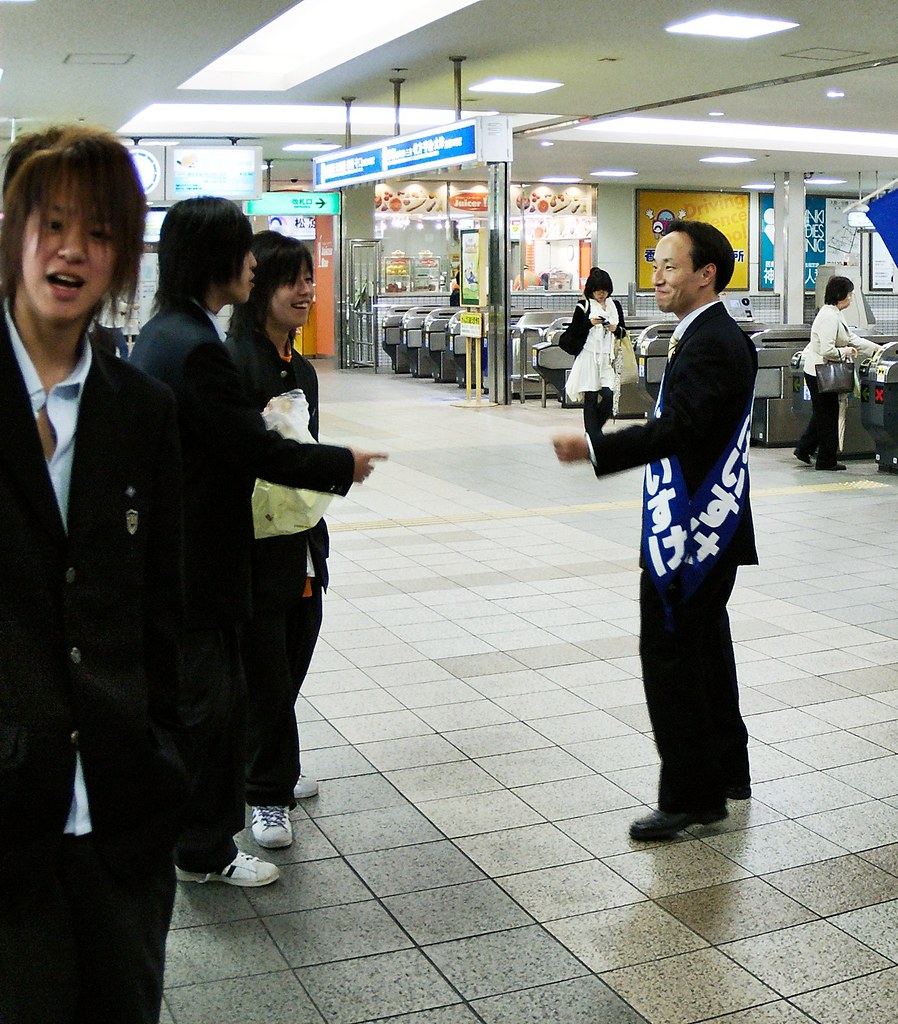
After years of coy teasing and feeling each other up, the country and the parties finally embraced for election in late July. The parties' long dormant election machinery quickly rose to the occasion and thrust themselves into the public view.

For the past month the parties have been mumbling sweet nothings to the electorate through their speaker cars and their volunteers have pounded out posters and pamphlets, thrusting them into the hands of an eager public. Today the long campaign is finally climaxing in an orgiastic burst of votes flowing out all over the country.

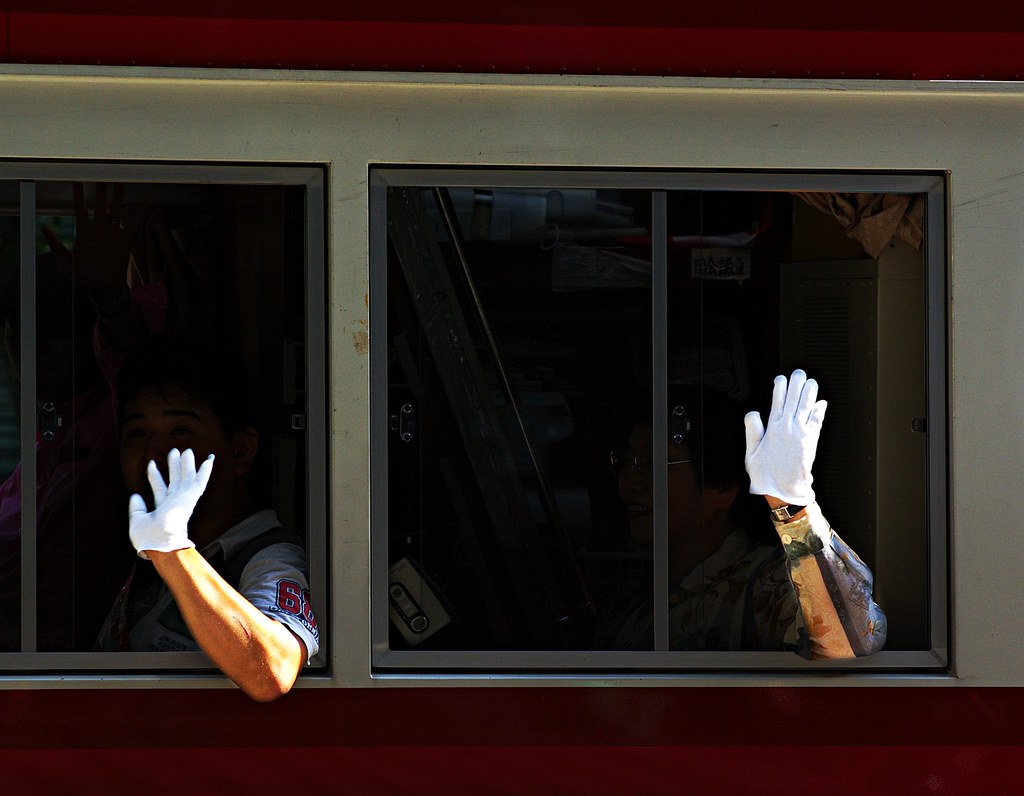
The worn-out campaigners may well be excused if they lean back and relax for a bit tomorrow, perhaps with a cigarette.

See the hand, Follow the hand

See the hand. Follow the hand. The hand knows.


So what will be born out of this process? It looks like my prediction may have been overly cautious. To my amazement the DPJ did not manage a single self-inflicted disaster, and looks set to achieve a majority. People are even speculating on the (remote) possibility of them achieving a 2/3rds majority on their own. The LDP seems to fall hard, and even the party leadership has had to stay and campaign in their own districts rather than travel and help other members.

Some credit for this outcome must be given to the different campaigns. Tobias Harris points out that the DPJ has run a completely positive campaign, talking only about what they want to achieve and largely ignoring the LDP. The LDP in turn has run a largely negative campaign, and mostly talked about, well, what the DPJ wants to achieve. It's a sad indictment on a party when it's best election efforts only manages to reinforce their opponents message.

We're not going to worry too much about the election here. The weather is good - a little hazy but pleasantly cool - so we'll have lunch at a Spanish restaurant near Midosuji, then take a walk around town. I'll drag my Pentax 67 along, see if I can find something interesting election-related to shoot, and we'll shop for tonight's dinner. Tomorrow is a workday so we're off to bed early; we'll see the election results once we get up tomorrow morning.

If you want to look at the election in much more detail, check out Harris' blog, Observing Japan for a lot of background and analysis. stippy.com has an idiosynchratic cheat sheet of sorts for people that want to follow along in detail. Transpacific Radio (which, to be honest, I have never listened to) will hold a live webcast.

The Mainichi Shinbun has an election site, as does the Asahi Shinbun and Yomiuri Shinbun. I have no idea which one is better; they all get fed the same data though so it probably doesn't matter.

Kyodo news agency has an English-language site with a neat, graphical at-a-glance illustration for those who can't be bothered with actual words or numbers.

I guess there won't be any actual data to look at until after 20:00 when the polls close. If anyone knows of a better source than these to get a good overview of the election, feel free to drop a note in the comments.

Friday, August 28, 2009

Posters - The Last Appeal

The election is just two days away. As the voters walk through town to the polling stations the parties have one final chance to appeal, through the wordless faces of the party leaders pleading with the electorate from their campaign posters. Ignore the words on these campaign posters for the moment and let's read what their faces seem to be saying us.

DPJ Poster

DPJ, Yukio Hatoyama: "We care. We care about you and we're concerned about you. We're concerned and caring. You can see my concern and my care right here, in my eyes. Look into my eyes, and see my concern, and my care, deep in my eyes. Come close and look deep into my eyes. Look deeper, deeeper. You are feeling sleeepyy, so sleeepy. You see nothing but my eyes. You feel relaxed and happy and care only about my eyes. You will vote DPJ on Sunday. You will vote DPJ ..."


Komeito Poster

New Komeito, Akihiro Ota: "Come Sunday I know you'll vote Komeito, right? 'Cause you care about fairness, right? I got this religious cult, see, full of members that are all zealous-like about fairness, and they get disappointed when we don't get our fair share of votes, see. They're like kids to me, these people, just like my own kids, right, and I get real upset when they get all disappointed. We had dis guy disappointin' us one time, see, and I got so upset I freakin' snapped his neck with dese hands here, dry twig-like, just snapped it clean off, so upset was I, see. So you don't want to be disappointin' us in any way on Sunday, understand?"


JCP Poster

JCP, Kazuo Shii: "Hello, um, is this thing on? Hi, we're the radical party! Um, except, you know, not radically radical, don't worry, heh. We're really reliable and stable, in fact. Um, our platform hasn't changed since before the war, and hasn't touched reality in decades, that's how stable and reliable we are. Um, what? Slogan? Oh, OK. Comrades, listen up! Let Us Boldly March - no, scratch that, sorry, forget I said anything - Let Us Gingerly And After Careful Deliberation Slowly Edge Backwards To A Past Where We Still Were The Future!"


asoposter

LDP, Taro Aso:1: "We're so fucked."


[Edit: It helps if you actually spell people's name right]

--
#1 In two weeks of idle searching I couldn't find a single Aso poster anywhere in town, so I had to get this one from the LDP website.

Friday, August 21, 2009

Other People's Predictions

To follow up from my own perfectly accurate (until they're proven false) predictions, some people with actual knowledge of politics have been weighing in with their predictions.

First, Tobias Harris of Observing Japan is compiling an "election handbook" and has done a seat-by-seat survey of the chances of every single candidate in the country (I got exhausted just browsing through it). His prediction sees a possible 279 seats for the DPJ, and believes they will manage to get comfortably over the 240 seats needed for a majority. He sees LDP getting 159 seats and New Komeito 15 seats, a substantial loss for both parties (though again, these are probably worst-case figures for them).

Meanwhile, centrist Asahi Shimbun rather optimistically predicts (japanese) a whopping 300 seats for DPJ, completely reversing the 300 seats now held by the LDP. I say "optimistically" not "deludedly" because the Yomiuri Shimbun (close to the LDP) also sees a possible 300 seats for the DPJ according to their survey. Of course, both newspapers have an agenda and may have their own reasons to push the idea of a DPJ landslide. On one hand, the DPJ will want to create the perception of momentum; that tends to bring in undecided voters and fence-sitters. On the other hand, the LDP might want to exaggerate the possible defeat in order to mobilize their base.

Me, I'm still a firm believer in the DPJ's ability to self-destruct, to screw up and bungle even the most surefire win. And I think it unwise to underestimate the LDP election machine; it has long experience of bagging elections after all, and at least passive support of substantial parts of the theoretically neutral civil service. I still think we'll see the DPJ get just about 240 seats, give or take a few. Unlike the people above I also doubt that New Komeito will lose many seats. They have a strong base, a captive audience, and they could probably keep many of their current seats even without campaigning.

Izakaya

A small Yakitory and pub in Shinsaibashi. It's not election related; I just like the picture. It's a good place and we're going there again tonight.

By the way, I have few election-related pictures. The reason is simple: campaigning mostly happens during the day, when I'm at work. In the evenings it's usually too dark (and I'm too tired) to go out and hunt candidates with the camera.

Tuesday, August 18, 2009

..and They're Off!

It's the 18th, and the official start of the election campaign (never mind that we've been up to our knees in campaigning politicians for a couple of weeks already). Another twelve days and the thing will be over one way or another. Here's my predictions for the election, nice and precise so it'll be easy to see just how badly I did:

  • DPJ will be the largest party but they'll either just miss the majority mark or they'll get a razor thin majority that leaves them vulnerable to the whims of one or two diet members. Either way they'll need the support of other parties in the lower house, and will elect to work with the same parties they already depend on in the upper house. LDP will suggest a grand coalition but be turned down. They'll claim the DPJ is irresponsible, unpatriotic and really mean, nasty poopyheads for refusing to share when it was their power to begin with. So there.


  • The Insane Clown Posse Let's Preventatively Nuke Our Enemies To Increase Japans Greatness And Pave The Way For The Triumphant Return Of Our Alien Overlords, Jesus And Martin Luther To The Reformed Continent Of Atlantis In The Year 2400 Party1 Happiness Realization Party will get one surprise Diet member through the proportional representation system. Most of their voters feel very embarrassed about supporting them once they find out what the party platform really is.


  • The New Komeito will hold steady. They'll lose some loyal voters through attrition (many are elderly) but will pick up some LDP protest voters that sees a coalition partner vote as a safe way to show their displeasure.


  • JCP and the other small parties will continue to lose seats. With he current election system their days on the national scene is probably numbered, long term.


  • The LDP will face a historic loss. In the upcoming election for party leader its members will conclude that the problem was that a whole year with the same leader is just too long and kick Aso out of office. Aso, having been prime minister and led his party and himself into the history books, has nothing left to prove. He leaves politics to become a day-time TV talento with a penchant for bursting out in Enka at inopportune moments.

    For all its faults, and despite a loss of power, the LDP itself turns out to still be far too valuable as an umbrella organization for its members to abandon it. Instead it will have a couple of small hard-core ideological factions fighting for control over the direction of the party. Meanwhile, most elected members politely ignore them and transform the party into a generic election platform for their own individual agendas. The LDP becomes the first true franchise party where anybody with a will and a wallet can join to push their own agenda.

So there you have it. If I turn out to be right for some strange reason I will of course revisit this post to gloat a bit. If I'm wrong you'll never hear a word of this again.

--
#1 I'm not joking. Of course, their beliefs are really no more absurd or divorced from reality than that of any religion; the old established ones just have a patina of age and a lot of followers to gives them a veneer of respectability.

Thursday, July 30, 2009

All You Ever Wanted to Know About the Upcoming Japanese Election But Were Too Bored to Google on Your Own

Library
Study Time!

I realize not everyone is fully up to date on the details of the coming election so I thought I'd give a primer of sorts for those not in the loop. I'm no expert on Japanese politics, or on anything related to it. Give this all the consideration an online rant by a nobody is worth, in other words. It's long, so I've set it in a question and answer format for simplicity.

Q: Election, huh?

A: Yes. National elections to the lower house must be held within four years of the previous one. The prime minister can decide for himself when to call an election, though. An election has been expected for more than a year already, but it has repeatedly been put off for various reasons. Now time is running out and the current prime minister has little choice left. This election will be on August 30th.
 
Two-thirds of the seats in the lower house are single-seat constituencies, where candidates represent a specific area and one winner takes all. One third are proportional, where you have a number of seats for a large area and the parties assign people to the seats in proportion to the votes the parties got. So people vote twice, once for their representative and once for the party proportional seats in their region.

Campaign
Getting the vote

Q: Both single-seat, and proportional?

A: Bit of an interesting hybrid, really; Sweden, for instance, has only proportional seats while countries like Britain has only single-seat voting.

The single-seat system - where the winner gets the seat and the losers get nothing - heavily rewards the largest parties. You can have two parties with almost the same number of sympathizers, but one party gets almost all seats. You can even get a result where the party with the largest number of votes still come out with only a minority of seats. It tends to create two-party systems that reduce choice and representation. On the other hand, it usually gives you strong governments with stable majorities.

Proportional election systems doesn't penalize smaller parties so much, so the representatives in the house - and the available parties - tend to reflect the aggregate views of the voters. But it can also give you weak governments that depends on voting support from other parties, and that can give small parties an outsize influence on the agenda.

The Japanese compromise tries to combine the benefits of both. Not a bad idea, perhaps, but it seems to combine the drawbacks as well. Small parties are very underrepresented in the Diet here; at the same time, in the last few years Japan has had an LDP government completely dependent on the small New Komeito to govern, and opposed by the DPJ who controls the upper house only by cooperating with a number of small parties.
 

Q: Ah, yes, parties. So, what do we have?

A: There's two main parties in this election, the incumbent LDP and the opposition DPJ.

The LDP is a conservative party of old political dynasties, torn between wildly divergent factions, lacking any ideological coherence, and with few policy ideas beyond staying in power.

The DPJ is a conservative party of old political dynasties, torn between wildly divergent factions, lacking any ideological coherence, and with few policy ideas beyond gaining power.


Q: Ummm...

Election Candidate
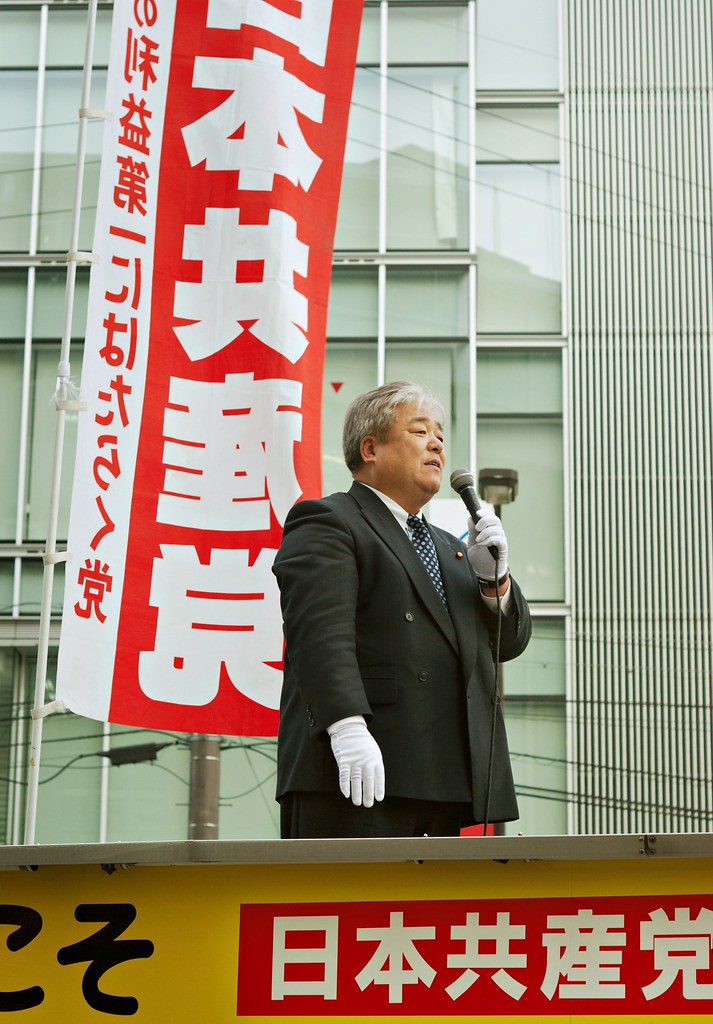
JCP Campaign

A: We also have the supporting cast of small parties. The election system penalizes small parties but they're still important since the major parties need their support. There's two small parties that manage to matter on a national scale: New Komeito and the Japan Communist Party (yes, you could argue that the social democrats is a third, even smaller one; but this is getting too long already).

New Komeito is the support party to the ruling LDP and the political arm of Soka Gakkai, a large religious sect. The party is vaguely similar to European Christian Democrat parties, both by being grounded in deeply held religious and ethical beliefs and by being very flexible about said beliefs whenever they conflict with the goal of political power. They get about 13% of the vote (but fewer seats).

The Japan Communist Party is similar to many European socialist and communist parties and has evolved from a revolutionary organization into a fairly generic left-wing party. And like its European counterparts, the party rhetoric tends to be more strident than the actual policies it pursues. It is noteworthy for being the largest non-conservative national party. They get about 7% of the vote, but again far fewer seats (they don't have a single single-seat constituency in fact, only proportional seats).

There's a gaggle of smaller parties that hold just a few seats each. They're peripheral to the election itself but do matter since the major parties need their support. There's also the "Happiness Realization Party", a newcomer. They're part of the new Happy Science cult, similar in spirit to scientology - the leader talks with Jesus and Buddha, and aliens will return to Earth in the 24th century - and batshit insane. A harmless diversion just as long as they don't manage to get elected anywhere.
 
It's worth noting that the combined vote totals for the small parties equaled that of either of the two main parties in the latest upper house election. The political stage may be dominated by the LDP and DPJ but the electorate is a lot more diverse than the election results may indicate.


Q: OK, but the election is mainly about the LDP and the DPJ, right?

A: Right.


Q: So, leaving the trite quip above aside, what's the difference between them?

A: Well, the LDP is fielding Tarō Aso, the current prime minister, and incidentally the third LDP prime minister in a row to get the job unelected. He's the fifth-generation scion of an old political dynasty, grandson of a prime minister and wealthy heir to a major construction company conglomerate. At 70 years, he's not exactly a spring chicken any more. With his weathered face, hoarse voice and glum expression he comes across rather like a grumpy old potato.

After Ozawa's departure, the DPJ candidate is Yukio Hatoyama. He's the fourth-generation scion of an old political dynasty, grandson of a prime minister and heir to Bridgestone, making him even wealthier than Aso. His brother Kunio was until recently a minister in Aso's LDP government. He's a fair bit younger than Aso of course, and has managed the rare feat of getting caught in a political fund raising scandal with himself as both donor and recipient - a possible first in Japanese politics. He is losing his hair big time.

As an aside, Hatoyama's grandfather Ichirō Hatoyama and Aso's grandfather Shigeru Yoshida were political rivals, and Hatoyama replaced Yoshida as prime minister in the 1950's. Yes, more than a few people see the symbolism of history repeating itself with their grandchildren.

So there's your choice: a conservative scion of an old, monied political dynasty that looks like a potato; or a conservative scion of an old, monied political dynasty that is going bald.


Q: You don't choose a party based on the look of the Prime minister candidate!

A: Don't be so dismissive - the winner is going to be all over the media for the next six months or so. Might as well be someone you can stand to look at, right?


Q: But what about politics? What about policy?

A: What about it?


Q: Surely the LDP and the DPJ have real, serious policy differences?

A: Well, yes and no. They occupy much the same end of the political spectrum, and their politicians hail from the same political dynasties. A substantial part of DPJ members are ex-LDP, and a lot of LDP and DPJ politicians are all related to each other. Of course, while the parties overlap there is a difference around the extremes, with LDP harboring more people of the loony right than DPJ while the DPJ has a more influential - or at least more visible - social liberal group than the LDP.

So yes, there are some real political differences. And they're playing them up for all they can during the campaign of course. But - with one exception - it doesn't make any difference in practice.


Q: It doesn't? Why?

A: I'm glad you asked. There's three reasons.


Q: Three?

A: Yes, three. Pay attention.

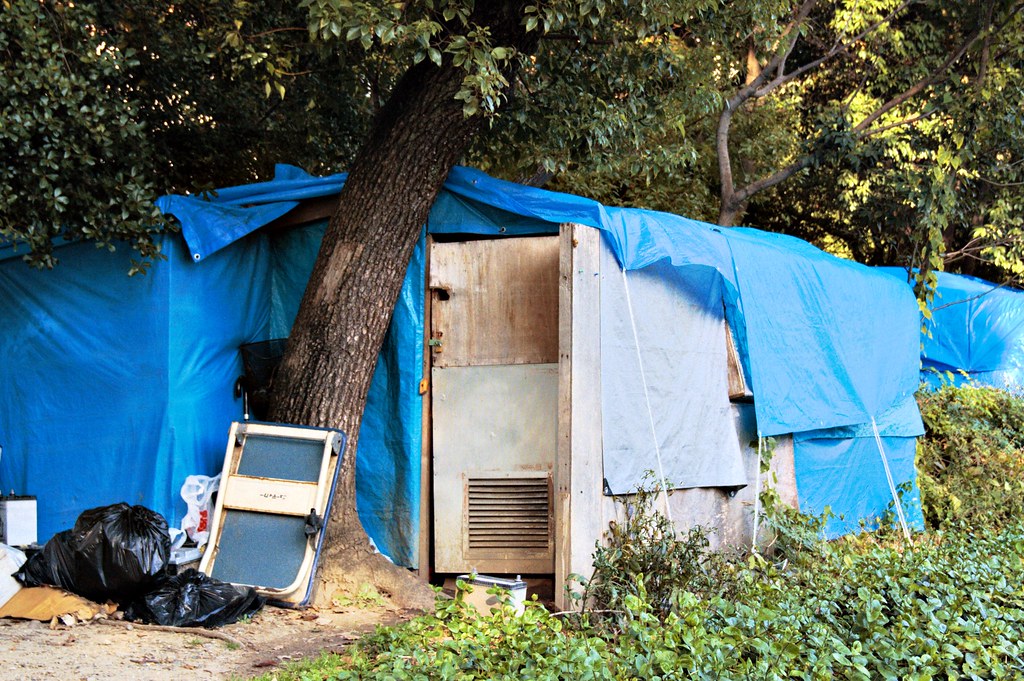
Homeless tent
A big tent for Aso

These are "big tent" parties, and it's fair to say that they have few specific policies that are supported by everyone within the party. In both the LDP and DPJ, for instance, some are in favor of the postal reform while others are bitterly opposed and want it reversed. Some in both parties are in favor of a stronger, independent Japanese military and a revision of the pacifist clause of the constitution; some are steadfastly against.

So election rhetoric notwithstanding, the policies that will actually be pursued won't be decided until after the public election. Over the coming months, the winning party will have an internal fight among its interest groups over what direction to take and what policies to follow. That fight will lead them toward the political center on most issues.

Second, neither party can govern alone. The DPJ holds the upper house but is dependent on small parties to do so. The winner will need cooperation from the upper house and will be dependent on the small parties there (and the DPJ, if LDP wins) to get any legislation enacted. It's also likely that the winner will be dependent on one or more small parties in the lower house, like the LDP is dependent on New Komeito now.
 
In effect pretty much everyone in the diet will have a say on policies, guaranteeing a bland middle-of-the-road compromise government no matter who wins. That's not necessarily a bad thing, mind you, but it means a radical agenda is off the table.


Q: You mentioned a third reason?

A: The third reason is economic. The current crisis is hitting Japan very hard. Japan was already in bad shape before, with an enormous public debt, rapid increase of pensioners and a social insurance system badly adapted to the changing society and an unraveling employment system. The next government is going to have their hands tied economically.

Both parties are pushing some specific vote-grabbing measures they will have to honor. The DPJ is pushing for a substantial raise in the child allowance, for instance, while the LDP wants to make preschool free of charge. The winner will have to enact at least some of those measures or risk swift and serious backlash. But as far as overall policies and the general political direction is concerned, who wins really isn't going to make much of a difference.


Q: But there was one exception?

A: There is. Policies and people may not differ much between the main parties, but there is one difference that really matters:

Lunch
Administrators at work

The LDP has been in power for over half a century. The DPJ has not. With the same party almost constantly in power, the Japanese bureaucracy has become thoroughly politicized. Appointments have all been via the LDP, and the same people move between the LDP, the bureaucracy and the private sector, creating a strong interdependence between party and administration.

The unelected, unsupervised bureaucracy can and does create and change policy by itself, unchecked by the political leaders theoretically in control. It's a political power comparable to the main parties, rather than a neutral, professional body implementing government policy. On occasion, turf battles between ministeries have gone out of hand to the point where it's materially hurt the country. Needless to say, that's not a healthy state of affairs.

So on one hand the LDP, with their deep connections in the bureaucracy, is more likely to get its policies enacted than the DPJ, which will have to fight their own ministeries to get their policies implemented. On the other hand, the DPJ stands a better chance of reforming this system over time and breaking this unhealthy politicization of the bureaucracy. In fact, just having any party other than LDP in power for a couple of electoral cycles would make a major difference, since it'd remove some of the strong incentives for administrators to hitch their career wagon to a single party.
 
In fact, this factor alone is important enough for a lot of people to support a DPJ win, in the face of any and all deficiencies of the actual party.


Q: OK, so the nitty-gritty stuff isn't going to differ much, and the things that matter have little to do with any actual party policies. But they must still be running on some kind of platform, right?

A: Sure. The DPJ platform is, in short, "We Are Not The LDP".

Not too creative, true, but it has the advantage of simplicity. It's really saying that the LDP is responsible for all that ails the dysfunctional Japanese political culture - the favoritism; the graft; the partisan bureaucracy; the low-level grubbiness; and the handouts to the construction industry, the agricultural sector, rural party sympathizers and just about anybody else with an outstretched hand and a roomy conscience.

A vote for the DPJ, they argue, would be a vote against this dysfunctional culture. Of course, It presumes the voters will overlook that the DPJ members are steeped in the very same culture, and that the party has a history of setting low expectations only to fail meeting them.


Q: And the LDP platform?

A: Is just as disarmingly simple: "We Are The LDP".


Q: Huh?

A: Really. They can't run on not being the LDP after all - well, Koizumi did just that in the 2005 election and got away with it. But Koizumi was a showman and could convince people by force of personality. Aso is not, and can not.

The approach isn't bad. Remember all that favoritism, graft and political back-scratching that the LDP is so famous for? A lot of people have benefited from it over many years of LDP rule. The construction industry, medical associations, farming and food production - the list goes on and on. It's not a bad idea to remind all those people just who's been buttering their toast for the past half century.

They argue that while they may be corrupt and venal, they're at least good at it. They have fifty years or more of experience, and the bureaucracy is at least listening to them. The DPJ, they say, is too inexperienced to be entrusted with the levers of power. It's a neat one-size-fits-all argument; by their own definition no other party than LDP could ever be considered for a position of power.


Q: Ok... But the Aso government has, what, 20% approval, right? And the LDP is faring no better in the polls. They've lost Tokyo and all other regional elections lately. Nobody's going to vote for them, right. Right?

A: It is an uphill battle for the LDP, true - but many people who vote LDP aren't really voting for Aso or for the LDP. Politics is local, and people vote for their local representatives as much as for a national party.

Harbor bridge
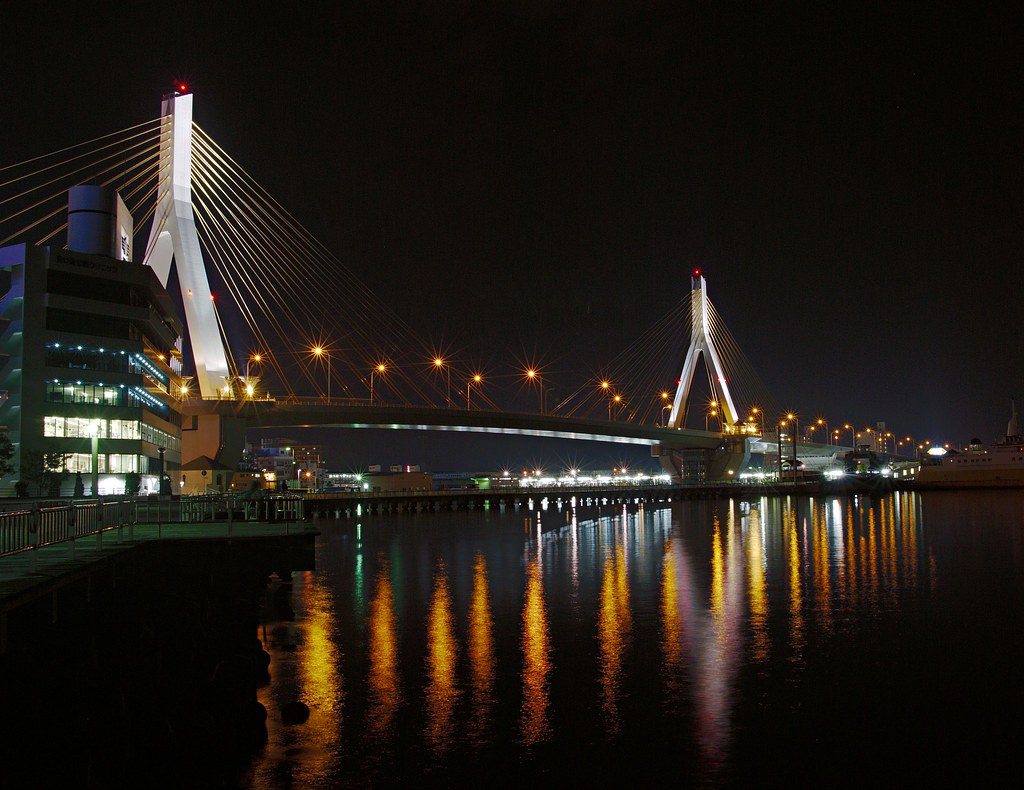
Aomori Bay Bridge.


You may not like Aso too much, but chances are you don't really care; the guy who really matters to you is your diet representative. He is the one making sure there is money flowing into the community by whatever means necessary. That grey concrete highway overpass may not look too hot but it did create a lot of local work for years when it was being built, and the rest stop is a source of jobs for dozens of people in the area. Every farming subsidy, every visitor's centre or lavish museum, every government contract to a local business, every allocation for school children with special needs is flowing directly or indirectly through your representative.


Q: So the LDP is basically buying the vote through its local representatives?

A: Well, that's too cynical a way to put it, I think.

The thing is, in rural districts especially, the local diet member probably really is local. He's likely been in office for years and years, and chances are his father or uncle held the same seat before him. He may well have been your councilman in the local assembly before moving to the national level; his relatives may be in local politics right now. His family business may have dealt with your family business for generations. He's a long-time recipient of donations and other help from the local business community - legal or not - that guarantees him as a champion for the local economy. He may be a crooked, underhanded politician, but at least he is your crooked, underhanded politician.


Q: So, really, for a lot people the election is not primarily about the national government at all, then?

A: Exactly. Of course the national issues matter - and especially now, when the LDP is doing its level best to collapse - but the local aspect is very important.

And locally, many communities are faced with a choice. You may choose the long-time representative, who may be crooked, perhaps, and associated with a disliked LDP, but who has a proven track record in siphoning off money to the local community and to local businesses. Or you choose a new DPJ representative who may be a local politician, but without proven, reliable political connections on the national level. More worrying, the DPJ representative and his party is arguing against the current system of interdependence between government, bureaucracy and local businesses that so many people are benefiting from, and that's an applecart a lot of people want left unturned.


Q: So, come August 30, what will happen?

A: Who will win? No idea. It does look good for the DPJ, but they have an absolutely limitless ability to screw things up. The LDP is backed by a lot of powerful business and community interests and has a history of pulling off improbable victories. The election system, with single seat districts, is another wild card. Small shifts in voting patterns and distribution of votes can have a large effect on the final outcome. Also, rural districts that traditionally favor the LDP have much more voting power in the national elections than the large urban districts.

My guess is - and I'm saying this with all the authority of someone who blissfully slept through his three years of high-school social science classes - that what will ultimately decide this election is not Aso's impopularity or the DPJ's blunders, but the track record the LDP has in the regional centers and rural areas. That's where the power shift will have to take place for the DPJ to pull off a win.

As I said, politics is local and rural districts have favored their long-time LDP representatives. But it's becoming clear that the system doesn't really work anymore. There's little money left for the kind of stimulus funds local communities have depended on for many years, such as highway projects, museums, colleges and other subventions. Also, they don't actually seem to work. They don't revitalize communities or create jobs long term, they haven't prevented local economies from deteriorating, and the regions continue to bleed people - often the young and educated - to the major metropolitan areas, making the regions still older and poorer.

In other words, the LDP-created system has perhaps not been the bounty it seemed. Changing this system may not only be a good thing for the country overall, but for many depressed communities may be only chance they have left for survival at all. The election hinges, I think, on how many people realize this.

Frog
Choose wisely.