..where we are in for a surprise. True to his word, Ishigawa goes to Bententei to buy a lunch bento. Yasuko is there, of course, and is very worried about his rare visitor last night. After enough furtive conversation and sideways glances to awake suspicion in a corpse she she finds out it was just an old classmate from his university days. After the morning rush Yasuko has a break with the Yonegawas, the owners of the shop. The detectives have visited them, and they're very relieved that Togashi didn't come to the store and didn't contact Yasuko (ahem).
The afternoon sees the entrance of Kudō, our possible plot twist, into the store and the story. A regular customer of Yasuko's at the first place she worked, he followed her to the next one (where both, by the way, met Sayoko, the bento shop owner's wife who also worked there). Yasuko and Kudō are not lovers, though not for his lack of trying. He even got into a fistfight with Togashi once as he escorted Yasuko home after work (I'm not altogether sure I would blame Togashi too much for that). He can apparently spend a large chunk of money and time every week for years with a hostess instead of his wife and son, without either of them protesting. Different strokes, I guess. Anyway, they reacquaint themselves, and go to a nearby place for coffee and a chat.
It rains as they leave, and he offers to drive her directly home. As they pull up by the building they are met by Ishigawa, who is uncharacteristically short-spoken and withdrawn on the phone with Yasuko later that day. At that point a light finally goes on for Yasuko. She realizes that Ishigawa may have the hots for her, and that may be the reason he helps her concealing a murder.
Now, I may not be the most socially or psychologically insightful person in the world ("computer science degree", 'nuff said) but this stretches the rubberband of believability to its breaking point. You'd expect a neighbor to lend a hand with a couch. You'd not expect them to lend a hand with a murdered ex-husbands corpse. Furthermore, Yasuko is a former hostess, a job whose single most important qualification (well ahead of being young and beautiful) is the ability to read and understand the moods, the desires and the motivations of other people. Sayoko, the bento-shop wife told Yasuko outright that Ishigawa is in love with her. And still it supposedly takes her weeks - and a third of the book - to figure out that there just might be something more behind Ishigami's willingness to help her conceal a murder than wanting to be a good neighbor. Yes, it is a murder mystery and you're supposed to check your skepticism at the door, but come on now; nobody is this dense.

Thursday, April 30, 2009

Monday, April 27, 2009
Monday morning
It's Monday morning. The weekend rained away, I've wasted two weeks on a modeling approach that turns out not to work, and I've mixed my instant coffee with cold water by mistake. MTC seems to be in a similar funk. Just to pick myself up a bit:

I saw this happy-looking old woman thoroughly enjoying spring in Nagai park two weeks ago. I ask if I can take her picture. She asks why, and I tell her she reminds me of the spring. She laughs and flashes me this wonderful 1000-watt smile.

Shikatacho, just over the hill from NAIST. For anyone living around here, that's Tomigaoka station you can just glimpse in the far back. This time of year really is perfect. Forget about summer vacations - let us work and study all summer under the soothing shade of a heavy blinds and the cool, refreshing bath of a high-powered air conditioner. Instead, let the world slow down over spring instead, and go outside to enjoy the change of the seasons.
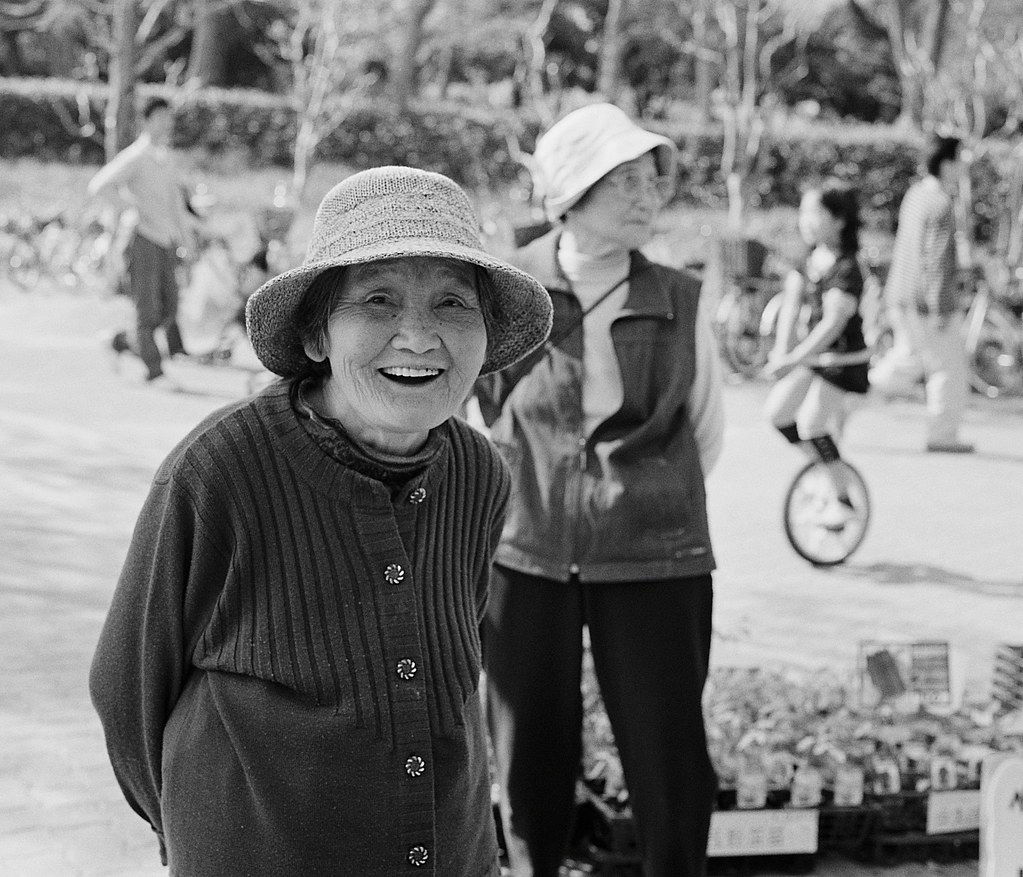
I saw this happy-looking old woman thoroughly enjoying spring in Nagai park two weeks ago. I ask if I can take her picture. She asks why, and I tell her she reminds me of the spring. She laughs and flashes me this wonderful 1000-watt smile.
Shikatacho, just over the hill from NAIST. For anyone living around here, that's Tomigaoka station you can just glimpse in the far back. This time of year really is perfect. Forget about summer vacations - let us work and study all summer under the soothing shade of a heavy blinds and the cool, refreshing bath of a high-powered air conditioner. Instead, let the world slow down over spring instead, and go outside to enjoy the change of the seasons.
Friday, April 24, 2009
Cash Handout Time!
We just got our documents for the cash handout the Japanese government is organizing. 12000 yen per person, and more for children and the elderly. Anyone with a registered address is eligible, apparently including wayward foreigners of a hirsute disposition and uncertain employability. The idea is to bump consumption to soften the impact of the recession.
We're probably going out for dinner with part of the money - most people are, apparently. The money conveniently comes just around tax payment time, however, so Osaka city will no doubt soon see most of it again. That bump to my bank account isn't going to be all that noticeable in the overall upheaval of tax payment time, and it's certainly not going to make me feel rich and ready for some extra spending. If they'd wanted to maximize the impact of the handout, I suspect they should have distributed time-limited value coupons to use in shops and restaurants, rather than cash you can stuff in your mattress, or use to pay your taxes. Since the idea behind it is pretty unclear beyond "we must seen as doing something", I guess that kind of foresight is a bit too much to ask for.
The whole thing is really driven by New Komeito, the small supporting party to the government, and was originally intended as a tax refund. We had prime minister Asō waffling mightily on whether he would accept the cash himself or not, showing that he doesn't believe his own governments stated reason for the handout, or doesn't fully understand it. But there's two other, real, issues with the handout, one with moral outrage but little economic impact; the other with impact but little outrage.
The thing is, this money is given to everybody with a registered address, and the forms are sent to that address. That's why I'm getting a share, for instance. It's sensible: anybody with a Japanese address is likely to spend the money here, and it's the spending that matters.
But the news have recently highlighted the plight of battered and abused women who have fled their husbands. Because they are registered at their original residence (Japan still has this quaint notion of having a legal head of a household) their abusive husbands are receiving the money meant for the wives. Outrageous of course, and any legal means to stop that should be tried. It also highlights the need to reform the rather archaic family-related laws. But a cold-hearted economist would point out that disgraceful as this may be, it is not an impediment to the handout. The purpose is for the money to be spent and it doesn't really matter who is spending it.
 The other issue are those without a registered address - the homeless. Without a formal, registered address you are not able to actually receive the money. Some homeless do have registered addresses, by the way, depending on the city and the current whim of the courts; this is yet another complex mess resulting from trying to fit a 21st century-society peg into a 19th-century regulatory hole. There is little visible outrage over the fact that some of the very poorest go without - it seems to me Japan has a very ambivalent attitude towards the people at the bottom of the society (and you can supply other words for "ambivalent" if you want) - but it is really hurting the cash handout plan. Remember, the idea is for people to spend the money and goose the domestic economy. The money makes a much greater difference for the poor, and with few or no economic margins they're also much more likely to spend all of it.
Asō is seriously rich. His first refusal to take the money was economically sound, if politically foolish; he and people like him are not going to change their spending patterns in response to a measly 12k yen. It's a waste of money for the country and a waste of time for Asō having to go through the paperwork. He had to take the money because he had to set an example, not because it would make any material difference. For people like us there's some effect - 12k yen is certainly money enough to matter. That said, while we might go to out to eat once we'll just save most of it, negating much of the stimulus effect.
Somebody living on the street on the other hand, who is getting by on day labor or collecting scrap, is not going to save it. They're going to spend every bit of that money, spend it quickly, and probably spend it all on domestic products, not expensive imports. 12k given to a homeless laborer is going to have a much higher stimulus effect than giving it to someone like me - never mind the rich, where the effect is zero. In fact, had you taken that money and given it only to the people with the lowest 20% income (60k yen per person - several months worth of living expenses), the economic impact, as well as the impact on the recipients, would have been much greater than it is now. Students, poor senior citizens, homeless, the unemployed and day laborers - they'd all spend it rather than bank it. Not politically possible, unfortunately, I realize that. But it would be more effective.
We're probably going out for dinner with part of the money - most people are, apparently. The money conveniently comes just around tax payment time, however, so Osaka city will no doubt soon see most of it again. That bump to my bank account isn't going to be all that noticeable in the overall upheaval of tax payment time, and it's certainly not going to make me feel rich and ready for some extra spending. If they'd wanted to maximize the impact of the handout, I suspect they should have distributed time-limited value coupons to use in shops and restaurants, rather than cash you can stuff in your mattress, or use to pay your taxes. Since the idea behind it is pretty unclear beyond "we must seen as doing something", I guess that kind of foresight is a bit too much to ask for.
The whole thing is really driven by New Komeito, the small supporting party to the government, and was originally intended as a tax refund. We had prime minister Asō waffling mightily on whether he would accept the cash himself or not, showing that he doesn't believe his own governments stated reason for the handout, or doesn't fully understand it. But there's two other, real, issues with the handout, one with moral outrage but little economic impact; the other with impact but little outrage.
The thing is, this money is given to everybody with a registered address, and the forms are sent to that address. That's why I'm getting a share, for instance. It's sensible: anybody with a Japanese address is likely to spend the money here, and it's the spending that matters.
But the news have recently highlighted the plight of battered and abused women who have fled their husbands. Because they are registered at their original residence (Japan still has this quaint notion of having a legal head of a household) their abusive husbands are receiving the money meant for the wives. Outrageous of course, and any legal means to stop that should be tried. It also highlights the need to reform the rather archaic family-related laws. But a cold-hearted economist would point out that disgraceful as this may be, it is not an impediment to the handout. The purpose is for the money to be spent and it doesn't really matter who is spending it.
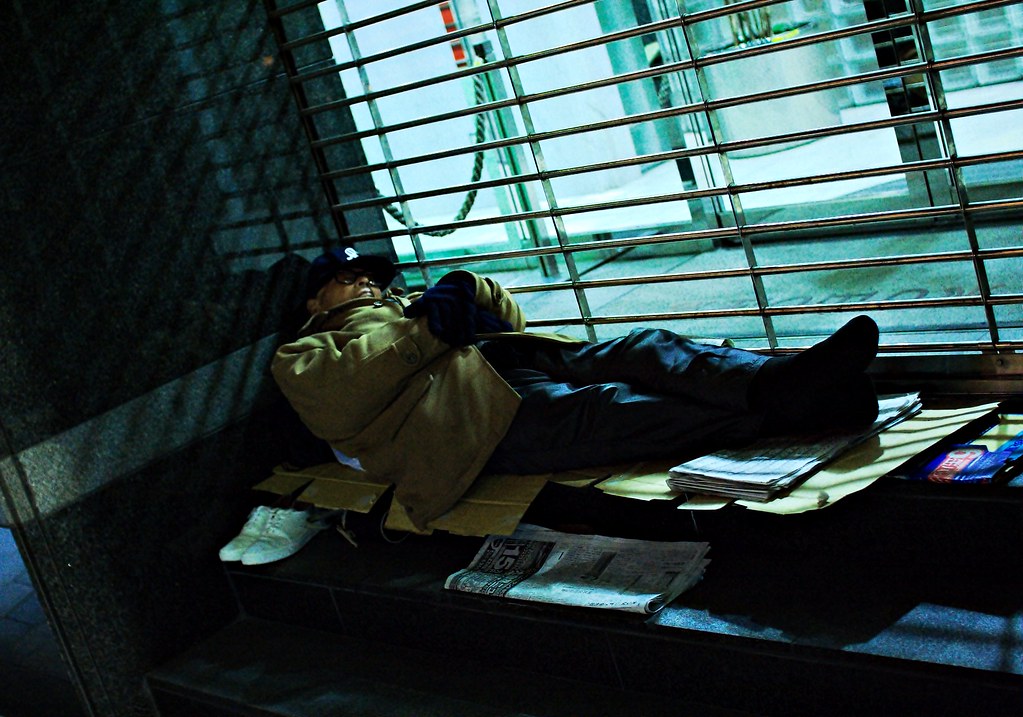
Asō is seriously rich. His first refusal to take the money was economically sound, if politically foolish; he and people like him are not going to change their spending patterns in response to a measly 12k yen. It's a waste of money for the country and a waste of time for Asō having to go through the paperwork. He had to take the money because he had to set an example, not because it would make any material difference. For people like us there's some effect - 12k yen is certainly money enough to matter. That said, while we might go to out to eat once we'll just save most of it, negating much of the stimulus effect.
Somebody living on the street on the other hand, who is getting by on day labor or collecting scrap, is not going to save it. They're going to spend every bit of that money, spend it quickly, and probably spend it all on domestic products, not expensive imports. 12k given to a homeless laborer is going to have a much higher stimulus effect than giving it to someone like me - never mind the rich, where the effect is zero. In fact, had you taken that money and given it only to the people with the lowest 20% income (60k yen per person - several months worth of living expenses), the economic impact, as well as the impact on the recipients, would have been much greater than it is now. Students, poor senior citizens, homeless, the unemployed and day laborers - they'd all spend it rather than bank it. Not politically possible, unfortunately, I realize that. But it would be more effective.
Wednesday, April 22, 2009
Mail fraud, corruption and the DPJ
Here's a "creative" business idea: send mail advertisements disguised as newsletters from support groups for the disabled. They have heavily discounted postal rates you can take advantage of and save more than 90% on the postal fee. Since the distribution fee is a major part of any advertising campaign, the sums are not trivial; we're talking billions of yen here. There is the little detail that defrauding the post office is illegal, and taking indirect advantage of disabled people for cheap marketing is not the most socially upstanding thing you could engage in.
Now the indictments are coming (had a link to Asahi here but it disappeared), and it turns out this idea was both more widespread and carefully planned than it first seemed. The companies involved are not small fly-by-night operations but include Best Denki, a nationwaide chain of electronics shops. The group had formal agreements in place on how to divide up the savings of at least 650 million yen so far (perhaps up to 20 billion yen overall). Also, they seem to have taken advantage of other postal discounts in a similar manner before switching to disability support groups. The "support group" currently in the news, Hakusankai, may have been set up specifically to take advantage of the mail discount system. Garden-variety fraud; so far, so good.
Here's a twist: When Best Denki first tried to send off a batch of advertisements under the guise of Hakusankai in 2007, he post office refused. The return address didn't go to Hakusankai but to Best Denki, which violated rules for the discounted rate and aroused suspicion. At that point an aide to Yoshio Maki, a DPJ lawmaker, intervened; he went to a regional office with Hakusankai representatives and "asked questions about the conditions for the disability discount" (as Asahi puts it), after which the direct mail was accepted and sent. Maki himself seems to have tried to defend the operation in the Diet. Oh, and completely incidentally - no connection att all, really - Yoshikuni Morita, arrested head of the Hakusankai is a long time donor to and supporter of Yoshio Maki. If you ever wondered what political corruption looks like, search no further. So what, you may wonder; "dirty Japanese politician" is pretty much a tautology after all.
This matters. Maki is an opposition DPJ lawmaker. And as it happens, there's an election coming up very soon (no later than September). The election really is mainly beteween the incumbent LDP, a conservative party of the old political class, bereft of policy ideas or ideological coherence and torn between wildly divergent factions vying for power; and DPJ, a, well... conservative party of the old political class, bereft of of policy ideas or ideological coherence and torn between wildly divergent factions vying for power. The truth is, both parties consists of much the same people from the same old political families, positioned around same end of the political spectrum, and as far as implementing policy is concerned they're close enough not to matter. Each party has its ideologically far-flung wings making noise, but they're unlikely to actually affect policy. The rhethoric is much more divergent than the actions.
In fact, the only major perceived difference has been one of morals. The LDP is seen as an old, corrupt party, in power only for the benefit of its representatives and their donors. DPJ would be a break from this endemic corruption and sleaze and, in some unspecified manner, return to politics as serving the people. DPJ and its leadership and policies are no more liked than the LDP; the only reason people have had to hold their nose and vote DPJ is that they're at least not in it to line their own pockets.
When the only saving grace of the opposition is their supposed moral superiority, getting involved in this kind of postal scam is a disaster. Remember that the opposition leader Ichiro Ozawa is already under a cloud after his campaign office accepted illegal contributions from the construction industry. Seriously, now: one lawmaker's office is taking illegal contributions from the construction industry, and one is helping a scam that takes advantage of a system set up to help poor disabled people? What's next - rob a fund for widows and orphans? "No worse than the other guy" works fine for the LDP; they have the benefit of low expectations and everybody expects them to be corrupt already. But it is a disaster for DPJ. "No worse" means "no better", and if they're no better the whole reason to vote for them - the whole reason for them to exist - is gone.
It doesn't help, of course, that the DPJ really is no better. It's all the same people, from the same families, brought up in the very same political culture - frequently in the same party. Of course they're just as corrupt as their LDP colleagues. The value of a DPJ government was never about what the DPJ would do, but that a solid election defeat for the LDP could finally start the process of changing the Japanese political landscape. The amorphous LDP and DPJ would hopefully both gradually disappear in their current form, to be replaced with a 20th century professional political culture (yes, I know it's the 21st century already. Baby steps, baby steps). Exactly what that would entail nobody knows, of course, but whatever ends up replacing the current setup, chances are good it'd at least be better than the current LDP government.
Of course, "Better than LDP" is a low bar to clear, and still the DPJ has shown an amazing ability to fail in doing so. They're nothing if not consistent, I have to give them that. For whatever reason, the upcoming election keeps reminding me of this.
Now the indictments are coming (had a link to Asahi here but it disappeared), and it turns out this idea was both more widespread and carefully planned than it first seemed. The companies involved are not small fly-by-night operations but include Best Denki, a nationwaide chain of electronics shops. The group had formal agreements in place on how to divide up the savings of at least 650 million yen so far (perhaps up to 20 billion yen overall). Also, they seem to have taken advantage of other postal discounts in a similar manner before switching to disability support groups. The "support group" currently in the news, Hakusankai, may have been set up specifically to take advantage of the mail discount system. Garden-variety fraud; so far, so good.
Here's a twist: When Best Denki first tried to send off a batch of advertisements under the guise of Hakusankai in 2007, he post office refused. The return address didn't go to Hakusankai but to Best Denki, which violated rules for the discounted rate and aroused suspicion. At that point an aide to Yoshio Maki, a DPJ lawmaker, intervened; he went to a regional office with Hakusankai representatives and "asked questions about the conditions for the disability discount" (as Asahi puts it), after which the direct mail was accepted and sent. Maki himself seems to have tried to defend the operation in the Diet. Oh, and completely incidentally - no connection att all, really - Yoshikuni Morita, arrested head of the Hakusankai is a long time donor to and supporter of Yoshio Maki. If you ever wondered what political corruption looks like, search no further. So what, you may wonder; "dirty Japanese politician" is pretty much a tautology after all.
This matters. Maki is an opposition DPJ lawmaker. And as it happens, there's an election coming up very soon (no later than September). The election really is mainly beteween the incumbent LDP, a conservative party of the old political class, bereft of policy ideas or ideological coherence and torn between wildly divergent factions vying for power; and DPJ, a, well... conservative party of the old political class, bereft of of policy ideas or ideological coherence and torn between wildly divergent factions vying for power. The truth is, both parties consists of much the same people from the same old political families, positioned around same end of the political spectrum, and as far as implementing policy is concerned they're close enough not to matter. Each party has its ideologically far-flung wings making noise, but they're unlikely to actually affect policy. The rhethoric is much more divergent than the actions.
In fact, the only major perceived difference has been one of morals. The LDP is seen as an old, corrupt party, in power only for the benefit of its representatives and their donors. DPJ would be a break from this endemic corruption and sleaze and, in some unspecified manner, return to politics as serving the people. DPJ and its leadership and policies are no more liked than the LDP; the only reason people have had to hold their nose and vote DPJ is that they're at least not in it to line their own pockets.
When the only saving grace of the opposition is their supposed moral superiority, getting involved in this kind of postal scam is a disaster. Remember that the opposition leader Ichiro Ozawa is already under a cloud after his campaign office accepted illegal contributions from the construction industry. Seriously, now: one lawmaker's office is taking illegal contributions from the construction industry, and one is helping a scam that takes advantage of a system set up to help poor disabled people? What's next - rob a fund for widows and orphans? "No worse than the other guy" works fine for the LDP; they have the benefit of low expectations and everybody expects them to be corrupt already. But it is a disaster for DPJ. "No worse" means "no better", and if they're no better the whole reason to vote for them - the whole reason for them to exist - is gone.
It doesn't help, of course, that the DPJ really is no better. It's all the same people, from the same families, brought up in the very same political culture - frequently in the same party. Of course they're just as corrupt as their LDP colleagues. The value of a DPJ government was never about what the DPJ would do, but that a solid election defeat for the LDP could finally start the process of changing the Japanese political landscape. The amorphous LDP and DPJ would hopefully both gradually disappear in their current form, to be replaced with a 20th century professional political culture (yes, I know it's the 21st century already. Baby steps, baby steps). Exactly what that would entail nobody knows, of course, but whatever ends up replacing the current setup, chances are good it'd at least be better than the current LDP government.
Of course, "Better than LDP" is a low bar to clear, and still the DPJ has shown an amazing ability to fail in doing so. They're nothing if not consistent, I have to give them that. For whatever reason, the upcoming election keeps reminding me of this.
Monday, April 20, 2009
Suma and Akashi
If you go east along the coast from Kobe you'll find Suma, the easternmost ward of Kobe city. It's a sleepy place that seems to mostly live off beach visitors and amateur fishermen; it has that lazy summer-city vibe. Of course, the entire coastline from Osaka to Suma, to Akashi and beyond is fully developed so it's not isolated or hard to reach.

Suma Beach. Picture taken by Ritsuko; that explains the presence of that odd-looking foreign fellow. It's fairly empty now, but during Golden Week this place will look like an upturned anthill, if the ants were all pink and red and drinking beer.
Anyway, Suma has a pretty good beach within easy day-trip distance from Kobe, Osaka and Kyoto. The trains actually stop just by the beach - you can step off the JR train station exit right onto the sand. This weekend was the perfect time to go. It's still early summer so it's not offensively hot, and the big Golden Week holiday is still a couple of weeks off. As a result the area was almost empty in stretches and the cool breeze made it a pleasure to walk along the beach from Suma to nearby Suma no Koen (yes, we really do enjoy long walks on the beach. And romantic dinners - not that there's anything wrong with that). This is a really pleasant day-trip if you live in Osaka or thereabouts.

Sky and sea and Ritsuko. Just about perfect.

Not everybody enjoys a day at the beach. This guy would probably feel rather more at ease in a dark, dingy diner than out here with all the unhealthy sun and fresh air. And yes, it seemed the woman in the background is his wife.
At Suma no Koen there's a fishing park. It's a set of long steel piers for amateur fishermen. We first went there two years ago. It's a nice setup; you pay an entrance fee and get to fish from the piers. If you need it, they'll sell you fishing gear, bait and even live fish if you're out of luck but still need something for dinner, and they can help you clean your catch too if you want. There's a squat, round tower near the center with a good sea view where you can get out of the sun and get something to eat and drink. The entrance fee is really low if you don't want to fish - and frankly, we've never felt the urge. It's way easier to buy fish cleaned out and ready at the local fishmonger than trying to catch it ourselves.

Fishing is quality time. Of course, photographing other people fishing is even better: same view, same fresh air, but no need to mess with rods, lines or hooks, or clean out your catch afterwards. Akashi and Akashi Kaikyō Ōhashi in the distance.


The fishing park is very pleasant to visit even if you don't fish. Great scenery, fresh sea breezes and plenty of interesting people milling about.
From Suma it's a fairly short train ride onward to Akashi, and you pass the Akashi Kaikyō Ōhashi bridge - one of the longest in the world, apparently - to Awaji on the way. Akashi's claim to fame is the bridge and the 135th meridian which passes through the city; it's the basis for Japan Standard Time, and there's an observatory sitting right on the meridian. We only spent an hour or so in the city; enough time to pick up some food from the local fish market, but not enough to visit the observatory.

The coast is rugged, so the train lines often hug the beach, making for some good views as you travel. Here is the JR line with the Akashi straight and the bridge in the background.

The Akashi market is good; not huge, but with a lot of fresh, good quality food. Very, very fresh - this octopus is fresh enough to make a determined break for freedom. The shop assistant had to stop it and put it back on the tray three times while I was watching. You know, put a kilt on it and it does look a bit like an aging Mel Gibson.
On the way back we had dinner at Raja, our favorite Indian restaurant in Kobe. Good as always. The owner, by the way, is one of those people who are indecisive about their facial hair; he's going through a mustache period at the moment. Normally we'd walk for a bit after dinner but as we'd done nothing but walk all day we called it a day and went home.

The Akashi city manhole design. They really like the meridian connection - A map of Japan with the 135th meridian going through it, overlaid with an image of the observatory, and the text "Shigosen no Machi Akashi" - Meridian City Akashi - on the rim. Should really visit the observatory next time.
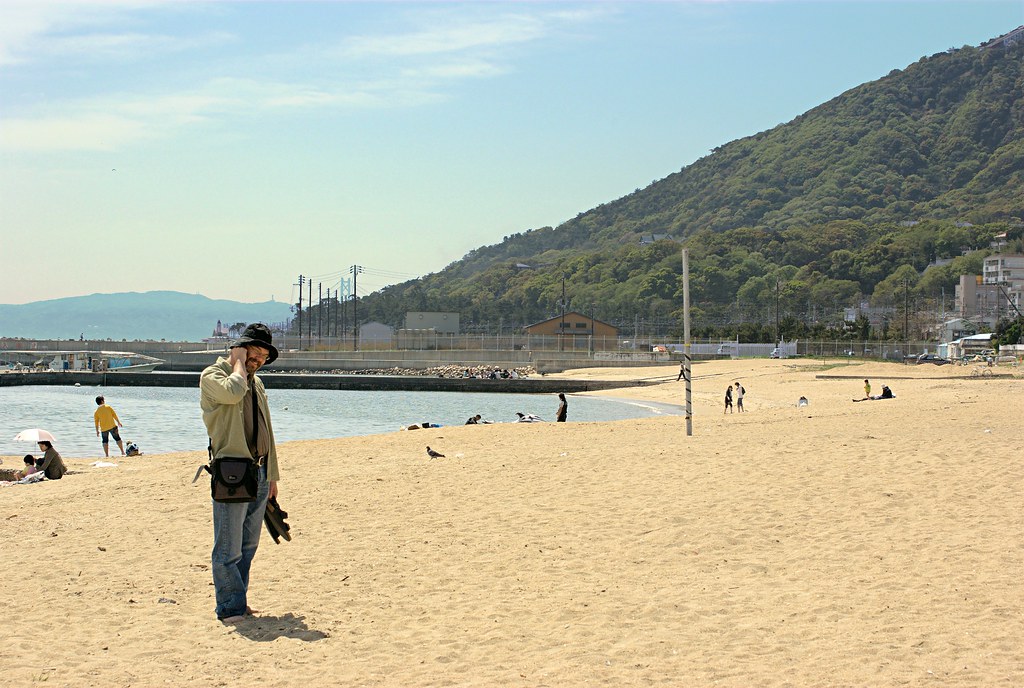
Suma Beach. Picture taken by Ritsuko; that explains the presence of that odd-looking foreign fellow. It's fairly empty now, but during Golden Week this place will look like an upturned anthill, if the ants were all pink and red and drinking beer.
Anyway, Suma has a pretty good beach within easy day-trip distance from Kobe, Osaka and Kyoto. The trains actually stop just by the beach - you can step off the JR train station exit right onto the sand. This weekend was the perfect time to go. It's still early summer so it's not offensively hot, and the big Golden Week holiday is still a couple of weeks off. As a result the area was almost empty in stretches and the cool breeze made it a pleasure to walk along the beach from Suma to nearby Suma no Koen (yes, we really do enjoy long walks on the beach. And romantic dinners - not that there's anything wrong with that). This is a really pleasant day-trip if you live in Osaka or thereabouts.

Sky and sea and Ritsuko. Just about perfect.

Not everybody enjoys a day at the beach. This guy would probably feel rather more at ease in a dark, dingy diner than out here with all the unhealthy sun and fresh air. And yes, it seemed the woman in the background is his wife.
At Suma no Koen there's a fishing park. It's a set of long steel piers for amateur fishermen. We first went there two years ago. It's a nice setup; you pay an entrance fee and get to fish from the piers. If you need it, they'll sell you fishing gear, bait and even live fish if you're out of luck but still need something for dinner, and they can help you clean your catch too if you want. There's a squat, round tower near the center with a good sea view where you can get out of the sun and get something to eat and drink. The entrance fee is really low if you don't want to fish - and frankly, we've never felt the urge. It's way easier to buy fish cleaned out and ready at the local fishmonger than trying to catch it ourselves.
Fishing is quality time. Of course, photographing other people fishing is even better: same view, same fresh air, but no need to mess with rods, lines or hooks, or clean out your catch afterwards. Akashi and Akashi Kaikyō Ōhashi in the distance.
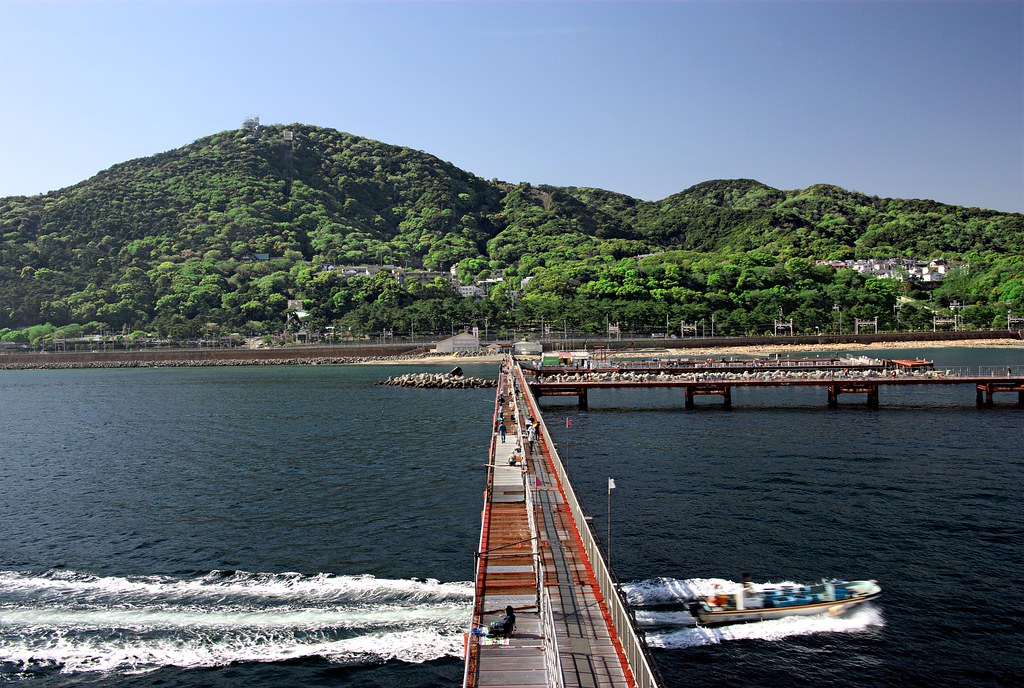
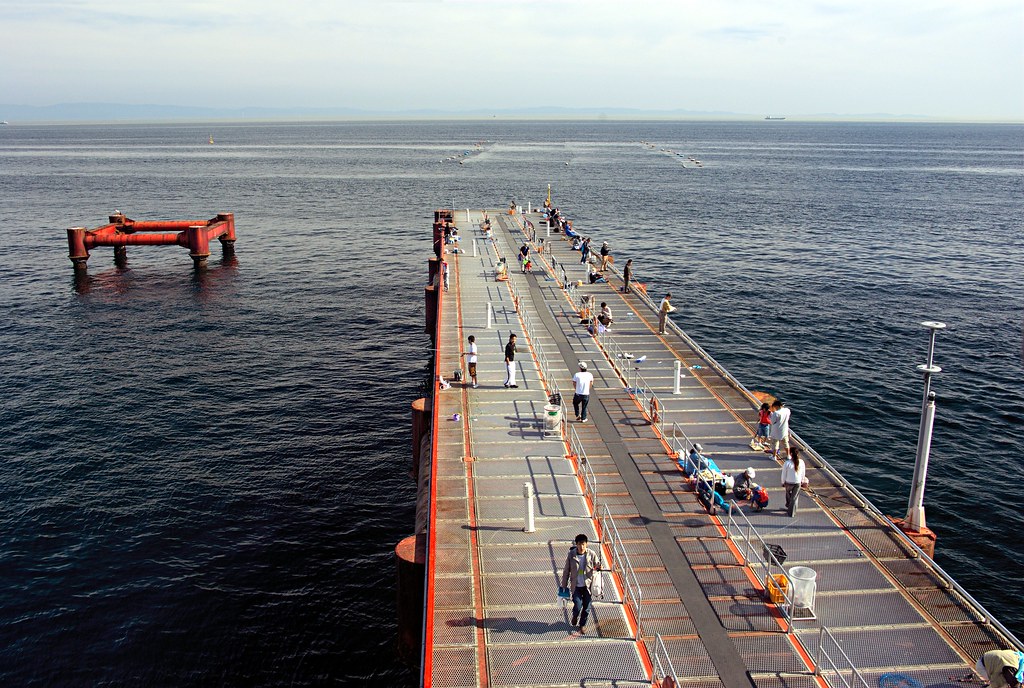
The fishing park is very pleasant to visit even if you don't fish. Great scenery, fresh sea breezes and plenty of interesting people milling about.
From Suma it's a fairly short train ride onward to Akashi, and you pass the Akashi Kaikyō Ōhashi bridge - one of the longest in the world, apparently - to Awaji on the way. Akashi's claim to fame is the bridge and the 135th meridian which passes through the city; it's the basis for Japan Standard Time, and there's an observatory sitting right on the meridian. We only spent an hour or so in the city; enough time to pick up some food from the local fish market, but not enough to visit the observatory.
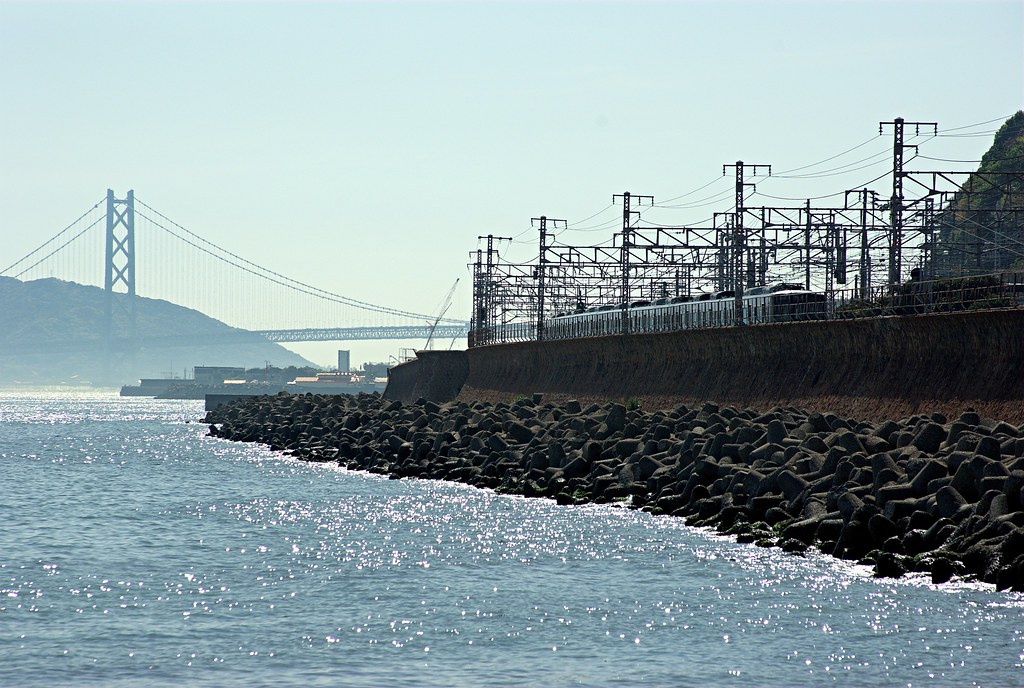
The coast is rugged, so the train lines often hug the beach, making for some good views as you travel. Here is the JR line with the Akashi straight and the bridge in the background.
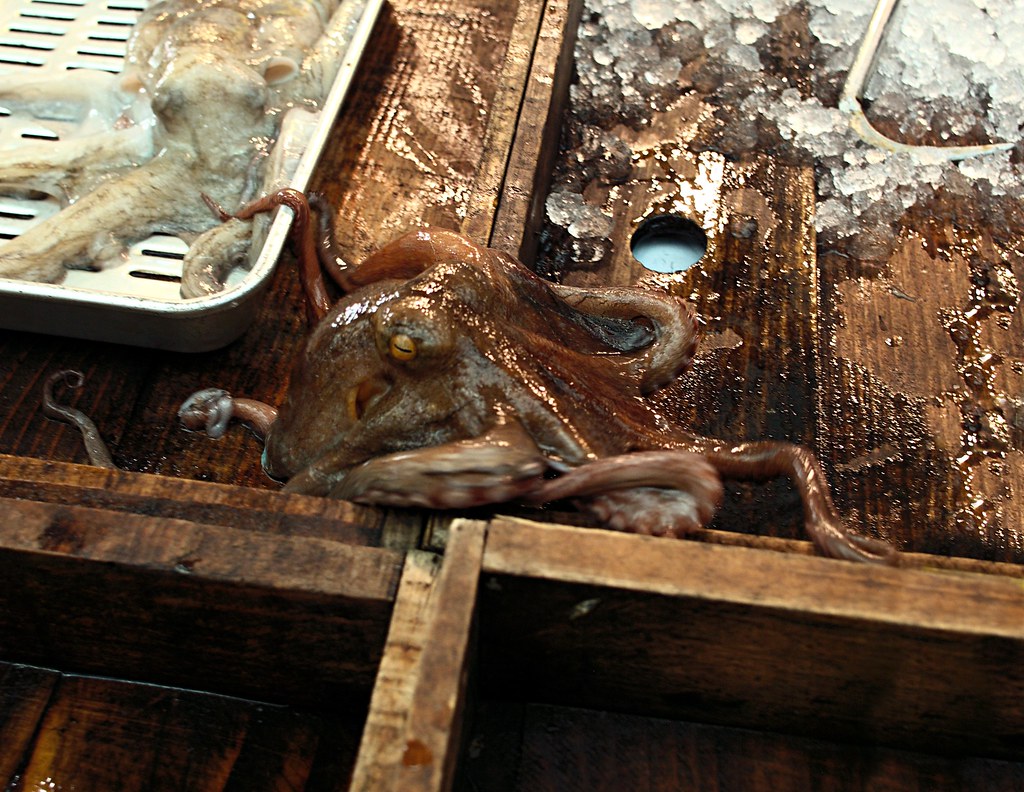
The Akashi market is good; not huge, but with a lot of fresh, good quality food. Very, very fresh - this octopus is fresh enough to make a determined break for freedom. The shop assistant had to stop it and put it back on the tray three times while I was watching. You know, put a kilt on it and it does look a bit like an aging Mel Gibson.
On the way back we had dinner at Raja, our favorite Indian restaurant in Kobe. Good as always. The owner, by the way, is one of those people who are indecisive about their facial hair; he's going through a mustache period at the moment. Normally we'd walk for a bit after dinner but as we'd done nothing but walk all day we called it a day and went home.
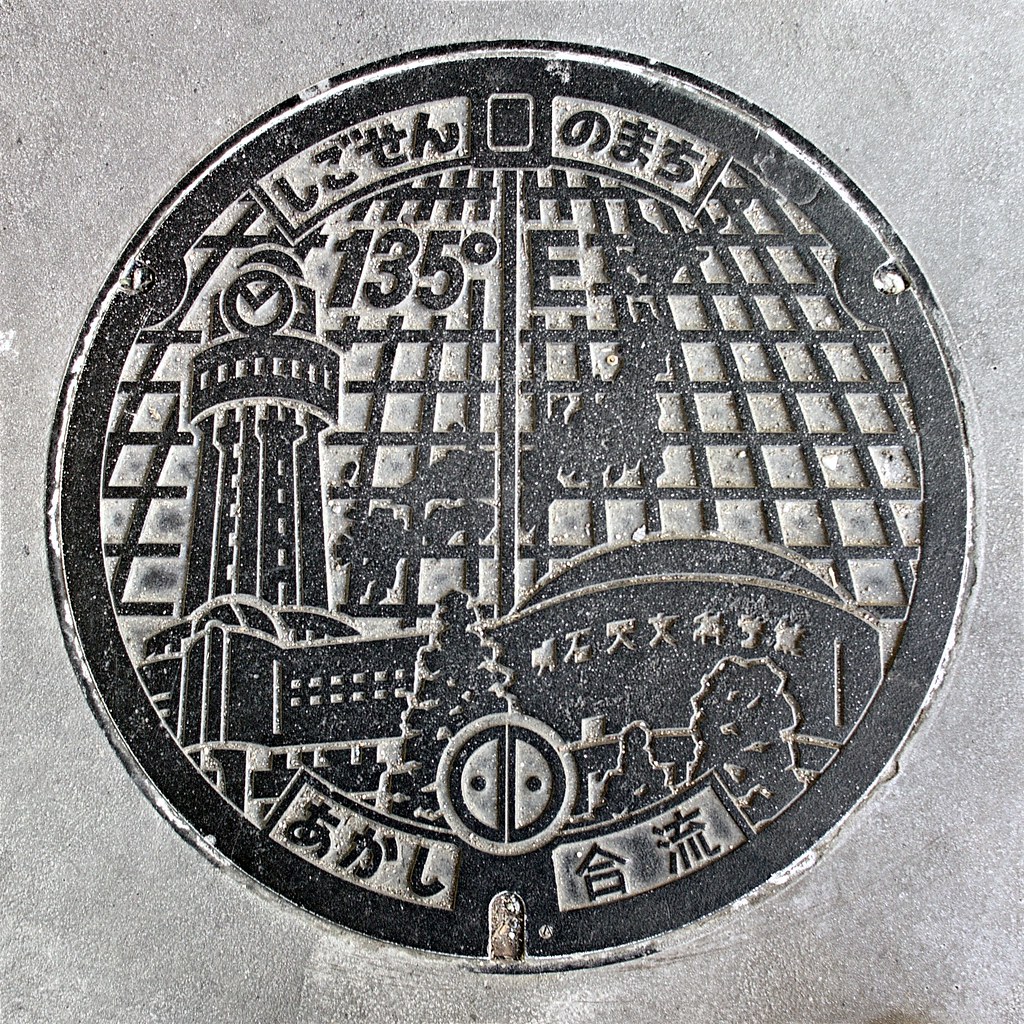
The Akashi city manhole design. They really like the meridian connection - A map of Japan with the 135th meridian going through it, overlaid with an image of the observatory, and the text "Shigosen no Machi Akashi" - Meridian City Akashi - on the rim. Should really visit the observatory next time.
Wednesday, April 15, 2009
The Devotion of Suspect X - Chapter 6
..and it's flashback time. It's Teito university again, and a much younger Ishigami is sitting by himself in a lecture room. Another student behind him strikes up a conversation; this turns out to be a young, disagreeable Yugawa. Turns out they're both notorious and know of each other by reputation. There's some interesting banter about Paul Erdös and the Four-color theorem, mostly, I suspect, as a way for the author to establish a bit of local color. As they study different subjects - mathematics and physics - they don't interact much directly, but they hear of each other throughout their undergraduate days.
An aside:
Paul Erdős was a real character even by the standards of mathematicians; check out the Wikipedia entry on him, or see the movie. He spent most of his life traveling with no fixed address, and was such an amazingly prolific coauthor of papers that mathematicians (and even other researchers) sometimes keep track of their Erdős Number - how many steps removed they are from Erdős in coauthorship, with Erdős himself having number 0, his coathors having 1, their coathors in turn 2 and so on (I believe I have Erdos number 7 myself; that's pretty far away).
The Four-Color theorem is the claim that a two-dimensional map always can be colored with four - and no more than four -different colors, so that two areas sharing an edge (not corner) always have different colors. This was proved in the 1970's, and is famous because it is the first partially computer-generated mathematical proof. A computer program was basically used to check that a large number of special cases had a certain property; doing so by hand would have been infeasible. In the book our young Ishigami is vehemently opposed to this approach.
By the way: if you think about it, it's easy to figure out that two colors would be enough for any one-dimensional map, and that there's no limit to the number of colors you need for three-dimensional ones.
...anyway:
Returning from the flashback we have the middle-aged Ishigami and Yugawa in Ishigami's apartment, meeting each other again for the first time since they were students. Sharing takeout sushi and a bottle of spirits brought by Yugawa, they reminiscence and catch up their lives. As it turns out, Ishigami wanted to stay on for a doctorate. He was unable to do so as he needed to care for his ailing parents, leaving him with neither time nor money to continue studying. He worked as a teacher at a technical college for a few years but was so swamped with teaching duties that he was unable to do any studying or research. Also, the students were mediocre and the faculty more interested in politics and infighting than in research. He eventually gave it up and went into teaching high school instead.
Yugawa has brought a paper purportedly disproving the continuum hypothesis. Doesn't matter what it is (it's an unproven theorem about what kind of infinity the real numbers belong to) but it's a way for the author to show Yugawa and the reader that Ishigami still has it - he spends most of the night oblivious to time, finally finding the fault in the paper early next morning. Duly impressed, Yugawa follows Ishigami on the way to work. Ishigami confesses that he does frequent the bento shop where Yasuko works, and they part way as Ishigami heads that way to pick up his lunch.
An aside:
Paul Erdős was a real character even by the standards of mathematicians; check out the Wikipedia entry on him, or see the movie. He spent most of his life traveling with no fixed address, and was such an amazingly prolific coauthor of papers that mathematicians (and even other researchers) sometimes keep track of their Erdős Number - how many steps removed they are from Erdős in coauthorship, with Erdős himself having number 0, his coathors having 1, their coathors in turn 2 and so on (I believe I have Erdos number 7 myself; that's pretty far away).
The Four-Color theorem is the claim that a two-dimensional map always can be colored with four - and no more than four -different colors, so that two areas sharing an edge (not corner) always have different colors. This was proved in the 1970's, and is famous because it is the first partially computer-generated mathematical proof. A computer program was basically used to check that a large number of special cases had a certain property; doing so by hand would have been infeasible. In the book our young Ishigami is vehemently opposed to this approach.
By the way: if you think about it, it's easy to figure out that two colors would be enough for any one-dimensional map, and that there's no limit to the number of colors you need for three-dimensional ones.
...anyway:
Returning from the flashback we have the middle-aged Ishigami and Yugawa in Ishigami's apartment, meeting each other again for the first time since they were students. Sharing takeout sushi and a bottle of spirits brought by Yugawa, they reminiscence and catch up their lives. As it turns out, Ishigami wanted to stay on for a doctorate. He was unable to do so as he needed to care for his ailing parents, leaving him with neither time nor money to continue studying. He worked as a teacher at a technical college for a few years but was so swamped with teaching duties that he was unable to do any studying or research. Also, the students were mediocre and the faculty more interested in politics and infighting than in research. He eventually gave it up and went into teaching high school instead.
Yugawa has brought a paper purportedly disproving the continuum hypothesis. Doesn't matter what it is (it's an unproven theorem about what kind of infinity the real numbers belong to) but it's a way for the author to show Yugawa and the reader that Ishigami still has it - he spends most of the night oblivious to time, finally finding the fault in the paper early next morning. Duly impressed, Yugawa follows Ishigami on the way to work. Ishigami confesses that he does frequent the bento shop where Yasuko works, and they part way as Ishigami heads that way to pick up his lunch.
Monday, April 13, 2009
So that was Spring
Springtime is absolutely the best season here in Osaka. It's a sliver of meteorological perfection between the chilly, wet winter and the brutally hot, wet summer - clear, dry temperate days that invite you to go outside and just enjoy life. It is also, unfortunately, by far the shortest season around here.

Sakura at the next-door shrine. It's late dusk and lit by a street lamp so the colors came out pretty interesting. Click on the image for the full experience.
Two weeks ago I used my winter coat and cursed the miserable mornings as I hid behind a rain-lashed umbrella on my way to work. This weekend the thermometer hit 25° and the morning train is already carrying the first faint traces of Eau-de-Summer-Salaryman (a delicate blend of sweaty suits with just a hint of hangover). The actual spring lasted perhaps a week. One good April cold or a business trip and you'll miss it altogether.
Anyway, while it does last (and we had a quick preview about three weeks ago, not to forget) it's really great, and it's always a treat to visit a park or two for Hanami - cherry-blossom viewing. When you've seen one cherry flower you've pretty much seen them all, of course; the real treat is to mingle with all the other people, have a pick-nick, and just generally enjoy the single best time of the year.

People often linger under the trees, eating and drinking, for most of the day and into the night. You might know the woman to the right from earlier posts of mine.

A Hanami party can be pretty improvised, or it can be a seriously pre-planned event. Here a group of drummers set up their stuff by one of the castle moats.

Cherry blossoms. Nice tones, though the sky is blown out.

Osaka castle. Would have been better had I not tripped the shutter by mistake as I was setting up.
If anybody actually reaches the bottom here and wonders why the pictures look a little off: this is my first attempt with slide film (Fuji Provia). I'm not going to make a habit of this - digital cameras do exactly this kind of punchy, contrasty color images so well - but it was fun to try it. The dynamic range is nothing to write home about, but the low grain, the level of detail and the overall look of a medium-format slide on a light table has to be seen to be believed.
I have yet to learn how to scan these properly so I've somewhat butchered the uploaded images. It doesn't help that the files I get - 48 bit 35-40mp image files after scanning and downscaling - are killing my computer. 2Gb memory just isn't cutting it when processing these. If I were to make a habit of slide film, I'd have to get a much beefier machine.
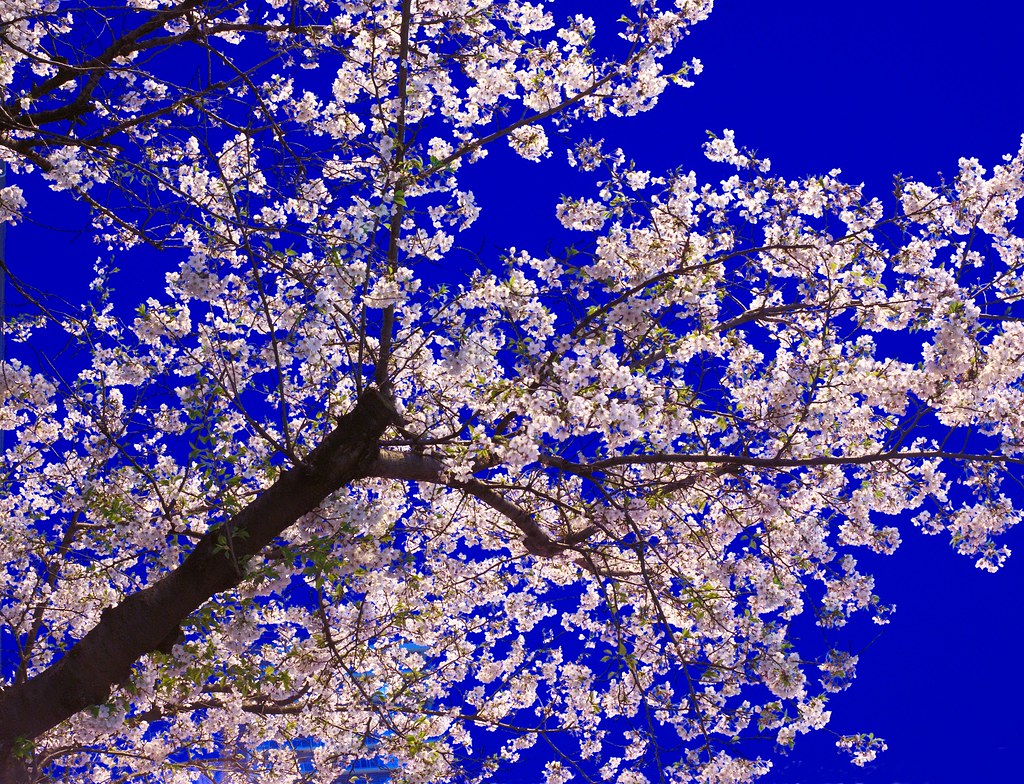
Sakura at the next-door shrine. It's late dusk and lit by a street lamp so the colors came out pretty interesting. Click on the image for the full experience.
Two weeks ago I used my winter coat and cursed the miserable mornings as I hid behind a rain-lashed umbrella on my way to work. This weekend the thermometer hit 25° and the morning train is already carrying the first faint traces of Eau-de-Summer-Salaryman (a delicate blend of sweaty suits with just a hint of hangover). The actual spring lasted perhaps a week. One good April cold or a business trip and you'll miss it altogether.
Anyway, while it does last (and we had a quick preview about three weeks ago, not to forget) it's really great, and it's always a treat to visit a park or two for Hanami - cherry-blossom viewing. When you've seen one cherry flower you've pretty much seen them all, of course; the real treat is to mingle with all the other people, have a pick-nick, and just generally enjoy the single best time of the year.
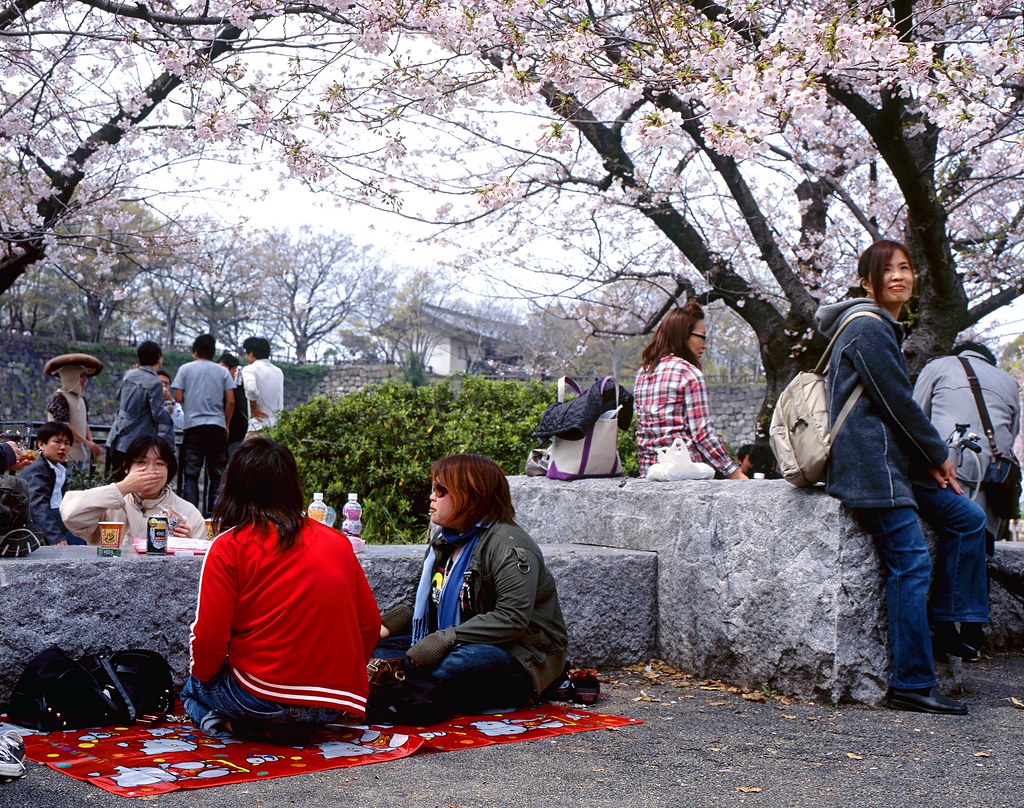
People often linger under the trees, eating and drinking, for most of the day and into the night. You might know the woman to the right from earlier posts of mine.
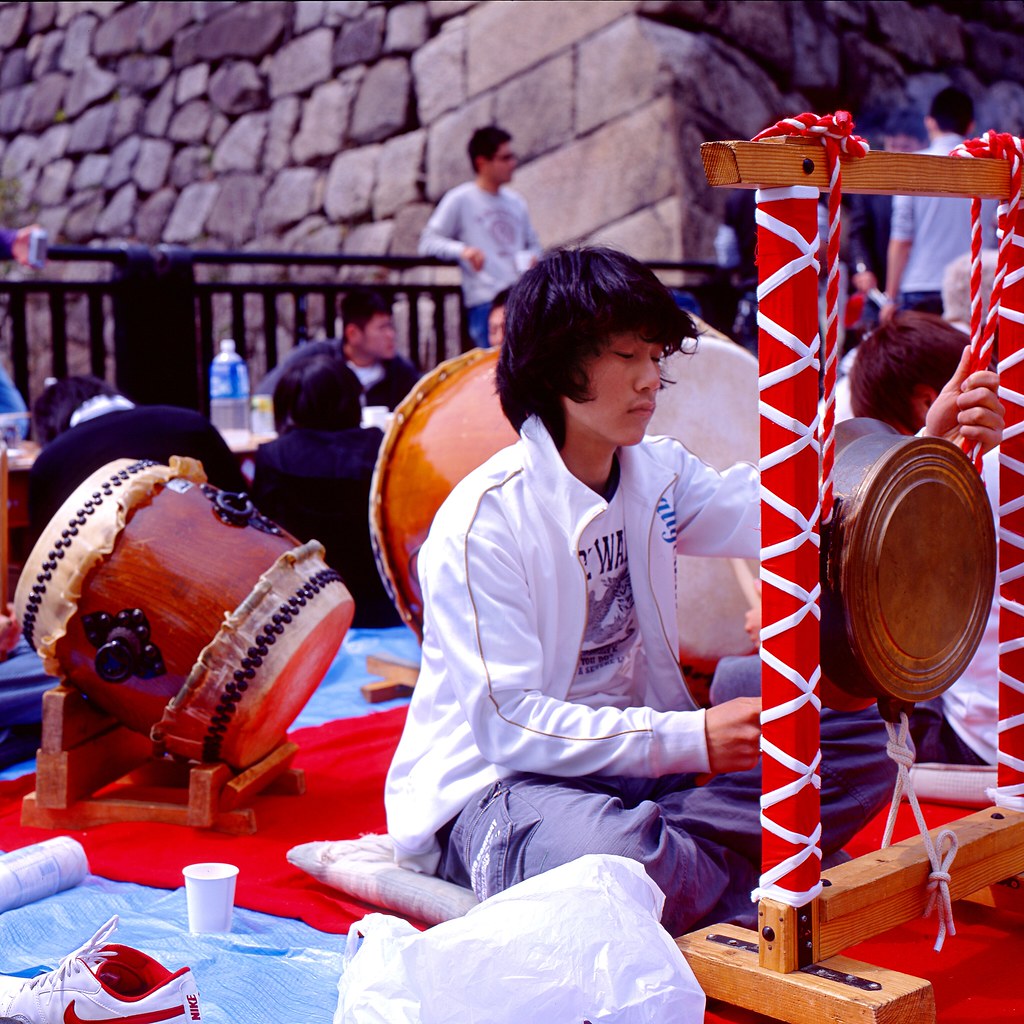
A Hanami party can be pretty improvised, or it can be a seriously pre-planned event. Here a group of drummers set up their stuff by one of the castle moats.
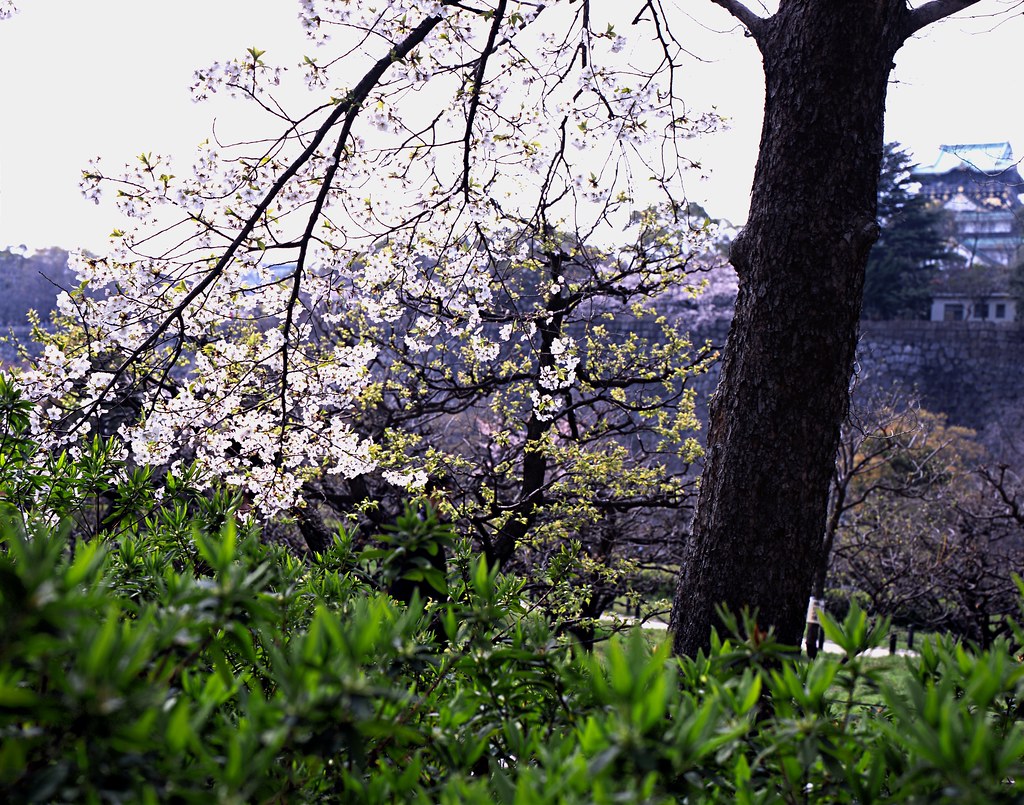
Cherry blossoms. Nice tones, though the sky is blown out.

Osaka castle. Would have been better had I not tripped the shutter by mistake as I was setting up.
If anybody actually reaches the bottom here and wonders why the pictures look a little off: this is my first attempt with slide film (Fuji Provia). I'm not going to make a habit of this - digital cameras do exactly this kind of punchy, contrasty color images so well - but it was fun to try it. The dynamic range is nothing to write home about, but the low grain, the level of detail and the overall look of a medium-format slide on a light table has to be seen to be believed.
I have yet to learn how to scan these properly so I've somewhat butchered the uploaded images. It doesn't help that the files I get - 48 bit 35-40mp image files after scanning and downscaling - are killing my computer. 2Gb memory just isn't cutting it when processing these. If I were to make a habit of slide film, I'd have to get a much beefier machine.
Subscribe to:
Posts (Atom)